Histoire & héritage
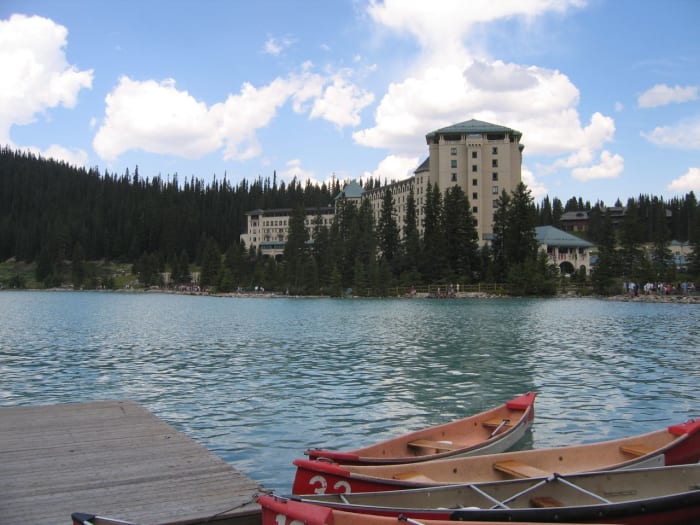
Le Fairmont Chateau Lake Louise appartient à cette lignée d’adresses nées du grand récit ferroviaire et alpin du Canada, lorsque les paysages des Rocheuses ont commencé à être pensés non seulement comme des territoires à traverser, mais comme des destinations à contempler. Installé sur les rives du lac Louise, l’hôtel s’inscrit dans une tradition d’hospitalité de montagne qui associe le sens du panorama, l’idée de refuge élégant et une certaine vision nord-américaine du grand hôtel de villégiature. Ici, l’architecture et l’emplacement travaillent ensemble : l’établissement n’est pas un simple point de chute face à un beau décor, il fait partie de la manière dont ce décor est vécu.
Au fil du temps, le château a acquis un statut particulier dans l’imaginaire des voyageurs. Son nom évoque immédiatement le lac, ses eaux d’un bleu laiteux en été, ses rives prises par la neige et la glace durant la saison froide, et cette impression très rare d’être au bord d’un site mondialement photographié tout en conservant une expérience d’hôtel complète, structurée, confortable. Comme d’autres grandes adresses historiques du Canada, il a accompagné l’évolution du voyage de loisir : d’abord destination d’exploration et d’air pur, puis retraite de nature sophistiquée, enfin base quatre saisons pour une clientèle mêlant amateurs de plein air, familles, couples et voyageurs venus chercher une forme d’isolement spectaculaire sans renoncer aux codes du service haut de gamme.
L’héritage du lieu ne tient pas seulement à son ancienneté relative ou à sa silhouette reconnaissable. Il réside aussi dans une culture de l’accueil façonnée par la géographie. À Lake Louise, le climat, l’altitude, la lumière et les rythmes saisonniers imposent une forme de précision. On ne séjourne pas ici comme dans un palace urbain : on compose avec la montagne, avec les départs matinaux pour les sentiers, avec les retours de ski ou de promenade, avec les variations rapides du temps. L’hôtel a donc développé, au fil des décennies, une manière d’orchestrer le confort autour de cette réalité alpine. Cela se traduit par une logistique discrète, des espaces pensés pour le retour au chaud, et une hospitalité qui sait être à la fois formelle et très pragmatique.
L’appartenance à Fairmont renforce cette continuité. La marque est associée à plusieurs des grands hôtels patrimoniaux du Canada, et cette filiation se ressent dans la promesse de service : une certaine constance, un goût pour les lieux emblématiques, et une capacité à faire dialoguer prestige historique et attentes contemporaines. Au Fairmont Chateau Lake Louise, cet équilibre est particulièrement lisible. Le cadre reste le protagoniste principal, mais l’hôtel lui donne une structure, une temporalité, une manière d’être habité. C’est ce qui explique qu’il soit choisi aussi bien pour des séjours de contemplation que pour des événements, des retraites ou des célébrations.
Ce patrimoine n’a rien de figé. Il continue d’évoluer avec les usages actuels, notamment autour de la durabilité et d’une relation plus consciente à l’environnement. Dans un site aussi sensible, l’idée de luxe ne peut plus se limiter à la vue ou à l’ampleur des installations ; elle suppose aussi une attention portée à l’impact, à la gestion des flux, à la préservation du paysage qui fait précisément la valeur du séjour. C’est sans doute là que l’hôtel trouve aujourd’hui sa définition la plus juste : une grande maison de montagne, héritière d’une tradition canadienne, qui continue d’interpréter le voyage alpin avec les codes du confort contemporain.
L’établissement
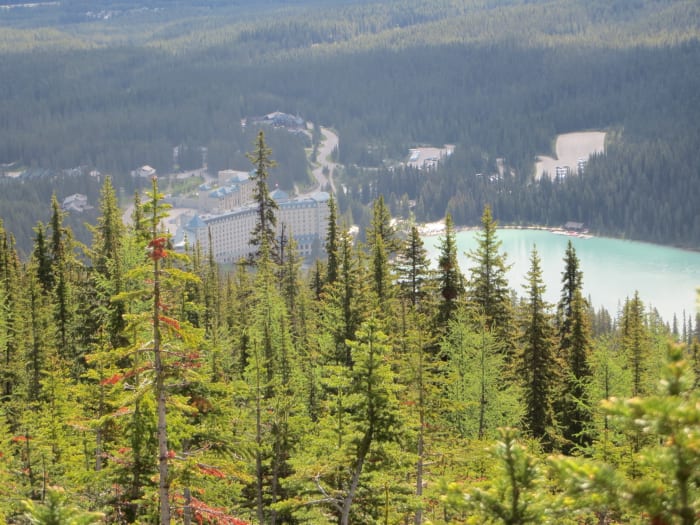
Ce qui frappe d’abord au Fairmont Chateau Lake Louise, c’est la précision de son implantation. Peu d’hôtels peuvent revendiquer un rapport aussi direct à un paysage iconique : ici, le lac n’est pas un horizon lointain, mais une présence immédiate, presque tactile, prolongée par la masse des Rocheuses canadiennes. Le bâtiment fait face à une scène naturelle d’une intensité rare, où la couleur de l’eau, la ligne des forêts, les pentes minérales et les glaciers composent un théâtre en perpétuel mouvement. Selon l’heure, la saison et la météo, le même point de vue change entièrement de caractère. L’expérience du lieu tient beaucoup à cette variabilité.
L’hôtel fonctionne comme une interface entre nature spectaculaire et confort organisé. Depuis les espaces communs, on passe sans rupture de l’intérieur protégé à l’extérieur grandiose. Cette continuité est essentielle : elle permet de vivre la montagne sans sentiment d’austérité. On peut partir tôt pour une marche, revenir à la mi-journée, observer la lumière tourner sur le lac depuis un salon, puis ressortir lorsque le calme s’installe. En hiver, le rapport au site devient encore plus enveloppant. La neige simplifie les lignes, le silence gagne du terrain, et l’hôtel prend alors des allures de refuge monumental, pensé pour les retours au chaud, les pauses prolongées et les fins de journée face à un paysage presque monochrome.
Le caractère de l’établissement tient aussi à son échelle. C’est une grande maison de destination, capable d’accueillir des séjours de loisirs, des retraites et des événements, sans que l’on perde pour autant la sensation d’être venu pour un lieu très précis. Cette dualité est importante. D’un côté, l’hôtel dispose de l’infrastructure attendue d’une adresse internationale de haut niveau ; de l’autre, il reste intimement défini par son environnement immédiat. On n’y vient pas seulement pour dormir dans les Rocheuses, mais pour habiter, quelques jours, l’un des points de vue les plus célèbres du parc national de Banff.
Le rythme du séjour dépend naturellement des saisons. L’été ouvre les sentiers, les départs vers les promenades panoramiques, les activités de plein air et les longues journées où la lumière s’étire sur l’eau turquoise. L’automne apporte une atmosphère plus calme, plus minérale, souvent appréciée pour sa clarté et sa sensation d’espace. L’hiver transforme le site en décor de neige et de glace, propice aux sports nordiques, aux séjours contemplatifs et à cette forme de lenteur choisie que recherchent de nombreux voyageurs. Le printemps, plus changeant, révèle la transition du paysage et rappelle que la montagne suit son propre calendrier.
L’engagement en faveur du développement durable prend ici une résonance particulière. Dans un environnement aussi fragile et observé, la question n’est pas accessoire. Elle touche à la manière de faire fonctionner un grand hôtel au cœur d’un site naturel majeur, en tenant compte des ressources, des flux et de la préservation du cadre. Sans transformer le séjour en démonstration, cette attention participe à la qualité globale de l’expérience : elle inscrit le confort dans une logique de responsabilité.
En définitive, le Fairmont Chateau Lake Louise est moins un hôtel avec vue qu’un hôtel de paysage. Tout y ramène au dehors, mais sans jamais sacrifier l’idée de refuge. C’est cette tension bien maîtrisée entre immensité et protection, entre nature brute et service structuré, qui donne au lieu sa singularité durable.
Chambres et suites
Dans un hôtel aussi étroitement défini par son environnement, la question de la chambre dépasse la seule notion de confort. Au Fairmont Chateau Lake Louise, elle relève d’un art de cadrer le séjour. Selon leur orientation, les chambres et suites ne racontent pas exactement la même histoire : certaines privilégient l’intimité et le calme intérieur, d’autres ouvrent plus directement sur le lac, la montagne ou les reliefs environnants. Ce rapport à la vue n’est jamais anecdotique ici ; il détermine la manière dont on habite le lieu, dont on se réveille, dont on observe la météo, dont on laisse la journée se refermer.
Le style attendu dans une adresse Fairmont de cette catégorie repose généralement sur un équilibre entre classicisme hôtelier et confort contemporain. On recherche moins l’effet décoratif que la lisibilité, la chaleur et la fonctionnalité. Dans un contexte alpin, cela prend tout son sens. Après une journée dehors, qu’elle ait été sportive ou simplement contemplative, la chambre doit offrir une sensation de retour, de protection, de température juste, d’ordre retrouvé. Les matières, l’éclairage, l’agencement et l’insonorisation comptent alors autant que l’esthétique. Le luxe, dans un tel cadre, tient souvent à cette impression de fluidité : rien ne distrait, rien n’entrave, tout accompagne le rythme du séjour.
Les suites répondent à une autre logique, plus résidentielle. Elles permettent d’étirer le temps, de ménager des espaces distincts pour se reposer, lire, travailler ponctuellement ou recevoir. Pour un long week-end, un voyage familial ou une occasion particulière, elles ajoutent une dimension de séjour plutôt que de simple hébergement. Dans un lieu aussi spectaculaire, cet espace supplémentaire change sensiblement l’expérience : on ne fait pas qu’y passer la nuit, on s’y installe. C’est particulièrement appréciable lorsque la météo invite à ralentir, lorsque l’on revient d’une activité hivernale, ou lorsque l’on souhaite simplement profiter du décor sans multiplier les déplacements.
L’intérêt d’un grand hôtel de montagne réside aussi dans sa capacité à répondre à des profils de voyageurs très différents. Couples en quête d’un séjour face au lac, familles venues explorer les Rocheuses, voyageurs internationaux intégrant Lake Louise à un itinéraire plus large, participants à un événement ou à une retraite : tous n’attendent pas la même chose de leur chambre. L’établissement doit donc conjuguer lisibilité de l’offre, qualité de service et souplesse d’usage. Le service de couverture, l’entretien quotidien, la disponibilité de la réception et de la conciergerie participent pleinement de cette expérience. Ils permettent de maintenir un niveau de confort constant, quel que soit le programme de la journée.
Il faut enfin rappeler qu’à Lake Louise, la chambre n’est pas conçue comme un monde fermé. Elle est un poste d’observation, un sas entre l’hôtel et la montagne. On y prépare ses départs, on y dépose ses couches de vêtements, on y revient pour se réchauffer, on y regarde la lumière changer sur le paysage. Cette fonction presque rituelle donne une valeur particulière aux détails de confort. Dans un environnement où les conditions peuvent évoluer rapidement, la qualité d’une chambre se mesure à sa capacité à absorber le dehors sans le prolonger en contrainte.
Choisir sa catégorie d’hébergement revient donc à choisir une manière d’habiter le site. Vue, espace, rythme, composition du voyage : tout cela compte. Au Fairmont Chateau Lake Louise, la chambre idéale n’est pas seulement la plus vaste ou la plus spectaculaire ; c’est celle qui correspond le mieux à la façon dont on souhaite vivre la montagne.
La table
Dans un lieu comme le Fairmont Chateau Lake Louise, la gastronomie ne peut pas être dissociée du paysage. Manger face au lac, prendre un café en observant la lumière du matin sur les sommets, s’attarder autour d’un dîner après une journée dehors : chaque moment de table est influencé par l’environnement immédiat. Plus qu’une simple offre de restauration, on attend ici une mise en scène du rythme alpin, avec des propositions capables d’accompagner des journées très différentes selon les saisons. Le petit-déjeuner n’a pas la même fonction pour un départ en randonnée estivale que pour une matinée d’hiver consacrée à la contemplation ou aux activités de neige. Le déjeuner peut être rapide ou prolongé. Le dîner, lui, devient souvent le temps du retour au calme.
Dans ce type d’adresse, la diversité compte autant que la qualité. Un grand hôtel de destination doit savoir répondre à plusieurs usages : repas structurés, pauses informelles, envies de réconfort après l’extérieur, moments plus célébratoires pour un séjour à deux ou une occasion particulière. L’intérêt réside dans cette capacité à faire coexister une restauration de grand hôtel, lisible et bien orchestrée, avec une sensation de lieu. À Lake Louise, cela suppose une cuisine qui n’écrase pas le décor mais l’accompagne, en privilégiant la saisonnalité, la clarté des saveurs et une certaine générosité adaptée au climat de montagne.
Le cadre joue évidemment un rôle central. Dans les espaces de restauration comme dans les salons, la vue n’est jamais un simple argument ; elle modifie le tempo du repas. On s’installe autrement lorsque le lac est à quelques mètres, lorsque les nuages descendent sur les pentes, lorsque la neige réfléchit la lumière jusque dans la salle. Cette proximité du dehors crée une expérience très particulière, presque cinématographique, où l’on vient autant pour la qualité du moment que pour l’assiette elle-même. C’est particulièrement vrai aux intersaisons et en hiver, lorsque le contraste entre l’extérieur froid et l’intérieur chaleureux devient un élément essentiel du plaisir.
Pour les voyageurs internationaux, la table joue aussi un rôle d’ancrage. Elle permet de retrouver des repères de confort tout en découvrant une interprétation locale de l’hospitalité canadienne. Sans surjouer le régionalisme, une adresse de cette catégorie peut faire sentir son territoire par touches : produits de saison, inspiration nord-américaine, attention portée aux textures et aux plats qui conviennent aux climats frais. Le service, lui, doit rester à la hauteur du lieu : attentif, fluide, capable de s’adapter aussi bien à un dîner marquant qu’à un simple besoin de simplicité après une journée active.
L’hôtel étant prisé pour les événements et retraites, la restauration prend également une dimension sociale. Elle devient un espace de réunion, de célébration, de conversation prolongée. Dans un décor aussi fort, ces moments collectifs gagnent naturellement en intensité. Mais l’adresse doit aussi préserver la possibilité d’expériences plus intimes : un petit-déjeuner lent, un verre en fin de journée, un dîner à deux avec la montagne en arrière-plan.
Au Fairmont Chateau Lake Louise, la table trouve ainsi sa juste place : ni démonstrative, ni secondaire. Elle prolonge le séjour, soutient les rythmes du corps dans un environnement exigeant, et offre un langage de confort qui répond à la grandeur du site sans chercher à lui voler la vedette.
Conciergerie & services
Dans un grand hôtel de montagne, la qualité du séjour dépend autant de la beauté du site que de la solidité de l’organisation. Au Fairmont Chateau Lake Louise, les services jouent un rôle décisif parce qu’ils permettent de transformer un environnement spectaculaire, parfois exigeant, en expérience fluide. La réception ouverte en continu, la conciergerie disponible à toute heure, le service de chambre quotidien, le service de couverture, la consigne à bagages, la blanchisserie, le service de réveil et la présence d’un personnel multilingue ne sont pas de simples marqueurs de catégorie ; ils constituent l’infrastructure invisible qui rend le séjour réellement confortable.
La conciergerie, en particulier, prend ici une dimension très concrète. Dans une destination où les journées se construisent autour des conditions météorologiques, des horaires de lumière, des activités extérieures et parfois de contraintes logistiques, le bon conseil au bon moment vaut souvent autant qu’un équipement supplémentaire. Savoir à quelle heure partir pour profiter d’un sentier, comment organiser une journée entre promenade et temps de repos, comment adapter un programme à la saison ou au niveau d’énergie du moment : ce sont ces arbitrages qui donnent au séjour sa justesse. Dans un lieu aussi fréquenté et emblématique que Lake Louise, l’accompagnement humain permet aussi d’éviter une expérience trop standardisée.
Le service en continu répond à une autre réalité : les rythmes de la montagne ne sont pas ceux d’un séjour urbain. On peut partir très tôt, rentrer tard, avoir besoin d’un soutien logistique après une activité, ou simplement apprécier la certitude qu’une équipe est présente à toute heure. Cette disponibilité crée une forme de sérénité, particulièrement appréciable pour les familles, les voyageurs internationaux soumis au décalage horaire, ou les hôtes venus pour un événement. Le service de réveil, par exemple, peut sembler classique ; dans un contexte où la lumière du matin, les départs d’excursion ou les correspondances comptent, il retrouve une vraie utilité.
L’entretien quotidien et le service de couverture participent également de cette sensation de continuité. À Lake Louise, on entre et l’on sort beaucoup, on compose avec des vêtements techniques, des chaussures adaptées, parfois l’humidité ou la neige. Revenir dans une chambre remise en ordre, retrouver un espace préparé pour la nuit, pouvoir compter sur une logistique discrète mais constante : voilà ce qui distingue un séjour simplement bien situé d’un séjour véritablement abouti. La blanchisserie et la consigne à bagages, souvent sous-estimées, deviennent elles aussi précieuses dans le cadre d’un voyage itinérant à travers les Rocheuses ou d’un programme alternant activités et temps de détente.
Le personnel multilingue ajoute enfin une dimension d’aisance internationale. Le Fairmont Chateau Lake Louise accueille une clientèle venue du monde entier, et cette capacité à communiquer avec clarté contribue à la qualité perçue du service. Elle facilite les demandes particulières, les ajustements de dernière minute, les recommandations et l’ensemble des interactions qui font qu’un grand hôtel ne se contente pas d’être efficace, mais devient réellement hospitalier.
Dans cette adresse, les services ne cherchent pas à se rendre spectaculaires. Leur réussite tient au contraire à leur discrétion et à leur précision. Ils absorbent les complexités du voyage en montagne, soutiennent les différents tempos du séjour et laissent au voyageur le privilège de se concentrer sur l’essentiel : le paysage, le repos, et la sensation rare d’être exactement à sa place.
L’art de vivre à Lake Louise
Séjourner au Fairmont Chateau Lake Louise, c’est aussi découvrir une manière très particulière d’habiter Lake Louise. Ici, l’art de vivre ne se définit pas par l’agitation d’une station ni par l’accumulation d’adresses, mais par un rapport direct au paysage, au temps qu’il fait, à la lumière et à l’effort juste. Le luxe local tient moins à la profusion qu’à l’intensité. On vient pour marcher, observer, respirer, glisser, ralentir, puis recommencer. Cette simplicité apparente demande en réalité une certaine disponibilité intérieure, que le site impose presque naturellement.
Lake Louise appartient à l’univers du parc national de Banff, l’un des grands territoires protégés du Canada. Cela change profondément la manière de voyager. Le décor n’est pas un arrière-plan aménagé pour le tourisme ; c’est un environnement vivant, réglementé, parfois fragile, dont il faut accepter les rythmes et les limites. Le séjour prend alors une tonalité différente, plus attentive. On apprend à partir tôt pour profiter du calme, à regarder le ciel avant de décider de sa journée, à considérer la saison non comme un simple climat mais comme une véritable structure d’expérience. L’été invite aux sentiers, aux points de vue et aux longues journées dehors. L’hiver ouvre un autre registre, plus silencieux, où la neige redessine tout et où le plaisir vient souvent du contraste entre activité et refuge.
Ce mode de vie séduit des voyageurs très divers parce qu’il offre plusieurs niveaux de lecture. Les amateurs de nature y trouvent un accès immédiat à des paysages majeurs. Les couples apprécient la force émotionnelle du décor et la possibilité d’un séjour rythmé par quelques gestes simples : un lever tôt, une promenade au bord de l’eau, une pause au chaud, un dîner face aux montagnes. Les familles y voient un terrain d’expérience partagé, où les saisons donnent un cadre clair aux journées. Quant aux voyageurs venus pour un événement ou une retraite, ils découvrent souvent qu’ici le lieu lui-même devient un participant silencieux, influençant l’humeur, la concentration et la mémoire du séjour.
L’art de vivre à Lake Louise suppose aussi une forme de modestie face au paysage. On ne cherche pas à tout consommer, à tout cocher, à tout accélérer. Le site invite au contraire à choisir, à ménager des temps de pause, à accepter que la contemplation fasse partie du programme au même titre qu’une activité. C’est sans doute ce qui distingue les séjours les plus réussis : la capacité à laisser le lieu agir, plutôt qu’à le traverser trop vite. Depuis l’hôtel, cette disposition est particulièrement facile à adopter, tant le lac et les montagnes restent présents à chaque instant.
La dimension durable du séjour s’inscrit naturellement dans cette philosophie. Dans un environnement aussi emblématique, voyager de manière attentive n’est pas une posture mais une évidence. Respecter les lieux, adapter ses usages, comprendre que la valeur du site dépend aussi de sa préservation : tout cela fait partie de l’expérience contemporaine de Lake Louise. L’hôtel, par son engagement en faveur du développement durable, s’inscrit dans cette logique plus large.
Au fond, l’art de vivre local tient en une formule simple : être dehors quand il le faut, être bien dedans quand on revient, et ne jamais perdre le lien entre les deux. C’est cette alternance, presque élémentaire, qui donne au séjour sa profondeur et explique pourquoi Lake Louise laisse souvent une impression durable, bien au-delà de la seule beauté de ses images.
Réserver via MyConciergeHotel
Réserver le Fairmont Chateau Lake Louise via MyConciergeHotel, c’est aborder cette adresse non comme une simple chambre à confirmer, mais comme un séjour à composer avec précision. Dans un lieu aussi demandé, aussi saisonnier et aussi étroitement lié aux conditions naturelles, la qualité de la réservation tient beaucoup au choix du bon moment, de la bonne catégorie d’hébergement et du bon rythme de voyage. Notre rôle consiste précisément à affiner ces paramètres pour que l’expérience corresponde à vos attentes réelles, qu’il s’agisse d’un voyage à deux, d’un séjour familial, d’une étape dans un itinéraire canadien plus large, ou d’une retraite ponctuée d’activités de plein air.
Le premier enjeu est souvent la saison. Lake Louise ne se visite pas de la même manière selon que l’on recherche les sentiers d’été, les paysages enneigés, l’atmosphère plus calme de l’intersaison ou la magie très particulière des périodes de fêtes. Réserver au bon moment, c’est donc d’abord clarifier l’intention du voyage. Souhaitez-vous privilégier la vue sur le lac en pleine lumière estivale, l’accès aux activités hivernales, ou une parenthèse plus contemplative lorsque la fréquentation évolue ? Cette lecture fine du calendrier permet d’éviter les décalages entre imaginaire et réalité sur place.
Le second point concerne la chambre ou la suite. Dans un hôtel où l’orientation et le rapport au paysage comptent autant, toutes les catégories n’offrent pas la même expérience. Certaines conviendront mieux à un court séjour centré sur les activités, d’autres à un voyage plus résidentiel où l’on souhaite profiter pleinement du cadre depuis sa chambre. Nous pouvons vous aider à arbitrer entre vue, espace, budget et composition du séjour, afin de privilégier ce qui compte vraiment pour vous plutôt qu’une montée en gamme abstraite.
L’accompagnement MyConciergeHotel a également du sens pour tout ce qui entoure la réservation. Dans une destination de montagne emblématique, l’anticipation est essentielle : horaires d’arrivée, durée idéale du séjour, articulation avec d’autres étapes, besoins spécifiques, demandes particulières, organisation d’un événement intime ou d’un voyage à plusieurs. Une bonne réservation ne se limite pas à garantir une disponibilité ; elle prépare les conditions d’un séjour fluide. C’est particulièrement vrai dans un établissement prisé pour les retraites et les occasions spéciales, où chaque détail de timing peut influencer l’expérience globale.
Nous accordons aussi une attention particulière au style de voyage. Certains clients souhaitent un programme très actif, d’autres recherchent avant tout le calme et la contemplation. Certains privilégient les espaces, d’autres la vue. Certains voyagent avec enfants, d’autres pour célébrer un moment important. Notre approche consiste à traduire ces attentes en choix concrets, en tenant compte des réalités du lieu et des services de l’hôtel. Cela permet de réserver avec plus de discernement, et souvent avec plus de sérénité.
Choisir MyConciergeHotel pour réserver le Fairmont Chateau Lake Louise, c’est enfin bénéficier d’un regard éditorial autant que pratique. Nous connaissons la logique de ces grandes adresses de destination : ce qui fait leur singularité, ce qui change selon les saisons, ce qui mérite d’être anticipé. Dans un hôtel où le paysage joue un rôle central, cette préparation fait toute la différence. Elle transforme une belle réservation en séjour juste, cohérent et pleinement vécu.