History & Heritage
In Hanoi, the concept of a grand hotel transcends mere practicality or a simple promise of comfort. It is deeply rooted in a city of layers, memories, and contrasting rhythms. Facades inherited from various eras stand alongside lakes, tree-lined boulevards, tube houses, and discreet temples.
Within this context, the Fairmont Hanoi emerges as a contemporary interpretation of a certain international art of hospitality, tailored to the urban elegance of Vietnam's capital. The Fairmont brand evokes a tradition of attentive hospitality, structured service, and spaces designed as anchors within the city. Here, this interpretation takes on a particular significance. The establishment seeks to harmonise contemporary codes with local references, without overstating either.
The traveller who chooses Hanoi does not come merely to see monuments; they come to experience an atmosphere. That of a capital that is political, cultural, and profoundly everyday. One moves from an orderly avenue to a bustling street filled with scooters, shops, cafés, and markets. A hotel of this calibre must meet a dual requirement: to offer a refuge that is clear, calm, and coherent while remaining permeable to the city's energy.
This is where the appeal of the location lies. The Fairmont Hanoi appears to have been conceived as a space of controlled transition between the external intensity and internal comfort. Between the city's constant movement and the need to slow down once the door is crossed.
The heritage it connects to is also that of a certain vision of contemporary hotel luxury in Asia. Fluid spaces, attention to detail in hospitality, and consideration for both business travellers and leisure visitors alike. This is not a demonstration of heritage or a staged recreation of the past. The identity is built in subtle touches, in the alliance of tradition and modernity. It surfaces in materials, lines, patterns, tones, or in the way communal spaces are composed with restraint.
This positioning is intriguing in Hanoi, a city where elegance is not always expressed ostentatiously. The most compelling addresses understand the value of contrast: the shade after heat, silence after traffic, the precision of service after the unpredictability of the street. The Fairmont Hanoi aligns with this logic. Its heritage is less about a monumental narrative and more about a continuity of use: welcoming, guiding, and protecting during the stay, while providing visitors with the right conditions to explore the city at their own pace.
For a French or European traveller accustomed to major hotel brands, this address may seem like a familiar landmark in a capital whose intensity sometimes requires an adjustment period. For those familiar with Asia, it offers a more measured, structured version of the urban experience. In both cases, the sense of place rests on a simple idea: to make the hotel not a disconnected bubble, but an elegant base from which Hanoi becomes more accessible, comprehensible, and livable.
The Establishment
The primary asset of the Fairmont Hanoi lies in its location at the heart of the city. In a capital as dense and nuanced as Hanoi, this centrality transforms the experience of one’s stay.
Being well-placed allows for easy alternation between visits, meetings, culinary stops, and returns to the hotel. One can plan their day with greater flexibility and is more open to the unexpected.
From a central address, Hanoi can be discovered in more natural sequences. One is tempted by a detour, a café, or a stroll through a livelier neighbourhood.
A central hotel allows for a progressive understanding of the city. One can set off early and return in the afternoon to find a more subdued environment.
For business travellers, this location facilitates the flow of meetings, lunches, and recovery time. For leisure travellers, it prevents being relegated to the outskirts of the capital.
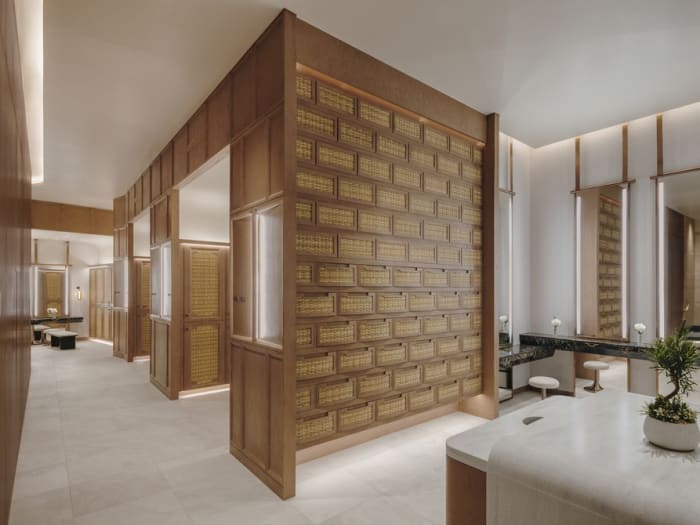
The establishment is grounded in an aesthetic of balance. The fusion of tradition and modernity suggests a decor that is neither coldly international nor folklorically clichéd.
This approach allows for the identity of the place to shine through. It caters to a cosmopolitan audience while respecting the local context.
In a large urban hotel, the fluidity of spaces is as important as the decoration. Light, materials, and the clarity of volumes shape the experience.
The refined and welcoming atmosphere is also worth noting. The refinement is measured by the venue's ability to remain pleasant at all times.
In the morning, during departures. Throughout the day, when spaces accommodate various uses. In the evening, when the hotel must slow its tempo without becoming stagnant.
A successful establishment creates this continuity. It offers areas of respite, well-thought-out seating, controlled acoustics, and efficient reception.
The Fairmont Hanoi thus meets contemporary expectations: that of a hotel capable of being both a place to stay and an anchor point in the city.
Guests seek comfort but also clarity. In a destination as stimulating as Hanoi, this clarity allows for a better enjoyment of the outside world.
Couples will find an elegant base for exploring the capital. Business travellers will appreciate the centrality and structured service. Families will benefit from a clear and reassuring environment.
Rooms and Suites
In an urban hotel of this calibre, the room is the equilibrium point of the stay. In Hanoi, the day can be dense, hot, and noisy. One expects a room to offer more than just a good bed and a well-equipped bathroom; it should provide a transition between the city and oneself. The Fairmont Hanoi naturally embodies this promise: a space designed for rest, recovery, and quiet comfort, without ostentation.
One expects a five-star establishment with this signature to provide quality bedding, studied sound insulation, impeccable maintenance, and an interior layout suited to both short business stays and longer leisure visits. The presence of daily room service and turn-down service supports this expectation. These attentions make a tangible difference. They restore rhythm to the room, keep it fresh, and enhance the sense of continuity typical of well-managed hotels.
The blend of tradition and modernity can find a fitting expression here. In the rooms, this balance works when it remains subtle: a calming palette, contemporary lines, discreet local references, and materials that evoke the Vietnamese context without caricaturing it. International travellers often appreciate this restraint. They seek a room that discreetly tells them where they are while meeting expected comfort standards. In a city as vibrant as Hanoi, this controlled sobriety often has more impact than overt theatricality.
The suites cater to a different use of the stay. They allow for hosting, working more comfortably, and prolonging the sensation of inhabiting the city. For long stays, trips that blend business and leisure, or family travels, this category becomes relevant. What matters is not just the additional space, but the quality of its distribution: separation of functions, fluid circulation, the possibility to isolate oneself, read, work, or rest without friction. A successful large hotel understands that luxury often resides in ease.
The rooms at the Fairmont Hanoi meet the expectations of a diverse clientele. Business travellers seek a clear environment, good lighting, simple connectivity, and responsive service. Couples prioritise atmosphere, tranquility, and the feeling of being shielded from external commotion. Families primarily look for practicality, flexibility, and the quality of support provided by the staff. When a hotel satisfies these simultaneous needs, it often reflects a sound design and rigorous management.
Ultimately, the success of a room in Hanoi lies in an almost invisible quality: the ability to make one forget the effort of travel. After a long-haul flight, a day of sightseeing, or a series of meetings, one expects to find a space that is immediately comprehensible, temperate, orderly, and ready for use. The Fairmont Hanoi aligns with this logic of controlled comfort. More than just decor, it offers a stay experience founded on consistency, discretion, and attention to the details that truly matter. This is often what one remembers about a beautiful room: not what it displayed, but how it accompanied the stay without ever complicating it.
Dining
In a major Asian capital, a hotel’s dining offer faces a particular challenge: it must exist alongside a city whose culinary culture is already one of the reasons to travel there. Hanoi belongs to that category of destinations where one eats as much to understand the city as for pleasure. Pavements, small stalls, markets, cafés and more established restaurants form a remarkably rich gastronomic landscape. In that context, a five-star hotel’s dining cannot merely be convenient; it must offer a complementary reading, more composed, more structured, sometimes more international, but always relevant.
Fairmont Hanoi, by virtue of its positioning, seems well placed to play precisely that balancing role. One may expect from such an address an offer able to accompany different moments of the day: breakfast designed for varied travel rhythms, an efficient lunch option for business stays, a calmer dinner setting for those wishing to remain on site, not to mention the intermediate pauses that matter greatly in a warm and active city. Luxury here often lies in availability and consistency. Knowing that one can have an early coffee, arrange an informal meeting, return to a comfortable setting after a dense day, or dine without leaving the hotel is part of the experience.
The editorial interest of the property also lies in the possibility of a cuisine that allows local references and international standards to converse. It is often in this articulation that urban hotels are at their strongest. Travellers want to discover Hanoi, but they also appreciate an establishment capable of translating certain Vietnamese codes into a calmer framework, with more structured service and reliable execution. This does not mean reproducing the street inside the hotel; it means offering another tempo, another way of approaching flavour, better suited to a business meal, a late arrival or a morning when one prefers to begin gently.
Breakfast, in particular, is revealing. In a hotel at this level, the issue is not simply abundance, but legibility, freshness and rhythm. Some guests will seek international reference points, while others will want to try more local preparations; the best properties accommodate both without confusion. This ability to welcome different expectations is especially important in a hotel suited to both business and leisure stays. It reflects a precise understanding of actual guest habits.
In the evening, hotel dining serves another function. It becomes a space of deceleration. After the intensity of Hanoi, one values a setting where conversation becomes possible again, where service accompanies without interrupting, and where lighting and acoustics contribute to comfort as much as the plate itself. Even without detailed information on the restaurants, one can say that an address such as Fairmont Hanoi will be judged as much on this sense of atmosphere as on its culinary proposition. In the five-star segment, the dining experience is always holistic: it depends on the place, the rhythm, the precision of the welcome and the ability to make the meal feel effortless, even when carefully executed.
For travellers, the appeal is clear: being able to alternate between the city and the hotel without feeling one is sacrificing either. Going out to explore the local scene, then returning to a calmer table; beginning the day in a structured setting before plunging into the city’s energy; arranging a business meeting in a legible environment; extending the evening without additional logistics. In that sense, dining at a hotel such as Fairmont Hanoi is not merely an ancillary service, but one of the tools that make a stay smoother, more comfortable and ultimately more in tune with the city around it.
Wellness & Rhythm of Stay
In Hanoi, this aspect takes on particular significance. The city is captivating, yet it demands a great deal from its visitors. The climate, traffic, noise levels, and visual intensity, along with appointments and sightseeing, shape the daily experience. Luxury also lies in enabling the traveller to remain open to what they are experiencing.
The Fairmont Hanoi primarily offers an environment conducive to recovery. A refined and welcoming atmosphere promotes a better balance. One breathes more easily in a thoughtfully designed space. One recovers more effectively in a tranquil setting. Sleep improves when the transitions of the day are seamless.
Hotel wellness often begins here. It is built upon the coherence of the spaces, the quality of service, and the establishment's ability to minimise the invisible frictions of the stay.
For business travellers, this function is essential. A centrally located, well-organised hotel with 24-hour reception and concierge services helps to mitigate the effects of time zone changes, programme alterations, and long days.
For leisure travellers, wellness takes on a different form. It is about rediscovering availability. One enjoys a demanding city more fully when returning to the hotel remains simple, calm, and restorative.
The turn-down service is part of those discreet gestures that alter the perception of the stay. It prepares for the evening, marks a transition, and instils a sense of continuous care.
Similarly, the daily housekeeping service maintains a commendable level of freshness in warm or humid climates. These details directly contribute to the physical quality of the stay.
In Hanoi, it is invaluable to be able to slow down without feeling disconnected from the journey. A good urban hotel allows for this breathing space. One can dedicate a slower morning, take a break between outings, and then find a more personal rhythm.
The Fairmont Hanoi thus embodies a wellness philosophy supported by the quality of its environment, the continuity of its service, and the clarity of its operations. In a city as vibrant as Hanoi, this ability to protect the traveller's energy is as important as any other aspect of the stay.
Concierge & Services
What often sets a truly exceptional hotel apart from one that is merely comfortable is the quality of its service infrastructure. When considered individually, each of these services may seem expected in a five-star establishment; however, together they create a particularly valuable experience in an international capital like Hanoi. The 24-hour concierge service is undoubtedly one of the most essential offerings. In a city that some may be discovering for the first time, where the rhythms can be surprising, having a point of contact who can guide, book, recommend, or resolve unexpected issues profoundly changes the experience. The concierge is not merely there to fulfil requests; they serve as an interface between the traveller and the city. They help transform a potentially complex destination into a smoother, more intelligent, and better-calibrated journey. This is especially useful in Hanoi, where the choice of timing, route, or neighbourhood can significantly impact the quality of one’s day. The 24-hour reception addresses another reality of contemporary travel: late arrivals, early departures, changes in plans, and needs that do not adhere to administrative hours. In luxury hospitality, this continuous availability is not just a convenience; it represents a form of security. Guests can rest assured that the hotel remains operational at all hours, allowing them to ask questions, retrieve luggage, request assistance, or simply be welcomed with the same quality of presence, regardless of the time. The daily housekeeping and turn-down service contribute to this sense of consistency. They remind us that a successful stay often hinges on the repetition of well-executed gestures. A room tidied with care, a bed prepared for the night, attention to practical details: all of this alleviates the mental load of the traveller. In a bustling, warm, and sometimes demanding city, this regularity becomes a true luxury. It allows guests to conserve energy for what truly matters: exploration, work, and connections. The luggage storage and laundry services may be more discreet but are essential nonetheless. The former provides flexibility in stay schedules, particularly on arrival and departure days. The latter quickly becomes indispensable for extended stays, business trips, or longer itineraries across Asia. As for the wake-up service, it remains highly relevant in a world saturated with technology: when a flight, meeting, or early excursion truly matters, many travellers still appreciate the reliability of a human reminder integrated into the hotel’s organisation. Finally, the presence of multilingual staff is an important marker. It is not merely a matter of courtesy; it conditions the accuracy of exchanges and thus the actual quality of service. In an international hotel, understanding a request, preference, or constraint makes all the difference. It avoids misunderstandings and allows for more precise personalisation. Overall, the Fairmont Hanoi seems to stand out with a clear promise of service: to make the stay simple without rendering it impersonal. This is a rare quality. The best hotels know that excellence is not always spectacular; it often resides in the ability to anticipate, to remain available, and to resolve issues calmly. For the traveller, this translates into a smoother, more serene, and more controlled experience — exactly what one expects from a premier urban address.
The art of living in Hanoi
Staying at Fairmont Hanoi also means choosing a certain way of entering Vietnam’s capital. Hanoi does not reveal itself all at once. It is understood through contrasts, repetitions and details. There are broad avenues and narrow lanes, lakes and streams of traffic, official buildings and pavement scenes, quiet cafés and more restless markets. The local art of living cannot be reduced to a list of sights; it lies in a way of inhabiting time. People rise early, observe a great deal, pause often, and learn to work with heat, noise and density. A well-located hotel in the heart of the city therefore becomes a valuable tool for entering that rhythm without being overwhelmed by it.
One of Hanoi’s pleasures lies in its ability to sustain several tempos at once. Mornings often belong to walkers, workers and already lively cafés. During the day, the city gathers intensity. In the evening, it changes texture again, with busy tables, softer light and traffic still very much present. For travellers, the challenge is not to see everything, but to understand when and how to experience each moment. A central address such as Fairmont Hanoi allows precisely that finer approach. One can go out early, return to rest, then set out again. One can devote half a day to a neighbourhood and then change atmosphere without turning every move into an expedition.
This flexibility is essential in Hanoi, because the city rewards visitors who accept slowing down. One must allow time for a coffee, a walk around a lake, a lunch not overburdened by plans, a careful observation of daily life. The elegance of a stay here lies less in accumulation than in quality of presence. From a refined and welcoming hotel, that availability becomes more natural. One is not struggling with logistics; one is freer to choose one’s sequences, pauses and discoveries.
Another advantage of a property suited to both business and leisure stays is that it reflects the very nature of Hanoi. The city is not only patrimonial or touristic; it is also active, administrative, intellectual and economic. One encounters travellers who have come to sign, meet and negotiate as much as those who have come to visit. This plurality gives the capital a particular tone, perhaps more serious than some other major cities in the region, but also more layered. A hotel capable of accompanying these different uses helps one grasp that complexity more clearly.
For a French visitor, Hanoi may carry historical, architectural or cultural resonances. Yet to reduce the city to that single reading would be to miss its present. Hanoi’s art of living is alive, mobile and everyday. It is expressed in neighbourhood habits, in the relationship to the street, in the attention paid to meals, in the coexistence of the ceremonial and the entirely ordinary. A successful stay therefore alternates between reference points and surprises: a stable hotel framework on one side, the city in all its vitality on the other.
That is where Fairmont Hanoi finds its proper place. Not as an isolated décor, but as an elegant base from which Hanoi becomes more accessible. The hotel makes it possible to filter the city without softening it, to discover it in comfort without losing its intensity. For many travellers, that is exactly the right distance: enough protection to recover well, enough openness to feel the capital properly. And it is often in that balance that the most memorable stays are made.
Book with MyConciergeHotel
Booking Fairmont Hanoi through MyConciergeHotel means approaching the stay not as a simple transaction, but as an intelligent preparation for travel. In a destination such as Hanoi, that difference matters. The quality of an experience depends not only on the hotel chosen; it also depends on how the stay is shaped in advance, on the right decisions made before arrival, on requests expressed at the right moment and on expectations clarified early. A central, refined hotel suited to several traveller profiles already provides an excellent base. The remaining question is how best to use it according to the nature of the trip.
The value of concierge-style support begins precisely there. For a couple’s stay, it may mean prioritising the right rhythm: arrival timing, the organisation of the first hours, suggestions for outings easily reached from the hotel, and a balance between discovery and rest. For business travel, the issue is more likely to be fluidity: late arrival, early departure, laundry needs, luggage logistics and specific requests linked to a schedule. For families, the focus will often be on ease of execution, clarity of services and anticipation of the more sensitive moments of the stay. In every case, booking through an editorial and concierge intermediary helps turn a good address into a better-adjusted stay.
The advice already present in the short description — to book activities in advance — is especially relevant in Hanoi. A central, lively and attractive city often leads to dense days, and certain requests are better organised before departure. This does not mean fixing the entire trip in place; it means securing the essentials so as to preserve freedom afterwards. A well-considered booking should leave room for spontaneity while avoiding unnecessary friction. That is exactly the spirit of effective concierge service: to simplify without making things rigid.
Booking through MyConciergeHotel also means benefiting from an editorial reading of the property. Not all five-star hotels offer the same experience, even when they share a comparable level of standing. What makes the difference is the fit between the address and the travel project. Fairmont Hanoi will particularly suit those seeking a central location, a refined atmosphere and a framework capable of supporting both business stays and moments of urban discovery. That clarity of positioning is valuable at the moment of choice.
Another advantage lies in the ability to anticipate the details that genuinely affect comfort on site: arrival time, concierge needs, luggage handling, departure organisation and specific requests linked to the rhythm of the stay. In luxury hospitality, such elements can seem secondary from home; once on site, however, they become decisive, especially after a long-haul flight or in a high-intensity city such as Hanoi. The better they are prepared, the more fluid the experience feels.
Ultimately, booking Fairmont Hanoi through MyConciergeHotel means choosing a double promise: that of a well-located major urban address, and that of a stay planned with discernment. For the traveller, it is a way of gaining serenity before departure itself. And on a long-haul journey, that serenity is never incidental: it shapes one’s availability, pleasure and the real quality of the days spent there.