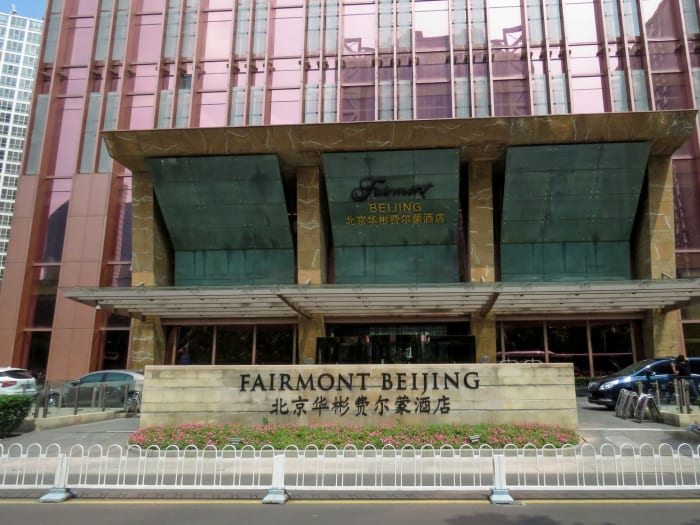
History & heritage
In Beijing, heritage is never only about the age of a building. It is equally about the way an address belongs to the city and its ability to reflect the ongoing dialogue between imperial tradition, economic modernity and contemporary cosmopolitan life. Fairmont Beijing belongs to that category of hotels that do not need centuries of history to claim a certain legitimacy. Its heritage is first that of a major international hotel brand, associated with a precise art of hospitality, a highly codified sense of detail and a sophisticated reading of the world’s great capitals.
In the context of Beijing, this identity takes on particular meaning. Beijing is a city of layers: palaces, hutongs, broad administrative avenues, glass towers, business districts and shopping areas coexist without ever fully blending into one another. Staying at Fairmont Beijing therefore means choosing an address in direct contact with this urban, active and international China, while retaining the codes of a refined luxury hotel. The property speaks as naturally to business travellers as it does to visitors discovering the capital, and this dual vocation is part of its character.
The heritage of a hotel such as this is also expressed through the atmosphere it creates. The aim here is not to reconstruct a historical setting or multiply decorative references for their own sake. The promise is subtler: to offer an orderly, elegant and legible refuge in a dense, fast-moving and often spectacular metropolis. In a city where days may alternate between meetings, transfers, cultural visits and late dinners, the value of an address is measured by its ability to create rhythm, comfort and continuity.
Fairmont Beijing thus belongs to a grand urban hotel tradition in which efficiency does not exclude refinement. Service plays a central role. A round-the-clock front desk, 24-hour concierge, daily housekeeping and turndown service all contribute to the culture of hospitality that defines accomplished international hotels. For the traveller, this consistency matters: it turns the hotel into a reliable anchor point, almost a temporary residence, in the heart of a capital whose scale can be impressive.
The hotel can also be understood as part of a period in which Beijing asserted itself as a major global destination, both economic and cultural. Hotels of this calibre became places of passage, rendezvous and transition between several worlds: business, high-end leisure travel and international mobility. That very contemporary role forms its true heritage. Not the telling of a fixed past, but the ability to accompany a city in motion with seriousness, discretion and a genuine sense of hospitality.
For a European traveller, the address is especially legible. It does not overplay exoticism or rely on theatrical staging. Instead, it offers an urban interpretation of luxury built on comfort, fluidity and dependable reference points. In a capital as vast as Beijing, that quality of presence matters as much as architecture or decoration. It is often what guests remember most: the feeling of having found a place capable of structuring the stay, calming it and giving it coherence.
The hotel
Fairmont Beijing’s first strength is its location. Being in the heart of Beijing, close both to major attractions and to business districts, is not merely a practical advantage: it is a way of experiencing the city in all its complexity. Beijing is not a destination grasped in a single glance. It reveals itself in sequences, contrasts and movements. A well-placed address makes it possible to orchestrate that experience, reducing transition time and allowing for days that are more flexible, richer and better balanced.
From the hotel, travellers can approach the capital according to several rhythms. There is first the rhythm of business, very present in this part of the city, with its towers, corporate headquarters, early meetings and working dinners. Then there is the rhythm of discovery, leading towards Beijing’s major landmarks, shopping avenues, older districts and cultural institutions. Finally, there is the more intimate rhythm of the stay itself: returning to the hotel, finding a controlled environment, pausing between obligations and regaining one’s breath before setting out again.
That role as an urban pivot is essential. In a metropolis of this scale, a grand hotel does more than provide accommodation; it shapes the relationship to the city. Fairmont Beijing appears to answer that requirement by offering a base that is both central and protective. One comes here less for isolation than for balance: to remain connected to Beijing without constantly absorbing its intensity. It is an important nuance, and no doubt one of the reasons the address suits both business stays and leisure breaks.
The overall atmosphere, as suggested by the existing description and known services, rests on an idea of urban sophistication. Public areas are designed to inspire confidence and calm, with the discreet elegance expected of an international five-star hotel. Multilingual staff, a 24-hour front desk and round-the-clock concierge service reinforce that sense of fluidity. For travellers arriving late, leaving early or navigating multiple demands, such continuity is not incidental: it directly shapes the quality of the stay.
Fairmont Beijing may therefore be understood as an address of controlled transition. Guests arrive after a long-haul flight, prepare for a dense day and return after crossing the city. This ability to absorb the variations of travel is one of the hallmarks of a good capital-city hotel. It requires solid organisation, a fine reading of international expectations and a certain restraint in staging. Luxury here does not need to be loud; it is expressed in the ease with which everything seems to unfold.
For couples, the hotel offers a coherent starting point from which to explore Beijing without unnecessary dispersion. For families, it provides a structured and reassuring setting, with services that simplify logistics. For business travellers, it answers another kind of requirement: that of a place supporting the programme rather than complicating it. Such versatility is often difficult to achieve. When successful, it gives a property real depth of use.
Ultimately, Fairmont Beijing is defined not only by its address on a map, but by the way that address shapes the stay. In a city as vast as Beijing, being close to major attractions and business centres means offering time, flexibility and greater control over the journey. In luxury hospitality, those are often the qualities that make the most lasting difference.
Rooms and suites
In a grand city hotel, the room is never merely a place to sleep. It is the true counterpoint to the city: a space in which to withdraw, reorganise the day and recover a sense of intimacy after the monumental scale of Beijing. At Fairmont Beijing, one may reasonably expect rooms and suites to extend the property’s overall philosophy: controlled comfort, contemporary elegance and a strong sense of service. In this kind of address, what matters is less effect than use. A successful room accompanies every moment of the stay, from a wake-up still affected by jet lag to a late return after dinner or a meeting.
Daily housekeeping and turndown service contribute greatly to that sense of continuity. These gestures, sometimes seen as classic in luxury hospitality, take on particular importance in a long-haul destination. They structure time, restore the room at the right moment and create a feeling of discreet yet constant care. For the business traveller, this means returning to a space ready for use despite a dense schedule. For the leisure guest, it is the assurance of a welcoming refuge after several hours spent in the city.
One imagines volumes designed to answer varied needs: working in good conditions, genuinely resting, reading, planning an itinerary or perhaps receiving an informal appointment. In a capital where days can be long and distances significant, the room must offer more than a comfortable bed; it must become a functional, calm and coherent environment. This is especially true of suites, which generally add a residential dimension that is valuable during longer stays or trips combining professional obligations with personal time.
The interest of a hotel such as Fairmont Beijing also lies in its ability to speak to several traveller profiles without losing its unity. A couple will seek above all the impression of an urban cocoon, conducive to rest between explorations. A family will appreciate legible spaces and reliable organisation. A solo traveller, particularly on business, will be sensitive to ease of use, dependable service and the feeling of being expected. The best rooms in international hotels know precisely how to answer these multiple expectations without becoming impersonal.
In Beijing, acoustic and visual comfort also matter. Even without detailing unconfirmed features, one may say that a well-designed room in this context should filter the density outside without entirely severing the sense of being in the city. That balance is what makes great urban addresses successful: allowing guests to feel the capital while also being protected from it. Travellers have not come to isolate themselves from the world, but to choose when and how they engage with it.
Suites, when one opts for a higher category, often fulfil this role with even greater ease. They allow for a clearer separation of the stay’s different moments, the hosting of an informal meeting, the extension of a period of rest or simply a more expansive way of inhabiting the hotel. In a city like Beijing, where one may combine cultural visits, appointments and travel time in a single day, that quality of space has very tangible value.
Ultimately, the rooms and suites at Fairmont Beijing should be seen as instruments of urban comfort. They do not necessarily seek to impress through ornament, but to provide a stable, fluid and reassuring experience. That is often what one expects most from a well-located five-star hotel: a place where one sleeps well, works well and breathes more easily. In the memory of a journey, that kind of obvious comfort matters more than many spectacular effects.
Dining
In a capital such as Beijing, hotel dining is never merely a convenience. It answers several very different needs: breakfast before a day of meetings, a quick lunch between appointments, a more settled dinner when one prefers to avoid further travel, or a moment of retreat after a late arrival. In a property such as Fairmont Beijing, dining must therefore be understood as an essential component of the overall experience, on a par with the room and the service. Even without detailing unconfirmed concepts, one may say that a five-star hotel of this level is expected to provide food and beverage options capable of following the varied rhythms of its guests.
In the morning, the key issue is accuracy. A good hotel breakfast in a major international metropolis should be both efficient and pleasurable, sufficiently varied to suit guests from different backgrounds while remaining clear and well organised. In Beijing, where days often begin early, this first moment matters greatly. It sets the tone, helps travellers regain their bearings after jet lag and establishes an immediate sense of comfort. For leisure guests, it is also a time of observation: one senses the life of the hotel, the mix of profiles and the discreet movement of a well-run address.
The rest of the day calls for a different approach. In high-end urban hotels, dining must know how to alternate between formality and flexibility. Some guests seek a setting suitable for a professional meeting; others simply want a reliable, well-executed meal without leaving the property. This versatility is particularly relevant in Beijing, where distances and traffic can turn an outside dinner into a logistical sequence. The quality of a hotel table is then measured by its ability to offer a real solution, not merely a default option.
One also expects an international address to engage intelligently with its surroundings. In Beijing, that ideally means a sensitivity to the local culinary scene, its codes, flavours and customs, while remaining accessible to a cosmopolitan clientele. The right balance lies not in display, but in the intelligence of the offer: providing reassuring reference points, leaving room for discovery and maintaining impeccable consistency. In luxury hospitality, gastronomy is not only about signature; it is also about trust.
Service plays a decisive role here. An attentive team, capable of adapting to international rhythms, understanding time constraints and maintaining constant quality, profoundly shapes the dining experience. In a hotel where concierge and front desk operate around the clock, that culture of availability generally extends throughout the house. The meal then becomes a frictionless moment, which is often more valuable than any stylistic effect.
For couples, the hotel table may offer an elegant pause after a day in the city. For business travellers, it provides comfort and efficiency. For families, it simplifies organisation while preserving a certain level of expectation. This ability to answer different needs without becoming diffuse is one of the signs of well-conceived hotel dining.
At Fairmont Beijing, gastronomy should therefore be seen as a natural extension of the stay: a structuring service, a breathing space and sometimes even a refuge. In a city as intense as Beijing, being able to rely on a serious, flexible and coherent hotel table is far from incidental. On the contrary, it is one of the elements that gives the journey its fluidity and the address its true practical value.
Spa & wellness
In a city such as Beijing, wellness in a hotel is not a decorative extra; it is a matter of rhythm. Travelling to China often involves a long-haul flight, significant jet lag and immediate immersion in a dense, energetic and sometimes demanding capital. In that context, spaces and rituals devoted to rest take on a very practical dimension. Even without detailing unconfirmed facilities, one may say that a five-star property such as Fairmont Beijing is expected to offer moments of recovery, recentring and physical release.
Wellness in a grand urban hotel actually begins before the spa in the strict sense. It can be felt in the fluidity of arrival, the quality of sleep, the attention paid to the room at the end of the day and the possibility of returning to a calm environment after several hours outside. Turndown service, the regularity of daily housekeeping and the presence of teams available at all hours already form part of this logic. They reduce the mental load of travel and allow body and mind to readjust more quickly.
If one considers the stay through the lens of wellbeing, Beijing presents an interesting paradox. The city is highly stimulating: heritage, architecture, economic life, traffic and cultural contrasts. Yet that intensity calls in return for spaces of deceleration. That is precisely the role of a spa or a well-conceived wellness offering in a hotel of this category. The point is not merely to provide treatments, but to introduce breathing spaces into the stay. An hour devoted to oneself can transform the perception of an entire day, especially when one alternates visits, appointments and transfers.
For business travellers, this dimension is often underestimated even though it is essential. A treatment, a moment of relaxation or simply access to a soothing environment can help restore clarity after a flight or before a sequence of meetings. For couples, wellness becomes shared time, a way of slowing down together in a city that naturally encourages acceleration. For families, it can be a discreet yet valuable resource: the ability to create pauses and preserve the balance of the stay.
In luxury hospitality, the true luxury of wellness often lies in quality of execution rather than accumulation. A well-judged atmosphere, attentive welcome, clear protocols and an impeccable sense of order and cleanliness: these are the elements that matter over time. Travellers seek less a spectacular promise than a reliable experience capable of producing a real effect on fatigue and accumulated tension. In Beijing, that expectation is particularly legitimate.
Wellness may also be seen as a way of inhabiting the city more fully. Resting properly, recovering between sequences and making room for pauses are what allow one to see more and feel more. A hotel that understands this does not treat wellness as a secondary department, but as part of the overall experience. It helps the traveller sustain the pace, preserve availability and remain receptive.
At Fairmont Beijing, the idea of wellbeing therefore fits naturally within a broader promise of urban comfort. Whether through a structured moment of relaxation or a collection of discreet attentions, the objective remains the same: to make the hotel a place where one genuinely recovers. In a capital as vast and stimulating as Beijing, that ability to restore energy is one of the most valuable services a five-star hotel can offer.
Concierge & Services
What sets a great urban hotel apart is not only its location or the comfort of its rooms, but the quality of its daily services. At the Fairmont Beijing, the 24-hour reception, 24-hour concierge, multilingual staff, luggage storage, laundry service, wake-up calls, daily housekeeping, and turndown service create a clear promise. Together, these services define a true infrastructure of serenity, particularly valuable in a city as vast and bustling as Beijing.
The concierge plays a central role. In a capital where distances, schedules, language, and urban density can complicate arrangements, having a point of contact available at all hours transforms the experience of the stay. The concierge helps to bring order to the journey. They can guide, confirm, recommend, and facilitate. For a visitor discovering Beijing, this mediation is reassuring. For a regular business traveller, it becomes a time-saver.
The continuously open reception meets the reality of international travel. Late arrivals, early departures, changes in plans, and the need for assistance require constant presence. In a hotel of this calibre, the permanence of service is a condition of trust. The traveller must feel that the establishment can absorb unforeseen circumstances without friction.
The multilingual staff also deserves special mention. In a destination like Beijing, the ability to communicate clearly is a decisive factor in comfort. It reduces misunderstandings, facilitates special requests, and allows the guest to focus on their stay. In luxury hospitality, this relational ease is an integral part of the service.
The more discreet services are often the most useful. Luggage storage allows guests to make the most of their first or last day. Laundry services become essential during extended trips, business travel, or multi-destination itineraries. Wake-up calls remain a reliable support when schedules are tight. Daily housekeeping and turndown service ensure the silent continuity that keeps the room ready and tidy.
For families, this array of services simplifies organisation. For couples, it frees up time and attention. For business travellers, it creates a more efficient environment. This is one of the strengths of well-managed hotels: they enhance the stay without becoming intrusive.
At the Fairmont Beijing, these services form a mechanism of hospitality. Their aim is to make travel smoother, clearer, and more comfortable. In a city where the external intensity can be overwhelming, this quality of support makes a difference. It transforms the hotel into a base for stays, suitable for both business trips and urban explorations.
The Beijing way of life
Staying at Fairmont Beijing also means choosing a certain way of entering Beijing. The city does not reveal itself like an immediately legible postcard; it requires time, attention and a degree of inner availability. Its way of life lies precisely in the coexistence of very different registers: imperial monumentality, neighbourhood life, the modernity of business districts, tea culture, grand dining rooms, parks, immense avenues and more secret lanes. A well-located hotel makes it possible to move between these dimensions without losing the thread of the stay.
For European travellers, Beijing may first impress through its scale. Yet the city soon reveals a subtler logic. It is discovered as much in its major sites as in its transitions: a morning journey, a pause in a café, a late-afternoon walk, the contrast between a contemporary avenue and an older urban fabric. The value of a central address such as Fairmont Beijing lies precisely in making these passages more accessible. One can organise the day around a major cultural visit, a professional sequence or a period of shopping, then return to the hotel before going out again for dinner or an evening engagement.
The Beijing way of life also means accepting the city’s rhythm. There are moments of density, flows, schedules and the highly visible energy of the capital. And then there are breathing spaces: a garden, an inner courtyard, a calm table, a tea moment, a particular light at the end of the day. A good stay in Beijing does not consist in seeing everything, but in alternating intelligently between intensity and retreat. This is where a grand hotel plays a decisive role. It becomes the place where impressions are sorted, pauses are taken and the next step is decided.
For lovers of culture, the city offers almost inexhaustible depth. For business travellers, it presents the most assertive face of contemporary China. For couples, it can be unexpectedly romantic, provided one does not look for that quality in the same way as in other capitals. Its charm often arises from contrast, distance and the feeling of being in contact with immense history while observing a very concrete modernity. For families, Beijing is a city of discoveries, perspectives and narratives, provided time for rest is preserved.
From this perspective, the hotel is not separate from the local way of life; it is one of its tools. It makes it possible to experience Beijing without exhaustion, to retain a degree of flexibility and to compose a personal stay rather than a mechanical programme. Proximity to major attractions and business districts provides exactly that freedom. One can leave early, return, go out again and improvise more. In a city of such scale, that freedom is valuable.
Fairmont Beijing suits this approach well because it appears to assume a clear position: offering a sophisticated, welcoming and professional setting in the heart of the capital. It does not pretend to summarise Beijing on its own; rather, it helps guests approach the city under good conditions. That is often the best definition of a great city hotel. It does not erase the destination; it makes it more inhabitable.
Ultimately, the Beijing way of life rests on a quality of attention. Looking at the city, accepting its contrasts, knowing how to pace one’s time and alternating between different registers. A successful stay depends less on accumulation than on the right rhythm. From an address such as Fairmont Beijing, that rhythm becomes easier to find. And perhaps that is where the true luxury of travel begins.
Book with MyConciergeHotel
Booking Fairmont Beijing through MyConciergeHotel means approaching the stay with a logic of comfort even before arrival. In a destination such as Beijing, where preparation matters almost as much as the journey itself, the quality of support beforehand makes a real difference. The point is not merely to confirm a room in a well-located five-star hotel; it is to build a coherent framework for the stay, adapted to the purpose of the trip, its duration and the rhythm desired on site.
The value of assisted booking becomes particularly clear in a major international capital. A stay in Beijing may combine several objectives: cultural discovery, business travel, a couple’s escape, a family trip or a stop within a wider Asian itinerary. Each of these scenarios calls for different choices. Should one prioritise transfer fluidity, flexible timings, proximity to certain districts, the possibility of preserving rest periods, or the organisation of the first days to absorb jet lag? A thoughtful booking concierge helps ask exactly these questions.
In the case of Fairmont Beijing, the strengths of the address are legible: a central position, proximity to major attractions and business districts, suitability for both leisure and professional stays, and continuous service. Booking through MyConciergeHotel makes it possible to place these qualities in relation to the actual programme. A couple staying for a few days will not use the hotel in the same way as an executive on business or a family on an urban stopover. The issue is therefore not only to book, but to book well.
This editorial and concierge approach is especially valuable in luxury hospitality. Hotels of this category offer a high level of service, but not all of them answer a given need with the same relevance. What matters is the fit between the address and the journey. In Beijing, that fit may concern time management, the simplicity of each day, the quality of returning to the hotel after outings, or the ability to alternate effectively between obligations and discovery. Good advice beforehand avoids many approximations.
Booking with MyConciergeHotel also means benefiting from a perspective that goes beyond simple pricing logic. True luxury does not consist only in obtaining a room; it lies in making the right choices for the stay, at the right moment, with the right level of anticipation. In a city where distances, seasons and events can influence the experience, that preparation has concrete value. It allows guests to arrive with a clearer programme, better-calibrated expectations and a greater sense of control.
For business travellers, this may mean a smoother stay, better aligned with the agenda. For couples, a more harmonious break with more useful time on site. For families, lighter and more serene organisation. In every case, booking becomes a first stage of the hotel experience rather than an administrative formality.
Fairmont Beijing lends itself well to this logic because it answers varied uses while retaining a clear identity. Booking this address through MyConciergeHotel therefore means choosing more than a hotel: it means choosing a way of entering Beijing with method, flexibility and discernment. And in a capital of this scale, that quality of preparation is already a form of privilege.