History & heritage
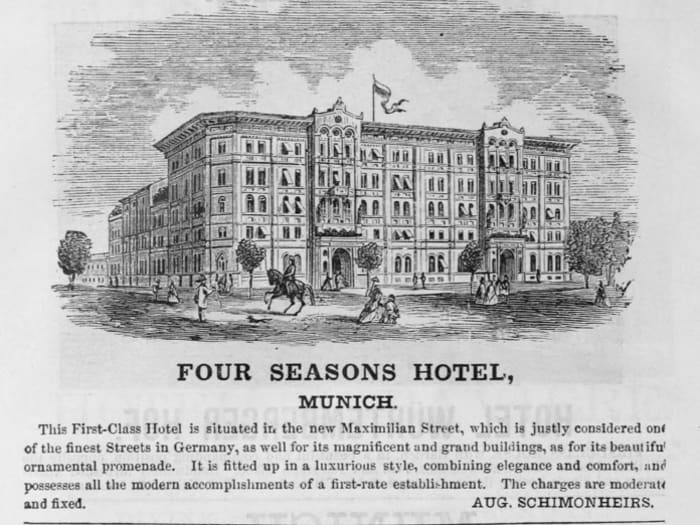
In Munich, some hotels do more than provide a comfortable place to stay: they become part of the city’s own narrative. Hotel Vier Jahreszeiten Kempinski Munich belongs to that category of addresses that are woven into the urban fabric as much as into the local imagination. Its name, firmly rooted in European hotel history, evokes a certain idea of the grand city hotel: a house designed to receive, represent and accompany the rhythms of a regional capital where culture, commerce and civic life meet.
The property is first defined by its classical architectural language, which immediately sets the tone. Luxury here is not about theatrical effect; it is expressed through permanence, proportion, well-kept public rooms and that distinctly continental way of combining prestige with restraint. Guests quickly understand that they are entering a hotel of tradition, yet a living tradition, continually adapted to contemporary expectations. It is precisely this blend of tradition and modernity, one of the hotel’s known hallmarks, that shapes its identity.
In a city such as Munich, where Bavarian history remains highly visible in façades, institutions and everyday rituals, a hotel of this kind often serves as a bridge. It welcomes visitors drawn by museums, the opera and major shopping streets, as well as business travellers attracted by the city’s economic energy. That dual purpose is not incidental: it informs the atmosphere of the house. One senses both the gravitas of a historic grand hotel and the ease of an international address accustomed to short stays, important meetings and the return of loyal guests.
The Kempinski heritage adds another layer. The brand is associated with high-end European hospitality, attentive service, discreet formality and consistency of experience. In that context, Hotel Vier Jahreszeiten Kempinski Munich does not feel like a static period setting, but rather like an address that has learned how to move through time without abandoning its core codes: elegance, centrality, hospitality and mastery of visible and invisible detail.
What is especially striking is the way the hotel seems to converse with Munich itself. The city cultivates a rare balance between historical grandeur and contemporary efficiency; the property offers a convincing hotel expression of that same balance. The elegantly decorated public spaces, classical architecture and refined atmosphere are not merely aesthetic choices. They speak to a particular idea of the high-end urban stay, where one comes not only for location but to inhabit a place. For the traveller, this heritage is felt less as a narrative than as an obvious truth: that of a house long established in the heart of the city and in the habits of those who know it well.
The Establishment
Staying at the Hotel Vier Jahreszeiten Kempinski Munich means choosing a prestigious address in the heart of Munich. The establishment serves as a coherent base for exploring the city on foot, seamlessly combining meetings and sightseeing, or simply enjoying a central location with true comfort.
The first impression is made through elegantly decorated communal spaces. In a grand city hotel, they set the tone upon arrival. Here, elegance prioritises coherence over spectacle. The decor subtly enhances the experience, catering to business travellers, couples, and families alike.
The classic architecture reinforces this impression. It places the hotel within a tradition immediately associated with Munich and the great capitals of Central Europe. The building and its interiors suggest a reassuring continuity, appreciated in a bustling urban environment. The address filters the city's intensity without isolating itself from it.
The proximity to cultural and historical sites further enhances the appeal of the location. For a first-time visit to Munich, the hotel simplifies travel arrangements. For regular visitors, it offers an efficient base close to institutions, shops, and cultural life. This convenience allows for a fluid alternation between sightseeing, relaxation, dining, or attending a concert.
The overall atmosphere lends itself to both relaxation and work. The interest lies in this balance. The hotel seems designed to accommodate days of varying nature, maintaining the same quality of service and clarity of spaces.
The Hotel Vier Jahreszeiten Kempinski Munich makes its location, architecture, and communal spaces the pillars of a refined urban experience. Here, one stays in the city centre, within a well-ordered, subdued, and controlled environment.
Rooms and Suites
In a hotel of this calibre, the room is never merely a functional space; it represents the second act of the stay. Comfort, silence, rest, and intimacy take on paramount importance.
At the Hotel Vier Jahreszeiten Kempinski Munich, the rooms and suites extend the identity of the establishment. Here, one finds a classic elegance tempered by contemporary furnishings. The decor remains coherent, with daily well-being guiding the overall experience.
This blend of tradition and modernity is reflected in characterful interiors that do not sacrifice functionality. The materials are reassuring, the lines remain understated, and the amenities cater to both business stays and cultural weekends.
One does not expect a display of design here. The room discreetly accompanies the traveller, from unpacking their suitcase to the evening turndown service.
The presence of daily service and a turndown service naturally punctuates the day. In a grand hotel, luxury often lies in these almost invisible interventions. They restore order to the space and prepare for the return to the room.
After a day spent in the city, attending meetings or exploring nearby cultural institutions, this continuity of care transforms the experience.
The suites operate under a different logic. They offer more space and a more residential comfort. In Munich, during events, fairs, or stays that blend work and leisure, this spaciousness makes a significant difference.
Here, one seeks less ostentation and more a way of living at one’s own pace. Whether hosting, working under favourable conditions, or simply feeling settled in a true address.
For couples, the appeal also lies in the atmosphere. Comfort cannot be solely utilitarian. Light, textiles, a sense of order, and aesthetic coherence are as important as square footage.
For families, value is often measured by the ease of the stay. Organisation, service, responsiveness, and the feeling of being anticipated. An establishment accustomed to diverse clientele knows how to adjust this experience without rigidity.
The rooms and suites at the Hotel Vier Jahreszeiten Kempinski Munich thus extend the spirit of a grand classic hotel in the city centre. These are spaces designed for recuperation, work, preparation, slowing down, and finding a sense of calm. In a bustling city like Munich, this stability is as significant as the location.
Dining
In a grand urban hotel, gastronomy plays a more subtle role than one might imagine. It is not merely about a restaurant; it structures the quieter and more vibrant moments of the stay. A well-orchestrated breakfast sets the tone. A lunch on-site avoids unnecessary transitions. An afternoon drink allows for a moment to catch one’s breath. An in-house dinner can sometimes be a valuable option for extending comfort. At the Hotel Vier Jahreszeiten Kempinski Munich, this culinary dimension is integrated into the overall experience. It remains elegant, practical, and tailored to an international clientele.
At the Hotel Vier Jahreszeiten Kempinski Munich, dining accommodates various uses. It follows diverse rhythms: early departures, professional meetings, discreet breaks, late returns, or the desire to stay in after a busy day.
In Munich, the gastronomic scene blends Bavarian traditions, Germanic influences, and international cuisine. A luxury hotel well-established in the city often reflects this plurality. Travellers expect a mastered classicism, but also a contemporary interpretation of their expectations. Attentive service, a well-maintained setting, flexible hours, and adaptation to diverse preferences are essential. In this context, the quality of a dining venue is measured as much by its precision as by its flexibility.
Breakfast deserves special mention. In city centre hotels, it often brings together all types of clientele: hurried regulars, visiting couples, families planning their day, and business travellers between calls. Its success relies on a balance between efficiency and comfort. One expects smooth service, a calm atmosphere, and a presentation consistent with the establishment’s standing. It is often here that the service culture of a venue is most clearly revealed.
Room service also contributes to the broader gastronomic experience. It meets concrete needs: a late dinner after arrival, a snack between meetings, or a more intimate meal to enjoy in one’s room. In a hotel accustomed to an international clientele, this consistency is a hallmark of quality.
Dining at the Vier Jahreszeiten Kempinski Munich is seen as a natural extension of the stay. It complements the city rather than competing with it. This approach is fitting in Munich, amidst cultural institutions, urban strolls, and restful moments at the hotel. Culinary luxury thus hinges on reliability, comfort, and the accuracy of service.
Spa & Well-being
Even when a city hotel is not conceived as a wellness destination, the question of rejuvenation remains central. In Munich, the need for recovery is part of the stay.
At the Hotel Vier Jahreszeiten Kempinski Munich, well-being seems to stem from a general balance. A relative calm, controlled service, orderly spaces, and a more relaxed pace contribute to this.
In such an establishment, comfort is also conveyed through subtle signs. The fluidity of movement, quality of sleep, a well-maintained room, and attentive concierge services all count. Well-being is not always spectacular; it often lies in the precision of the balance.
The most convincing experience often respects the urban nature of the location. It is not about recreating a resort in the city centre. Instead, one expects a credible interlude, suited to travellers who wish to remain connected to Munich while allowing for genuine moments of recovery.
For business travellers, this aspect is essential. A central hotel that offers reliable conditions for rest quickly becomes a reference point. The quality of the stay is then measured by concrete elements: leaving early without stress, returning late without friction, and finding an environment that helps one unwind.
For couples, the wellness dimension takes on a different tone. It leans more towards atmosphere and the possibility of experiencing the stay at a slower pace. In both cases, comfort forms the foundation of the experience.
Contemporary luxury increasingly accommodates this discreet well-being. An attentive team, well-maintained communal spaces, and a room conducive to rest often suffice. In an address like this, classic elegance reinforces the impression of stability, creating a readable environment where one can catch their breath between two city sequences.
At the Hotel Vier Jahreszeiten Kempinski Munich, well-being is thus understood as a transversal quality. It depends on the atmosphere, the discipline of service, and the hotel's ability to offer a calming counterpoint to urban intensity.
Concierge & Services
The true level of a grand hotel is often reflected in the quality of its services. At the Hotel Vier Jahreszeiten Kempinski Munich, everything is clear: 24-hour concierge, 24-hour reception, daily housekeeping, evening turndown service, luggage storage, laundry service, wake-up calls, and multilingual staff.
Taken together, these services create an essential mechanism. They ensure that the stay remains fluid, regardless of arrival time, length of visit, or nature of the trip.
The 24-hour concierge is one of the most significant markers for a city-centre address. In Munich, it serves not only to book a restaurant or arrange a transfer. It helps prioritise the stay's agenda, propose a realistic pace, guide guests to nearby cultural and historical sites, and resolve unforeseen issues.
The continuously open reception complements this promise of continuity. For business travellers, late arrivals and early departures are part of daily life. For leisure visitors, schedules vary according to flights, trains, or cultural programmes.
The daily room service and evening turndown contribute to a quieter comfort. A consistently tidied room with details adjusted at the right moment builds a trustful experience.
Luggage storage and laundry services fall under discreet yet decisive logistics. The former allows guests to enjoy their arrival or departure day fully. The latter addresses a frequent need during urban stays.
The wake-up call service remains a sign of seriousness in establishments attentive to punctuality. Finally, the presence of multilingual staff fosters a more precise, serene, and personalised relationship.
The services at the Hotel Vier Jahreszeiten Kempinski Munich thus paint a portrait of an establishment that understands the demands of contemporary travel. Nothing ostentatious, but reliable, available, and well-articulated provisions.
The Art of Living in Munich
Choosing a hotel in the heart of Munich also means opting for a particular way of experiencing the city. The Hotel Vier Jahreszeiten Kempinski Munich derives a significant part of its appeal from its direct relationship with the urban environment. Its proximity to cultural and historical sites allows one to approach Munich as a coherent ensemble of strolls, visits, and returns to the hotel.
Munich possesses a unique art of living among the major German cities. It features a real institutional density, but also a form of bourgeois gentleness in its customs and rhythms. This combination of seriousness and pleasure, culture and comfort, greatly contributes to its attractiveness. A hotel like the Vier Jahreszeiten Kempinski naturally fits into this logic, offering an environment that allows for a seamless transition from the city to the hotel.
For a first stay, the centrality of the address is an obvious asset. It facilitates the exploration of historical landmarks, shopping districts, and cultural institutions that give Munich its character. One can imagine a day starting early, with a walk to the iconic sites in the centre, followed by a return to the hotel before heading out again in the evening. This ability to compose the day in sequences fully contributes to the pleasure of travel.
For regular visitors, the interest is different but equally real. A central hotel allows for a quick reacquaintance with familiar landmarks, efficient work between meetings, a pause in the middle of the day, or enjoying a cultural evening without worrying about long transfers. In a city marked by trade fairs and events, this flexibility becomes a tangible advantage.
The Munich art of living also relies on a certain quality of atmosphere. The city knows how to blend prestige with moderation, tradition with modernity. This parallel explains why some addresses seem more fitting than others in their context. Here, classic architecture, elegantly decorated communal spaces, and high-end service do not create an artificial bubble. They extend a local culture where decorum, reliability, and a taste for well-crafted things hold significant importance.
Staying in this hotel thus provides access to Munich through a coherent entry point. One finds a real historical depth, a dense cultural life, appreciable urban efficiency, and a sense of comfort without ostentation. For couples, families, or business travellers, this alignment between the address and the destination is invaluable, lending the stay a sense of inevitability.
Book via MyConciergeHotel
Booking the Hotel Vier Jahreszeiten Kempinski Munich through MyConciergeHotel means approaching your stay with a mindset of precision. In a five-star city centre hotel, the difference lies not only in the room category or the displayed rate but also in the alignment between the traveller's profile, the purpose of the trip, the city's calendar, and the desired pace during the stay. Munich experiences peak periods, particularly during trade fairs and certain cultural events. In this context, receiving sound advice in advance becomes a significant advantage.
The value of editorial and concierge support primarily lies in understanding the nuances of the stay. A couple will seek a different experience than a business traveller in transit or a family visiting the city. Some will prioritise the atmosphere and access to cultural sites, while others may focus on the smoothness of services, flexibility of schedules, or the hotel's ability to accommodate a busy agenda. A well-considered reservation aligns these expectations with the actual strengths of the establishment: its prime location in the heart of Munich, its classic architecture, elegantly decorated common areas, and high-end service.
MyConciergeHotel allows for a contextual understanding of the hotel. This means knowing whether your stay coincides with a high-demand period, anticipating an early arrival or a late departure, or favouring a quieter experience when possible. Taking advantage of off-peak hours to enjoy the facilities with greater tranquillity exemplifies this approach. Luxury is not only about access; it is about timing.
Booking through this channel also provides a more nuanced perspective of the address. The Hotel Vier Jahreszeiten Kempinski Munich is not an isolated resort hotel but a grand urban house. It is suited for travellers who wish to combine location, comfort, and quality service. It is beneficial to plan your stay accordingly: allowing time to explore the city, organising meetings without overloading the days, making returns to the hotel between activities, and utilising the 24-hour concierge service to simplify practical details.
For regular travellers, this intermediation saves valuable time. For first-time visitors, it helps avoid common pitfalls related to pace or scheduling. In both cases, it transforms the booking process into a preparation for the stay. One does not merely choose a room; one chooses a way to experience Munich.
Ultimately, booking this address through MyConciergeHotel represents a preference for a more informed, coherent, and serene approach. In a city as vibrant as Munich, and in an establishment where the quality of the experience largely depends on the fluidity of the stay, this distinction matters. It allows one to view the hotel not merely as another option, but as a place to be utilised intelligently, at the right moment and with the right rhythm.