Travelling with family in Germany requires more careful consideration than it might seem. The country boasts cultural capitals, spa towns, wine valleys, and alpine retreats. However, not all major hotels meet the same family expectations. Some cater well to short urban stays, while others are better suited for longer holidays, offering nature, space, and a more relaxed pace. This is precisely what makes this ranking useful. A family is not just looking for a beautiful address; they seek smooth logistics, suitable rooms, a comprehensible environment, and a destination that works for multiple generations. Berlin, Baden-Baden, Düsseldorf, Reit im Winkl, and Traben-Trarbach do not offer the same promise. Our assessment therefore prioritises actual use without losing sight of hotel standards.
To establish this ranking, we have selected simple yet decisive criteria. Firstly, the hotel's ability to accommodate various types of travellers. Parents with young children, teenagers, grandparents, or families in connecting rooms have different needs. Next, we consider the layout of the premises. Room sizes, suites, chalets, gardens, walking access to points of interest, or the presence of a large park can change the experience. We also look at the destination context. A hotel can be excellent for families due to its location, even without a formal children's programme. Finally, we take into account the clarity of service. In high-end family hospitality, anticipation remains key. What our advisors observe is a hotel's ability to simplify the stay.
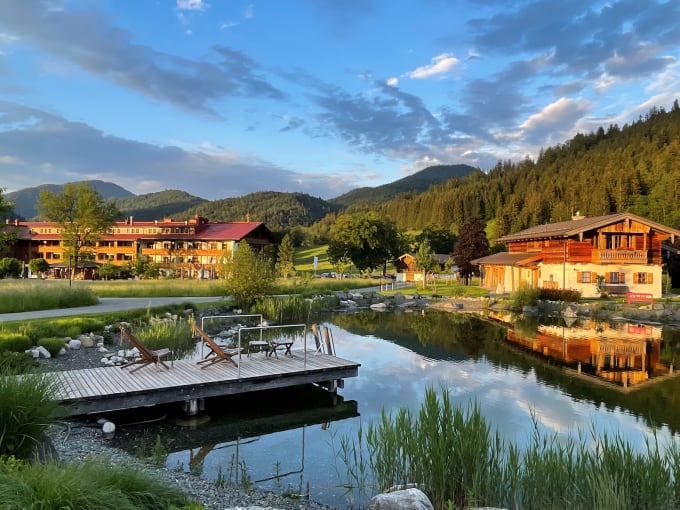
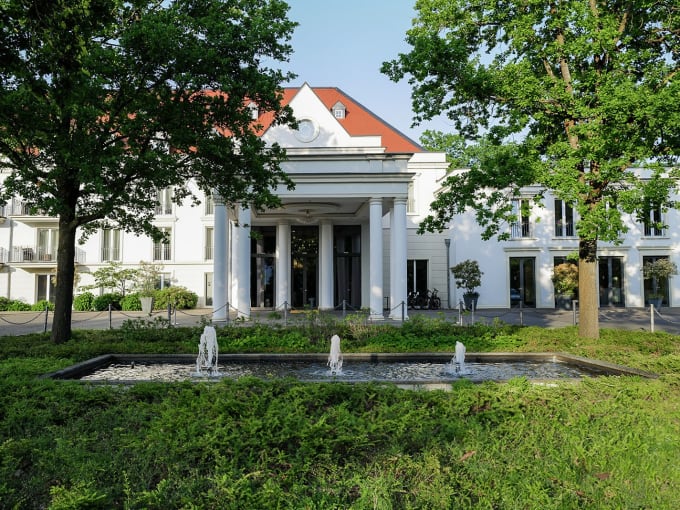
The German landscape is more varied than one might imagine. In Berlin, several addresses cater to distinct needs. Hotel Adlon Kempinski Berlin, Grand Hyatt Berlin, Das Stue, Hotel Bristol Berlin, Casa Camper Berlin, Cosmo Hotel Berlin Mitte, Hotel Amano, and Dormero Brandenburger Hof serve families looking to combine museums, parks, and easy travel. In Düsseldorf, Breidenbacher Hof plays the card of urban elegance in a city often chosen for cultural or shopping weekends. In Baden-Baden, Brenners Park-Hotel & Spa is rooted in a tradition of grand spa resorts, complete with parkland and breathing space. Further south, Gut Steinbach Hotel Chalets Spa offers a nature and mountain experience. Hotel Diepeschrather Mühle and Hotel Dollenberg provide a more secluded dimension. Even Ayurveda Parkschlösschen may appeal to some multigenerational families, despite its more specific positioning.
For 2025 and 2026, three trends are clearly emerging in high-end family demand. The first concerns space. Families are increasingly opting for suites, connecting rooms, or chalets rather than simple double rooms. The second relates to pace. Stays now blend visits, rest time, and outdoor activities. This is why hotels located near a park, garden, lake, or mountain range are becoming more relevant. The third trend is the search for comprehensible destinations. Berlin remains strong for a first cultural family trip. Baden-Baden reassures with its tranquillity. Reit im Winkl meets the need for nature. My advice is simple. In Germany, the right family hotel is not always the most spectacular; it is often the one that reduces travel friction.
At MyConciergeHotel, we also view these addresses through the lens of French concierge sensitivity. This means paying particular attention to the flow of the stay. How does one arrive with tired children? How is a day organised between breakfast, a stroll, a museum visit, a nap, and dinner? How does a hotel support the journey rather than weigh it down? Family luxury, from this perspective, is not an accumulation of amenities; it is a form of precision. A grand urban palace can be suitable if it offers spaciousness, precise service, and a location that avoids unnecessary travel. A countryside retreat can excel due to fresh air, silence, and the opportunity to let time stretch. It is important to remember that the best family address is one that allows each generation to find its place.
Therefore, this ranking should be read without automatic reflexes. Being first does not mean being universal. Being tenth never signifies being secondary. Each hotel has its audience, its rhythm, and its geography. A family discovering Berlin for three nights will not have the same priorities as another seeking a week of Bavarian nature. Likewise, some establishments shine through their tradition, while others excel in contemporary flexibility. We do not oppose these models; we rank them according to their relevance for a comprehensive family experience. This is an important nuance. Our role is not to distribute accolades but to guide towards the most coherent address, based on the age of the children, the season, the travel project, and the expected level of service.
The following top ten therefore brings together ten German hotels capable of meeting, each in their own way, the expectations of a family stay. Some excel in the city, while others thrive in the countryside. All deserve to be considered with precision.