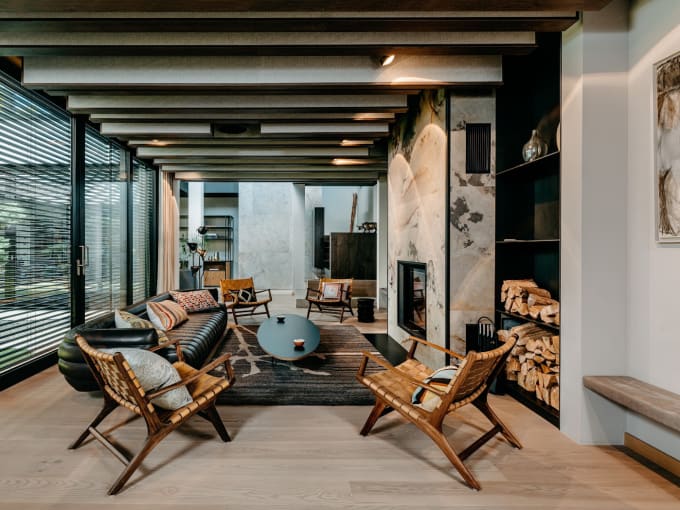
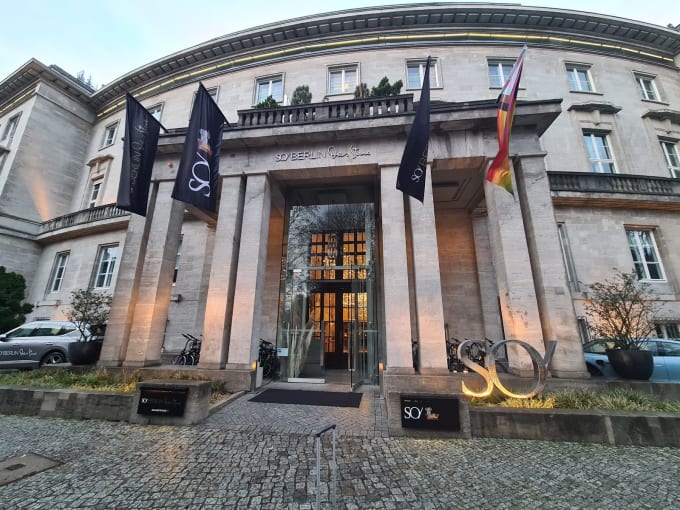
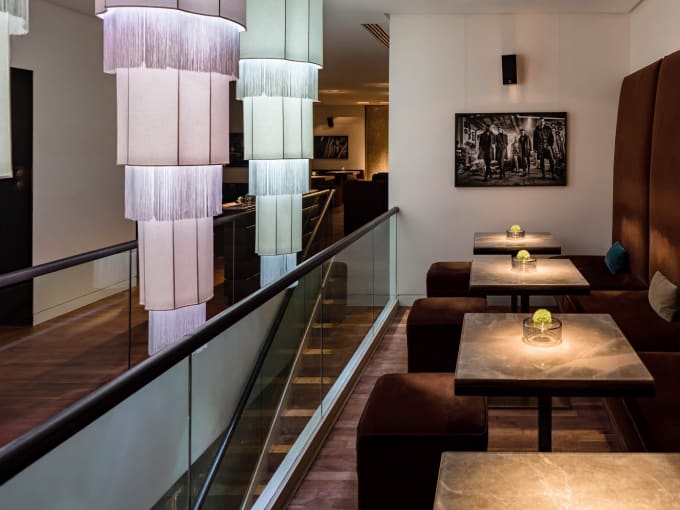
Discussing hotel design in Germany requires stepping beyond clichés. The subject encompasses much more than minimalism, functionalism, or the legacy of the Bauhaus. Here, hotel design is a conversation between history, usage, and the staging of spaces. Berlin offers the most visible version, with venues where interior architecture interacts with cultural life, the creative scene, and dynamic neighbourhoods. However, the picture is broader. Dresden, Munich, Frankfurt, Sylt, and Stolpe an der Peene showcase different expressions of German taste. This ranking focuses on hotels where design truly shapes the experience. It serves not merely as a backdrop but organises light, circulation, comfort, the relationship with the city, and the way one inhabits a stay.
At MyConciergeHotel, we do not rank a design hotel solely on the photogenic quality of a lobby. Our criteria are more demanding. We first observe the coherence between architecture, decoration, brand identity, and the actual use of spaces. A hotel can be visually striking yet remain unconvincing in experience. Conversely, a more understated venue may offer a highly refined interior narrative. We also consider a property's ability to contextualise its design. In Berlin, this may manifest as an urban, contemporary, or conceptual aesthetic. In Dresden, it may involve a subtler tension between heritage and current intervention. The quality of detail is also paramount. Materials, furniture, acoustics, light, volumes, and fluidity are as significant as the visual signature. For us, design is never an isolated effect.
The authorised selection for this ranking presents a particularly interesting panorama. Berlin occupies a central position, which is hardly surprising. The capital showcases several distinct hotel languages. Casa Camper Berlin opts for an urban, direct, and functional design. Das Stue embraces a more residential approach, within a sophisticated framework. Grand Hyatt Berlin aligns more with an international interpretation of contemporary five-star hospitality. H10 Berlin Ku'Damm and Hotel Q! remind us that West Berlin remains a relevant laboratory for enthusiasts of bold interiors. Michelberger Hotel and Hotel Amano exhibit a different energy, more lifestyle-oriented and closely connected to the local scene. Even Hotel Adlon Kempinski and Hotel Adlon Kempinski Berlin, establishments of great classicism, have their place in the conversation. German hotel design is not limited to the avant-garde; it also includes the art of evolving a grand hotel without compromising its identity.
The trends for 2025-2026 further confirm this evolution. The most compelling hotel design in Germany is moving away from overly pronounced demonstrations. We observe a return to more legible, tactile, and sustainable spaces. Natural materials, calmer palettes, and rooms designed for extended use are gaining importance. Travellers are seeking less of a manifest décor and more of an authentic atmosphere. This applies equally to urban hotels and more intimate retreats. In this context, venues like Hotel Landhaus Stricker in Tinnum or Hotel Gutshaus Stolpe propose a different idea of design—less spectacular, often more grounded. In Munich, Hotel Vier Jahreszeiten Kempinski Munich reminds us that a historic hotel can remain desirable through the quality of its reinterpretations. In Frankfurt, Kempinski Hotel Frankfurt Gravenbruch illustrates the dialogue between a city-close resort and contemporary comfort codes.
This perspective also aligns with a certain idea of French luxury, which we advocate at Le Concierge. Luxury is not measured by decorative excess but recognised by precision. A beautiful design hotel is a place where everything seems in its rightful place, without rigidity. The reception, bar, room, potential spa, perspectives, and even transitions between spaces must form a coherent whole. What our advisors often observe is that the most discerning clients speak less about style and more about the overall sensation. They remember a well-thought-out room, flattering morning light, genuine calm despite the city, or a lounge where they wish to prolong the evening. Design thus becomes a form of hospitality. It does not seek to impress constantly; it intelligently accompanies the stay.
It is also important to read this ranking without a reflex for superlatives. The number one does not diminish the significance of other addresses. Each hotel meets a different expectation. Some travellers seek a Berlin immersion, almost creative, with a clear aesthetic and genuine neighbourhood energy. Others prefer a more subdued, classic setting or a design integrated into a large international house. Still, others desire an escape from the metropolises, where the work on materials, volumes, and landscape matters more than the stage effect. My advice is simple. Read this top as a mapping of sensibilities. A successful design hotel is not merely one that presents a strong image; it is one whose visual narrative aligns with your way of travelling, working, resting, or experiencing a destination.
In the following lines, we transition from the general framework to the addresses themselves. The top 10 highlights German hotels where design adds real value to the experience. Ultimately, this is the only lasting criterion.