Germany is increasingly emerging as a more nuanced spa destination than one might imagine from Paris, Geneva, or Brussels. The country is not merely defined by its cultural capitals; it also boasts a well-structured geography of wellness. Baden-Baden remains a historical reference, underpinned by an ancient spa tradition and a clear resort environment. In contrast, Berlin offers an urban spa experience, designed as a breath of fresh air within a busy schedule. Further south, the Bavarian Alpine arc attracts guests seeking fresh air, space, and a slower pace of life. In the west, the Moselle Valley and the Rhine countryside present different offerings. It is important to note that in Germany, the spa is not just an ancillary service; it often plays a crucial role in the hotel's identity.
To establish this ranking, we first assess the coherence between the location, the hotel, and the wellness promise. A large spa alone is not sufficient; a clear understanding of the experience is essential. Our advisors examine the hotel's reputation, category, location, and its ability to provide a stay genuinely focused on recovery. We also value establishments where the spa is rooted in local tradition. This is particularly true in Baden-Baden with Brenners Park-Hotel & Spa. We consider the positioning of each hotel; an urban palace has a different mission than a mountain retreat. Finally, we prefer establishments where wellness remains a guiding thread rather than merely a brochure selling point.
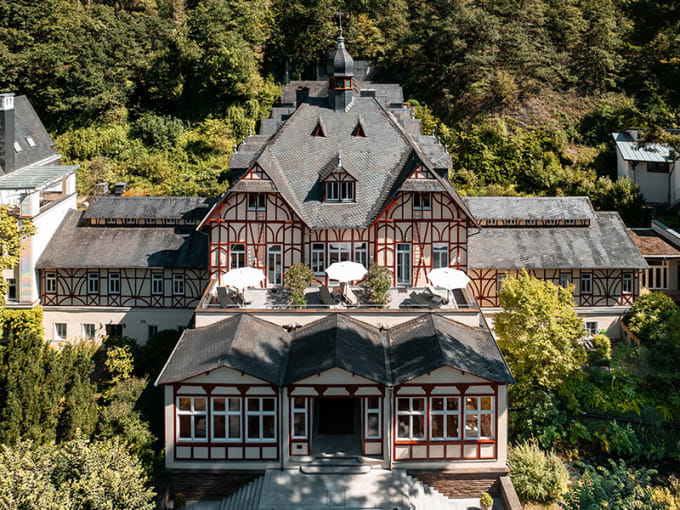
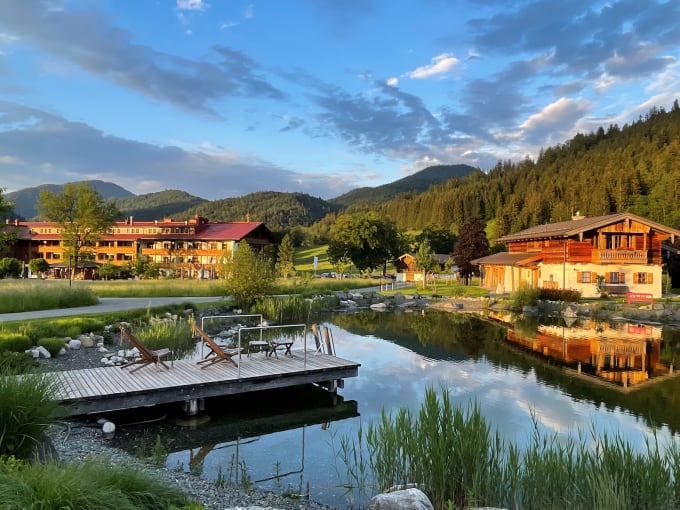
The German landscape is intriguing because it resists uniformity. In Berlin, hotels such as Das Stue, Grand Hyatt Berlin, Hotel Adlon Kempinski Berlin, and Hotel Bristol Berlin cater to different needs. Some are suited for a cultural weekend with a spa interlude, while others target business travellers who wish to unwind without leaving the city centre. Outside the metropolises, the narrative shifts entirely. Gut Steinbach Hotel Chalets Spa, in Reit im Winkl, highlights Bavarian nature and a more immersive idea of rest. Hotel Dollenberg, in the Black Forest, appeals to those seeking gentle altitude and wooded landscapes. Ayurveda Parkschlösschen, in Traben-Trarbach, occupies yet another more specialised territory centred around Ayurveda.
The trends for 2025-2026 confirm several underlying movements. The first concerns the duration of stays. We are observing a growing demand for breaks of three to five nights, rather than just a single night of relaxation. The second movement relates to specialisation. Travellers want to understand precisely what the spa promises: muscle recovery, sleep, digital disconnection, a holistic approach, or simple thermal comfort. Hotels that clearly articulate their offerings gain an advantage. The third movement pertains to the environment. The Bavarian mountains, the Black Forest, and river valleys are becoming more attractive compared to urban settings. This does not disqualify Berlin or Düsseldorf; it simply means that the spa is often becoming a reason for the destination. My advice: first choose the desired effect, then select the city.
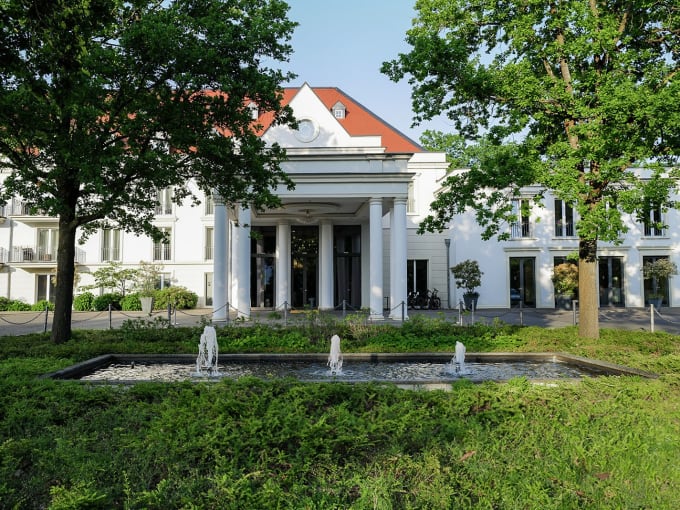
At MyConciergeHotel, we advocate for a French interpretation of hotel luxury, but never in a superficial manner. Luxury, in this context, is not solely measured by the size of the spa. It is reflected in the quality of silence, the fluidity of service, and the appropriateness of transitions. A good hotel with a spa knows how to unwind the day. It allows for useful pauses and avoids showiness. Breidenbacher Hof, in Düsseldorf, exemplifies this idea of disciplined urban elegance. Brenners Park-Hotel & Spa reminds us of the strength of great historical houses when they remain accessible. What our advisors often observe in Germany is a more direct relationship with wellness: less theatrics, more method. For many travellers, this is precisely what makes the experience credible.
This ranking should also be viewed without a reflex for absolute podium placements. The number one choice will not automatically be the best option for everyone. Some travellers seek a medically-oriented or quasi-curative stay, while others look for a city hotel with a pool, hammam, and treatment rooms, without leaving the museums or shops. Still others prioritise the mountains, walking, and tranquillity. This is why we do not brutally compare establishments of different natures. Ayurveda Parkschlösschen does not meet the same expectations as Grand Hyatt Berlin. Gut Steinbach Hotel Chalets Spa serves a different purpose than Hotel Adlon Kempinski Berlin. Our role as concierges is to clarify profiles. The right hotel is one that aligns with the right moment, the right pace, and the right traveller.
In the following top list, you will find ten addresses that truly matter for a spa stay in Germany. Some are historic, while others are more contemporary. All have a valid reason for being included in this selection. We will now place them in context to help you choose with precision.