MC
Editorial ranking

The best hotels in Germany in 2026

Editorial selection of 10 exceptional hotels in Germany, 2026: urban palaces, destination spas, historic addresses recognized.

Ranking reviewed on 22 June 2026.

The top of the ranking in pictures

The verdict at a glance

  1. Hotel Adlon KempinskiRanked first here, Hotel Adlon Kempinski holds a position few German hotels can claim: directly facing the Brandenburg Gate, in the heart of Berlin.
  2. Brenners Park-Hotel & SpaRanking Brenners Park-Hotel & Spa at #2 in Germany makes sense when you judge longevity, setting and the precision of its credentials.
  3. Fairmont Hotel Vier JahreszeitenPlacing Fairmont Hotel Vier Jahreszeiten at No.

Our methodology

Germany is no longer a hidden luxury destination. It has now established itself as a comprehensive playground for discerning travellers. The country brings together cultural capitals, historic spa towns, aristocratic countryside, and major trading ports. This density explains the interest in a national ranking. Berlin is home to several strong signatures, from the Hotel Adlon Kempinski to The Regent Berlin. Baden-Baden maintains its role as a reference for spa experiences with Brenners Park-Hotel & Spa. Hamburg showcases a more classic elegance with the Fairmont Hotel Vier Jahreszeiten. Düsseldorf, Reit im Winkl, Nörten-Hardenberg, and Traben-Trarbach further broaden the spectrum. It is important to note that in Germany, luxury hospitality is not only measured in stars. It is also assessed by the continuity of service, local anchoring, and a hotel’s ability to embody its city.

To establish this Top 10, we first consider verifiable criteria. The level of official ranking matters, as does the Palace status when it exists. We then observe the reputation of the establishment, its consistency over time, and its position in the market. The address, architectural quality, arrival experience, and clarity of the offering also come into play. A grand urban hotel is not evaluated in the same way as a wellness retreat. We compare each establishment to its natural category. What our advisors particularly observe is coherence. A Berlin palace must excel in service and representation. An alpine retreat must convince through rhythm, space, and its relationship with the landscape. This ranking therefore rewards clear identities, not mere marketing gimmicks.

The German landscape surprises with its diversity. Berlin plays several roles within it. The Hotel Adlon Kempinski Berlin appeals to those seeking a representative address, close to the capital's major landmarks. The Regent Berlin offers a more understated interpretation of the grand hotel. Das Stue, Casa Camper Berlin, Cosmo Hotel Berlin Mitte, Grand Hyatt Berlin, H10 Berlin Ku’Damm, and Dormero Brandenburger Hof demonstrate that a single city can host very distinct styles. Elsewhere, Breidenbacher Hof anchors Düsseldorf in a tradition of grand city hotels. Brenners Park-Hotel & Spa highlights the importance of spa towns in European history. Gut Steinbach Hotel Chalets Spa offers an alpine respite. Hardenberg BurgHotel adds a heritage dimension. Finally, Ayurveda Parkschlösschen places wellness at the heart of the stay.

For 2025 and 2026, several trends are clearly emerging in Germany. The first concerns structured wellness. Travellers are no longer just looking for a spa. They want a clear programme, ample time, and a distinct promise. Ayurveda Parkschlösschen meets this expectation precisely. Brenners Park-Hotel & Spa remains relevant due to Baden-Baden's thermal heritage. The second trend is the return of hotels with strong locations. An address should tell the story of its neighbourhood, city, or landscape. This is an advantage for the Fairmont Hotel Vier Jahreszeiten in Hamburg, as well as for Gut Steinbach Hotel Chalets Spa in Bavaria. The third evolution is the demand for unobtrusive service. Clients are less concerned with showmanship. They favour fluidity, discretion, and precision. My advice: in Germany, first choose the intention of your stay. The right hotel often follows from this initial filter.

There is also a more French interpretation of German luxury hospitality. It does not oppose tradition and modernity. It seeks a balance between decorum, comfort, local culture, and quality of welcome. In this perspective, Germany presents a particular interest. The country knows how to preserve institutions without renouncing more contemporary offerings. The Hotel Adlon Kempinski and the Fairmont Hotel Vier Jahreszeiten illustrate this permanence of great houses. Das Stue and Casa Camper Berlin appeal more to a clientele that values personality and usage. Breidenbacher Hof maintains a classic line, very readable for a business or city stay. What we appreciate here is the discipline of detail. A grand hotel does not need to overdo it. It simply needs to be right, from the first contact to departure.

As always, this ranking does not claim to designate a universal hotel. It offers an editorial hierarchy, useful for guiding a choice. Some travellers will seek the solemnity of a historic palace. Others will prefer a more design-oriented, discreet, or wellness-focused address. A stay in Berlin does not meet the same expectations as a break in Baden-Baden or the Bavarian Alps. This is why this Top 10 should be read as a map, not as a verdict. The top positions reward a rare combination of reputation, location, service, and symbolic significance. Other establishments retain genuine relevance depending on the travel project. It is worth noting: the best hotel in Germany is often the one that matches your rhythm exactly, not just the one that holds the highest rank.

Our selection therefore juxtaposes institutions, wellness retreats, and more contemporary urban hotels. It favours establishments that truly matter in their destination. Below you will find our Top 10 best hotels in Germany.

Our selection criteria for Germany

Our selection weighs address, status, service consistency, setting, spa, dining, and the real purpose of the stay.

What German luxury hospitality reveals

German luxury hospitality stands out for its range, from grand city hotels to alpine retreats, historic spa towns, and refined country estates.

Questions about this section

Is German luxury hospitality mainly urban, or should travelers consider resorts too?

Germany offers both strong city hotels and excellent wellness, lake, and countryside retreats.

Gastronomy: the restaurants that matter

Germany’s best luxury stays often win the booking through the table as much as the room.

Spa and wellness: the most convincing retreats

Germany’s most convincing wellness hotels combine serious spa facilities, restorative settings, and a real sense of disconnection.

Questions about this section

For a spa-focused stay in Germany, what truly differentiates one luxury hotel from another?

The real difference lies in scale, serenity, usability, and the depth of the wellness offering.

Where the experience-to-value ratio feels right

Value in Germany’s luxury hotels is best judged by what the stay truly delivers, not by rate alone.

Why these 10 hotels lead our selection

These ten hotels stand out for their clarity of experience, operational consistency, and strong sense of place across Germany.

Comparison tables

Top hotels in Germany: comparison table
HotelAtmosphereHighlightsBadgeIndicative budget
Hotel Adlon KempinskiGrand urban hotel facing Berlin's institutions.Iconic address in Berlin, a landmark for protocol and cultural stays.5★ Palacefrom €500-900/night
Brenners Park-Hotel & SpaUrban resort and spa in Baden-Baden.Renowned spa, thermal destination, historical roots in Baden-Württemberg.5★ Palacefrom €600-1000/night
Fairmont Hotel Vier JahreszeitenGrand classic address by the water in Hamburg.Strong international brand, central location, business and leisure clientele.5★from €450-850/night
Breidenbacher HofCity centre hotel with a grand house spirit.Reference address in Düsseldorf, suitable for shopping and business stays.5★from €350-700/night
The Regent BerlinClassic and discreet hotel in the capital.Sought-after Berlin location, palace format, solid base for a cultural stay.5★ Palacefrom €450-800/night
Das StueDesign boutique hotel, discreet in Berlin.More intimate format, contemporary take on urban luxury.5★from €300-650/night

Editorial selection based on positioning, reputation, destination and distinctions visible in the provided list.

Budget guide by service level
LevelHotel profileObserved range
Very high-end palaceHotel Adlon Kempinski, Brenners Park-Hotel & Spa, The Regent Berlinoften €450-1000+ / night
Classic 5★ grand hotelFairmont Hotel Vier Jahreszeiten, Breidenbacher Hof, Grand Hyatt Berlinoften €300-850 / night
Design 5★ boutique hotelDas Stue, Casa Camper Berlin, Cosmo Hotel Berlin Mittetypically €200-650/night
Wellness or nature retreatAyurveda Parkschlösschen, Gut Steinbach Hotel Chalets Spa, Hardenberg BurgHoteltypically €250-700/night

Indicative ranges for segment comparison. They are not contractual rates.

The ranking

  1. Hotel Adlon Kempinski, Berlin

    #1Hotel Adlon Kempinski

    Berlin · National icon

    Ranked first here, Hotel Adlon Kempinski holds a position few German hotels can claim: directly facing the Brandenburg Gate, in the heart of Berlin. Opened in 1907, with Robert Leibnitz and Carl Gause among the architects associated with it, it carries its history plainly, without relying on theatre. The Palace distinction from Atout France matters here; it remains rare in Germany. Across 385 keys, including 307 rooms and 78 suites, the hotel keeps its bearings clear, from the Elephant Fountain to the Lobby Lounge & Bar. Brasserie Quarré sets its terrace towards Brandenburg Gate. Lorenz Adlon Esszimmer, led by Jonas Zörner, holds 1 Michelin star. Adlon Spa by Resense adds an indoor pool, whirlpool and gym. On foot, you can also reach the Reichstag, the Memorial to the Murdered Jews of Europe and the Philharmonie. Cinema fixed it too: Hotel Adlon, by Josef von Báky, was released in 1955.

  2. Brenners Park-Hotel & Spa, Baden-Baden

    #2Brenners Park-Hotel & Spa

    Baden-Baden · Baden-WürttembergResort reference

    Ranking Brenners Park-Hotel & Spa at #2 in Germany makes sense when you judge longevity, setting and the precision of its credentials. Opened in 1834 in Baden-Baden, it carries a spa-resort heritage that few German hotels can document so clearly. Its 5-star rating and Palace distinction from Atout France provide an objective benchmark, still rare outside France. The building adds two official heritage protections, in Germany and in Baden-Württemberg. For dining, Wintergarten is the practical detail worth knowing: the Michelin Guide lists a three-course lunch there, Monday to Friday. Nigrum and moriki round out the culinary picture. From the hotel, you can walk to Museum Frieder Burda, the Trinkhalle, Baden-Baden Casino, the Russische Kirche, the Theater and the historic Altstadt. That continuity, rather than any staged effect, is what earns it such a high position.

  3. Fairmont Hotel Vier Jahreszeiten, Hamburg

    #3Fairmont Hotel Vier Jahreszeiten

    Hamburg · Hanseatic grande dame

    Placing Fairmont Hotel Vier Jahreszeiten at No. 3 in Germany rests on how precisely it reads Hamburg. The hotel faces the Alster and immediately resets the pace of a city stay. Breakfast overlooking the lake, followed by a walk around the Alster straight from the hotel, sets the tone. In the evening, returning from the city to turndown service keeps the whole sequence seamless. On the dining side, Restaurant Haerlin bears the signature of Christoph Rüffer and holds 3 Michelin stars. GRILL and NIKKEI NINE broaden the rhythm further, from a classic dinner to a more contemporary register. From this central base, City Hall, the Kunsthalle, St Nicholas, St Michael’s, Chocoversum and Miniatur Wunderland are all easy to reach. The concierge team sharpens the stay with a tailored Hamburg itinerary. The MICHELIN Guide awarded it Three Keys in 2025.

  4. Hotel Vier Jahreszeiten Kempinski Munich, Munich

    #4Hotel Vier Jahreszeiten Kempinski Munich

    Munich · Munich classic

    In 4th place, Hotel Vier Jahreszeiten Kempinski Munich earns its standing first through its position in the heart of Munich, made for exploring on foot. From the hotel, you can reach Hofbräuhaus, the Munich Residence, Isartor, Odeonsplatz, Munich Cathedral of Our Dear Lady and the Eisbachwelle without cumbersome logistics. In a national ranking, that centrality matters as much for a frictionless business stay as for a cultural city break. Dining strengthens the case. Schwarzreiter Restaurant, led by Franz-Josef Unterlechner, gives the in-house experience real substance. KOMU adds 2 Michelin stars, a rare asset in a grand urban hotel. The rest follows a clear rhythm: breakfast in the heart of Munich, a concierge-planned cultural itinerary, a romantic escape in the city, then a calm return after the streets. Kempinski finally brings recognisable service continuity without diluting the hotel’s Munich character.

  5. Mandarin Oriental, Munich, Munich

    #5Mandarin Oriental, Munich

    Munich · Munich city standout

    Ranked #5 among the best hotels in Germany, Mandarin Oriental, Munich earns its place through a precise reading of the urban grand hotel. In the heart of Munich, it brings Isartor, Hofbräuhaus, Munich Residence, Odeonsplatz, Munich Cathedral of Our Lady and the Deutsches Museum into the same stay radius. That geography matters for travellers balancing meetings, heritage and lively districts without wasting time. Dining strengthens the case. Matsuhisa Munich and Munich Sushi Club carry the signature of Nobu Matsuhisa. Tohru in der Schreiberei, led by Tohru Nakamura, holds 3 Michelin stars. The Lounge and Bar31 extend that city rhythm. We also keep it in this ranking for very practical reasons: breakfast in the heart of Munich, a tailored cultural itinerary, then a wellness pause after the city. Few German hotels combine business travel and a city break with such clarity.

  6. Hotel de Rome, Berlin

    #6Hotel de Rome

    Berlin · Berlin essential

    Ranked sixth in our Germany edit, Hotel de Rome makes the case for a different kind of grand Berlin hotel. It occupies the former Dresdner Bank headquarters, completed in 1889. Ludwig Heim designed its Neo-Renaissance architecture. That listed setting gives the hotel unusual substance in the heart of Berlin. The house has 145 keys, including 13 suites. It is a member of The Leading Hotels of the World, which matters in this bracket. For dining, CHIARO is centred on Fulvio Pierangelini’s contemporary Italian cooking. The Michelin Guide lists his Italian Menu, without a star. De Rome Spa spans 800 sq m, with a 20 m pool, 6 treatment rooms, a sauna and hammam. On foot, you can reach Berliner Dom, Brandenburg Gate, the Reichstag or Checkpoint Charlie. For a cultural or business stay, that logistical clarity carries real weight.

  7. Breidenbacher Hof, Düsseldorf

    #7Breidenbacher Hof

    Düsseldorf · Düsseldorf reference

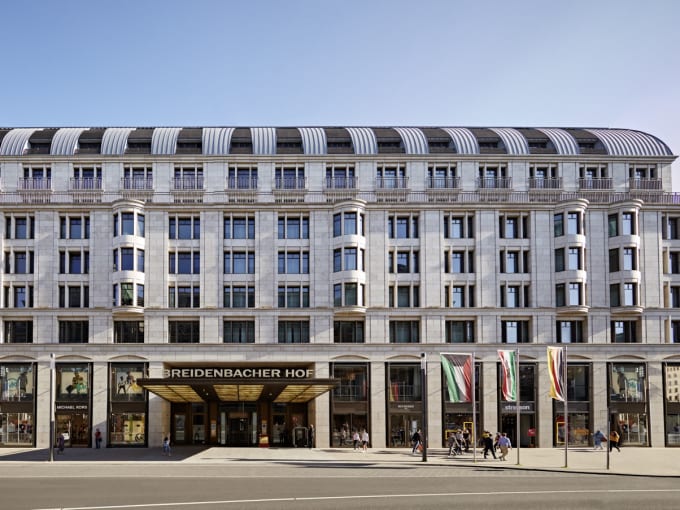
    We place it 7th for one clear reason: few German hotels read their city this well. Breidenbacher Hof sits in central Düsseldorf, a short walk from the Königsallee. From the lobby, you can reach the Kunstsammlung Nordrhein-Westfalen, the Marktplatz, the Düsseldorf Theater, Little Tokyo Düsseldorf and Roncalli's Apollo Variety Theatre on foot. That walkable radius matters. It lets you move between meetings, shopping and culture without relying on a car. Then return to a marked sense of calm. A member of Small Luxury Hotels of the World, the hotel keeps the measured scale of an urban 5★ grand hotel. The 24-hour bespoke concierge is practical here, shaping the day’s rhythm and handling last-minute requests. For dining, The Duchy Restaurant, led by Philipp Ferber, is joined by Brasserie 1806 and the Lobby Lounge. That reliability, in the exact heart of Düsseldorf, earns its place.

  8. Weissenhaus Private Nature Luxury Resort, Weissenhaus

    #8Weissenhaus Private Nature Luxury Resort

    Weissenhaus · Resort pick

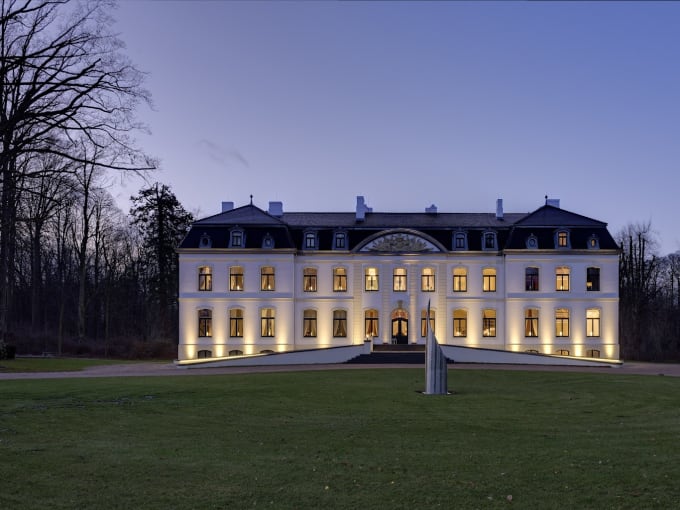
    Ranked #8 among Germany's best hotels, Weissenhaus Private Nature Luxury Resort makes a persuasive case for a rarer format: a 5-star Relais & Châteaux resort in Weissenhaus, set against the Baltic. Its place rests on the coherence of the estate as much as on the dining. Courtier, led by Christopher Schlang, Bootshaus by Christian Scharrer, and NAMI create a clearly defined culinary progression on site. The stay is also shaped by named experiences with real substance. Breakfast facing nature, a private walk through the estate, a personalised wellness ritual, a Baltic pause at sunset, then a destination dinner at the resort. Few German hotels deliver this sense of complete retreat beyond a capital city, without losing contact with the coast. The proximity of Weißenhäuser Strand Süd, Seebrücke Weißenhäuser Strand, and Aussichtspunkt Oldenburger Graben grounds the stay in a precise stretch of shoreline.

  9. The Ritz-Carlton Berlin, Berlin

    #9The Ritz-Carlton Berlin

    Berlin · Berlin grand dame

    Ranked #9 among Germany’s best hotels, The Ritz-Carlton Berlin earns its place through a sharply tuned reading of Potsdamer Platz. The Berlin Philharmonic, Neue Nationalgalerie, the Memorial to the Murdered Jews of Europe and Brandenburg Gate are all within walking distance. Its 303 rooms and suites revisit Art Deco through a contemporary lens, with a clear nod to Berlin’s 1920s heyday. The in-house rhythm is easy to read. Art Deco Afternoon Tea at The Lounge, a tasting dinner at POTS, then cocktails at The Curtain Club. At POTS, modern German cooking carries the signature of Tim Raue, a 2-Michelin-star chef. In season, the Secret Champagne Garden brings a lighter counterpoint. On the 10th floor, the Club Lounge ritual adds a more residential register. The Wellness Area, with indoor pool, fitness room and Berlin cultural concierge, rounds out a polished, well-placed city hotel.

  10. Rosewood Munich, Munich

    #10Rosewood Munich

    Munich · Contemporary Munich

    Rosewood Munich earns its place in this ranking for one clear reason: it lets you experience Munich on foot without giving up the framework of a 5-star hotel. From the property, Odeonsplatz, the Munich Residence and Munich Cathedral shape a cultural day that feels coherent rather than rushed. Hofbräuhaus, Karlsplatz and the Pinakothek der Moderne extend that walkable radius, which matters for a short stay as much as for a more considered weekend. Here, the concierge service has real purpose: it can map out a tight itinerary between heritage, museums and urban pauses. The rhythm holds from morning to evening, with breakfast in the heart of Munich, an urban wellness break and a calm return at day’s end. For a romantic city break, the historic centre clearly works in the hotel’s favour. Its Rosewood Hotels & Resorts affiliation brings an international grand-hotel lens without disconnecting the stay from Munich’s walkable scale.

Glossary

5-star hotel
High-end category. It indicates a strong service level, without alone defining style, size or atmosphere.
Boutique hotel
Small or mid-sized format, often more personal. The experience favors character, design and a closer sense of place.
Iconic address
A hotel whose name goes beyond lodging alone. It becomes a destination landmark, often tied to history or a powerful location.
Indicative budget
A broad price guide used to compare segments. It varies with season, events, room category and booking conditions.
Palace
In this selection, the term refers to the badge visible in the provided list. It signals a top-tier positioning in hospitality.
Wellness resort
A hotel built around spa, treatments or a wellness program. The stay is shaped as much by leisure time as by the room.

Going further

Germany’s finest hotels stand out through clarity of purpose, strong sense of place, and consistently disciplined service.

Frequently asked questions

How is this ranking of Germany’s best hotels determined?

It combines editorial judgment, service consistency, location, identity, and recognized luxury credentials.

What specifically sets the selected German hotels apart?

They stand out through consistent service, strong identity, and a well-rounded luxury experience.

What is the difference between a Palace and a five-star hotel in Germany?

In Germany, Palace is not an official category; true differentiation comes from actual service and experience.

When is the best time to book a luxury hotel in Germany?

Book early for major cities, trade fairs, holidays, and peak wellness or mountain periods.

What nightly budget should travelers expect at Germany’s best hotels?

Expect several hundred euros per night, with higher rates for suites and peak dates.

Is it better to book direct for loyalty benefits or perks?

Direct booking can unlock loyalty benefits, but concierge channels may add valuable perks too.

Can travelers expect real concierge service and personalized stays in these German hotels?

Yes, top hotels usually deliver precise, discreet personalization before and during the stay.

Are these German luxury hotels suitable for reduced mobility travelers and families?

Many are suitable, but accessibility and family options must be confirmed case by case.

How can travelers book through MyConciergeHotel.com instead of an OTA?

Booking through MyConciergeHotel.com adds expert guidance, tailored matching, and possible added-value perks.

Sources & references

This editorial article is based on the following authoritative sources, listed here for transparency and reader verification.