History & positioning
Fairmont Pacific Rim belongs to the generation of high-end hotels that accompanied the recent transformation of Vancouver’s waterfront. Its interest lies less in old-world heritage than in a contemporary vision of urban luxury: clean lines, open volumes, fluid transitions between business address and leisure hotel, and a constant relationship with light, water and landscape. In a city that looks simultaneously towards the Pacific Ocean, the mountains of British Columbia and the towers of downtown, the property occupies a particularly telling setting, where nature is never far from the urban fabric.
The Fairmont name carries a well-established hotel tradition in Canada and beyond. That affiliation sets a clear framework for the experience: attentive service, elevated standards, consideration for international travellers, and the ability to host both leisure stays and tightly scheduled business trips. Fairmont Pacific Rim translates that heritage into a decidedly current register. Where some grand hotels rely on pomp or nostalgia, this one favours a more graphic, metropolitan elegance, entirely in keeping with Vancouver’s identity.
The hotel speaks to several kinds of guests without losing focus. Business travellers find a central, efficient base close to key downtown districts. Couples are often drawn by the views, the polished atmosphere of the public spaces and the sense of being poised between city and shoreline. Families, meanwhile, tend to value easy access to the waterfront promenades, shopping areas and the open-air lifestyle for which the city is known. That versatility is one of the property’s most persuasive qualities.
What truly sets Fairmont Pacific Rim apart is the way it reconciles the energy of a major international hotel with a distinctly Vancouver sensibility. Vancouver is neither a monumental European capital nor merely a North American business city. Its luxury is often quieter, more connected to quality of life, the outdoors, proximity to nature and a certain calm modernity. The hotel adopts those codes and translates them into a restrained staging: open views, contemporary materials, and spaces designed to be lived in rather than admired from afar.
Guests come here less for local folklore than for a highly accomplished urban experience, rooted in a central district and open to the city’s defining lines. That positioning gives the hotel its relevance: a five-star address that does not attempt to mimic historic palaces, but instead offers a contemporary reading of high-end hospitality on Canada’s Pacific coast.
The hotel and its setting
One of Fairmont Pacific Rim’s greatest strengths is its location, close to the water in a part of Vancouver where the city reveals its full complexity: glass towers, distant reliefs, harbour activity, pedestrian promenades and easy access to the liveliest downtown districts. For first-time visitors, the setting quickly explains what makes Vancouver distinctive. Few cities combine natural scenery and contemporary urban life with such clarity.
From the hotel, shopping areas, restaurants, business addresses and several central sights are all within easy reach. This centrality is not an abstract advantage: it makes a stay more fluid, with less time lost in transit and more freedom to shape the day spontaneously. One can leave early for meetings, return in the late afternoon, then head out again on foot for dinner or a walk along the waterfront. It is a discreet but decisive luxury, particularly in a city where people make the most of the outdoors whenever the light is good.
The property itself embraces a modern, elegant aesthetic without decorative excess. Public spaces are designed for comfort as much as for style, and that is immediately apparent in the way guests move through them. Nothing feels overly formal, yet nothing is left to chance. The lobby and lounges function as places of passage, meetings and pause. They are spaces in which to settle between appointments, wait before a departure, meet a friend or simply observe the rhythm of the hotel.
Views are fully part of the experience. Depending on orientation, the eye opens onto the city, the water or the surrounding mountains. In Vancouver, such perspectives are more than scenery: they constantly recall the topography and climate of the Pacific coast. They also lend the stay a particular depth, especially when the weather shifts quickly, as it often does here.
This is an address especially well suited to travellers who want to experience Vancouver without choosing between efficiency and pleasure. Business guests find a coherent base, leisure visitors an ideal starting point, and seasoned hotel-goers a contemporary proposition that never overstates itself.
Rooms and suites
At a hotel such as Fairmont Pacific Rim, the room is not merely a place to sleep: it is a vantage point over Vancouver and a direct extension of the property’s overall aesthetic. The language established in the public areas continues here in a contemporary style attentive to comfort, clarity of space and the quality of everyday experience. Guests do not come in search of historic décor or overt theatricality, but rather a calm sophistication suited to a high-level urban stay.
The principal appeal of the rooms and suites often lies in their relationship with the outdoors. Depending on category and orientation, views may bring the city, the water or the mountains into the stay. In Vancouver, that openness matters greatly. It gives mornings a particular character, especially when light settles on the distant reliefs or the waterfront gradually comes to life. In the evening, the city’s reflections create another landscape altogether.
The comfort expected of a five-star hotel is expressed through attention to simple gestures: fluid layouts, daily housekeeping, turndown service, and a team available around the clock to assist with practical needs. For business travellers, this means a room capable of absorbing the pace of a demanding day. For leisure guests, it allows for a slower rhythm and a more contemplative use of the space.
Suites, when chosen, generally answer a different logic: more room, greater ease, sometimes a stronger framing of the panorama and a heightened sense of temporary residence. They are particularly well suited to longer stays, couples seeking a more generous setting, or guests combining business appointments with personal time.
What stands out here is less an accumulation of effects than an overall coherence. Rooms and suites extend the hotel’s positioning: contemporary, elegant and functional without feeling cold.
Dining and convivial moments
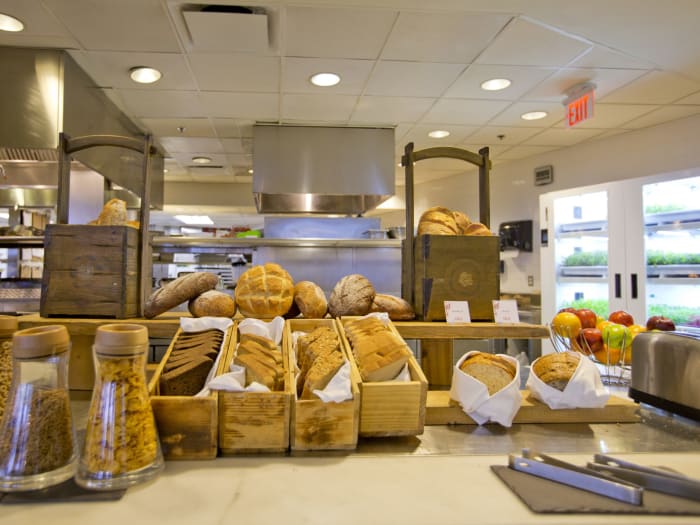
The available brief does not detail the full dining offer at Fairmont Pacific Rim, and it would therefore be unwise to map it too precisely. What can be said, however, is that a property of this level, set in central Vancouver and frequented by both local and international guests, generally gives significant importance to dining, meetings and convivial moments. In a contemporary urban hotel, food and drink are not merely ancillary services: they contribute to the identity and rhythm of the place.
In Vancouver, this carries a particular tone. The city has an open, cosmopolitan food culture, attentive to freshness, seasonality and diverse influences. The coastline, the Pacific setting and the international energy of downtown create a favourable context for a clear, current style of hospitality. A hotel such as Fairmont Pacific Rim naturally fits within that environment, offering spaces in which one may take breakfast before a demanding day, pause for coffee in the afternoon, or extend the evening over dinner or drinks.
Dining and bar spaces in a hotel of this category typically serve several functions at once. They welcome residents, certainly, but also passing guests, business meetings and end-of-day gatherings. That mix is often a sign of vitality. It prevents the hotel from turning inward and gives it a genuine place within urban life.
For French travellers accustomed to major hotels, dining here is best understood as part of the art of staying well rather than as a display. Fairmont Pacific Rim appears above all to favour an experience consistent with its positioning: contemporary, polished, central and adaptable to the varied rhythms of its guests.
Wellbeing, rhythm and respite
Even when an urban hotel is chosen for its location or for business reasons, wellbeing remains central. In a city such as Vancouver, where one can move easily from a demanding schedule to a walk by the water, luxury is measured not only by bedding or the standing of the public spaces. It is also expressed through a property’s ability to provide moments of respite, recovery and recalibration. Fairmont Pacific Rim, through its positioning and the expected quality of its services, belongs to that logic of balance.
In a contemporary grand hotel, wellbeing does not necessarily depend on spectacular staging. It may take a quieter form: the sense of being welcomed at any hour, the comfort of a room restored each day, the ease of public spaces in which one can slow down, and the fluidity of service that removes unnecessary friction. For many travellers, especially on long-haul journeys or stays combining work and jet lag, such elements matter as much as any dedicated facility.
Vancouver adds a very particular context. The city naturally invites a rhythm that alternates between indoors and outdoors, activity and pause, urban energy and contact with the landscape. A hotel near the waterfront makes that alternation especially easy.
What feels particularly right at Fairmont Pacific Rim is the idea of wellbeing integrated into the overall experience rather than isolated in a single area of the building. Views, light, proximity to the water, the quality of the public spaces and the efficiency of the concierge together create a sense of composed comfort.
Concierge & Services
In the luxury hospitality sector, the value of services lies as much in their coordination as in their offerings. The Fairmont Pacific Rim provides a 24-hour concierge service, a continuously open reception, daily room service, a turndown service, luggage storage, laundry services, wake-up calls, and a multilingual team. Together, these elements create a seamless stay, well-supported, tailored to international schedules and diverse needs.
The 24-hour concierge service is particularly significant in a city like Vancouver, which attracts guests from various time zones. Late arrivals, early departures, last-minute adjustments, local orientations, or targeted recommendations all require a precise expertise. In a central location, close to restaurants, shops, and major points of interest, this service becomes even more valuable.
The continuously open reception plays a complementary role. It ensures a constant presence at every stage of the stay. Whether arriving after a long flight, needing practical assistance in the middle of the night, or departing early for a meeting or transfer, immediate support is always available.
Daily room service and the turndown service contribute to a more discreet yet essential comfort. They provide the room with a sense of order and care that distinguishes a five-star experience. Laundry services, luggage storage, and wake-up calls address very concrete needs. This is particularly true for business stays, long layovers, or multi-stop itineraries. The presence of a multilingual staff further enhances the quality of the welcome and the precision of interactions.
At the Fairmont Pacific Rim, the essence lies less in the accumulation of services than in their execution. The service aims to be available without being intrusive, efficient without coldness, and attentive without being overbearing. When this balance is achieved, schedules are managed more smoothly, unexpected events weigh less heavily, and the city becomes more accessible.
Vancouver, a way of life between city and nature
Staying at Fairmont Pacific Rim also means adopting, for a few days, Vancouver’s very particular rhythm. The city charms less through monumentality than through a rare balance between urban density, openness to the water and immediate proximity to dramatic landscapes. For a European visitor, this way of life can be striking in its fluidity. One moves from a business district to a waterfront walk, from lunch in town to mountain views, from shopping to a quiet moment by the harbour. The hotel, thanks to its central location, makes that rhythm easy to inhabit.
The waterfront is one of the clearest threads. Walking along the water explains Vancouver better than many formal itineraries. It reveals the city’s direct relationship with its environment, its preference for gentle circulation and its ability to integrate landscape into daily life.
What makes Vancouver singular is also a certain restraint. Local luxury is rarely demonstrative. It lies more in quality of life, clarity of design, ease of use and the constant presence of nature in the background. Fairmont Pacific Rim aligns well with that tone.
To make the most of this way of life, one must sometimes allow for slowness: watching the light change on the mountains, heading out early for a walk near the water, returning to the hotel between parts of the day, dining without going far, then taking up the city again the next morning.
Booking with MyConciergeHotel
Booking Fairmont Pacific Rim through MyConciergeHotel means choosing an editorial reading of the stay as much as a booking channel. For a property of this kind, the value lies not only in securing a room, but in selecting the right category, the right timing and the right travel rhythm. Vancouver is a city whose experience changes noticeably according to season, light, weather and the nature of the programme.
The benefit of guidance through MyConciergeHotel lies precisely in refining that reading. Should one prioritise a room category for the view? Is it worth allowing more time on site to enjoy the waterfront and central districts on foot? How should the hotel fit within the broader journey? Such questions may seem simple, yet they strongly shape the quality of the stay.
Fairmont Pacific Rim suits several traveller profiles, and that versatility calls for a degree of discernment at the booking stage. Couples may prioritise atmosphere and views; solo travellers the reassurance of a major central hotel; families the organisation of daily rhythms; business guests logistical efficiency and reliable services at any hour.
Booking ahead remains sensible, particularly in an international destination where availability can shift with the seasons. Through MyConciergeHotel, the aim is not excess, but accurate guidance.