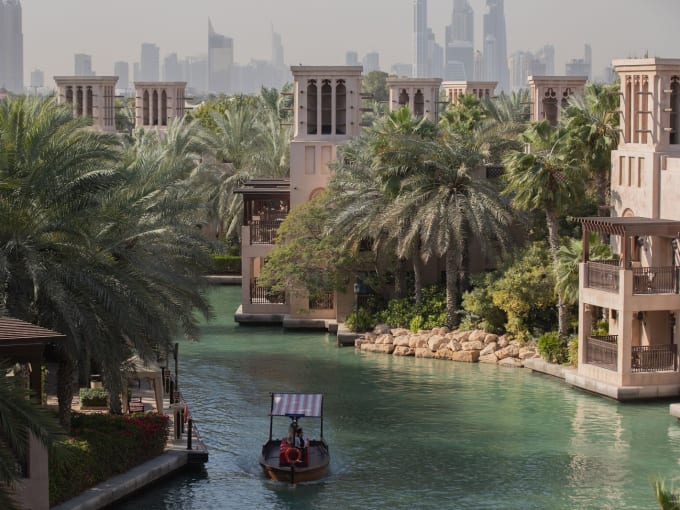
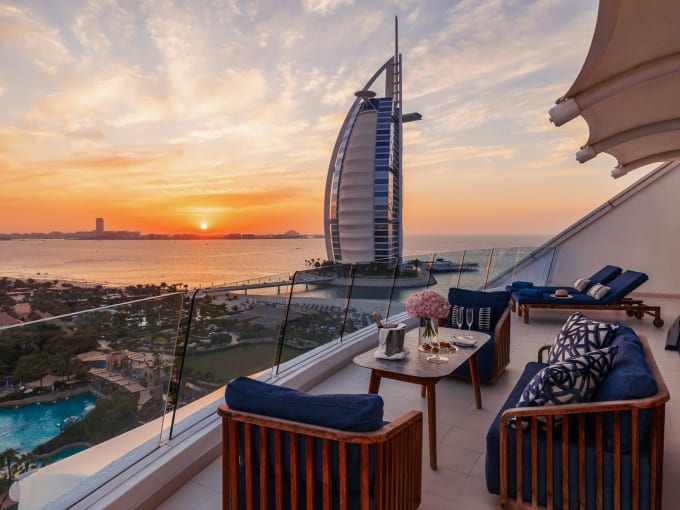
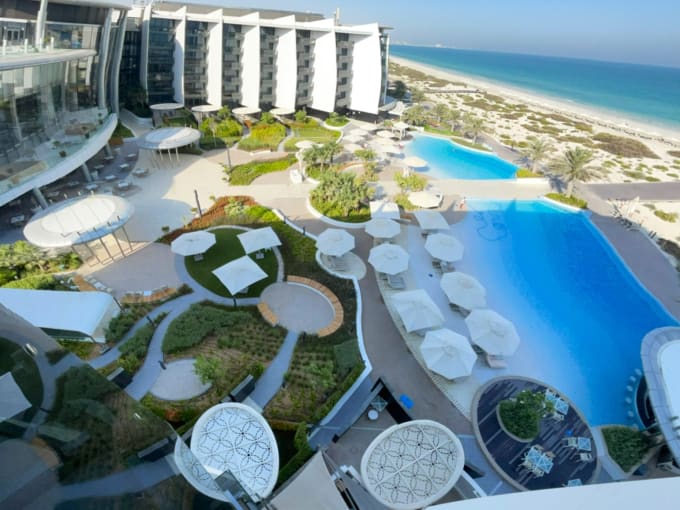
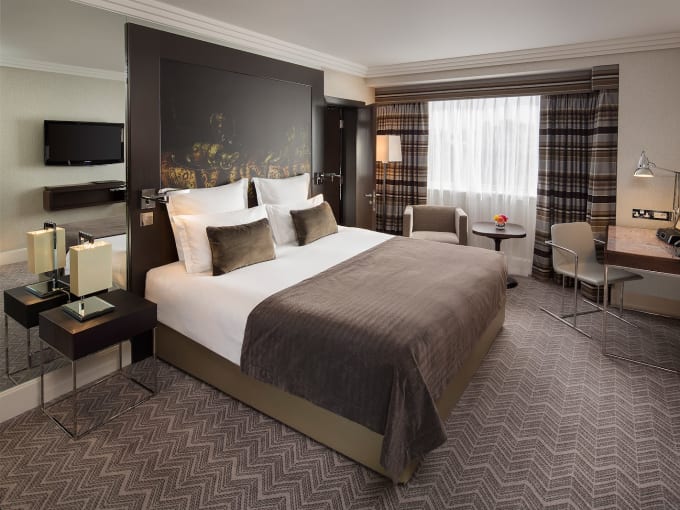
Jumeirah holds a unique position in contemporary luxury hospitality. The group originated in Dubai and has grown alongside the city, embracing its architectural ambition, international openness, and a particular vision of Arab hospitality. Here, luxury extends beyond the room; it is expressed in the arrival experience, the scale of spaces, and the fluidity of service. Burj Al Arab Jumeirah remains the most visible icon of this vision, its sail-like silhouette having established a global imagination. However, to reduce Jumeirah to this image would be overly simplistic. From Jumeirah Dar Al Masyaf, Jumeirah Mina A'Salam, Jumeirah Al Naseem, Jumeirah Al Qasr, Jumeirah Capri Palace to Jumeirah Carlton Tower, the portfolio also narrates a geography of stay.
To establish this Top 21, we adhere to clear editorial criteria. Firstly, the strength of the Jumeirah signature at each address. Secondly, the relevance of the location; a private beach in Dubai serves a different purpose than a grand urban hotel in London. We also consider the quality of architectural anchoring, which is significant at Jumeirah. Some addresses have become visual landmarks, while others excel in their integration into the landscape. We examine the coherence of the experience, including Spa Talise, dining options, room types, family friendliness, villa intimacy, and the efficiency of a business hotel. Finally, we take into account lasting desirability; a hotel must remain relevant over time, beyond mere initial appeal.
The Jumeirah landscape is more varied than one might expect. In Dubai, the group offers multiple interpretations of the beach resort. Jumeirah Al Naseem appeals to travellers seeking a contemporary, sea-facing address. Jumeirah Al Qasr adopts a more classic palatial style, while Jumeirah Dar Al Masyaf emphasises intimacy and the rhythm of villas. Jumeirah Mina A'Salam serves as a well-balanced entry point into the Madinat Jumeirah universe. Jumeirah Beach Hotel retains a strong emotional value for international families. Outside the Emirates, the brand shifts tone without losing its identity; Jumeirah Capri Palace positions the group within a sophisticated Mediterranean context, while Jumeirah Carlton Tower champions London elegance. Jumeirah Bali and Jumeirah Gulf of Bahrain illustrate the extension of the model towards destination resorts.
For 2025 and 2026, several trends enhance the relevance of this ranking. The first concerns the demand for hotels with a strong visual identity; affluent travellers still seek iconic landmarks but also desire greater clarity in their experiences. Spectacular architecture is no longer sufficient; it must be accompanied by genuine comfort. The second trend relates to multigenerational stays, where Jumeirah is particularly well-positioned with spacious rooms, suites, villas, and direct beach access. The third trend focuses on wellness; the spa is no longer a mere add-on, with Talise embodying this evolution. Lastly, we observe a resurgence of luxury urban stays, provided they offer space, clubs, pools, or striking views, as seen in London or Guangzhou.
What often distinguishes Jumeirah is a form of demonstrative yet controlled hospitality. It is generous in volume while remaining attentive to usage. Luxury often takes on a residential dimension, evident in the suites, terraces, gardens, and relationship with water. In Dubai, this philosophy meets an environment that values space and flow. In Capri, it translates differently, with a more Mediterranean relationship to the landscape. In London, the address becomes more urban, club-like, and intimate. Our advisors frequently note the group's ability to adapt its vocabulary without breaking the thread; clients find a clear promise, knowing they are entering a realm where service, wellness, and staging are equally important.
This ranking should also be approached methodically. A number one is not a universal verdict but an editorial synthesis. Some travellers will choose Burj Al Arab Jumeirah for its status as a global icon, while others may prefer Jumeirah Dar Al Masyaf for its intimacy. A family might opt for Jumeirah Beach Hotel for its practicality, while a couple may lean towards Jumeirah Capri Palace or Jumeirah Bali. A regular visitor to Knightsbridge will likely turn to Jumeirah Carlton Tower. Our role is not to impose a singular taste but to organise experiences according to coherent criteria. It is also important to note that each ranked hotel possesses its own legitimacy, showcasing different profiles. This is precisely what makes the reading useful; the best hotel is not merely the most famous but the one that fits the right moment of the journey.
In the following pages, we therefore rank 21 Jumeirah addresses according to their significance, coherence, and desirability. You will find icons, resorts, and urban hotels. My advice is simple: read the Top with your actual use in mind—be it a beach stay, city break, family trip, or a romantic getaway. At Jumeirah, nuance often makes the difference.