History & heritage
Jumeirah Carlton Tower holds a distinctive place in London’s hotel landscape, at the meeting point of British classicism and a more contemporary vision of international hospitality. Set in Knightsbridge, one of the capital’s most sought-after districts, the hotel belongs to the tradition of grand urban addresses designed to offer both an elegant base and an immediate reading of the city. Here, luxury is not built on display, but on continuity: carefully structured service, spaces designed to endure, and a close relationship with one of London’s most refined neighbourhoods.
The property’s identity lies precisely in this balance. On one hand, it follows the codes of a great London hotel: a neighbourhood address, an international clientele, particular attention to discretion, smooth arrivals and the quality of service. On the other, it embraces a more current aesthetic, visible in the lines of the interiors, in the way spaces are opened to light, and in an approach to comfort that favours clarity over excess. This meeting of modern design and traditional charm, already apparent in the hotel’s description, is perhaps its most accurate defining feature.
Its place within Jumeirah adds another dimension to this story. The brand is associated with high-end hospitality built on attentiveness, generous proportions and a certain idea of frictionless travel. In London, that signature takes on a particular tone: it does not seek to erase the spirit of the place, but to accompany it. The result is an address that speaks equally to seasoned international travellers and to guests discovering London who wish to stay somewhere central, composed and immediately legible.
Like many great city hotels, Jumeirah Carlton Tower is also defined by its ability to accommodate different uses. It suits business stays, romantic breaks, family travel and shorter stopovers where one expects a hotel to simplify everything without making the experience feel generic. This versatility is not incidental: it says something about the heritage of major urban houses, capable of welcoming very different travel rhythms while maintaining a coherent tone.
Rather than a heritage monument in the strict sense, the hotel represents a living legacy: that of addresses able to evolve with their time without giving up their purpose. In a city where openings are constant and trends shift quickly, that sense of permanence matters. It gives a stay a particular depth, shaped by reassuring reference points, controlled comfort and an elegance that never needs to insist on itself.
The Establishment
Staying at the Jumeirah Carlton Tower means choosing a location that allows you to experience London from one of its most iconic neighbourhoods. Knightsbridge showcases various facets of the capital: exquisite addresses, grand department stores, fashion houses, gardens, and quieter residential squares. In just a few streets, one can transition from urban bustle to a more subdued retreat. The hotel fully benefits from this geography, situated in a vibrant area close to shops while maintaining the necessary distance to change pace upon return.
This location is undoubtedly one of its most significant assets. For first-time visitors to London, it offers a straightforward interpretation of the city. Several major districts are easily accessible, and public transport facilitates movement. For those already familiar with the capital, the area provides a more sophisticated sense of familiarity, characterised by its established addresses, elegant promenades, and discreet local life. In both cases, the hotel serves as a balancing point between vibrancy and serenity.
The establishment extends this impression. Its modern design does not oppose traditional charm; rather, it frames it. The public spaces are inviting, clear, and comfortable, without excessive decorative elements. This restraint is notable in a city where luxury hospitality is sometimes expressed through accumulation. At the Jumeirah Carlton Tower, the atmosphere feels more measured, favouring volume, light, quality materials, and a sense of an orderly environment. This setting is ideal for those seeking a hotel that complements the city without competing with it.
The address also caters to a diverse range of travellers. Couples find a practical starting point for exploring museums, boutiques, restaurants, and parks. Solo travellers appreciate the safety and convenience of a central neighbourhood, along with a team available at all hours. Families benefit from a well-structured urban hotel, complete with concierge services, a 24-hour reception, and seamless organisation.
What distinguishes this location is its ability to convey the essence of London without ever imposing it. One can sense the city's energy, refinement, attention to detail, and diversity, all while maintaining a respectful distance. The hotel does not seek to dramatise its surroundings; it interprets them with sobriety. For many travellers, this is what is expected from a prestigious urban address: a setting that provides access to the city while offering coherence, comfort, and calm.
Rooms and suites
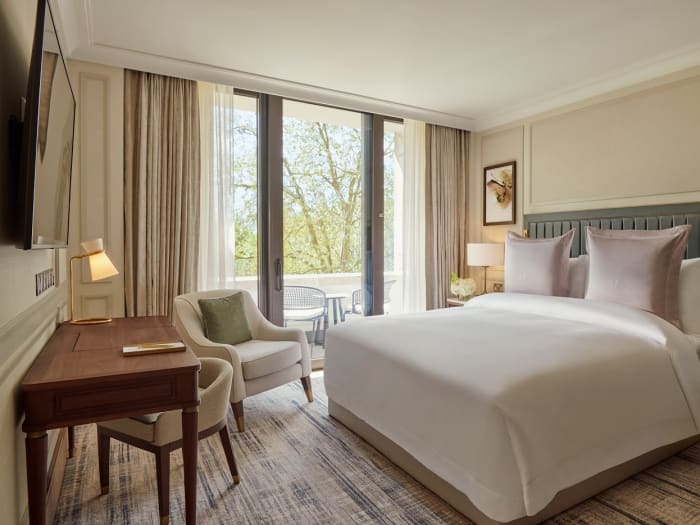
In a great city hotel, the room is never merely a place to pass through. It must function as a refuge, a temporary office, a place to recover after a full day, and sometimes even as a private sitting room when the pace of travel requires slowing down. At Jumeirah Carlton Tower, that logic appears to shape the accommodation experience. While the precise room categories are not detailed here, the hotel’s positioning suggests a clear promise: high-end comfort designed for varied stays, whether a weekend for two, a business trip or a family break in London.
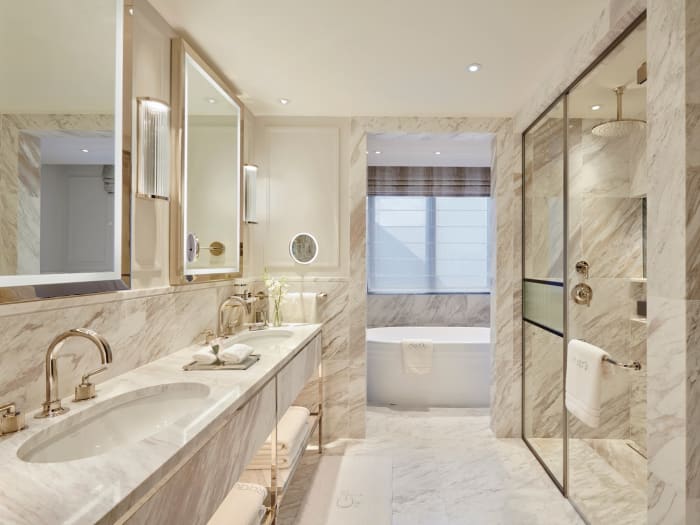
The dialogue between modern design and traditional charm likely finds its fullest expression in the rooms and suites. In this kind of address, success rarely lies in decoration alone; it depends more on the way elements come together to create a sense of calm. Contemporary lines bring clarity, functionality and a certain visual ease. More classical references anchor the whole in a softer, more domestic London register, avoiding the anonymity of some international hotels. The value of this combination is that it allows a room to feel current without becoming quickly dated.
For the traveller, this first translates into a sense of order. Circulation is designed to be simple, storage to support a real stay, and the associated services to lighten daily logistics. Daily housekeeping, turndown service, laundry, luggage storage and wake-up calls all contribute to that overall quality. They are not incidental details: in a hotel of this level, they mark the difference between comfortable accommodation and a true stay experience, where one feels looked after without ever feeling constrained.
In the London imagination, suites often answer a particular expectation: to provide space in a dense city and to allow an added degree of privacy. For families, or for travellers wishing to host, work or simply settle in for longer, that dimension matters greatly. Even without entering into unconfirmed specifications, it is reasonable to see that the hotel, by its status and clientele, also responds to this demand for volume, flexibility and extended comfort.
What matters most, however, is the feeling on returning. After Knightsbridge’s shopping streets, museums, meetings or long walks through the royal parks, the room must become a place of deceleration again. A good London hotel knows how to stage that transition; a very good one makes it almost imperceptible. At Jumeirah Carlton Tower, everything suggests that this continuity is part of the experience: accommodation conceived not as a set piece, but as a breathing space. In a city as intensely stimulating as London, that quality has particular value. It allows guests to experience the city fully without giving up the essential feeling of truly being at home for the duration of the stay.
The Dining Experience
In London, hotel dining plays a unique role. It is not merely an accompaniment to the stay; it contributes to the establishment's integration within its neighbourhood and the rhythm of the city.
At the Jumeirah Carlton Tower, the dining experience naturally extends the address's appeal. It aims to be elegant, practical, and internationally inspired while remaining attentive to the local spirit. In Knightsbridge, the external dining options are vast. Therefore, a hotel must offer more than mere convenience; it must provide a robust alternative, sometimes a refuge, from breakfast through to dinner.
The primary merit of a good hotel restaurant often lies in its adaptability to guests' needs. Business travellers expect punctuality, clarity, and service that respects their schedules. Couples seek an atmosphere, a certain tempo, and the possibility of extending their evening without interruption. Families appreciate the flexibility and simplicity of a well-organised operation.
In an establishment of this calibre, dining is a service in its own right. It demands the same level of attention as reception or concierge services. This consistency distinguishes a mere hotel restaurant from a genuine component of the overall experience.
The setting is as important as the food. In London's premier establishments, the elegance of the dining experience often rests on restraint. A well-proportioned room, precise service, carefully considered lighting, and comfortable materials are sufficient. This aesthetic aligns well with the identity of the Jumeirah Carlton Tower. One can envision spaces conducive to a calm start to the day, a pause between meetings, or a more relaxed return at the end of the day.
Room service also plays a significant role. In a capital with long days, dining in the privacy of one's room or suite remains a true comfort. The same applies to a leisurely breakfast or a late-night snack. The appeal is not solely practical; it embodies a certain idea of urban comfort, allowing guests to choose between the city and retreat, between the neighbourhood's vibrancy and the tranquillity of their private space.
More broadly, dining accompanies a way of travelling. It allows for a balance between external discoveries and more contained moments. It prevents complete reliance on city reservations and maintains genuine flexibility in the organisation of one's stay. In London, this freedom is essential, contributing to a fluid experience where the hotel absorbs some of the city's complexities.
Spa and wellbeing
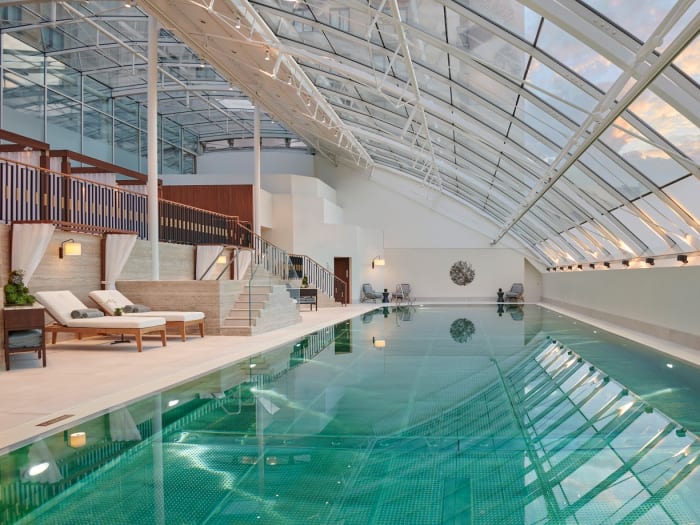
In a metropolis such as London, the wellbeing offer of a grand hotel is not merely a pleasant extra; it answers a genuine need. The city imposes a demanding rhythm, long days, frequent movement and constant stimulation. In that context, having spaces dedicated to recovery within the hotel itself fundamentally changes the quality of a stay. At Jumeirah Carlton Tower, wellbeing naturally fits into this logic of the urban refuge. It extends the hotel’s broader idea: to offer a sophisticated yet legible setting where one can move seamlessly from the city’s energy to a more inward calm.
Wellbeing in a hotel of this category is not limited to the presence of facilities. It also depends on how those facilities are integrated into the overall experience. A fitness or relaxation area only makes sense if it is accessible, well maintained, designed for different travel rhythms and supported by service of the right standard. Some travellers will look for a morning routine, others for recovery after a flight, a day of meetings or several hours spent walking through London. Families, couples and solo guests do not use such spaces in the same way, but all expect the same quality of execution: discretion, cleanliness, ease and an atmosphere that genuinely invites slowing down.
In contemporary luxury hospitality, the spa and wellbeing areas also serve a subtler function: they restore depth to the time of a stay. Guests no longer come only to sleep in a well-located hotel; they also organise moments of recovery, refocusing or care. This shift is especially visible in major capitals, where external intensity can quickly become tiring. A hotel that understands this does not simply provide facilities; it offers breathing space. That is perhaps the best way to understand the wellbeing promise of Jumeirah Carlton Tower: as a counterpoint to London’s density.
This dimension may take varied forms, from an early workout to a more enveloping moment of relaxation at the end of the day. The essential point lies elsewhere: in the possibility of composing one’s own rhythm. Some guests will want to maintain their routines, while others will use the stay as an opportunity to slow down more fully. A great hotel should be able to accommodate both attitudes without ranking them. Wellbeing is not an imposed programme here, but an additional freedom.
Finally, it is worth noting that in London, a city of contrasts and crowded schedules, the quality of a stay is often measured by how easily one can regain one’s centre. An effective, calm wellbeing space, well integrated into the hotel, contributes directly to that feeling. It allows guests to enjoy everything else more fully: walks through the neighbourhood, visits, meetings and evenings out. In that sense, it is not a separate parenthesis from the trip, but one of the conditions for its success. In a property such as Jumeirah Carlton Tower, this promise of rebalancing is fully part of contemporary luxury.
Concierge & Services
The true luxury of a grand urban hotel is often measured by what is not immediately visible. A smooth arrival, a request handled without delay, an effortless late return, and a precisely organised departure are all elements that profoundly transform the experience. At the Jumeirah Carlton Tower, the quality of service stands as one of the pillars of this establishment. With a 24-hour concierge and reception, daily room service, turndown service, luggage storage, laundry, wake-up calls, and a multilingual team, every aspect is designed to support the journey.
The concierge plays a central role in a city like London. Whether it’s booking a car, directing guests to the right neighbourhoods, advising on itineraries, organising a tour, or managing unforeseen circumstances, this expertise goes beyond mere execution. A good concierge anticipates, prioritises, and simplifies. In a luxury hotel, this intelligence regarding the stay is as important as physical comfort.
The continuously open reception complements this promise, providing essential flexibility for international arrivals, early departures, and changes in plans. This constant availability reassures and structures the stay. In a major capital, such readiness also offers a discreet sense of security.
Everyday services are equally significant. Daily housekeeping and turndown service create a continuity of care from morning to evening. Laundry services facilitate longer stays, while luggage storage makes early arrivals and late departures more comfortable. The wake-up call service remains a hallmark of diligence and attention.
What distinguishes a great establishment is not just the list of its amenities, but the way they interconnect. When service is seamless, guests experience a sense of continuity. Everything feels simpler, calmer, and better organised. At the Jumeirah Carlton Tower, this culture of attentiveness forms the invisible fabric of the stay.
The London art of living
Choosing an address in Knightsbridge also means choosing a certain way of inhabiting London. The district cannot be reduced to prestige or shopfronts alone; it offers a very particular experience of the capital, where urban elegance is combined with a genuine quality of walking. From Jumeirah Carlton Tower, one has easy access to that version of London that appeals as much to first-time visitors as to regulars: orderly streets, benchmark shopping, cultural institutions within reasonable reach, and the proximity of major green spaces that remind one how the city can preserve calm at the heart of its density.
The value of staying here lies in the freedom with which days can be composed. One might begin with a quiet breakfast, move on to the area’s boutiques and department stores, continue towards a museum or gallery, then cross a park before returning to the hotel for a pause. This fluidity is precious. It transforms London, often perceived as vast and demanding, into a city that feels more accessible, almost more intimate. The hotel’s role is then decisive: it serves as a fixed point, an elegant reference from which the city becomes easier to read.
Knightsbridge also allows guests to discover a distinctly London form of refinement, based less on display than on precision. Here, luxury is legible in the quality of addresses, in the attention paid to detail, and in the coexistence of long-established traditions with discreet modernity. This tone aligns particularly well with Jumeirah Carlton Tower. The property seems to share with its neighbourhood the same sense of measure: nothing is forced, and everything rests on a balance between visibility and restraint, animation and comfort, international outlook and local grounding.
For couples, the area lends itself to stays shaped by walks, café pauses, cultural visits and returns to the hotel in the late afternoon before going out again for dinner. For solo travellers, it offers an appealing combination of security, centrality and independence. For families, it makes it possible to organise varied days without multiplying complicated journeys. This versatility helps explain why the district remains one of the most sought-after for an upscale stay in London.
Yet the London art of living is not only about places; it is also about tempo. London is often best enjoyed when intensity is alternated with breathing space, discoveries with moments of calm. A well-located, well-serviced hotel makes precisely that possible. It allows for improvisation as much as planning, for very full days as well as slower interludes. From Jumeirah Carlton Tower, this many-sided city becomes easier to embrace. One can explore its great classics, follow impulses for shopping or culture, or simply enjoy the very particular pleasure London offers when experienced from a neighbourhood that is at once central, elegant and deeply lived-in.
Book with MyConciergeHotel
Booking Jumeirah Carlton Tower through MyConciergeHotel means approaching this London address with the right level of preparation and guidance. In a hotel of this category, the difference does not lie only in the choice of room; it also depends on how the stay is thought through in advance. A trip to London can answer very different intentions: a romantic break, a shopping stay, a business trip extended by a weekend, a family interlude during school holidays, or simply the desire to return to the capital within a well-controlled setting. The clearer the purpose, the more precisely the experience can be shaped.
The value of concierge guidance at the time of booking lies exactly there. It makes it possible to place the hotel back into its real use. Depending on the length of stay, the traveller profile, arrival times, mobility needs or the importance attached to the neighbourhood, some accommodation categories will be more relevant than others. Likewise, the organisation of the first services — welcome, luggage handling, particular requests, the rhythm of the days — can transform the experience from the very first hours. In a great urban hotel, everything that smooths the arrival and structures the stay has tangible value.
Booking with discernment also means taking account of the season and the London calendar. The city changes significantly according to the time of year: shopping intensity, cultural attendance, holidays, major events, the rhythm of movement. Jumeirah Carlton Tower is a strong option throughout the year, but expectations will not be the same in winter, during a more inward-looking stay, as in spring or summer, when walks and neighbourhood life play a greater role. Editorial and concierge support helps align the right moment, the right stay format and the right accommodation configuration.
MyConciergeHotel can also help think about the stay as a whole, beyond the room night alone. In a city as rich as London, the real question is not only where to sleep, but how to articulate the hotel with the desires of the trip: shopping, culture, professional appointments, family time, wellbeing moments, dinners or simple walks. An address such as Jumeirah Carlton Tower comes fully into its own when considered as a temporary living base rather than a mere place to stay.
Finally, booking through a specialist in the high-end segment is a search for clarity. Clarity about the hotel’s positioning, the type of experience it offers, the profiles to which it is best suited, and the best way to make the most of it. Jumeirah Carlton Tower speaks to travellers who want London within immediate reach without giving up calm, service and a well-judged elegance. It is precisely in this fine reading of the address that MyConciergeHotel finds its role: helping guests choose not only a hotel, but the right way to inhabit it.