History & positioning
Jumeirah Creekside Hotel embodies a contemporary reading of hospitality in Dubai, away from the purely resort-led image often associated with the city. Its identity is first understood through its setting, in the wider Deira and Dubai Creek area, where the emirate’s urban history took shape through trade, maritime exchange and early commercial districts. Choosing this address means favouring a Dubai of movement, connections and rhythm rather than a purely leisure backdrop. That distinction matters, as it gives the hotel a particular character within the local luxury landscape.
Its belonging to Jumeirah, a Dubai-born hospitality group associated with polished service, reinforces this impression of a property designed for travellers seeking both efficiency and refinement. Here, luxury is not built on excess but on control: contemporary spaces, smooth organisation and an ongoing attention to the practical details of a stay. For an international clientele in transit, on business or exploring the city, this approach feels especially relevant. It responds to the reality of Dubai as a city of connections, short stays and longer stopovers, where the quality of a hotel is measured as much by atmosphere as by its ability to simplify movement.
The very name Creekside suggests a symbolic closeness to the Creek, the historic waterway around which old Dubai developed. Without claiming heritage in the European sense, the hotel belongs to a foundational geography. It appeals to guests wishing to experience the city in continuity: the international airport, older districts, shopping areas, business zones and major leisure hubs remain relatively easy to reach. In a metropolis where distances can quickly reshape a day, that practical centrality is a genuine advantage.
The property also stands out for its hybrid positioning. It suits business travellers thanks to its proximity to the airport and the service logic expected from a major international hotel. It also works well for families, who find here a comfortable base with good access to the city’s main points of interest. Couples, meanwhile, often appreciate this more urban and composed version of a Dubai stay, where relaxation, cultural outings, shopping and dining can be combined without relying on a purely beach-focused programme.
In a city known for dramatic architectural gestures, Jumeirah Creekside Hotel adopts another language: that of contemporary, well-managed luxury. It does not need to overstate its status to persuade. Its appeal lies in the balance it offers between destination hotel and transit address, between discreet refinement and genuine functionality. For seasoned travellers, that is often the difference between a stay that is merely comfortable and one that feels truly well considered.
The hotel
The first strength of Jumeirah Creekside Hotel is its strategic location. Close to Dubai International Airport, it allows guests to reach the hotel quickly after a long-haul flight and to depart without turning the final day into a logistical exercise. For a destination often used as a stopover, an extended transit point or a gateway to the wider Gulf, this ease of access materially changes the travel experience. It reduces fatigue, protects schedules and leaves more room for the stay itself.
Yet the address is not defined by convenience alone. It also offers relatively easy access to the city’s major poles: historic districts around the Creek, shopping areas, business centres, leisure infrastructure and key road networks. Dubai is a fragmented city made up of distinct zones that are connected rather than walked through. In that context, staying in a well-linked hotel is essential. Jumeirah Creekside Hotel answers that need by providing an urban base from which days can be organised with flexibility.
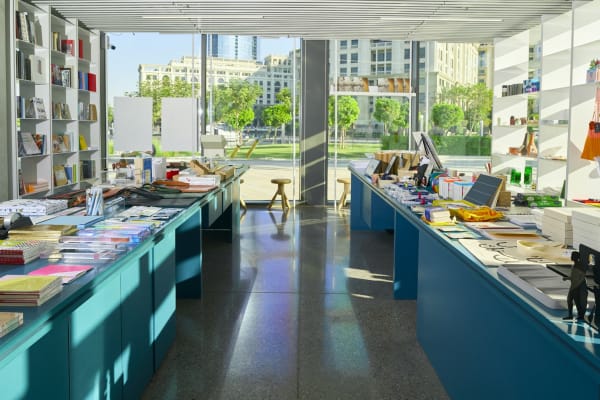
The overall atmosphere of the public spaces rests on a contemporary and refined aesthetic. It reflects the visual language of a certain kind of international luxury hospitality: clean lines, controlled volumes, a restrained palette and lighting designed to soothe without dimming. This is not a hotel that seeks to impress through scale alone, but rather one that establishes an immediate sense of comfort. After the intensity of the city, the airport or a day of meetings, that restraint becomes a quality in itself.
The guest profile also contributes to the property’s identity. Business travellers, families and couples on a city break all find their place here. This mix is not a compromise; it reflects the hotel’s versatility. Corporate guests value smooth service, round-the-clock reception and proximity to major transit points. Families appreciate an environment flexible enough to shape a stay without rigidity. Visitors discovering Dubai, meanwhile, benefit from an elegant anchor point that is less isolated than a resort and more connected to the city’s actual rhythm.
In practical terms, the hotel focuses on the essentials that matter in an urban five-star setting: reception at all hours, concierge service, daily housekeeping, turndown, luggage storage, laundry and multilingual staff. There is nothing ostentatious in this list, yet everything needed to make a stay feel frictionless. It is often here that a hotel’s quality is truly revealed: in its ability to make things easy, discreetly.
Jumeirah Creekside Hotel therefore appeals to travellers seeking a Dubai that is accessible, well connected, contemporary and comfortable. It does not promise a retreat cut off from the world; rather, it offers an elegant way of inhabiting the city, even for only a few days. For many guests, that is exactly what a major urban address should provide today.
Rooms and suites
In an urban hotel of this category, the room is not merely a place to sleep: it becomes a space for recovery, preparation and sometimes work. At Jumeirah Creekside Hotel, that multi-layered function appears to shape the expected experience. In keeping with the rest of the property, the overall spirit is one of contemporary comfort that is clear, composed and free from excess. One imagines volumes designed to let light and sightlines move easily, with décor favouring calm elegance over theatrical effect.
This kind of address attracts guests with very different rhythms. Some arrive late after an international flight and need an environment that feels immediately restful. Others move between meetings, appointments and journeys across the city, and expect a room to be as functional as it is pleasant. Families, meanwhile, look for straightforward layouts, well-kept spaces and a sense of ease in daily use. In that context, the quality of a room is measured by its ability to accommodate varied needs without losing aesthetic coherence.
Daily housekeeping and turndown service contribute to that sense of ongoing care. These are discreet yet essential touches in a five-star hotel: returning at the end of the day to a room restored to order, finding a calmer atmosphere in the evening, feeling that the stay is being supported without intrusion. Laundry service extends this logic, particularly valuable for business trips, longer stopovers or family travel, where managing clothing quickly becomes a practical concern.
In a city like Dubai, where one moves rapidly from one highly animated environment to another, the room must provide a counterpoint. It serves as a climate-controlled refuge, a pause between parts of the day and sometimes even a temporary office. That is why seasoned travellers value ergonomics as much as style. A good hotel room in Dubai is not simply attractive; it must be easy to inhabit. The appeal of an address such as this lies precisely in that balance between standing, practicality and calm.
For guests seeking greater ease, suites generally extend the same philosophy with more space in which to host, relax or work in better conditions. Without relying on spectacle, that additional volume changes the perception of a stay, especially over several nights. It allows a more domestic rhythm to emerge, which matters in a destination where days can be long and full.
Ultimately, the rooms and suites at Jumeirah Creekside Hotel are best understood as a natural extension of the hotel’s wider positioning: contemporary high-end hospitality designed for mobile, discerning travellers. One does not come here for excessive staging, but for comfort that feels right, lasting and well executed. It is often this kind of quality, less dramatic yet more consistent, that leaves the strongest impression.
Dining
In Dubai, hotel dining plays a particular role. It does not merely feed guests; it structures the rhythm of the day, serves as a meeting point, a transition space or a place to unwind, and contributes fully to a property’s identity. At a hotel such as Jumeirah Creekside, one expects a culinary offering that is both suited to an international clientele and consistent with the house style: contemporary, polished and accessible without being generic.
Breakfast is often the most revealing moment in this kind of hotel. It must suit very different needs: an early departure to the airport, an important meeting, a day of sightseeing or a slower morning. The quality of service is then measured in pace, freshness, clarity of offer and attention to individual preferences. A strong urban hotel succeeds at breakfast when it manages to be both efficient and pleasant, without feeling mechanical. That is the sort of balance naturally associated with a Jumeirah address.
The rest of the day calls for other registers. A light lunch between appointments, an informal coffee, a more settled dinner after a full day: dining must be able to support several stay scenarios. In a cosmopolitan city such as Dubai, this generally implies a certain openness of style, with options likely to appeal to travellers from many backgrounds. The goal is not to multiply influences artificially, but to maintain consistency, precision and a sense of culinary ease.
For business travellers, hotel dining also serves a social function. It allows meetings to take place without leaving the property, provides a controlled setting for conversation or simply extends an exchange in a calm environment. For couples and families, by contrast, it offers welcome convenience: being able to dine on site after a day of movement, without giving up on a pleasant experience, is a genuine urban luxury. Here again, the key word may be less sophistication than fluidity.
In keeping with the spirit of the hotel, one imagines dining spaces that extend its wider aesthetic: contemporary lines, a composed atmosphere and attentive service without unnecessary formality. The right tone for a hotel restaurant today often lies in this ability to feel well run without becoming intimidating. In Dubai, where the external dining scene is broad and highly competitive, a hotel only keeps guests at table if it offers genuine quality of execution and an immediate sense of comfort.
At Jumeirah Creekside Hotel, dining should therefore be understood as an element of continuity. It does not necessarily seek to stand alone as a destination in itself, but rather to support the stay with accuracy and ease. For many travellers, that is precisely what one expects from a major urban address: well-considered meals, dependable service and an atmosphere that accompanies the journey rather than complicating it.
Concierge & services
In high-end hospitality, services are not merely a list of options; they form the invisible architecture of a stay. At Jumeirah Creekside Hotel, this dimension is especially important, as the property welcomes very different kinds of travellers and sits in a city where time, distance and schedules can quickly become sensitive variables. A hotel’s quality is then measured by its ability to absorb that complexity and make it almost imperceptible to the guest.
Round-the-clock reception and a 24-hour concierge are, in this context, far more than standard features. They respond to the reality of an international destination where late arrivals, night departures and changing plans are part of daily life. Being able to rely on continuous assistance reassures, simplifies and smooths the experience. For a business traveller, it means greater flexibility. For a family, it offers the certainty of never being left without a practical solution. For a couple on a short break, it creates more freedom to improvise.
Multilingual staff also play an essential role in a city as cosmopolitan as Dubai. The quality of an exchange, the accuracy of a recommendation, the understanding of a specific request: all of this often depends on nuances of language. In the best hotels, this skill is barely noticed because it feels so natural. Yet it contributes directly to the guest’s sense of comfort and confidence.
Daily services such as housekeeping, evening turndown, luggage storage, laundry and wake-up calls belong to the same logic of continuity. Taken separately, they may seem ordinary. Together, they create a stay without friction, where practical details cease to be concerns. This is especially valuable in Dubai, a city of often densely scheduled trips, where one may move from a flight to a meeting, from lunch to sightseeing and then to dinner with little pause in between. A well-run hotel becomes a discreet partner in the journey.
At this level, concierge service also acts as a mediator with the city. It helps turn a metropolis impressive in scale into an experience that feels more legible: route advice, transport arrangements, recommendations suited to the nature of the stay, assistance with booking activities or restaurants. Even when a traveller has planned an itinerary in advance, the ability to refine it on site with a capable interlocutor often changes the quality of each day.
This sense of service aligns closely with the DNA expected of a Jumeirah property. It is not simply about being available, but about anticipating with tact, responding with precision and maintaining a kind of operational calm. In a hotel world where many establishments claim excellence, it is often these quiet gestures that distinguish the truly well-run addresses. Jumeirah Creekside Hotel appears to belong to that category: hotels that understand that in a city, luxury often begins with perfectly organised simplicity.
The Dubai art of living
Staying at Jumeirah Creekside Hotel means approaching Dubai through a particularly interesting gateway: that of an active, connected and multifaceted city where, over a few days, one can combine recent heritage, mercantile memory, contemporary architecture, shopping, dining and leisure. Thanks to its location, the hotel makes it possible to shape a stay that is not limited to a single image of the emirate. This is undoubtedly one of its main attractions for travellers wishing to understand Dubai beyond its clichés.
The Creek area remains essential to grasping local history. It was around this waterway that the commercial exchanges shaping old Dubai first developed. Although the city has since projected itself towards spectacular districts and large-scale infrastructure, this foundational geography still informs part of its identity. From a hotel situated within this urban sphere, it becomes more natural to alternate between the city’s different faces: historic zones, major shopping centres, business districts and leisure spaces.
For visitors, Dubai is often discovered in sequences. The morning may be devoted to a more cultural or heritage-led exploration; the afternoon to meetings, shopping or architectural visits; the evening to dinner or a walk in another district. This highly mobile way of inhabiting the city requires a base that is reliable, well connected and comfortable. Jumeirah Creekside Hotel answers that logic by offering an urban anchor point that facilitates movement without imposing the isolation of a peripheral resort.
The local art of living also rests on a certain management of climate and time. Between November and April, the city is especially pleasant for travel, with milder temperatures that make movement and outdoor activities more agreeable. Yet whatever the season, Dubai works through contrasts: outdoor heat and indoor cool, the intensity of major roads and the calm of hotels, dense schedules and the need for pauses. A good address must know how to accompany that rhythm. Here, the hotel’s contemporary and refined atmosphere plays precisely that role of counterpoint.
Another singularity of Dubai lies in the diversity of its visitors. People travel here for business, holidays, a stopover, an event, and sometimes all of these at once. A hotel capable of welcoming families, couples and business travellers without losing its coherence becomes especially relevant. That is the case here, allowing each guest to build a personal relationship with the city: more cultural, more practical, more relaxed or more intensive.
In short, Jumeirah Creekside Hotel opens the way to a Dubai of intelligent movement, urban comfort and open possibilities. It does not seek to confine the stay within a single experience; rather, it provides the conditions for each guest to shape their own. In a metropolis as fluid as this one, that well-supported freedom may well be one of the most contemporary forms of luxury.
Book via MyConciergeHotel
Booking the Jumeirah Creekside Hotel through MyConciergeHotel means opting for a more guided approach to your stay rather than a mere transaction. In a destination like Dubai, where the hotel offering is vast and segmented, this mediation holds real value. Not all five-star establishments meet the same expectations. The difference often lies in concrete elements: location, client profile, the pace of the venue, transportation, and suitability for transit, business trips, romantic getaways, or family holidays.
The Jumeirah Creekside Hotel exemplifies this type of choice. Its appeal lies in a coherent set of qualities: proximity to the international airport, easy access to major points of interest, a contemporary and refined atmosphere, and the ability to cater to various travel needs. This address stands out as an excellent upscale urban hotel, particularly relevant for travellers seeking to combine comfort, efficiency, and access to the city.
The support from MyConciergeHotel allows for a more nuanced understanding of this choice. Depending on the length of stay, arrival time, travel composition, sightseeing priorities, or desired degree of flexibility, the same address can be experienced differently. A couple on an extended layover will have different expectations than a family exploring the city or a business traveller with a tight schedule. Being able to book with an understanding of these nuances helps in making a more informed decision.
This logic also applies to the organisation of the stay. In a city of great contrasts like Dubai, the experience heavily depends on how one articulates the hotel with the rest of the itinerary: transfers, timings, activity bookings, daily rhythms, and the balance between sightseeing and relaxation. A well-prepared stay allows for full enjoyment of the destination without being hindered by logistical constraints.
Booking via MyConciergeHotel is about seeking more than just a rate or availability. It prioritises a thoughtful selection, a keen understanding of each address's positioning, and a more qualitative approach to travel. For the Jumeirah Creekside Hotel, this approach is particularly pertinent. The hotel reveals its true value when chosen for the right reasons: its location, versatility, urban comfort, and ability to support a dynamic Dubai experience.
For travellers who appreciate well-thought-out hotels that are efficient without being cold, and elegant without being ostentatious, this address deserves special attention. MyConciergeHotel provides that additional level of insight that often makes all the difference.