History & philosophy
Six Senses Dubai belongs to a new generation of luxury addresses that seek not merely to impress through scale or spectacle, but to offer a more conscious way of inhabiting the city. In Dubai, where hospitality has long been associated with architectural bravura, an establishment shaped by wellbeing and sustainability introduces a notably different tone. The point is not to stand apart from the emirate’s energy, but to reinterpret it through a slower, more attentive lens: better sleep, balanced routines, urban immersion paired with recovery, and a form of comfort that does not ignore environmental responsibility.
The Six Senses identity is widely associated with high-end hospitality, holistic wellbeing and an informed sensitivity to sustainability. In Dubai, that philosophy takes on particular relevance. The city is a place of contrasts, driven by innovation, international business, leisure and a highly visible modernity. An urban resort here that places sustainability at the centre of the stay does more than add a few responsible gestures to a conventional luxury experience; it proposes a different definition of luxury altogether, one built on considered materials, mindful resource use, structured wellness programming and services designed for travellers who want to restore as much as they want to explore.
This also explains the range of guests to whom the hotel naturally appeals. Couples will find a setting that encourages decompression without complete seclusion; families can expect a smoother stay in which space, comfort and service matter as much as location; business travellers, meanwhile, are offered the efficiency of a city hotel with genuine opportunities to recover between appointments. This versatility is not a compromise. Rather, it reflects a contemporary understanding of luxury: a place able to accommodate different rhythms and purposes without losing coherence.
The hotel should also be viewed within a broader shift in high-end travel. Many guests today are no longer looking only for a beautiful room or a striking view, but for an experience that feels meaningful in practical, everyday ways. Time at the spa, indoor air quality, attention to rest, the ability to maintain movement and healthy eating habits, and discreet service all matter as much as design. Six Senses Dubai speaks directly to that expectation. Its heritage is not that of a historic grand hotel in the European sense; it belongs instead to an international culture of luxury resort hospitality, translated for a major Gulf metropolis.
That is what gives the address its distinct character. It is not built on an old-world patrimonial narrative, but on a highly contemporary vision of hospitality in which elegance is measured less by accumulation than by precision: precision in spaces, service, use and intent. For a stay in Dubai, this changes the tone of the experience considerably. One does not come here only to see the city; one also chooses a calmer, more deliberate way of moving through it.
The Establishment
Presented as an urban resort in the heart of Dubai, Six Senses Dubai occupies a unique position within the local hospitality landscape. Here, the term 'resort' does not imply isolation by the sea or in the desert; rather, it evokes the ability to recreate a sense of retreat within the city itself. This address thus offers a grounding point in a dense and bustling metropolis while allowing for moments of respite. For the traveller, this enables a seamless transition from a busy work agenda, a day of sightseeing, or a shopping spree to a more tranquil environment, without breaking away from the urban dynamic.
Dubai is often discovered in fragments. Business districts, major thoroughfares, beaches, marinas, shopping centres, recent cultural institutions, and leisure activities coexist within a constantly evolving geography. In this context, choosing a centrally located hotel is not merely a matter of convenience; it is also a way to optimise one's stay. A hotel situated in the heart of the city allows for more flexible days, minimises transfers, and increases the range of experiences. Morning business meetings, lunch in the city, a wellness break at the hotel, dinner on-site, or an evening outing—this fluidity is crucial in Dubai, where distances can quickly reshape the organisation of a day.
The overall atmosphere strikes a balance between urban sophistication and relaxation. Guests do not come here seeking decorative orientalism but rather a contemporary interpretation of comfort. In an urban resort focused on well-being, this translates into calming circulation, well-integrated rest areas, thoughtfully designed lighting, and an overall sense of order.
The establishment also adapts to different types of stays. For couples, it can serve as a base to explore Dubai without sacrificing moments of retreat. For families, the concept of an urban resort truly comes into its own, suggesting services, logistics, and hospitality that can make the stay more comfortable, even when the rhythms differ between adults and children. For business travellers, the hotel meets another expectation: that of a place where one can work efficiently, host meetings, organise travel, and then find a conducive environment for recovery.
The best time to enjoy Dubai is during the milder months from November to March. The city then lends itself more readily to movement, outdoor terraces, and activities. During this season, Six Senses Dubai truly shines, becoming both a temperate refuge and an ideal base for exploring a destination that is experienced as much in its interiors as in its open horizons. It is this dual nature—urban and rejuvenating—that best defines the establishment.
Rooms, suites & the rhythm of the stay
In a hotel whose promise rests so strongly on wellbeing, the room cannot be reduced to a mere accommodation category. It becomes the traveller’s primary tool for recovery. In Dubai, where days can be long, climatically contrasting and often densely scheduled, the quality of the private space matters even more. At an address such as Six Senses Dubai, one expects rooms and suites designed not only for immediate comfort, but for the quality of the stay over time: rest, privacy, ease of use and a genuine sense of refuge once the door is closed.
The language of contemporary luxury has evolved. It is no longer only about generous proportions or expensive materials, even if those naturally contribute to the experience. What truly distinguishes a fine room today is the way it supports the ordinary gestures of travel: sleeping deeply despite jet lag, working for a few hours without turning the space into an impersonal office, taking time over tea or in-room dining, getting ready for an evening out, or simply doing nothing at all. In a wellbeing-led hotel, one expects ergonomics, acoustics, bedding, lighting and internal flow to have been considered with particular care.
For couples, the room should offer a form of elegant retreat, sufficiently enveloping for the stay to retain an intimate dimension even in the middle of a major city. For families, other criteria come into play: legibility of space, practicality and the ability to organise rest without unnecessary complication. Business travellers, meanwhile, often look for a room capable of absorbing several functions in the same day: early rising, swift preparation, working time, a pause between appointments and then calm in the evening. A hotel that manages this balance makes the entire stay markedly smoother.
Service is decisive here. Daily housekeeping, turndown service and a front desk available around the clock are not merely standard features; they are what allow the room to remain stable, orderly and welcoming whatever the traveller’s schedule. After a late arrival, an early flight or a day full of movement, returning to a space quietly reset changes the perception of the stay at once. In luxury hospitality, it is often these silent continuities that matter most.
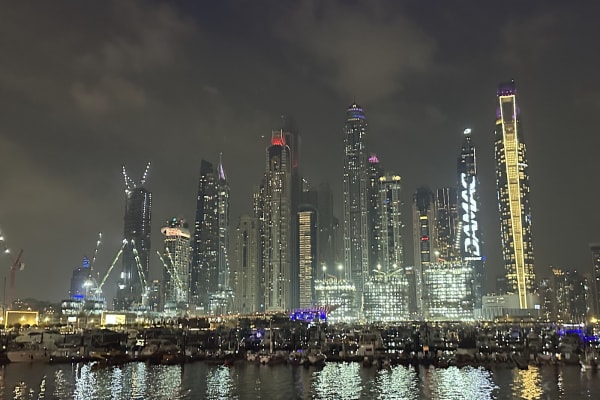
In Dubai, the room is also a point of observation. Even without detailing unconfirmed room categories or views, one can say that an urban hotel of this level inevitably enters into dialogue with the city: skyline lines, changing light, a sense of height or retreat depending on the space. Yet the essential point lies elsewhere. In the Six Senses spirit, the room is not designed to distract the body; it seeks to place it back at the centre. In this context, true luxury is not the accumulation of objects or effects, but the possibility of finding one’s proper rhythm again. Sleeping better, waking more easily, recovering faster and inhabiting the space without effort: that is what one expects here, and it is precisely what gives a well-conceived stay its meaning.
The Dining Experience
In Dubai, hotel dining holds a special place. The city thrives on its restaurants, brunches, and social venues. In a hotel like Six Senses Dubai, the culinary offerings play a significant role in the coherence of the stay.
When an establishment emphasises well-being and sustainability, it influences how meals are conceived. Balance, seasonality when possible, clear menus, and attention to dietary preferences are all paramount here.
Luxury is not merely about multiplying options; it lies more in the quality of intention. A well-constructed breakfast often holds as much value as a more ceremonial dinner, setting the tone for the day.
Fruits, warm dishes, comforting beverages, and tailored choices cater to varying rhythms. In a city where one alternates between air conditioning, travel, meetings, and sunshine, enjoying a good breakfast is no small detail.
The sustainable approach is also evident in the dining experience. Reducing waste, selecting ingredients carefully, adopting a more responsible sourcing strategy, and discreet education are among the expectations. The credibility of a venue often hinges on these concrete decisions.
For couples, on-site dining maintains a sense of continuity throughout their stay. It is appreciated to be able to dine without leaving the hotel, especially after a busy day. For families, flexibility remains essential. For business travellers, the dining experience must fulfil multiple functions.
The gastronomic experience in a luxury urban resort is not necessarily one of technical demonstration. It can be more subtle, more everyday, yet also more authentic. In Dubai, where external dining options are abundant, a hotel must offer a dining experience that aligns with the spirit of the establishment.
Spa & wellbeing
If there is one area in which Six Senses Dubai clearly asserts its difference, it is wellbeing. In international luxury hospitality, many hotels now have a spa; far fewer make it the true centre of gravity of the experience. Here, wellbeing does not appear as a decorative parenthesis added to the stay, but as an organising logic. That changes the way the hotel is lived. One does not simply book a treatment between two activities; one may structure the entire stay around a need for recovery, recalibration or renewed energy.
In Dubai, that promise has particular resonance. The city is stimulating, fast, bright and often intense. It can exhilarate as much as it exhausts. In that context, a hotel that takes rest seriously answers a distinctly contemporary expectation. The spa becomes a space of regulation. Guests come to release the tensions of travel, offset the effects of jet lag, recover better sleep or simply restore continuity between body and mind after highly demanding days. The advice to reserve treatments in advance during high season is telling: it speaks to the central place this dimension occupies within the overall experience.
The Six Senses approach is generally associated with a holistic vision of wellbeing. Without detailing unconfirmed protocols, one can reasonably expect an offering that goes beyond the classic massage to include a more personalised reading of needs: relaxation, energy, recovery and balance. What distinguishes a great spa is not only the technical quality of treatments, but the way they are integrated into a coherent journey. The welcome, the time allowed before and after, the quality of silence, the temperature of the spaces, the skill of practitioners and the ability to adjust the experience to the traveller all matter as much as the treatment itself.
For couples, the spa can become a ritual of the stay, a way of marking arrival or suspending time in the middle of an urban programme. For business travellers, it often represents a very concrete, almost strategic tool for recovery. For families, meanwhile, the presence of a strong wellness component contributes to the overall balance of the stay: each person can find time for themselves, which makes the shared experience more harmonious.
Wellbeing in an address such as this is not limited to the spa. It potentially informs the entire stay: quality of rest in the room, attention to food, the possibility of maintaining a movement routine, service smooth enough to reduce mental load and an overall atmosphere conducive to decompression. It is this coherence that gives the property its strength. A successful treatment produces a momentary effect; a hotel conceived around wellbeing changes more durably the way one feels over several days.
In a city often associated with excess, Six Senses Dubai therefore proposes another reading of luxury: not permanent intensification, but the ability to recover a sense of inner space. For many travellers today, that is one of the most valuable forms of sophistication.
Concierge & Services
Hotel luxury is rarely measured by what is immediately visible; it reveals itself in the continuity of service. An establishment supports the stay without burdening it, anticipating needs without becoming intrusive, transforming practical gestures into a seamless experience.
Six Senses Dubai features a concierge and reception open 24/7. The hotel also offers daily room service, a turndown service, luggage storage, laundry, wake-up calls, and a multilingual team. Taken individually, these elements may seem expected in a five-star establishment, but together they create a tangible promise of operational comfort.
In Dubai, this aspect is essential. The city operates on broad timeframes, and travel can be complex. Stays often blend business, leisure, shopping, appointments, excursions, and downtime. In this context, the constant availability of the reception and concierge becomes a valuable tool for managing time. Late arrivals, early departures, changes in plans, logistical assistance, or last-minute reservations are part of daily life.
The concierge acts as a mediator between the hotel and the city. In a destination as rich in offerings as Dubai, a traveller can easily become overwhelmed by abundance. A knowledgeable concierge helps prioritise, tailoring suggestions to the client's profile, avoiding time wastage, and enhancing the overall experience. For a couple, this might manifest as a well-planned evening; for a family, as simplified logistics; for a business traveller, as discreet assistance in orchestrating movements and schedules.
Room service and housekeeping also contribute to this overall quality. Daily service ensures a consistently maintained room, while the turndown service reintroduces a sense of care and preparation for rest at the end of the day. Laundry services address a practical need in a hot and active city, and luggage storage optimises early arrivals and late departures.
The multilingual team deserves special mention. In a global destination like Dubai, the quality of interaction relies on clear communication. Being understood quickly, making specific requests, and clarifying needs related to health, transport, or family organisation without ambiguity—this represents a discreet yet crucial comfort.
Ultimately, the services at Six Senses Dubai are valuable not just for their list but for their ability to lighten the stay. True luxury is not about having access to everything; it is about the feeling that everything becomes simpler. When an establishment achieves this, it frees up time, attention, and energy. This is often what travellers remember most enduringly.
The Dubai way of life
Staying in Dubai often requires an adjustment of perspective. The city is too often reduced to a handful of clichés, somewhere between architectural records, spectacular shopping and demonstrative hospitality. In reality, it is better understood when one accepts its plurality. Dubai is at once an international platform, a transit point turned destination, a city of work, sea, leisure and urban experimentation. Choosing a hotel such as Six Senses Dubai makes it possible to approach that complexity with greater nuance, because the property encourages guests not to experience the city solely through intensity.
One of Dubai’s first pleasures lies in its capacity for juxtaposition. Within a few hours, one can move from a business district to a waterfront walk, from a cosmopolitan lunch to a restorative pause, from a cultural sequence to a more social evening. That mobility is part of the local way of life. Yet it can also be tiring if not balanced properly. This is where a wellbeing-led urban resort becomes especially valuable: it allows for more intelligent days, preserves pauses and prevents abundance of options from being mistaken for the actual quality of a stay.
The most pleasant season, from November to March, reveals this dimension particularly well. Milder temperatures make the city easier to navigate, terraces return to the centre of social life and one benefits more fully from transitions between indoors and outdoors. It is often then that Dubai appears at its most appealing: less as a showcase, more as a city of rhythms, light and uses. One understands that it is not defined only by its icons. It is also lived through the quality of a calm morning, a well-placed lunch, an urban sunset or a return to the hotel at exactly the right moment.
For couples, Dubai can offer a surprisingly balanced stay, provided one does not try to see everything. A few well-chosen experiences, alternated with moments of rest, often create a more memorable trip than an overfilled programme. For families, the city has the advantage of logistical clarity and a varied offering, provided there is a comfortable base. For business travellers, meanwhile, it combines international efficiency with genuine possibilities to extend a trip through moments of leisure or discovery.
The Dubai way of life also rests on a certain mastery of contrast: exterior heat and interior coolness, public energy and private retreat, infrastructural speed and the chosen slowness of certain moments. A hotel such as Six Senses Dubai fits precisely into that dialectic. It does not seek to isolate the traveller from the city, but to give them the means to experience it better. That is an important nuance. The stay is not conceived as an escape from urban reality, but as a more balanced way of inhabiting it.
For those willing to read it in this way, Dubai becomes a subtler destination than is often assumed. And the hotel, far from being a mere backdrop, becomes the instrument through which one finds the right tempo.
Book with MyConciergeHotel
Booking Six Senses Dubai through MyConciergeHotel means approaching the stay through guidance rather than mere transaction. In a destination such as Dubai, where the hotel landscape is extensive, highly competitive and sometimes difficult to read from the outside, the value of editorial advice and expert intermediation is real. Not all five-star hotels offer the same experience, even when they display similar standards. What matters is the fit between the property and the way you travel. Six Senses Dubai naturally speaks to specific profiles: travellers attentive to wellbeing, couples seeking a calmer urban setting, families looking for a comfortable and structured base, or business guests wishing to combine efficiency with recovery.
Booking through MyConciergeHotel first makes it possible to assess that fit. The point is not only to reserve a room, but to prepare a coherent stay. Should certain dates be preferred in order to enjoy the city at its best? How should spa time be integrated into an already dense programme? What rhythm helps avoid the sense of saturation often associated with Dubai? Which services should be anticipated for a late arrival, an early departure, a family stay or a business trip? These practical questions are what separate a correct trip from one that feels genuinely fluid.
One of the key advantages of concierge-style support also lies in anticipation. In a hotel where wellbeing is central, certain experiences benefit from being arranged in advance, particularly spa treatments during the high season. Booking early not only secures preferred time slots, but also helps structure the stay around moments of recovery that are truly protected. This matters especially in Dubai, where days fill quickly and where the impact of heat, transfers and urban pace is often underestimated.
MyConciergeHotel also brings a more nuanced reading of the property. The aim is not to promise a uniformly spectacular stay, but to direct guests towards what the hotel does best. In this case: offering a high-end urban experience centred on wellbeing, with a sustainability-minded outlook and services suited to several types of traveller. That precision is essential. It allows guests to book for the right reasons, with accurate expectations, and therefore with greater satisfaction on arrival.
For couples, the service can help shape a more harmonious stay, alternating discovery with moments of pause. For families, it eases logistical preparation. For business travellers, it helps secure the usual points of friction: timing, transfers, organisation of time and recovery needs. In every case, the principle remains the same: simplify what should be simplified, so that the essential can be preserved.
Booking through MyConciergeHotel, finally, means choosing a more editorial approach to luxury. Not the accumulation of abstract promises, but the identification of a place for what it truly is, and the construction around it of a stay in the right measure. For Six Senses Dubai, that measure can be summed up in one word: balance. Between city and retreat, activity and rest, efficiency and softness. It is along that line that the experience finds its full meaning.