History & heritage
Overlooking Hyde Park in one of Knightsbridge’s most established settings, Mandarin Oriental Hyde Park, London belongs to that rare category of London hotels whose identity is inseparable from the city’s own layered history. Luxury here is not built on display, but on a distinctly British sense of elegance: a historic façade, an immediate relationship with the park, and a carefully judged balance between grand-hotel tradition and contemporary expectations. The hotel sits within a district shaped by institutions, prestigious residences, fashion houses and department stores, all of which contribute to a long-standing idea of international London.
What stands out, beyond the name and address, is precisely this controlled dialogue between heritage and modernity. The building faces Hyde Park in a way few London hotels can: not merely as a backdrop, but as a daily source of light, space and calm. This proximity to one of the capital’s great royal parks gives the hotel a particular tone. There is something of the great London townhouse in its spirit, with its sense of discretion, flow and preserved privacy, yet translated into the language of an international luxury hotel.
The Mandarin Oriental identity adds another layer. The brand is associated with highly attentive service, detail-driven hospitality and a polished sense of care. In London, that signature takes on an interesting form: it does not attempt to erase the character of the place, but rather to support it. The result is an address where one feels both the weight of the neighbourhood, the dignity of a historic setting and the flexibility of a hotel designed for present-day travel, whether for leisure, business or a quieter city stay.
The history of such a hotel is also measured by its ability to remain relevant. London has no shortage of distinguished addresses, yet not all succeed in maintaining this balance of prestige, comfort and natural ease. Mandarin Oriental Hyde Park, London relies on enduring strengths: a rare location, a peaceful atmosphere despite the intensity of the city, and a way of hosting that values continuity of experience. Guests do not choose it simply to tick off a well-known name; they choose a particular relationship with London, one that feels more composed, more discreet and at times almost residential.
This idea of heritage should not be confused with nostalgia. It is expressed instead in the way the hotel brings the codes of the grand London hotel into conversation with a more current aesthetic. Travellers attentive to interiors, materials, light and rhythm will notice that the property resists becoming a period piece. Everything appears designed to preserve the dignity of the setting without turning it into a museum. That, perhaps, is one of the most convincing forms of contemporary luxury: respecting a place, its geography and its implied history, while delivering comfort that is entirely rooted in the present.
The property
The first privilege of Mandarin Oriental Hyde Park, London is its position. In London, an address often matters as much as the hotel itself, and this one has a rare sense of inevitability. On one side, Hyde Park unfolds in avenues, open views and a slower rhythm; on the other, Knightsbridge reminds guests that they are in the heart of an active, elegant and intensely cosmopolitan capital. This dual reading, between green breathing space and urban density, shapes the entire stay. One can walk towards the cultural institutions of South Kensington, reach some of the city’s most sought-after shopping districts, or simply cross the park to encounter a more contemplative London.
The hotel makes full use of this setting. Views over Hyde Park are a genuine London luxury, not only for their beauty but for the quality of light they bring. At certain hours, the park acts almost as an extension of the interiors: it broadens the perspective, softens the eye and gives the stay a sense of openness that is unusual in a major metropolis. This relationship with the landscape lies at the heart of the hotel’s appeal. It also explains its peaceful atmosphere, often cited as one of its defining qualities. Even when the city is in full motion, the property retains a hushed, protective calm.
Inside, the overall spirit is one of measured elegance. Luxury is expressed through execution, finishes, the coherence of the public spaces and the sense that each area is designed to be lived in rather than merely admired. Travellers familiar with major international hotels will recognise Mandarin Oriental’s discipline; those looking for a more local grounding will also find a distinctly London approach to discretion. This is not a theatrical hotel in the obvious sense, but one that privileges depth of experience over immediate effect.
That impression is reinforced in the circulation spaces, lounges and reception areas, where there is a clear sense of flow. The hotel works equally well for romantic breaks and business stays, and that versatility is part of its success. A couple will find an urban retreat with park views; a business traveller will appreciate the precision of the service, the central address and the ability to return at the end of the day to an environment that is genuinely calm. In London, where many central hotels sacrifice a sense of retreat, that distinction matters.
Finally, the property appeals because it embodies a certain idea of London without slipping into cliché. One feels the capital here in its most convincing form: close to institutions, shaped by service culture, defined by a dialogue between tradition and modernity, and marked by that very British ability to make refinement feel almost natural. For a first stay or a return visit, Mandarin Oriental Hyde Park, London offers an especially well-judged base, allowing guests to inhabit the city rather than simply pass through it.
Rooms and suites
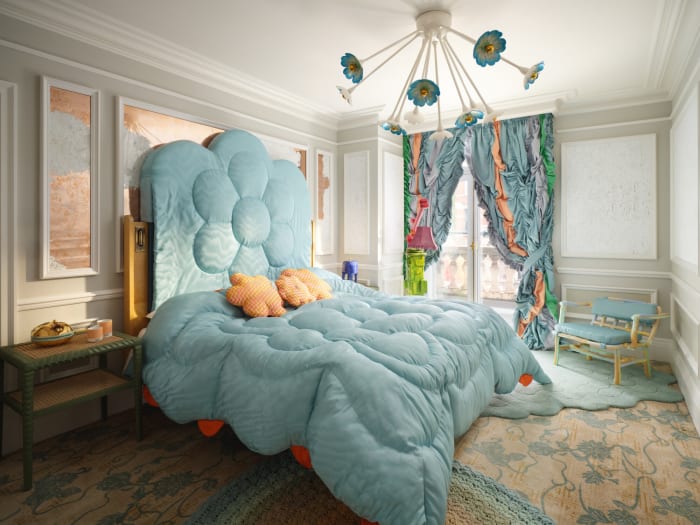
In a hotel of this calibre, a room is never merely a place to sleep. It must act as a counterpoint to the city, especially in London, where the pace of urban life makes the return to calm particularly valuable. At Mandarin Oriental Hyde Park, London, the rooms and suites follow that logic of the sophisticated retreat. The aim is not simply to provide an elegant setting, but to create a space in which one immediately regains a sense of order, comfort and continuity. After a day spent between meetings, museums, shopping or walks through neighbouring districts, that quality of withdrawal becomes especially meaningful.
One of the major attractions of certain categories is, naturally, the view over Hyde Park. In London, an open outlook is already a privilege; when that outlook is a royal park, the experience changes scale. The eye settles on trees, pathways and shifting light, and the room gains an added sense of depth. This relationship with the landscape transforms the quieter moments of a stay: waking up, pausing in the late afternoon, watching the first hours of evening. Without even leaving the room, one remains connected to the city, but to a softer, more breathable version of it.
The overall aesthetic reflects the blend of tradition and modernity noted among the hotel’s defining traits. In the rooms and suites, this is expressed less through dramatic contrast than through balance. References to the classic London grand hotel may be felt in the structure of the spaces, in a certain decorative restraint and in the emphasis on lasting comfort. More contemporary elements appear in the flow of the design, in discreet functionality and in the sense of precision that characterises well-conceived hotels. Luxury here is measured by the absence of friction: everything feels in place, everything supports the stay without weighing it down.
The suites, meanwhile, answer a variety of needs. Some will be particularly well suited to longer stays, romantic city breaks or trips in which guests wish to entertain, work or simply enjoy more generous space. In a major London hotel, the value of a suite is not only a matter of size; it also lies in the quality of silence, the separation of functions and the way the space allows one to move between private life and engagement with the city. It is here that the property takes on an almost residential tone, especially appealing to travellers who seek more than accommodation: a genuine temporary way of living.
Turndown service and daily housekeeping contribute fully to this sense of continuous care. In luxury hospitality, such gestures are not incidental details; they shape the rhythm of the stay. Returning to a room prepared for the evening, sensing that the space has been quietly reset, finding everything immaculate without any feeling of intrusion: these are all signs of mature hospitality. At Mandarin Oriental Hyde Park, London, the rooms and suites feel designed as places of deep rest, but also as privileged vantage points over a calmer side of London.
Dining
In a major London address, dining plays a role that goes far beyond the meal itself. It contributes to the identity of the place, to its daily rhythm and to the way guests inhabit it from morning to night. At Mandarin Oriental Hyde Park, London, this dimension follows the logic of controlled elegance. Without resorting to theatrical effect, the hotel offers a dining experience aligned with its positioning: refined, attentive, urban, yet never disconnected from the primary need for comfort. Guests may come for dinner, certainly, but also for breakfast, a light lunch, tea or a more informal pause between appointments.
The setting matters here as much as the plate. In a hotel facing Hyde Park, dining benefits from a particular visual and emotional context. Depending on the time of day, the light over the park, the activity of Knightsbridge or, conversely, the relative calm of the interior changes the perception of the meal. It is this ability to offer several registers that makes dining in a grand hotel so compelling. It can be a discreet stage for a special occasion, a practical refuge for a busy traveller, or a transitional space between the city and rest. Mandarin Oriental Hyde Park, London appears designed to support these different uses with ease.
In keeping with the brand’s spirit, one can expect careful execution and precise service. For travellers accustomed to international luxury, that consistency is an important point of reference. It allows the culinary experience to be approached without unnecessary uncertainty: one knows that the level of attention, the pace of service and the quality of welcome will form a coherent whole. In London, where the dining scene is vast and often highly segmented, that reliability has real value. It also allows the hotel to become a destination in its own right at certain moments of the stay, rather than simply a place to sleep before dining elsewhere.
Breakfast deserves particular mention, as it often sets the tone for the day. In a hotel with park views, it can take on an almost ceremonial quality without losing its essential role as comfort. Beginning the morning in a peaceful setting, with the city close at hand yet still held at a distance, is one of those pleasures specific to great urban hotels. For a couple, it offers a rare moment of slowness; for a business traveller, it is a gentler way to enter the London tempo.
Dining, finally, reflects the blend of tradition and modernity that defines the property. In London, that may mean a sense of ritual inherited from the grand hotels — the importance of service, discreet staging and punctuality — combined with a more contemporary reading of how people travel now. Today, a luxury city hotel is expected to be both destination and resource, experience and convenience. Mandarin Oriental Hyde Park, London answers that expectation with dining that feels designed to accompany all the nuances of a stay.
Spa & wellness
The simplest — and perhaps most accurate — advice for making the most of Mandarin Oriental Hyde Park, London is to reserve time at the spa. In a city like London, where days fill quickly and walking is part of the rhythm, wellness is far from incidental: it becomes a way of rebalancing the stay. The hotel, already defined by a peaceful atmosphere, finds in its spa offering a natural extension of that character. Guests come not only for a treatment, but for a transition: between outside and inside, between schedule and rest, between the energy of the capital and the need to slow down.
Mandarin Oriental’s wider reputation in wellness naturally shapes expectations. In the international luxury segment, the spa is often one of the clearest expressions of a hotel’s quality: the precision of the welcome, the attention to detail, the ability to establish a slower rhythm from the first moments. Here, the interest lies in the coherence between the hotel’s overall identity and the restorative experience on offer. Calm does not feel like an added decorative layer; it seems built into the structure of the place. That is what gives the spa real legitimacy beyond simple comfort.
For couples, a treatment can become one of the highlights of the stay, especially after a day spent exploring nearby districts, museums or major shopping avenues. For business travellers, it often serves as a particularly valuable decompression chamber. Luxury in this context is less about excess than about timing: finding, at the right moment, a space in which tension can be released, energy restored and the pace genuinely altered. In a luxury urban hotel, that is an essential promise.
The spa also contributes to the hotel’s distinctiveness by reinforcing its character as a refuge. Many prestigious London addresses offer an excellent location; fewer manage to create such a convincing sense of retreat. Wellness plays a discreet yet central role here. It reminds guests that a stay is measured not only by what one sees in the city, but also by the quality of what one feels between excursions. A great hotel succeeds when it knows how to protect these invisible moments, the ones that are sometimes remembered even more vividly than a perfectly planned itinerary.
Finally, the spa experience sits especially well with London’s seasonal rhythms. Cooler days, walks in the park, greyer afternoons or winter evenings all give treatments and rest a particular resonance. Yet even in the brighter months, when Hyde Park draws people outdoors and the city feels lighter, the spa retains its place: that of a calm luxury that feels almost necessary. At Mandarin Oriental Hyde Park, London, wellness is not a decorative extra. It is part of the way the hotel cares for the traveller, with the very contemporary understanding that a successful stay depends as much on restoration as on discovery.
Concierge & services
In luxury hospitality, services matter not only for what they include, but for how they are integrated into the experience. At Mandarin Oriental Hyde Park, London, the presence of a 24-hour concierge and round-the-clock front desk immediately establishes a highly fluid framework for a stay. For the traveller, this means something essential: the hotel remains available at all times, whether for a late arrival, an early departure, a last-minute request or a more discreet need. This continuity of care is one of the most reliable markers of a great hotel, especially in an international city where travel rhythms are rarely straightforward.
The concierge, in particular, plays a central role in a property so well located. Within easy reach of some of London’s most desirable districts, the hotel becomes an ideal base from which to shape a tailored stay. A good concierge does more than book: they organise the city, simplify it, prioritise it and protect the guest’s time. In a capital as dense as London, that function has considerable value. Whether suggesting a coherent itinerary, helping to structure a day that combines culture and shopping, or responding to a practical request, concierge service often turns a good stay into one that feels remarkably seamless.
The known daily services — housekeeping, turndown, luggage storage, laundry and wake-up service — follow the same logic of frictionless comfort. Taken individually, each is standard in a five-star hotel. Together, however, they create a very specific experience: a stay in which one does not need to think about logistics. It is precisely this release from practical concerns that distinguishes the best hotels. The traveller can focus on meetings, discoveries or rest, while the hotel quietly absorbs the operational burden.
The presence of multilingual staff adds to the sense of international ease. In a London hotel of this standing, it helps make the welcome more direct and more natural, particularly for guests arriving from different parts of the world. Here again, luxury is expressed through achieved simplicity. Being able to explain a need clearly, to be understood immediately and to feel that one can ask without effort all change the texture of a stay, especially when time is short or the schedule is full.
What ultimately distinguishes Mandarin Oriental Hyde Park, London is the coherence between these services and the hotel’s broader atmosphere. Nothing feels overstated. Service accompanies rather than intrudes, anticipates without stiffness and remains present without becoming heavy. That tonal quality is rare. It suits couples seeking privacy just as well as business travellers for whom efficiency must remain discreet. In both cases, the hotel performs an essential function: it makes London feel simpler, more liveable and gentler.
The London way of life
Staying at Mandarin Oriental Hyde Park, London means gaining access to a particular idea of London: highly central, yet unexpectedly calm. The hotel allows guests to experience the capital not in haste, but in a form of elegant continuity. From Knightsbridge, everything feels close: Hyde Park, certainly, but also cultural institutions, major shopping avenues, prestigious residential quarters and the places where London refinement is most legible. What changes here is the way one approaches the city. This is not a performance-driven form of tourism; it is a more nuanced rhythm, made up of returns, pauses, detours and observation.
The park plays a major role in that experience. Hyde Park is not merely a view; it becomes a temporary way of life. In the morning, it invites a walk before breakfast or before appointments. During the day, it offers breathing space between urban sequences. In the late afternoon, it becomes an ideal counterpoint to the intensity of the nearby shopping streets. Few London hotels allow such a natural alternation between metropolitan energy and a sense of openness. This closeness to greenery subtly alters the stay: one walks differently, looks differently and allows more time.
Knightsbridge, for its part, embodies a London of precision and composure. Shopfronts, façades, discreet institutions and the smooth passing of cars all contribute to a particular atmosphere in which luxury is often expressed through restraint. For travellers who enjoy capitals when they reveal their most constructed, polished dimension, the district is a fascinating field of observation. One encounters an international London here, but never a rootless one; a London that knows how to welcome the world while keeping its own codes, habits and sense of measure.
The hotel thus becomes a point of balance between several faces of the city. Towards South Kensington, one easily reaches museums and a dense cultural life. In the direction of Mayfair or Belgravia, one finds other expressions of London chic, more residential or more social depending on the street. Staying close to Hyde Park brings one into contact with a more contemplative version of the capital. This diversity, accessible without undue effort, explains why the address suits both a first stay and a more seasoned return. It allows each guest to compose a personal London rather than imposing a single narrative.
That may be where the true way of life offered by this address lies: in its ability to make London feel habitable. The traveller is not condemned to rush from one point to another. One can return, pause, head out again and improvise. Great urban luxury often comes down to this: the feeling that the city, however vast and complex, suddenly becomes readable. Through its location, calm and quality of service, Mandarin Oriental Hyde Park, London makes that reading possible.
Book with MyConciergeHotel
Choosing Mandarin Oriental Hyde Park, London through MyConciergeHotel means approaching the property in the right way: as a stay shaped around how you actually travel, rather than around room availability alone. A hotel of this nature reveals itself fully when certain factors are considered in advance: the importance of the view, the value placed on calm, the role of the spa in the itinerary, the length of stay, the balance between appointments and free time, or the desire to experience London on foot from Knightsbridge. Booking intelligently in this context means aligning the hotel with your way of travelling.
That is particularly true here, because the property can answer very different expectations. For a couple, the focus may be atmosphere, Hyde Park views, the quality of shared time and the possibility of a city stay that still feels restful. For a business traveller, priorities may include logistical ease, the central address, reliable service and the ability to return at the end of the day to a genuinely calm environment. For a first stay in London, one may want an iconic base that is easy to inhabit; for a return visit, consistency, discretion and quality of execution may matter more. In every case, the value of editorial and concierge guidance lies in clarifying these priorities before booking.
MyConciergeHotel offers precisely that more nuanced reading. Rather than reducing the choice to a rate category, the approach is to place the hotel back within the wider economy of the trip. Should you choose a room or a suite depending on the length of stay? Is a park view essential to your enjoyment, or is the hotel’s overall calm the real priority? Would it make sense to schedule a spa treatment on arrival to mark the transition from travel? Are there requests worth arranging in advance to make the stay smoother? These practical questions are what distinguish a standard reservation from a well-considered one.
Booking with MyConciergeHotel also means benefiting from an independent editorial view of the property’s real experience. Mandarin Oriental Hyde Park, London is not simply a major international name; it is an address that makes particular sense for travellers sensitive to the balance between location, serenity and service. Our role is to help you determine whether that promise matches your plans, and then to optimise the conditions of the stay. In luxury hospitality, relevance matters as much as prestige.
In practical terms, this address will particularly suit those who want to experience a London that is elegant, central and breathable, with Hyde Park as a daily horizon. If that perspective speaks to you, MyConciergeHotel can help turn a fine reservation into a genuinely coherent stay.