History & Heritage
In Amsterdam, some hotels merely occupy a fine address; others extend the story of their neighbourhood. Mandarin Oriental Conservatorium clearly belongs to the latter category. Its identity begins with its setting in a heritage building whose very name suggests a cultural and scholarly past. In this part of the city, architecture is never just a backdrop: it reflects Amsterdam’s rise as a commercial, intellectual and artistic capital, and its ability to reinvent historic buildings without stripping them of memory. Here, that continuity is expressed through the dialogue between period structure, generous volumes and contemporary intervention.
The Museumplein district, with which the hotel is closely associated, gathers much of Amsterdam’s cultural life. Within a short walk are the institutions that have shaped the city’s international reputation: museums, concert venues, galleries, fashion houses and design addresses. In that context, staying at the Conservatorium is not simply a matter of choosing a well-located hotel; it means settling into an environment where culture is part of daily life. In the morning, northern light moves across brick façades and broad glazing; by day, visitors move between exhibitions and canal-side walks; by evening, the area takes on a quieter elegance, with restaurants, performances and an easy walk back to the hotel.
What makes the property compelling is the way it allows heritage and contemporary language to coexist. The design, as travellers experience it, avoids both historical reconstruction and theatrical effect. Instead, it favours balance: current lines, noble materials, a calming palette, and the discreet presence of original elements that lend depth to the interiors. That restraint matters. In a city where heritage can easily slip into postcard imagery, the hotel adopts a more mature, urban approach, one that feels true to Amsterdam.
Belonging to Mandarin Oriental adds another layer. The group is known for service defined less by ostentation than by precision. In a building with such a strong past, that philosophy works especially well: it preserves character while delivering the comfort and ease expected of a contemporary luxury hotel. The result is not a static monument, but a living address designed for travellers who want to experience the city as much as rest within it.
What lingers is the coherence of the whole. The name, architecture, location and atmosphere all tell the same story: an Amsterdam that is cultivated, cosmopolitan and attentive to detail, where the old never excludes the present. For a leisure stay, it provides a particularly apt base. For business travel, it offers a more inspiring setting than a standardised hotel. In both cases, the Conservatorium’s heritage is not an abstract claim; it translates into a palpable sense of depth, of a place truly inhabited, and of continuity between the city and the hotel.
The Hotel
The first impression at Mandarin Oriental Conservatorium is one of controlled space. The hotel sits in the heart of a lively district, yet its interiors create a clear transition between the city’s energy and a calmer atmosphere. That quality matters in Amsterdam, where days are often spent outside, moving between museums, shopping streets, cafés, canals and journeys on foot or by bicycle. Returning to a place that absorbs that intensity without denying it is part of the genuine comfort of a grand hotel.
The address is particularly well placed for discovering the Dutch capital. Museums and galleries are only moments away, allowing guests to shape a stay without relying constantly on a car. One can head out in the morning for an exhibition, return late morning, set off again for shops or lunch, then make for a concert hall or restaurant in the evening. That ease changes the way the city is experienced: Amsterdam is no longer visited in rigid blocks, but through natural comings and goings, with the hotel as a point of balance.
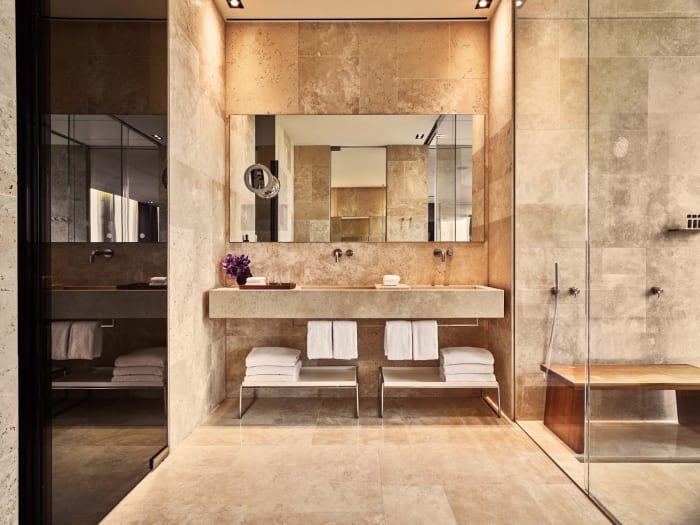
Inside, the décor blends modern elegance and heritage with real clarity. The public spaces do not attempt to impress through accumulation; instead, they establish a rhythm. Volume, light, materials and furnishings create a setting that is refined yet usable, where one can pause between appointments as easily as extend a moment of reading or conversation. That ability to be both representative and liveable is what separates strong addresses from purely theatrical ones.
The Conservatorium therefore suits several kinds of stay without losing its identity. Business travellers find an efficient base, with a 24-hour front desk, round-the-clock concierge and the services expected of a five-star hotel. Couples appreciate the immediate proximity of cultural institutions and good restaurants, as well as the more hushed atmosphere on returning in the evening. Solo travellers, meanwhile, benefit from a reassuring, central setting that is lively enough to enjoy Amsterdam without excessive logistical effort.
What also stands out is the way the hotel belongs to its surroundings without dissolving into them. It does not merely sit near the attractions; it contributes to a certain idea of the district, shaped by culture, design, soft mobility and urban elegance. It feels less like an isolated retreat than a privileged vantage point. It is a place where one may choose to slow down, but never one cut off from the city.
In that sense, the property appeals above all to travellers seeking a discreet form of luxury, rooted in the quality of the setting, architectural coherence and ease of use. Daily housekeeping, evening turndown, luggage storage, laundry and multilingual staff all reinforce that sense of flow. Nothing is overplayed; everything is designed to make a stay simpler, more comfortable and more seamless. That is often where the difference lies between a handsome hotel and one genuinely worth recommending.
Rooms & Suites
In a hotel of this standing, a room must be more than attractive; it must provide a credible counterpoint to the city. At Mandarin Oriental Conservatorium, that promise rests above all on the balance between contemporary comfort, restrained lines and continuity with the architectural spirit of the whole. The same idea found in the public spaces appears here in a more intimate form: modern elegance that does not erase heritage, but translates it into a quieter language better suited to rest.
Discerning travellers generally notice three things in a good hotel room: the quality of light, the clarity of the layout and the absence of friction in use. Here, those elements matter more than decorative display. The palette is designed to soothe after a day in a city dense with visual stimulation. Materials, without being ostentatious, contribute to a sense of composure and lasting comfort. Furnishings and layout favour ease: one settles in quickly, works if needed, reads, gets ready to go out, then returns in the evening to a room refreshed by daily housekeeping and turndown service.
The rooms and suites suit several kinds of traveller. For a couple’s city break, they offer a calm refuge within immediate reach of museums, galleries and restaurants. For a business stay, they support an efficient rhythm, with the added advantage of an environment less impersonal than a conventional corporate hotel. For solo travel, they provide a reassuring, well-located space in which one can alternate between retreat and immersion in the city.
What often distinguishes suites in this kind of property is not only additional space, but the way they extend the experience of the hotel. They allow guests to receive visitors, work more comfortably or simply enjoy a different relationship to time. In Amsterdam, where one readily spends long hours outside, the possibility of returning to a more generous space, taking a proper pause before heading out again for dinner or a concert, has particular value.
It is also worth noting the importance of relative quiet and the sense of protection. In a lively district, the success of a room lies in its ability to preserve privacy without cutting the traveller off from the urban atmosphere. The Conservatorium answers that expectation through an approach that privileges serenity over effect. The result is less spectacular than deeply pleasant over time, which is often the best definition of hotel luxury.
Finally, service is decisive here. A grand hotel room never exists independently of the attention surrounding it: daily care, evening preparation, discreet assistance, coordination with the concierge for specific requests. That continuity allows the rooms and suites to fulfil their true role: not merely to accommodate, but to provide a stable, elegant and restorative setting from which Amsterdam becomes easier to inhabit. It is that quality of use, even more than the décor, that encourages guests to return.
Dining
In Amsterdam, hotel dining has evolved considerably. The strongest addresses no longer aim merely to keep guests in-house; they position themselves within the life of the neighbourhood and engage with a particularly active urban food scene. At Mandarin Oriental Conservatorium, that dimension is especially meaningful because of the location. Between cultural institutions, shopping streets and sought-after restaurants, the hotel sits in an area where one can just as easily improvise a morning coffee, arrange a business lunch or extend the evening after a concert. Dining, in this context, forms part of a broader way of staying.
Even without detailing a specific culinary offer beyond the confirmed information, one can say what a well-conceived property of this level generally provides: dining that supports the different rhythms of the day. Early morning calls for a calm atmosphere, suited to an unhurried start before heading to the museums. Lunch should work equally well as a light pause or a professional meeting. In the evening, travellers often look for a more enveloping setting, where they may choose either to remain in the hotel or ask the concierge for an outside reservation that suits the mood.
The appeal of a hotel such as the Conservatorium lies precisely in that flexibility. Because it stands in the heart of a lively district, close to both shops and restaurants, it does not impose a single model. Some travellers will prefer to begin the day at the hotel before setting out to explore the city. Others will favour multiple experiences elsewhere and return only for a drink or a late dinner. That freedom is valuable: it avoids the sealed-bubble effect and allows the hotel to remain a base rather than a closed world.
Service is central here. A strong dining experience depends not only on what is on the plate, but on how it is integrated into the stay. Suitable opening hours, attentive welcome, the ability to respond to changing rhythms, and coordination with the concierge for reservations in town all matter greatly in a cultural destination such as Amsterdam, where days are often built around exhibition times, performances or walks.
It is also worth considering the social role of restaurant and bar spaces in a grand urban hotel. They are places of transition as much as destinations in themselves: one passes through before going out, returns after a visit, holds an informal conversation, waits for an appointment. When successful, they extend the hotel’s identity without caricaturing it. In the case of the Conservatorium, one would expect an atmosphere in keeping with the address: cosmopolitan, polished, contemporary, yet never disconnected from its surroundings.
For the traveller, the real value therefore lies in the whole. Immediate proximity to the neighbourhood’s good tables, easy access to restaurants across the city, and the ability to rely on the hotel team for informed guidance create a gastronomic experience richer than any single meal on site. It is a fitting way to experience Amsterdam: alternating the pleasures of the hotel address with those of a dynamic local scene, without ever sacrificing the comfort of smooth organisation.
Spa & Wellness
In a city as stimulating as Amsterdam, wellness is not only about treatment; it is about the rhythm of a stay. One walks extensively, moves from museum to shopping street, from lunch to a canal-side stroll, then on to dinner or a concert. In that context, a five-star hotel must offer more than room comfort: it should help restore balance. At Mandarin Oriental Conservatorium, that expectation fits naturally with the spirit of the place, where contemporary elegance and attention to detail suggest an approach to wellbeing based on quality of experience rather than grand claims.
Even without setting out a precise treatment menu here, it is reasonable to expect from an address of this level an environment conducive to recovery and recalibration. In an urban destination, true luxury often lies in being able to slow down without losing the thread of the journey. A restorative moment in the late afternoon, a pause after a flight or before an evening engagement, or a more structured routine for those wishing to integrate wellness into their stay: these are all needs a grand hotel should be able to meet with flexibility.
Contemporary hotel wellness is no longer confined to a logic of performance. It is less about listing facilities than about creating continuity between body, space and available time. In a property such as the Conservatorium, that coherence begins with atmosphere: relative calm, soothing materials, discreet service, and the possibility of withdrawing into an ordered setting after the intensity of the city. For many travellers, that sense of breathing space matters as much as any treatment itself.
Cultural stays are especially suited to this alternation between stimulation and recovery. After several hours spent standing in museums or walking Amsterdam’s streets, taking time to reset changes the experience of the trip. Evenings are enjoyed more fully, sleep improves, and the following day begins with greater energy. Couples often see it as a shared ritual; business travellers as a way to preserve focus; solo travellers as a means of giving the stay a more personal dimension.
The value of wellness in a hotel of this category also lies in how it integrates with the rest of the experience. The concierge can help shape the day more smoothly; the teams can adapt room services to the guest’s rhythm; the whole contributes to the impression of a stay considered in its entirety. Wellness then ceases to be a separate module and becomes a natural component of hospitality.
Ultimately, what one seeks here is not spa spectacle, but a quality of recovery faithful to the spirit of the address. In a lively, cultivated and layered city, being able to return to a space of calm, care and recalibration is a discreet privilege. It is also what allows Amsterdam to be enjoyed more fully: not by accumulating experiences, but by giving them a rhythm that remains sustainable and pleasurable.
Concierge & Services
Luxury in hospitality is often measured less by what is visible and more by what operates effortlessly. At the Mandarin Oriental Conservatorium, this idea takes on a tangible form. With 24-hour concierge service, continuous reception, daily room service, evening turndown, luggage storage, laundry, wake-up calls, and multilingual staff, every aspect of your stay is thoughtfully structured.
The concierge plays a crucial role in a city like Amsterdam. With museums, galleries, shops, and restaurants nearby, requests often revolve around optimising time. Whether it’s securing a table reservation, planning a cultural itinerary for the day, suggesting a stroll based on the weather, or arranging transfers upon arrival and departure, an effective concierge does more than just execute requests. They read the stay, understand the guest's rhythm, and refine their suggestions accordingly.
The 24-hour reception and multilingual staff provide a discreet sense of security. This is particularly appreciated for late arrivals, early departures, and international stays. In a bustling capital, this continuous presence transforms the experience. A request can be attended to at any hour, without interruption.
In-room services also contribute to this seamless experience. Daily housekeeping ensures a clean environment, while the evening turndown service marks the transition into night. Laundry services prove invaluable for extended stays, business trips, or back-to-back city breaks. Luggage storage allows guests to enjoy their first and last hours in the city without constraints.
What distinguishes exceptional service from mere functionality is the tone. Assistance is present without being intrusive. Guests do not feel monitored but rather supported. This nuance is significant in a luxury urban hotel, where efficiency, discretion, and situational awareness are expected.
At the Conservatorium, the stay becomes richer because nothing unnecessarily interrupts the flow of the journey. The teams manage logistics, smooth transitions, and leave guests with what truly matters: time, mental space, and the freedom to enjoy Amsterdam.
The Amsterdam Way of Life
Staying at Mandarin Oriental Conservatorium also means choosing a particular way of experiencing Amsterdam. The city cannot be reduced to a list of sights; it is best discovered through atmospheres, neighbourhoods and slow transitions between culture, commerce, water, architecture and daily life. The hotel, set in the heart of a lively district and only steps from museums and galleries, makes precisely that more nuanced reading possible. It offers easy access to major institutions, but also to a subtler urban fabric of elegant streets, terraces, bookshops, boutiques and walks that reveal the Dutch capital at its true scale.
The great advantage of this location is that it makes the city highly walkable. Amsterdam lends itself especially well to that mode of discovery. One leaves the hotel for Museumplein, continues towards the canals, crosses shopping streets, pauses in a café, then resumes walking without ever feeling bound to a prescribed route. That freedom corresponds to the local spirit: real sophistication, but never rigidity; a culture of quality of life rather than display.
The surrounding district offers a rare balance between liveliness and composure. There is movement, certainly, but also a visual and urban discipline that is distinctly Amsterdam. Façades, perspectives, the presence of water, bicycle traffic, gardens and cultural institutions create a living setting that does not tire the eye. For the traveller, this means a stay can be full without becoming heavy. One may accumulate visits, then slow down naturally, without a jarring break between the day’s intensity and the calm sought in the late afternoon.
Amsterdam’s way of life also lies in the constant proximity between culture and the everyday. Here, going to a museum is not necessarily a solemn event; it can simply form part of an ordinary day, alongside a light lunch, some shopping or a walk by the canal. By choosing such a well-placed hotel, guests adopt that local rhythm rather than a tourist programme imposed from outside the city. That difference matters, especially for travellers already familiar with Europe’s major capitals and seeking not accumulation, but accuracy.
In the evening, Amsterdam reveals another side, more intimate. Lights reflect on the water, streets soften in tone, and the walk back to the hotel becomes part of the stay in itself. In that context, the Conservatorium works as a particularly apt anchor point: central enough to remain within the city’s life, yet sufficiently controlled in atmosphere to offer real breathing space.
That is perhaps where the address truly succeeds. It does not promise a postcard Amsterdam, but a fuller, more inhabited experience. Culture is present, certainly, but so too are the taste for detail, ease of movement, importance of setting and discreet elegance that make the city’s charm endure. For those wishing to understand Amsterdam beyond the obvious, the hotel provides an ideal vantage point.
Book with MyConciergeHotel
Booking Mandarin Oriental Conservatorium through MyConciergeHotel means approaching the stay through selection and guidance rather than a simple transaction. An address such as this deserves to be chosen for the right reasons: its position in the heart of a lively district, immediate proximity to museums and galleries, décor that blends modern elegance with heritage, and easy access to shops and restaurants. These points may look obvious on paper; the real question is whether they genuinely suit the way you travel. That is precisely where our role becomes meaningful.
For a first stay in Amsterdam, we can help assess whether this is the right base according to your priorities: cultural immersion, a couple’s city break, business travel with time to enjoy the city, or a solo escape in a central and reassuring setting. For travellers already familiar with Amsterdam, the appeal may be different: returning to a favoured district, privileging walkability, or organising a smoother stay between appointments, exhibitions and good tables. In both cases, the issue is not simply booking a room, but choosing a coherent rhythm for the trip.
Our added value also lies in anticipation. Busy periods in Amsterdam can reduce availability, particularly in the most sought-after hotels and in room categories best suited to longer stays or preferred positions within the property. Booking well in advance therefore remains a sensible step, not only to secure availability but also to preserve greater choice over room type, arrival times and the overall structure of the journey. It is a simple point, but a decisive one.
Beyond the reservation itself, MyConciergeHotel works within a logic of advice. We can help shape the experience as a whole: ideal length of stay, balance between time at the hotel and time in the city, relevance of a cultural programme, choice of nearby addresses, or the organisation of the first and last hours on site. In a city as layered as Amsterdam, that light but targeted preparation often makes all the difference. It prevents the feeling of chasing the destination and instead allows it to be enjoyed more naturally.
Choosing the Conservatorium through us also means favouring a certain idea of high-end travel: informed, precise and free of unnecessary emphasis. We do not recommend an address simply because it belongs to a major brand, but because it demonstrates real coherence between setting, service and surroundings. Here, that coherence is evident. The hotel suits a variety of stays while retaining a strong identity linked to culture, architecture and urban living.
If you are looking in Amsterdam for a five-star address capable of combining location, character and smooth service, Mandarin Oriental Conservatorium clearly deserves consideration. And if you would like that reservation to form part of an experience that is better judged, better prepared and more serene, MyConciergeHotel is here to assist with the level of attention such a stay requires.