History & heritage
In Amsterdam, few addresses capture the meeting point between grand European hotel tradition and the energy of a capital in constant motion as clearly as Anantara Grand Hotel Krasnapolsky Amsterdam. Its name has long belonged to the city’s landscape, to the point of becoming one of those landmarks referred to as much for its function as for its place in the collective imagination. Set in the historic heart of the city, the hotel is part of a dense urban story shaped by canals, trade, old façades and a culture of hospitality that is never merely about display. The building carries that memory in its architecture, its proportions and the way it converses with Amsterdam’s historic fabric.
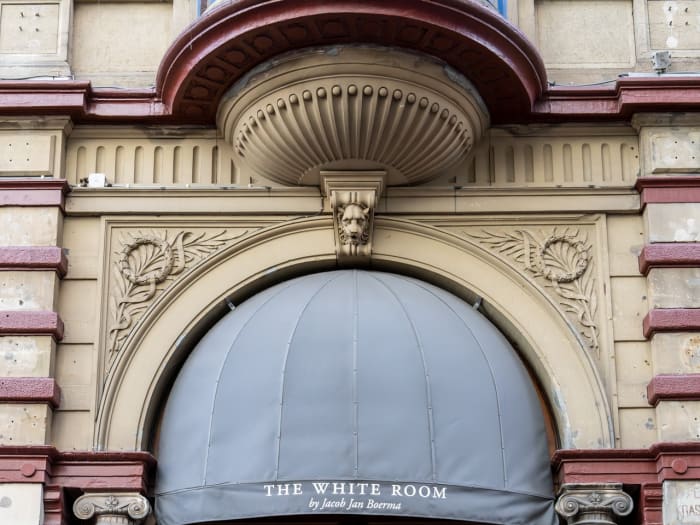
What stands out first is not overwhelming monumentality, but an elegant continuity with the city. The hotel belongs to that category of historic addresses that have evolved without severing ties with their identity. Original lines, heritage elements and a setting on one of the Dutch capital’s best-known squares give it unusual depth: one is not simply staying in a centrally located hotel, but in a place that has accompanied Amsterdam’s transformations across generations. That historical depth helps explain the property’s singular atmosphere, at once cosmopolitan and rooted, refined and legible.
The arrival of the Anantara brand brings a contemporary reading of that heritage. The group is known for attentive hospitality and for embedding its hotels in their destination rather than flattening them into a uniform template. Here, that approach translates into a clear emphasis on local character: the spirit of the place is not erased in favour of standardised luxury, but reinterpreted in a more current, fluid and international language. The result will appeal both to seasoned luxury travellers and to guests seeking an address with a genuine relationship to its surroundings.
In a city where history can be read on every corner, the hotel acts as a bridge. It allows guests to enter Amsterdam through an address that says something about the city’s past while still meeting contemporary expectations in terms of comfort, service and pace of stay. That duality matters: heritage is not treated as a frozen backdrop, but as a living material. It can be sensed in the circulation spaces, in the architectural depth and in the contrast between historic sections and more recent interventions.
For the traveller, this changes the nature of the experience. One does not choose the hotel simply to tick off an ideal location or a five-star category; one also chooses an address that has stood the test of time, that has seen business travellers, cultural visitors, romantic escapes and private milestones pass through its doors. That continuity lends the stay a particular kind of quiet gravitas, very different from that of a newly built property. At Anantara Grand Hotel Krasnapolsky Amsterdam, history is never waved about as a decorative claim: it forms the discreet backdrop to a contemporary hospitality designed for those who want to feel Amsterdam without giving up a certain standard.
The hotel
One of the great privileges of Anantara Grand Hotel Krasnapolsky Amsterdam lies in its address. In a city where geography strongly shapes the quality of a stay, being based in the centre means experiencing Amsterdam on foot, with almost no transition between hotel and city. Canals, shopping streets, lively squares, cultural institutions and everyday architecture form an immediately accessible setting. Step outside and you are directly in Amsterdam’s rhythm, with its characteristic alternation between urban bustle, waterside views and quieter moments found at the turn of a lane or bridge.
That centrality does not, however, result in an impersonal experience. On the contrary, the hotel feels designed as a stable anchor within a lively district. This is one of the strengths of great historic city-centre addresses: they absorb the energy outside while offering, once the door is crossed, a sense of order, clarity and retreat. Business travellers find an efficient base, leisure guests an ideal vantage point, and couples on a short break an address that simplifies everything without making the stay feel generic.
Architecturally, the property plays on the tension between heritage and contemporary comfort. Historic elements give the whole a sense of depth, while modern facilities ensure a smooth experience. This combination is particularly relevant in Amsterdam, where travellers often seek the charm of older buildings while knowing that historic architecture can sometimes come at the expense of comfort. Here, the balance lies precisely in preserving a heritage presence while meeting the present-day expectations of a five-star hotel.
The public spaces contribute to that impression of controlled continuity. The interior design, described as elegant, favours legible sophistication rather than a trend-driven effect. That matters in an address intended to welcome very different profiles: international travellers, business stays, cultural weekends and private celebrations. The overall tone remains sufficiently timeless to avoid trapping the hotel in a dated aesthetic, while still asserting a genuine quality of composition. There is a clear concern for visual comfort, easy circulation and discretion in the way luxury is staged.
The hotel therefore suits several ways of inhabiting Amsterdam. Some will see it as a strategic base for exploring museums, shopping districts and canals; others will appreciate the ease of returning between appointments or after a day spent walking. This flexibility is often underestimated, though it is one of the most decisive factors in the success of an upscale city stay. A great urban hotel is not merely a place to sleep: it is a space for breathing, transition and recalibration.
In the case of the Krasnapolsky, that role is reinforced by the symbolic weight of the address. One senses a reassuring permanence here, rare in heavily visited capitals. The hotel does not try to compete with the city; it accompanies it, organises it and makes it more accessible. Whether for a first stay in Amsterdam or a return visit, that ability to provide both immersion and orientation is what makes the difference. It is what turns a good location into a true sense of place.
Rooms and Suites
In a grand urban hotel, the room is not merely a private space. It becomes a counterpoint to the outside world, a place to regain one's rhythm after the intensity of the city. At the Anantara Grand Hotel Krasnapolsky Amsterdam, this coherence is reflected in the comfort, interior elegance, and modern amenities. In a historical context, this restraint allows the architecture, light, and volumes to take centre stage.
An establishment of this calibre typically offers rooms and suites suited to a variety of stays. The solo or business traveller seeks the efficiency of a well-organised space, while couples favour atmosphere and intimacy. Longer stays often gravitate towards more spacious categories. In Amsterdam, the key lies in the ability to create a restful cocoon without breaking away from the external energy.
The charm of a modernised historic hotel often lies in the diversity from one room to another. Some rooms emphasise the connection to the old building, while others adopt a more contemporary interpretation of comfort. What truly matters is the overall quality. Bedding, tranquillity, technological fluidity, well-designed bathrooms, ample storage, and controlled lighting are the elements that determine the success of a high-end city stay.
The rooms appear to be designed for longevity, without succumbing to eccentricity. This is a valuable quality. A central hotel welcomes guests with varied expectations. The most compelling interiors combine character with neutrality, identity with comfort. Here, one expects pleasant materials, a soothing palette, meticulous details, and an overall impression of coherence. The aim is not to distract from the destination but to provide a backdrop worthy of the city.
The suites offer an additional dimension. They allow guests to experience Amsterdam as a temporary residence. More space also brings greater flexibility, whether for leisure, work, or a special occasion. It is often here that the dialogue between architectural heritage and contemporary comfort is most perceptible, particularly in the volumes, views, or certain structural details.
Choosing a room at the Krasnapolsky means opting for a way to inhabit the centre of Amsterdam with greater calm, comfort, and continuity. After a day of museums, meetings, or strolls along the canals, one returns to a space that does not need to overdo it. In urban luxury, this subtlety often matters more than ostentation.
Dining
In a capital such as Amsterdam, hotel dining plays a particular role. It must not only meet the standards of an international clientele; it must also offer a rhythm, an atmosphere and a reading of the destination. At Anantara Grand Hotel Krasnapolsky Amsterdam, one can expect the food and beverage offering to extend the hotel’s overall personality: a combination of elegance, contemporary comfort and local anchoring. Without resorting to grand claims, a major city-centre address often distinguishes itself through its ability to make every dining moment feel relevant, whether that means breakfast before a day of sightseeing, a business lunch, afternoon tea or a more settled dinner.
Breakfast, in this kind of property, is often the first true measure of hospitality. In a city best explored on foot, it needs to be generous, smooth and enjoyable. The attentive traveller notices the quality of produce, the organisation of service, the relative calm of the room despite the movement, and the team’s ability to adapt to international habits without losing coherence. In a historic hotel, this moment often gains an extra dimension when the architectural setting contributes a genuine sense of place rather than merely providing a functional backdrop.
For the rest of the day, dining at a hotel such as the Krasnapolsky should be able to answer several different needs. Residents appreciate the possibility of lunching or dining on site without feeling cut off from the city. Outside guests, meanwhile, often look for an address central and polished enough to serve as a meeting point. In both cases, success depends less on theatricality than on consistency: a clear menu, precise service and an atmosphere balanced between liveliness and discretion. It is that consistency, more than any passing trend, that encourages return visits.
The Anantara affiliation also suggests particular attention to the overall experience beyond the plate itself. In contemporary luxury hospitality, dining is no longer simply about feeding guests; it structures the day, creates memories and offers moments of pause. A well-conceived bar, a welcoming lounge, a carefully handled in-room offering or more intimate occasions can matter just as much as the main restaurant. In Amsterdam, where one easily alternates between urban exploration and slower interludes, that flexibility is especially valuable.
French-speaking travellers will often be sensitive to another point: in the best international hotels, gastronomy does not try to imitate a tradition that is not its own. Instead, it offers cuisine suited to the place, open to influences, attentive to seasonality and responsive to the cosmopolitan nature of the clientele. That is often where the credibility of a great house is decided. One does not need a spectacular display, but rather a dining offer that makes sense in its environment and can accompany different moods of stay.
In practice, dining at the Krasnapolsky is therefore likely to follow this logic of a complete house, able to host a business stay, a cultural weekend or a romantic interlude with equal ease. A good hotel table does not need to overshadow the city’s wider culinary scene; it must provide a reliable, elegant and enjoyable alternative worthy of the address. That is precisely what one expects here: a culinary experience conceived as a natural extension of the stay.
Spa & Wellness
In an urban stay, the question of well-being presents itself differently than in a resort. It is less about dedicating entire days to it and more about integrating moments of recovery, centring, and physical comfort into a busy schedule. At the Anantara Grand Hotel Krasnapolsky Amsterdam, the modern facilities reflect this attention to an essential aspect of contemporary travel. In a capital where walking is prevalent, having a dedicated space or services for well-being significantly enhances the quality of the stay.
Here, luxury resides less in abundance and more in relevance. A wellness offering in a city hotel must be accessible, clear, and flexible enough to adapt to varying schedules. The business traveller may desire a quick treatment between meetings, while a couple on a getaway will seek a moment to share after a day exploring the streets of Amsterdam. The international visitor will appreciate the opportunity to quickly regain a sense of balance. In all cases, the challenge is to provide an experience that complements the stay without adding burden.
The Anantara ethos is associated with attentive hospitality and a culture of personalised care. Here, the approach to well-being prioritises listening, adaptation, and quality execution. In the finest establishments, this translates into simple rituals, calming spaces, a controlled atmosphere, and a team capable of recommending the right moment, duration, or type of treatment. This intelligence in service often matters more than the size of the facilities.
Urban well-being also encompasses more discreet elements: sleep quality, thermal comfort, relative silence, and the possibility to slow down. A well-designed room, a pleasant bathroom, attentive service to details, and communal spaces that do not overwhelm the senses are all part of this. In a modernised historic hotel, success lies in the ability to offer rest without erasing the character of the place. The traveller then feels a continuity between the aesthetic of the house and its restorative function.
Amsterdam lends itself particularly well to this alternation between stimulation and recovery. The city invites one to walk, observe, pause, and then set off again. Returning to a hotel that can offer a quality pause is not merely a convenience; it is often what allows one to enjoy the following day more fully. A treatment, a moment of calm, a fitness routine, or simply returning to an orderly environment can suffice to transform the overall experience.
The wellness aspect of the Krasnapolsky thus aligns with its promise. To provide, in the heart of Amsterdam, a setting where historical elegance and contemporary comfort work in harmony. The spa and associated services are not a decorative addition; they contribute to the overall balance of the stay. In a large city, this balance often represents the most convincing form of luxury.
Concierge & services
In five-star hospitality, the true quality of a stay is often measured less by visible features than by the precision of the service. At Anantara Grand Hotel Krasnapolsky Amsterdam, this dimension matters all the more because the hotel is likely to welcome very varied profiles: business travellers, couples, international visitors discovering Amsterdam for the first time, returning guests, short stays and longer ones. A great city-centre house must be able to answer these multiple uses without rigidity, with a kind of ease that makes everything feel simple even when the logistics are complex.
The concierge plays a central role here. In a destination as busy as Amsterdam, access to the right restaurants, museums, routes through the city or suitable transport solutions can save considerable time. True luxury lies not merely in securing a booking, but in receiving a recommendation that is accurate, calibrated to the stay, the mood, the season and the traveller’s pace. A couple does not expect the same suggestions as a guest on a business trip; a first visit calls for clear landmarks, while a returning traveller may be looking for more targeted ideas. The value of a good concierge lies precisely in this interpretive ability.
Services in a hotel of this category must also ensure constant fluidity: an arrival without friction, efficient luggage handling, discreet assistance, clear information and genuine availability. In a historic and central address, that fluidity is even more valuable because it offsets the intensity outside. The hotel then becomes an intelligent filter between traveller and city. Guests enter to be advised, oriented and relieved of practical details, then head back out into Amsterdam with the sense of having a reliable base.
The Anantara affiliation suggests a service culture attentive to detail and personalisation. Without extrapolating beyond confirmed information, it is coherent to expect hospitality that privileges listening and quality of presence over excessive formality. The best services are often those that know how to adjust their level of intervention: being highly present when needed, then stepping back when guests simply wish to enjoy the place independently. That relational intelligence distinguishes truly accomplished houses.
For business travellers, the appeal of such an address is obvious: central location, representative setting and services suited to a tight schedule. But the hotel is not limited to that utilitarian role. Leisure travellers also benefit from a reassuring level of organisation, particularly useful in a city rich in options and distractions. Booking a visit, arranging a transfer, identifying the right moment to explore a district, choosing a walking route or planning a special touch for a celebration: these are the details that, when well handled, turn a correct stay into a seamless one.
Ultimately, that is what one expects from the Krasnapolsky: not an accumulation of amenities, but a quality of accompaniment. In a great urban hotel, ideal service never interrupts the experience of the city; it makes it clearer, more comfortable and more personal. When properly conceived, it becomes almost invisible, and that is often its highest form of excellence.
The Amsterdam art of living
Staying at Anantara Grand Hotel Krasnapolsky Amsterdam also means choosing a particular way of entering Amsterdam. The city cannot be reduced to postcards or major museums, important though these obviously are. Its art of living lies in a subtle balance between cultural density, human scale, freedom of movement and a constant relationship with water. One walks a great deal, notices the leaning façades, bicycles, reflections on the canals, neighbourhood cafés, carefully curated shops, markets, institutions and the details of everyday life. A central hotel makes it possible to absorb that urban texture without undue effort.
From an address such as this, Amsterdam reveals itself in layers. First come the obvious attractions: canals, squares, heritage routes and the major museums that shape the city’s image. Then come the nuances: a quieter street in the early morning, a bridge from which the light suddenly alters the perspective, a row of houses telling the story of the city’s mercantile past, a district one wanders through without a fixed plan. The luxury of a well-located stay often lies in being able to alternate between these two levels of experience, the classic and the unexpected, without depending on heavy organisation.
Amsterdam also has a particular temporality. Morning often feels crisp, almost graphic; afternoon invites wandering; evening shifts the city into a softer register, more muted, more reflected in the water. In spring, when the city is in bloom as the short description notes, that visual gentleness enhances the appeal of walking even further. Yet Amsterdam’s interest extends well beyond a single season. Its charm lies in its ability to remain legible even when busy, and in its constant supply of micro-experiences: crossing a canal, pausing in a café, visiting an exhibition, an hour of shopping, a walk between appointments.
In this context, the role of the hotel is not to create a closed world, but to serve as a point of balance. Guests return to rest, change, dine, plan the next part of the day or simply catch their breath. This flexible relationship between inside and outside is central to the Amsterdam art of living as perceived by the traveller. The city does not impose a single rhythm; it lends itself equally to methodical exploration and to drifting. A well-placed, well-run hotel allows one to move naturally between the two.
For French travellers, Amsterdam often offers an immediate sense of change without a radical break. Its urban culture is different, as is its organisation of space, yet the city remains accessible, intelligible and deeply European. That is one reason why it lends itself so well to short upscale stays: one can live a great deal in a short time, provided one has the right base. The Krasnapolsky answers that logic by offering a central, elegant and historically grounded anchor.
Ultimately, the Amsterdam art of living may consist in accepting this rare combination of structure and freedom. The city is orderly, but never rigid; sophisticated, but seldom intimidating; historic, without becoming museum-like. Staying at the heart of that dynamic, in a hotel that shares both its heritage and its contemporary openness, allows guests to grasp it in the most accurate way.
Book with MyConciergeHotel
For an address such as Anantara Grand Hotel Krasnapolsky Amsterdam, booking is not simply a matter of comparing room categories or rates across dates. The real difference often lies in the way the stay is prepared: understanding which room type best suits the rhythm of the trip, anticipating the busiest periods, organising arrivals and departures smoothly, identifying priorities on site and, where relevant, structuring experiences around the hotel. That is precisely where support such as MyConciergeHotel becomes meaningful.
In a major European capital, the most successful stays are rarely those improvised in full. Amsterdam attracts a substantial international clientele throughout the year, and availability in the most sought-after hotels can shift quickly, particularly during busy periods, business events or cultural weekends. Booking ahead not only provides a better choice, but also makes it possible to think about the stay as a whole. For a central and historic hotel such as the Krasnapolsky, that can make a tangible difference to the final experience.
Booking through MyConciergeHotel means approaching the hotel not as a simple product, but as the starting point of a tailored stay. Some travellers will need a room perfectly suited to a business trip; others will be looking for a suite for a romantic weekend, a celebration or a few days of cultural discovery. Others still may chiefly want informed advice on the best time to come, the ideal length of stay or the best way to combine the hotel with the city’s essential sights. This editorial and concierge-led approach goes beyond a straightforward reservation.
There is also the benefit of clarity. In luxury hospitality, the abundance of online information does not always make decisions easier; it can make them harder. Between standardised descriptions, highly staged visuals and generic promises, it becomes difficult to distinguish what truly matters for one’s own trip. MyConciergeHotel offers a more precise reading: understanding the character of the address, its real positioning and its suitability for a particular style of stay. For the Krasnapolsky, that means appreciating what makes it distinctive: strong heritage, a central location, reinterpreted classic elegance and an experience designed to enjoy Amsterdam in comfort.
Booking with guidance also allows for the integration of the details that change everything: a particular request, the organisation of a stay for two, coordination of timings, targeted recommendations for enjoying the city, or simply help in choosing between several room options. These are often the elements that remain invisible at the time of booking but later determine the smoothness of the stay. In an address of this category, the quality of preparation matters almost as much as the quality of the hotel itself.
Choosing Anantara Grand Hotel Krasnapolsky Amsterdam through MyConciergeHotel therefore means opting for a booking process that is more intelligent, more contextualised and more personal. It does not add complexity; on the contrary, it removes everything that might interfere with the experience. For a discerning traveller, it is often the best way to approach Amsterdam: with the right address, a clear framework and the assurance of a stay planned to the right tempo.