History & Spirit of the Place
The Jumeirah Lowndes embodies a distinctly Londonian concept of hospitality. This address maintains a human scale, nestled in a sought-after residential neighbourhood. Its refinement lies in the precision of tone, the quality of service, and meticulous attention to detail.
The charm of the location is found in its unique way of inhabiting London. The hotel is part of a collection renowned for its service excellence. This heritage is reflected in the balance between international standards and a sense of local context. Thus, the Jumeirah Lowndes occupies a singular position as an elegant urban retreat, calm yet connected to the vibrant energy of the capital.
Belgravia plays a significant role in this identity. The neighbourhood showcases a London of orderly facades, discreet squares, white doors, and private gardens. Within minutes, the residential atmosphere transitions to the bustling energy of major shopping thoroughfares. This tension between restraint and movement aptly defines the spirit of the hotel.
Here, one finds a reinterpreted London classicism expressed in a more contemporary language. The modern design of the communal spaces does not erase the character of the place; rather, it updates it. The lines are sharp, the volumes clear, and the materials chosen to create immediate comfort.
The warm and refined atmosphere illuminates the promise of the Jumeirah Lowndes. Elegance here remains inviting. The communal spaces are designed for living, with fluid circulation. Attention to light, relative calm, and quality of welcome structure the whole experience.
Personalised service extends this philosophy. It is not merely about efficiency; the stay adapts to the rhythm of the traveller, whether they come to London for business, a romantic weekend, or a family getaway.
In the landscape of London hotels, the Jumeirah Lowndes stands out as a connoisseur's choice. A five-star establishment that prioritises coherence, discretion, and an overall experience. It embodies a certain idea of contemporary London comfort: central, well-maintained, attentive, and intimate enough to feel like residing in a neighbourhood.
The Establishment
Staying at the Jumeirah Lowndes means choosing a location where the setting is as important as the comfort. The hotel is situated in a pleasant area of London, balancing residential elegance with quick access to the city's major landmarks. Here, you reside in a neighbourhood rather than merely passing through.
On foot, this part of London quickly reveals its charm. The streets showcase the architectural restraint typical of west London, featuring well-kept facades and a more relaxed pace. Vibrancy is never far away, with shops, restaurants, cultural institutions, and department stores easily accessible. Days can be organised without the need for excessive travel time.
The establishment complements this urban mobility with finesse. The contemporary design of the communal spaces acts as a transition between the external intensity and the intimacy of the room. The overall ambience favours a warm and refined atmosphere, ideal for unwinding after a day in the city.
This address caters to various styles of stay. Business travellers find a central setting suitable for short visits. Couples appreciate the subdued character of the neighbourhood. Families benefit from a practical location that allows for a balance of sightseeing and relaxation.
Thus, the Jumeirah Lowndes offers a more nuanced interpretation of London. Its location, scale, and atmosphere create an experience that is both connected and preserved. For many, it is this combination that makes all the difference.
Rooms and Suites
In an urban hotel of this calibre, the room is never merely a transient space. It must cater to multiple uses simultaneously: a genuine place for rest, preparation for a busy day, a calm interlude between meetings, and sometimes even a temporary workspace.
At the Jumeirah Lowndes, this versatility is treated with seriousness. Comfort is expressed through the quality of the experience rather than mere effect. The overall tone of the establishment—contemporary, warm, and refined—extends into the more intimate and soothing rooms.
In central London, a good room is distinguished by its organisation. The intelligence of the layout, fluid circulation, storage solutions, and a sense of calm are essential. The Jumeirah Lowndes is expected to excel in these aspects. The nightly turndown service, daily housekeeping, and attention to detail reinforce the impression of a room always ready.
For couples, the room should encourage relaxation after a busy day in London. This is achieved through an enveloping atmosphere, quality bedding, and well-considered lighting. For business travellers, other criteria matter: efficient reception, simplicity of services, good working conditions, and facilitation of early departures. Families primarily seek practicality, flexibility, and a smoother stay.
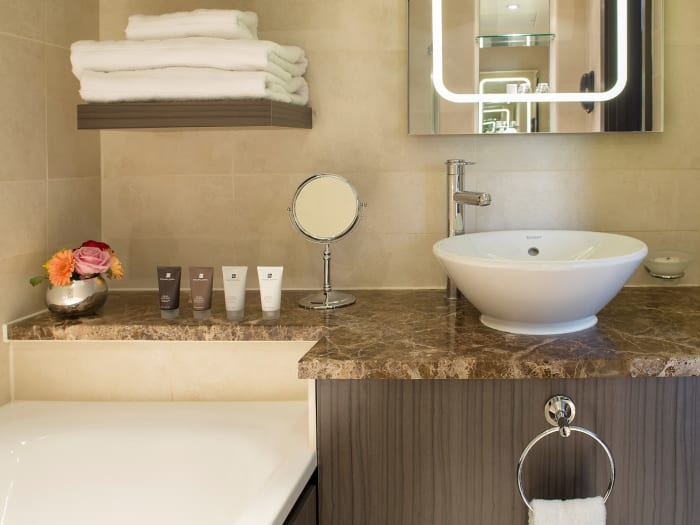
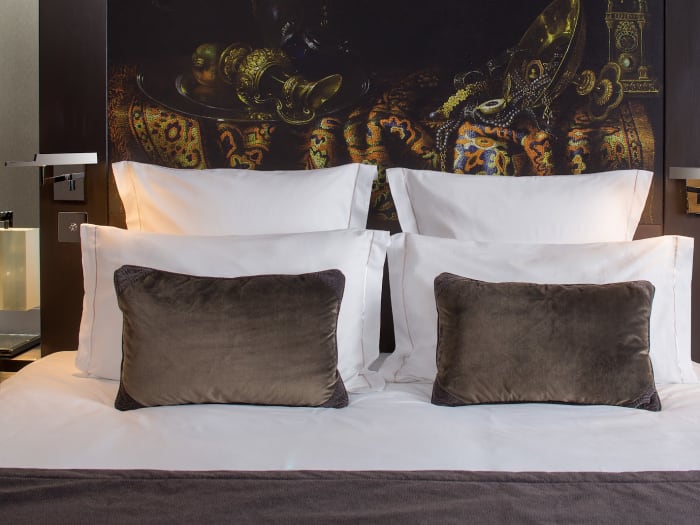
The contemporary design suggests a measured decorative language. Here, modernity does not equate to coldness; it is expressed through sharp lines, calming palettes, pleasant materials to the touch, and a discreet staging of comfort. A successful room in London is one where one feels immediately at home.
The rooms and suites at the Jumeirah Lowndes thus embody a contemporary approach to hotel luxury. A precise comfort, unembellished, where each element aims to make the stay simpler and more enjoyable. This quality is often measured by modest yet decisive factors: the sense of order, the consistency of maintenance, the availability of service, and the ease of regaining one’s bearings after a long day.
Dining
In London, the gastronomic experience of a hotel extends beyond mere in-house dining; it contributes to the identity of the address and its daily rhythm.
At the Jumeirah Lowndes, dining is approached from a broad perspective. It accompanies various moments of the day with flexibility, discretion, and coherence.
Breakfast holds significant importance here. For a business traveller, it must be efficient. For a couple, it can set a slower pace. For a family, it becomes an organisational point before venturing into the city.
In a hotel of this category, one expects precise execution. Well-chosen products, attentive service, a pleasant setting, and adaptability to schedules matter more than mere effect.
The personalised service of the establishment takes on its full meaning here. The quality of a stay often hinges on these repeated sequences.
Beyond the morning, dining must cater to varied needs. Post-day returns, informal meetings, in-room dining, or a calm pause between obligations.
In this context, the warm and refined atmosphere of the establishment is an asset. It situates dining within a broader experience of urban well-being.
The appeal of the address also lies in its relationship with the neighbourhood. Staying in this part of London grants access to a rich culinary scene.
A good hotel does not need to contain everything; it must also know how to guide. The concierge and reception, available around the clock, play a crucial role here.
Dining at the Jumeirah Lowndes thus embodies an art of accompaniment. Breakfast, end-of-day meals, or in-room service extend the continuity of comfort.
In a city as generous as London in culinary offerings, this approach makes sense. The hotel becomes a starting point, a refuge, and a discreet partner in the stay.
Concierge & Services
The true luxury of an urban hotel is often measured by what operates seamlessly behind the scenes. At the Jumeirah Lowndes, the service is built on continuous organisation. A 24-hour concierge, 24-hour reception, daily housekeeping, turndown service, luggage storage, laundry, wake-up calls, and multilingual staff simplify the stay.
The concierge is the discreet heart of this operation. In London, it goes beyond merely reserving a table or calling a vehicle. It assists in crafting a realistic itinerary, choosing the right moment to depart, and organising a complex day. Its availability at all hours is crucial in a capital with such varied rhythms.
The continuously open reception extends this fluidity. It facilitates late arrivals, early departures, and ensures a constant presence. The multilingual staff enhances the quality of the welcome. Quickly understanding, responding clearly, and avoiding linguistic friction are all part of the comfort.
Room services fall into another category, that of daily care. Daily housekeeping ensures the continuity of well-being. The turndown service accompanies the end of the day. Laundry, luggage storage, and wake-up calls address concrete needs.
Together, these services create a framework based on anticipation. The Jumeirah Lowndes prioritises precise and attentive hospitality, tailored to varied profiles. In a demanding and fast-paced London, this quality of support is as important as the location.
London living around the hotel
The great advantage of an address such as Jumeirah Lowndes is that it allows for a nuanced immersion in London. Not a purely spectacular immersion made only of landmarks and lists to tick off, but a subtler experience, closer to the way the city truly reveals itself: through districts, rhythms and contrasts. From this base, one can shape a stay that combines residential elegance, culture, shopping, walks and well-timed pauses. It is a way of experiencing London that particularly suits travellers who like to feel the texture of a city as much as they wish to see its icons.
In the morning, this part of the capital lends itself well to exploration on foot. The surrounding streets invite attention to architecture, façade details and the relative calm of addresses still slightly removed from the main flow. Very quickly, one reaches livelier thoroughfares where London displays its commercial and cosmopolitan energy. That transition is one of the neighbourhood’s pleasures: within minutes, one moves from an almost domestic atmosphere to a more urban, active sequence, without losing the sense of being in a coherent and well-kept area. For shoppers, this is an obvious advantage; for everyone else, it is above all the chance to alternate intensity and breathing space.
London living in this area also depends on the proximity of parks and major promenading routes. London is a metropolis best understood partly through its open spaces. To walk, sit, observe local habits, enter a museum, emerge onto a shopping avenue and then return to a quieter street: this succession of sequences is part of the local charm. Couples find in it a natural setting for days without rigid planning. Families can build flexible itineraries punctuated by pauses. Business travellers often value the ability to insert a moment of real city life between obligations.
By evening, the neighbourhood takes on another tone. London becomes more theatrical, more social, sometimes more glittering; yet the value of a well-placed hotel lies precisely in allowing guests to choose how much of that effervescence they wish to embrace. One may go out for dinner, attend a performance, cross to another district, or prefer a more contained evening marked by a walk and an early return. That freedom is precious. It prevents the city from feeling imposed and instead allows it to be modulated according to mood. Jumeirah Lowndes, with its refined atmosphere and attentive service, seems particularly well suited to this way of travelling.
Ultimately, London living around the hotel rests on a simple idea: enjoying a world capital without giving up a sense of measure. Seeing a great deal, certainly, but without permanent haste. Reaching the essentials while preserving time for details. Letting oneself be guided by the city’s major institutions, but also by its streets, local habits and transitions between moods. It is this quality of experience, more than centrality alone, that gives an address like this its value. It allows guests to discover London not as a backdrop, but as a city to inhabit, even if only for a few days.
Book via MyConciergeHotel
Booking the Jumeirah Lowndes through MyConciergeHotel means approaching your stay with a sense of selection and support. This address is not merely defined by its stars or its location. Its value lies in more nuanced balances: the atmosphere of the neighbourhood, the tone of the service, its suitability for various types of travellers, and the comfort of a well-thought-out urban retreat.
For couples, booking facilitates a smoother London experience. Strolls, dining, moments of relaxation, and the organisation of a weekend without overload can all be tailored to the desired pace. For business travellers, the stakes are different. The aim is to secure a central, coherent address capable of supporting a tight schedule with continuous services. For families, the choice of hotel raises practical considerations. Arrivals and departures, luggage, flexibility of stay, and ease of exploring the city: the Jumeirah Lowndes meets this diverse range of needs.
Using MyConciergeHotel allows the reservation to be part of a broader vision of travel. It is not just about confirming a room, but about considering the experience as a whole. What period should be favoured according to the style of stay sought? How can one make the most of the neighbourhood? What types of activities should be booked in advance? How can one balance highlights with moments of rest? In a city like London, this preparation makes a real difference.
Booking certain local activities in advance, especially during peak season, often proves wise. Exhibitions, sought-after restaurants, events, transfers, or preferred pacing benefit from prior planning. The strength of a specialised editorial platform is to transform this preparation into added value. It takes into account the hotel's standing, as well as how it fits into the destination.
Choosing the Jumeirah Lowndes through MyConciergeHotel prioritises a more precise approach to urban luxury. The address is selected for its coherence. The expected service is understood within its daily reality. The reservation becomes the starting point for a more thoughtfully composed stay. In London, this quality of preparation allows for enjoying the city with greater freedom and comfort.