History & a place in contemporary Cairo
Fairmont Nile City belongs to a distinctly Cairene tradition of the contemporary grand hotel: a place able to connect the energy of an ancient metropolis with an international language of hospitality. This is not a historic palace in the European sense, with period salons and overt aristocratic memory, but a major city address designed for the rhythms of modern Cairo while maintaining a clear relationship with its Egyptian setting. That distinction matters, because it shapes the stay. Guests come not only for a room with a view, but for a stable base within a dense, layered and compelling capital where the Nile remains the city’s most defining line.
The hotel’s identity rests on a dual reading. On one side is the Fairmont signature, associated with structured service, operational fluency and careful attention to the details of a stay. On the other is a local anchoring felt in the atmosphere, in the relationship to the river, and in the way the property responds to Cairo’s light, urban perspectives and constant dialogue between heritage and modernity. The result is neither an orientalist reconstruction nor a generic business hotel. Rather, it is an address that embraces contemporary luxury while allowing references to Egyptian tradition to inform its overall mood.
In a city where luxury hospitality has long maintained a particular relationship with the Nile, the view is never merely decorative. It shapes the imagination of the stay. The river brings distance, breathing space and almost a form of visual calm in contrast to the city’s intensity. Fairmont Nile City draws much of its character from precisely this relationship: being in the heart of Cairo without feeling trapped by it, observing its movement while preserving a sense of retreat. This position largely explains the hotel’s appeal to a varied clientele, from business travellers to couples and visitors exploring the capital’s major sights.
The hotel also belongs to a generation of properties that accompanied Cairo’s evolution towards a more cosmopolitan, more vertical and more internationally attuned form of hospitality, without giving up a sense of place. This is reflected in spaces designed for different kinds of stays: short stopovers, long weekends, business trips and cultural visits. The experience is not fixed in excessive ceremony; it favours legible elegance, immediate comfort and an organisation intended to make the city easier for the guest.
That is perhaps where its most tangible legacy lies: not in claimed antiquity, but in its ability to represent a certain idea of contemporary Cairo. A Cairo in which one may, in the same day, cross historic districts, reach cultural institutions, dine overlooking the Nile and then return to a calm, air-conditioned, carefully managed refuge. Fairmont Nile City tells that story of transition between outside and inside, between urban intensity and hotel comfort, between river horizon and metropolitan verticality. For the traveller, that coherence often matters more than any forced heritage narrative: it gives the stay its accuracy, and the address its real personality.
The hotel, between river and capital
A stay at Fairmont Nile City means choosing an address that fully embraces its urban setting. The hotel stands in the heart of Cairo, with the sought-after proximity of major routes, lively districts and key attractions, while also enjoying a direct relationship with the Nile that immediately changes one’s perception of the stay. In a city as vast and shifting as Cairo, location is not a minor practical matter: it shapes the way the destination is experienced. Here, guests have a coherent base from which to alternate meetings, visits, outings and rest, without feeling removed from the real rhythm of the capital.
One of the first impressions is the view. The Nile is not merely a panorama; it acts as a constant presence. Depending on the hour, light reflects differently on the water, urban silhouettes appear with varying clarity, and the city seems at times to suspend its intensity for a moment. For the traveller, this visual openness provides valuable breathing space. It gives scale to the interiors and reminds one that Cairo, for all its density, remains a city shaped by a founding river. This relationship to the landscape lies at the heart of the hotel experience.
The property itself adopts a register of contemporary elegance, tempered by references to Egyptian tradition. It does not seek excessive decorative effect; instead, it favours a refined, legible atmosphere designed to outlast fashion. Such restraint suits a major city address particularly well. The public spaces are intended to support very different uses: a late arrival after a long-haul flight, a pause between appointments, an informal drink, or a return from sightseeing at day’s end. Everything is arranged so that moving from one rhythm to another feels seamless.
This versatility also explains why the hotel suits varied profiles. Business travellers find an efficient base with the expected services of a major international property. Couples appreciate the more contemplative dimension of the stay, especially through the views and subdued mood. Families benefit from a structured, reassuring and central environment that makes moving around the city easier to organise. The address thus achieves a balance that is not always simple: remaining sophisticated without becoming intimidating, and offering calm without cutting itself off from the surrounding energy.
Fairmont Nile City is also a useful gateway to understanding contemporary Cairo. From the hotel, one quickly senses the city’s complexity: its contrasts of scale, its circulation, its overlapping tempos. One moves from a perfectly orchestrated hotel environment to a capital lived through movement, sound, human density and surprise. Returning afterwards to the comfort of the property gives the stay a pleasing, almost cinematic rhythm. The outside world feeds the experience; the inside extends it.
In short, the hotel cannot be reduced either to its brand or to its view, important though both are. Its real quality lies in the way it turns a strategic location into a complete stay experience. It offers the traveller a stable, elegant and well-positioned framework from which to approach Cairo without oversimplifying the city. It is this combination of centrality, Nile outlook and controlled atmosphere that makes the address a relevant choice for discovering the Egyptian capital in good conditions.
Rooms and suites, comfort as a point of balance
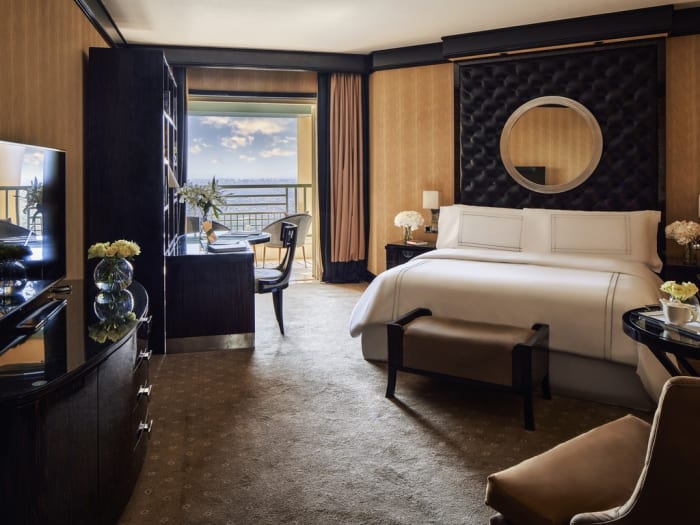
In a city as sensory as Cairo, the hotel room takes on particular importance. It is not merely where one sleeps; it becomes a space of transition, recovery and observation. At Fairmont Nile City, the rooms and suites fully support that role. They are conceived as contemporary refuges, both elegant and functional, reflecting the blend of modernity and Egyptian tradition that informs the hotel’s wider identity. The aim is not to multiply decorative signals, but to create a coherent, calming atmosphere suited to different kinds of stays.
The first luxury here is often perspective. When a room opens onto the Nile, the stay changes scale. The eye travels further, light enters differently, and the sense of space is strengthened. Even for a traveller used to major capitals, this direct relationship with the river brings something distinctive. It offers, in the morning and again at day’s end, a fixed point within a city often experienced through constant movement. This quality of view contributes as much to psychological comfort as to visual pleasure.
In terms of style, one expects from a Fairmont property a certain command of international standards, and that is precisely what makes the experience feel seamless. The rooms are designed for concrete uses: sleeping well, working quietly, getting ready without haste, perhaps receiving a visitor, or extending a moment of rest after a full day. In this kind of address, true refinement lies less in display than in the obviousness of things done properly: clear circulation, comfortable furnishings, controlled lighting and an overall impression of order and softness.
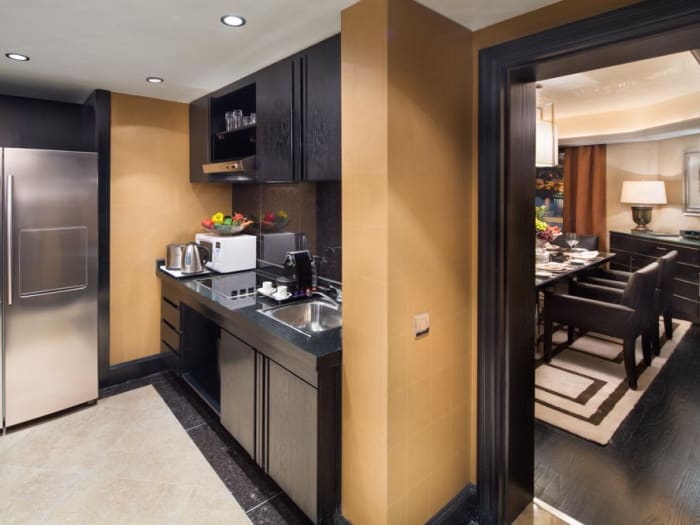
The suites naturally add a more residential dimension. They suit those seeking more space, a clearer separation of functions, or simply a broader experience of the hotel. For a couple, they allow the address to be lived more slowly, with time for breakfast in the room, reading by the river view, or a pause between outings. For a business stay, they offer welcome flexibility when work, meetings and private time overlap. In every case, the appeal lies in the feeling of having a genuine base within the capital.
Service also plays an essential role in the quality of the in-room experience. Daily housekeeping, turndown service and the steady attention of the teams help maintain that sense of effortless comfort that matters so much in high-end hospitality. After a day spent in Cairo traffic, in museums, souks or historic districts, returning to a perfectly kept room can feel almost ritualistic. It is a discreet form of luxury, but a very tangible one.
Ultimately, the rooms and suites at Fairmont Nile City do not try to distract from the city; rather, they make it easier to experience. They provide a stable, elegant and restful setting in which one can catch one’s breath, look at Cairo from a distance and recover a more personal rhythm. In a destination of such intensity, that ability to make the room a place of re-centring is perhaps one of the hotel’s most valuable qualities.
Restaurants and bars, shaping the day without leaving the hotel
Fairmont Nile City offers several restaurants and bars on site, and that variety matters greatly to the overall experience of a stay. In a major capital, being able to shape one’s day without constantly depending on the outside world is a real comfort. One may start early, return late, improvise a meeting, extend an evening, or simply prefer to remain within the hotel after a demanding day. Dining then becomes more than a practical service: it contributes to the breathing rhythm of the stay and to the way one inhabits the address.
What matters here is not merely an accumulation of options, but a certain continuity of tone. In a hotel of this level, the different dining spaces are meant to accompany distinct moments: breakfast in the morning light, a quicker lunch between obligations, a pause over coffee, a more settled dinner, or a drink at the end of the evening with the city in the background. This natural progression through the day is especially valuable in Cairo, where journeys can be long and the intensity outside often creates a desire to return to a more controlled environment.
The presence of the Nile obviously plays a role in the dining experience. Even when the plate is not intended to narrate a terroir in the European sense, the setting strongly influences one’s perception of the meal. Lunching or dining with the river in view changes the tempo, invites one to slow down and gives the moment an almost scenographic quality. Cairo is a city of contrasts; eating in an elegant, air-conditioned space overlooking the water after moving through its energy creates a very pleasing counterpoint. This is one of the privileges of well-situated grand hotels: offering a form of sensory continuity between landscape and hospitality.
The culinary identity of an international address such as this generally rests on balance. It must respond to a cosmopolitan clientele while leaving room for local context, regional flavours or a certain oriental inspiration when appropriate. Without over-interpreting the offer, one may expect careful execution, attentive service and atmospheres differentiated according to the time of day. The bars in particular often play an important role in the social life of the hotel: places of transition, meetings, relaxation or observation, extending the experience beyond the meal itself.
For travellers discovering Cairo, the on-site offer has another advantage: it allows alternating immersion and retreat. Nothing prevents one from exploring the city’s own tables, but it is valuable to know that a good dinner or a final drink can be enjoyed without reorganising the entire evening. For a business stay, this flexibility is even more useful. For a weekend for two, it instead encourages a chosen slowness, in which one may decide to remain in the hotel and fully enjoy its atmosphere.
Ultimately, dining at Fairmont Nile City cannot be reduced to a matter of convenience. It structures the stay, accompanies its different tempos and reinforces the idea of a grand hotel capable of offering everything without confining the traveller. It is a form of hospitality defined as much by rhythm as by taste: one that allows each day to be composed freely, between city, river and interior pause.
Spa & wellbeing, a necessary pause within Cairo’s rhythm
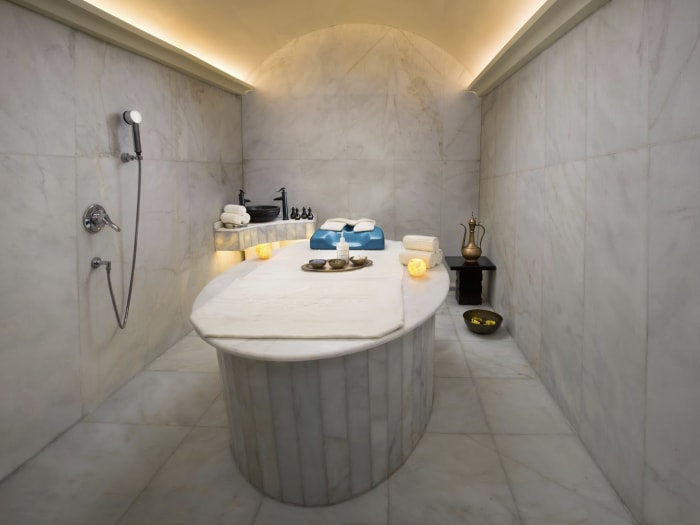
In a destination such as Cairo, wellbeing is not a decorative extra; it quickly becomes an essential dimension of the stay. The city asks much of its visitors: heat depending on the season, dense traffic, strong sound contrasts, long days and visits rich in impressions. In that context, the presence of a spa and spaces dedicated to relaxation makes complete sense. At Fairmont Nile City, this promise of release fits naturally into the overall hotel experience, acting as a counterpoint to the surrounding urban intensity.
The soundest advice is often to book a treatment on arrival. After a long-haul flight or a late transfer, allowing oneself a massage or a moment of recovery helps reset the body before one even begins to explore the city. This simple gesture changes the tone of the stay. Instead of entering immediately into the outside rhythm, one first takes time to recover a sense of balance. This is particularly relevant in a capital as dense as Cairo, where travel fatigue can linger more noticeably if one does not allow for a genuine pause.
In a hotel of this category, the wellbeing experience depends less on spectacle than on the quality of the sequence. One expects calm spaces, treatments carried out with precision, an atmosphere conducive to slowing down and a certain continuity with the rest of the property. The spa then becomes a place of transition between the city and oneself. Guests come to release tension, regain energy, pause in the middle of a stay, or simply extend that sense of controlled comfort that characterises major international hotels.
Wellbeing also takes on a broader meaning than treatment alone. It extends into the quality of sleep, the feeling of freshness regained after a day outside, and the ability to organise one’s time without friction. A hotel such as Fairmont Nile City, with its continuous services and orderly setting, encourages this more global form of recovery. The spa is its most visible expression, but the whole stay leads towards it: a calm room, attentive service, on-site dining, soothing views of the Nile and the possibility of slowing down whenever one wishes.
For couples, the spa often represents a moment of re-centring together, a way to mark a stage in the journey or create a more intimate pause within an urban stay. For business travellers, it may instead help rebalance a crowded schedule of meetings, calls and transfers. For visitors focused on cultural discovery, it acts as a decompression chamber after museums, historic sites or long crossings of the city. In every case, it answers a very concrete need: not to endure Cairo’s intensity, but to inhabit it more flexibly.
Wellbeing here is therefore far from incidental. It contributes to the success of the stay as much as the location or the view. In an address that combines centrality, elegance and service, the spa is a reminder that a grand hotel does more than provide accommodation; it also regulates the traveller’s rhythm. And in a city as compelling as Cairo, that ability to offer a genuine pause is one of the most relevant forms of contemporary luxury.
Concierge & services, the discreet mechanics of a grand hotel
What sustainably distinguishes a grand hotel from a merely attractive address is not only its décor or its view, but the quality of its daily functioning. At Fairmont Nile City, this dimension is visible in the known services: 24-hour concierge, 24-hour front desk, daily housekeeping, turndown service, luggage storage, laundry, wake-up service and multilingual staff. Considered separately, these elements may seem expected in high-end hospitality; brought together and properly orchestrated, they form the true infrastructure of comfort.
In a city such as Cairo, this discreet machinery has particular value. Arrivals may take place at unusual hours, days may begin very early, returns may be delayed by traffic, and plans may change at the last moment. Knowing that the hotel operates continuously, without breaks in service, brings real peace of mind. A front desk open at all times is not merely a standard: it ensures that the stay remains fluid whatever the hour. Likewise, the concierge plays a central role in making the city manageable. It helps turn a complex capital into a workable itinerary, responding both to logistical needs and to more personalised requests.
Multilingual staff also contribute to this quality of welcome. In an international destination, the ability to communicate clearly, understand the expectations of a diverse clientele and anticipate certain difficulties makes all the difference. Luxury, in the end, often lies in the removal of friction. Luggage stored for a few hours before a late departure, a shirt pressed in time for dinner, a wake-up call arranged for an early flight, a room restored while the guest is away: these may appear modest gestures, yet they are decisive in the overall perception of the stay.
Turndown service deserves a mention of its own, because it neatly expresses the idea of continuous attention. It is not only about preparing for the night; it marks the transition between the outer day and the return to the intimacy of the room. In a city as dense as Cairo, this discreet ritual takes on an almost soothing dimension. Daily housekeeping, meanwhile, ensures the consistency essential to comfort. Each day, one returns to a space that is clean, ordered and ready to receive the next moment of the stay, whether that means rest, work or preparation before going out.
The concierge, finally, is often the service that best reveals a hotel’s personality. Beyond practical information, it sets the tone of the relationship with the guest. In an address such as this, one expects assistance that is efficient, measured and able to adapt equally well to a business trip or a leisure stay. To reserve, guide, confirm and simplify: these verbs summarise an essential part of the experience. The grand hotel does not impose a programme; it makes the traveller’s choices possible.
That is why services should never be seen as a mere inventory. They form the invisible framework of the property. At Fairmont Nile City, they support the promise of a stay that is both elegant and frictionless in a capital that can be as demanding as it is compelling. When everything works with precision, the guest hardly notices. And that is precisely the sign of successful service.
The Cairo art of living, from an address that simplifies the city
Cairo does not reveal itself in a single glance. It is a city of layers, distances, contrasts and intertwined tempos. One comes for its ancient history, certainly, but also discovers a deeply contemporary capital shaped by current habits, rhythms and forms of sociability. In that context, choosing a hotel such as Fairmont Nile City means adopting a certain way of inhabiting the city: not by reducing it to a postcard, but by giving oneself the means to approach it with comfort, flexibility and perspective.
The Cairene art of living lies first in this constant coexistence of intensity and slowness. Traffic is dense, days may be long, and stimuli are many; yet the city also knows how to offer suspended moments, often linked to light, the river, the conviviality of a meal, or the simple observation of urban movement. From an address set in the heart of Cairo and open to the Nile, this duality becomes especially legible. One may leave early to explore, return in the afternoon, pause, go out again at sunset, or choose to remain at the hotel and enjoy its atmosphere. The stay then gains nuance.
The proximity of major attractions is an obvious advantage here. It allows cultural days to be organised without turning every transfer into an expedition. Museums, emblematic districts and more contemporary walks: Cairo is discovered in fragments, and it is valuable to be able to return easily to a central base. This possibility of going out and coming back deeply changes the experience. Instead of accumulating visits in a logic of endurance, one can compose a more breathable stay, with pauses and moments of observation. It is often in this way that the city reveals itself best.
The hotel also supports another facet of local art of living: the taste for the end of the day. In Cairo, light slowly fades over the Nile, temperatures become gentler depending on the season, and the city takes on another face. It is an ideal moment for a drink, dinner, a prolonged conversation or simply contemplation. An address with restaurants and bars on site allows that transition to be fully enjoyed without effort. One is not obliged to go back out; one may let the evening come to oneself in an elegant and well-managed setting.
For travellers discovering Egypt, Fairmont Nile City thus offers a gentle initiation to Cairo. It does not replace the city, of course, but it makes access to it easier. It allows one to feel its energy without getting lost in it, to admire its perspectives without giving up comfort, and to alternate immersion and retreat according to one’s own rhythm. This flexibility is precious, because Cairo can impress as much as it seduces. A good hotel does not neutralise that power; it simply helps one move through it more accurately.
Ultimately, the art of living here consists in accepting the city as it is while choosing the right framework from which to appreciate it. Fairmont Nile City answers precisely that expectation. Through its centrality, Nile views, refined atmosphere and structured services, it gives the stay a form of coherence. And in a capital as vast as this, such coherence is no minor detail: it becomes the very condition of a successful experience.
Book with MyConciergeHotel
Booking Fairmont Nile City through MyConciergeHotel means approaching Cairo with a stay planned in advance rather than allowing arrangements to scatter once on site. In a destination as rich and as intense as this, such preparation makes a genuine difference. The choice of hotel is already strategic: a five-star address in the heart of Cairo, overlooking the Nile, close to major attractions, with restaurants and bars on site, and backed by a brand recognised for the quality of its service. Beyond those elements, however, the value of a well-supported booking lies in the ability to adjust the stay to one’s actual rhythm.
MyConciergeHotel makes it possible to approach this kind of address with greater clarity. For a short stay, the challenge is often to maximise useful time: a smooth arrival, a suitable room, a simple organisation of visits and rest, perhaps even a spa treatment booked in advance so that the journey begins well. For a longer stay, one may instead seek to establish a balanced cadence, alternating cultural discovery, time to unwind at the hotel and freer evenings. In both cases, the value of support lies in its ability to turn a beautiful address into a coherent stay.
Fairmont Nile City suits several traveller profiles, and that versatility deserves to be considered at the time of booking. A business trip will not have the same priorities as a couple’s escape or a family stay. Some will prioritise Nile views, others logistical ease, and others still the possibility of fully enjoying the restaurants, bars and spa without multiplying transfers. To book thoughtfully is therefore not to treat the hotel as a simple container, but as a true experiential framework.
The timing of the trip matters as well. The existing description rightly notes that the winter months are particularly sought after for visiting the region. That seasonality affects demand, so it is wise to plan ahead, especially for the most popular periods. Booking in advance not only secures the stay, but also allows one to think more clearly about the overall programme: the rhythm of the days, time for rest, cultural priorities and moments to be enjoyed within the hotel itself. In a city such as Cairo, that anticipation is often synonymous with comfort.
The final advantage of MyConciergeHotel is that it places booking within an editorial and service-driven logic. It is not only a matter of confirming a room, but of choosing an address with a clear understanding of what it truly offers, whom it suits and how best to enjoy it. In the case of Fairmont Nile City, that means knowing one is reserving a refined urban grand hotel, well located, open to the Nile, and capable of accommodating a discovery stay, a business trip or a more restorative interlude.
In short, booking through MyConciergeHotel gives the stay a more precise intention. In a capital as compelling as Cairo, that precision takes nothing away from spontaneity; it simply makes it more pleasant to live. And for an address such as Fairmont Nile City, it is often the best way to make full use of what it offers best: comfort, views, service and a real sense of rhythm.