History & identity
In Jakarta, some hotels play a discreet yet decisive role in the way the city is experienced. Fairmont Jakarta belongs to that category of addresses that do not rely on theatricality, but on clarity, ease and a strong understanding of the capital’s pace. Its identity lies in this balance: an international hotel shaped by the codes of a major luxury brand, yet designed for the very specific rhythms of a metropolis where business, social life and movement structure each day.
The Fairmont name suggests a certain way of hosting guests, grounded in service continuity, discreet staff presence and an elegance that favours genuine comfort over decorative effect. In Jakarta, that promise feels especially relevant. The city is one of Southeast Asia’s largest and most dynamic capitals, combining business districts, institutions, major retail destinations and a dense urban life. In such a setting, a luxury hotel is not merely a place to stay; it becomes an anchor point, somewhere to recover calm, order and continuity whether travelling for work, with family or for a short city break.
The hotel’s identity therefore rests less on a long historical narrative than on a controlled modernity. Here, luxury is expressed through execution: round-the-clock welcome, well-planned circulation, spaces suited to meetings as well as downtime, attention to service details and the ability to accommodate very different traveller profiles. This versatility matters. In a city such as Jakarta, a single stay may combine business appointments, social obligations, leisure and urban exploration; the hotel must shift between these registers without losing coherence.
Fairmont Jakarta also belongs to a contemporary tradition of international hospitality that values legibility. Guests quickly understand how to inhabit the property, organise their day and move from work to leisure. That clarity is valuable. It contributes to the rare feeling of being immediately functional in a complex city, without giving up the pleasure of a refined environment.
More than a hotel of display, the address reads as a high-end urban residence designed for today’s capital. Its heritage is less about distant history than about proven hospitality expertise applied to Jakarta with precision. That combination — a recognised brand, structured service, elegant atmosphere and a clear grasp of contemporary needs — gives the property its distinct personality and explains its place among the city’s most sought-after addresses.
The establishment in the heart of Jakarta
Staying at the Fairmont Jakarta means choosing a location that offers immediate access to the city without the constant hustle and bustle. The hotel is situated in the heart of Jakarta, close to business centres and major attractions. In a capital where geography significantly influences the experience, this location is as important as the comfort of the room.
The advantage of this positioning lies in its versatility. For business travellers, it facilitates movement between meetings, working lunches, and professional events. For leisure stays, it provides a coherent starting point to explore various facets of Jakarta.
The establishment responds to this urban logic with an atmosphere that is both professional and welcoming. The spaces are designed for travellers with diverse expectations. One can work, hold a meeting, reconnect with family after an active day, or simply rest between outings.
This relationship with the city also reflects a certain way of experiencing Jakarta. The capital blends office towers, residential neighbourhoods, international practices, and local habits. The Fairmont Jakarta embodies this culture of efficient service, with a more relaxed internal rhythm.
For families, the location allows for a balance of sightseeing, hotel breaks, and relaxation activities. For couples, it creates an urban getaway filled with dinners, rest, and carefully chosen discoveries. For professionals, it offers a reliable, central, and functional base.
In a city as vibrant as Jakarta, the success of a stay often hinges on the balance between location, fluidity, and quality of service. This is where the hotel finds its relevance.
Rooms and Suites
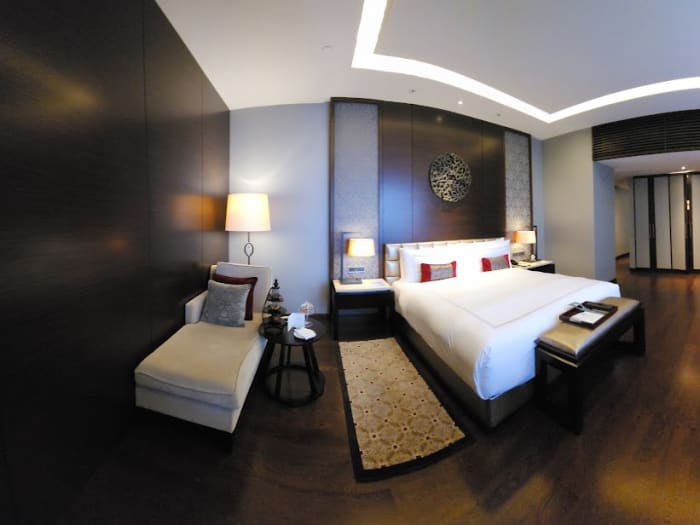
In a large urban hotel, the room is never just a transient space. In Jakarta, it becomes a private sanctuary. It is where one recuperates from the city's pace, prepares for the day ahead, and finds a semblance of silence after the external density.
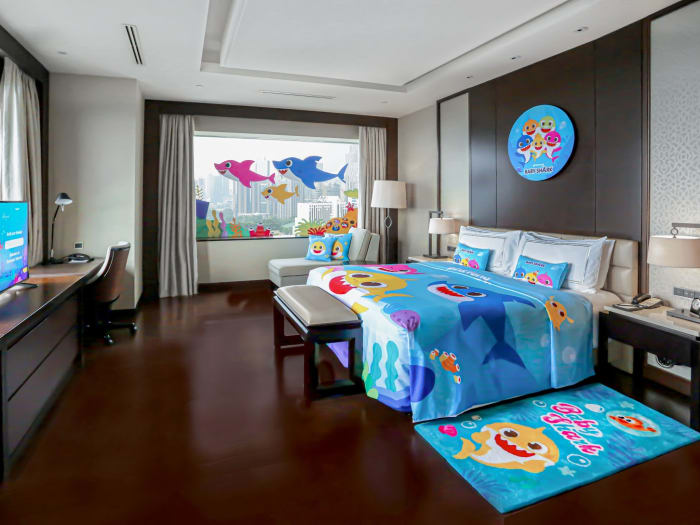
At the Fairmont Jakarta, the rooms and suites extend the overall identity of the establishment. They favour contemporary elegance, structured comfort, and a keen attention to practical detail.
These spaces cater to very specific needs. The business traveller seeks conducive working conditions, with a clear organisation. Couples desire rest, intimacy, and a certain visual softness. Families appreciate the fluidity of movement, the practicality of service, and straightforward responses to everyday needs.
In such establishments, luxury often lies in coherence. The bedding, acoustics, quality of daily maintenance, turn-down service, and the availability of staff create a genuine continuity. Nothing needs to be spectacular to persuade. The room should enhance the stay—providing an easy wake-up before a meeting, a comfortable pause between appointments, or a simplified late return thanks to a well-trained service.
The suites adhere to a logic of additional space and discreet representation. They are suitable for extended stays and allow for a living area, hosting a professional contact, or adopting a more residential pace. In Jakarta, this flexibility of use is particularly meaningful.
Daily housekeeping, turn-down service, reception and concierge available at all hours, luggage storage, and practical assistance are among the essentials. These elements make the stay smoother, allowing for early arrivals, late departures, managing a busy schedule, or travelling with family with greater peace of mind.
At the Fairmont Jakarta, the rooms and suites establish themselves as breathing spaces within the capital, striking a perfect balance between professional efficiency and guest comfort.
Dining and the rhythm of the stay
When a hotel is set in the heart of a major capital, its dining offer does more than feed its guests: it structures the stay, punctuates the day and creates spaces for sociability. At Fairmont Jakarta, even without detailing every venue or concept here, dining can be read as an essential part of the overall experience. In an address used by business travellers, couples and families alike, the table must answer several rhythms: an efficient breakfast, a lunch meeting, an informal pause, a more settled dinner, and room service for those who prefer the privacy of their own space.
In Jakarta, this dimension carries particular resonance. The city has a rich culinary culture shaped by Indonesian traditions, regional influences and a strong international scene. A major hotel often plays the role of mediator: it offers visitors an immediately accessible setting while remaining connected to the city’s gastronomic energy. For travellers discovering Jakarta, the hotel’s dining may provide a first, more structured reading of the city. For returning guests, it becomes a reliable point of reference, where one knows service will be consistent and the environment suited to different moments of the day.
In this kind of property, breakfast is a true barometer. It must allow for both speed and comfort, autonomy and attention. Some guests see it simply as a step before a day of meetings; others make it a slower, almost residential moment, especially when travelling with family or over a weekend. The care devoted to this first part of the day says much about a hotel’s philosophy: its ability to anticipate, the quality of execution and its sense of practical hospitality.
The rest of the day calls for other registers. A well-conceived hotel knows how to offer places where one can receive without ostentation, work over coffee, extend a conversation in a calm setting, or choose dinner without leaving the property. This flexibility is especially valuable in a metropolis where journey times can be unpredictable. Being able to rely on a credible dining offer within the hotel becomes a genuine, almost strategic advantage.
For families, dining also simplifies the stay. It allows them to alternate city outings with quieter moments without having to reorganise the entire day. For couples, it contributes to the atmosphere of the trip by creating more intimate pauses within the urban pace. For professionals, it forms a natural extension of meeting spaces and concierge support.
At Fairmont Jakarta, dining therefore seems best understood as an architecture of daily life: a way of supporting the hotel’s different uses with seriousness, consistency and elegance. More than a collection of restaurants, it sets the tempo of the stay and contributes to the sense of fluidity that defines successful urban luxury addresses.
Wellness, relaxation, and urban breathing
In a city as dense and active as Jakarta, wellness facilities take on particular importance. They contribute to the overall balance of the stay.
Family-friendly leisure services complement this approach. In a downtown location, they enable a more balanced experience.
In a large contemporary hotel, the wellness space serves multiple functions. For business travellers, it offers a moment of decompression between two intense sequences.
A few laps in the pool, a moment of calm, a workout session, or a treatment can restore a more appropriate rhythm. For couples, these facilities provide a time apart.
For families, they allow for a mix of activities and create opportunities for more playful or restful moments.
Good urban wellness spaces create a clear break from the outside world, without artifice. Everything hinges on the atmosphere.
Light, relative silence, simple circulation, impeccable cleanliness, and attentive service matter more than abundance. In a capital where everything moves quickly, this breathing space becomes almost essential.
The Fairmont Jakarta aligns with this logic of balance. Its positioning, between professional clientele and family stays, calls for facilities that cater to varied expectations.
Some guests will want to maintain their fitness routine despite travelling. Others will primarily seek to unwind after a day in the city.
Still others will appreciate having alternatives to outdoor plans when the weather, fatigue, or schedule invites a slower pace.
Wellness is not limited to a spa. It also manifests in the availability of services, the quality of sleep, and the fluidity of the stay.
A concierge available at all hours, a responsive reception, meticulous turndown service, or discreet assistance all contribute significantly.
In Jakarta, where urban intensity can be both stimulating and demanding, this dimension is particularly important. The Fairmont Jakarta offers a more balanced way to experience the city.
Concierge & services
The true level of a hotel is often measured by how it addresses the details. At the Fairmont Jakarta, the concierge and reception are available 24/7. This is complemented by daily housekeeping, turndown service, luggage storage, laundry, and wake-up calls.
In an international capital like Jakarta, this continuity matters. Arrivals can be late, departures very early, and schedules can change at the last minute. A reception available at all hours promotes a more serene stay. The concierge assists with requests, transportation, and reservations with responsiveness and discretion.
The turndown service and daily maintenance belong to a quieter realm. They accompany the rhythm of the stay. Returning to a room that has been tidied and prepared for the night contributes to constant comfort. In a dense urban environment, these gestures become reassuring markers.
The laundry service and luggage storage meet very concrete needs. For an extended business trip, a layover, or a final day in the city, these services facilitate organisation. They allow for lighter travel and better time management.
The wake-up call service remains relevant in large cities. It reflects a service culture attentive to schedules, imperatives, and individual habits.
Beyond this list, a structured and discreet hospitality emerges. At the Fairmont Jakarta, services are designed to streamline the stay, whether for work, rest, or exploration.
The Jakarta way of life
A successful stay in Jakarta does not depend solely on a list of sights or appointments. It also depends on the way one enters the city’s rhythm. As Indonesia’s political, economic and cultural capital, Jakarta does not always reveal itself at a glance. It requires a little method, a well-chosen base and a willingness to engage with its contrasts. That is where a hotel such as Fairmont Jakarta becomes especially meaningful: it offers a stable enough setting to allow for a more nuanced reading of the city.
The local way of life is first expressed through movement. Jakarta is a city of flows, transitions and planned or improvised encounters. Days are often built around several poles: a business district, a lunch, a visit, time in a shopping destination, dinner, sometimes an event. This constant mobility can surprise visitors unfamiliar with it. Having a central hotel with strong services and a calming atmosphere makes it possible to experience that energy without being overwhelmed by it.
Yet Jakarta is not defined by efficiency alone. The city also has a social warmth, perceptible in the quality of welcome, the importance placed on relationships and the fondness for places where people gather. Major hotels often function as elegant crossroads between local life and international clientele. One encounters professionals, families, residents coming for a meeting or meal, travellers in transit and regular visitors to the city. This mix gives such places a particular density, very different from that of purely tourist hotels.
For visitors, Jakarta can be experienced in several ways. Some will favour the capital’s contemporary aspects: recent architecture, business districts, shopping addresses, restaurants and social venues. Others will seek more cultural dimensions through museums, monuments, markets or neighbourhoods that tell a different story of the city. Many will naturally alternate between these two registers. A good hotel does not impose a single narrative; rather, it helps guests compose their own itinerary.
In that sense, Fairmont Jakarta appears to be an intelligent point of transition between exterior intensity and interior comfort. One can leave early, return mid-day, head out again for dinner, arrange an informal meeting or simply observe the city from a more protected position. This flexibility is valuable, because Jakarta is often discovered in sequences rather than through a linear route.
To experience Jakarta from such a property is ultimately to accept that urban luxury is not only a matter of décor, but of time management. Being able to move through the day without excessive fatigue, benefiting from service that simplifies constraints, and returning to a coherent setting between key moments — this is what allows one to enter the capital’s way of life more fully. Fairmont Jakarta seems to offer that possibility with precision, giving the city an elegant counterpoint rather than a screen.
Book through MyConciergeHotel
Choosing Fairmont Jakarta through MyConciergeHotel means approaching the stay with a logic of comfort even before arrival. In a destination as active as Jakarta, the quality of the experience depends greatly on preparation: understanding the location, anticipating journey times, selecting the most suitable room category, arranging transfers and ensuring that the stay truly matches one’s travel rhythm. Booking should never be a mere administrative formality; it is the first stage of a successful stay.
The value of editorial and concierge guidance lies precisely in this ability to turn a hotel offer into a relevant choice. A five-star hotel may suit several traveller profiles, but not always for the same reasons. Some guests will prioritise proximity to business districts and service fluidity. Others will mainly seek an elegant base from which to discover the city as a couple or family. Still others will need a mixed stay combining meetings, rest and leisure. Booking with discernment means identifying these priorities in advance so that the chosen address answers the actual uses of the trip as accurately as possible.
In the case of Fairmont Jakarta, several structuring elements stand out clearly: a central location, closeness to business districts, access to the city’s main attractions, meeting spaces for professionals and leisure facilities suited to families. Added to this is a foundation of continuous services — 24-hour concierge and reception, daily housekeeping, turndown, laundry and luggage storage — which secures the stay and makes it more flexible. Booking through MyConciergeHotel allows these points to be placed in context, not as abstract promises but as concrete advantages according to your programme.
It is also the right moment to anticipate what will make a difference on site. The advice to arrange an airport transfer is particularly relevant in Jakarta, where arrival into the city can feel intense on a first visit. Organising this in advance creates a smoother transition between the journey and the hotel, without unnecessary friction. In the same way, clarifying the purpose of the stay — business, family, couple, tightly scheduled or more relaxed — helps orient any specific requests more accurately.
Booking through MyConciergeHotel also means choosing a qualitative reading of hospitality. The aim is not simply to secure a room, but to select an address that makes sense within the chosen city. In Jakarta, Fairmont stands out through its ability to combine centrality, elegance and functionality. For travellers seeking a clear, well-supported experience adapted to the realities of the capital, this booking follows a logic of precision rather than mere prestige.
A great stay often begins with a good decision made in advance. Here, that means choosing a dependable address, then booking it with the level of attention that a metropolis such as Jakarta deserves.