History & heritage
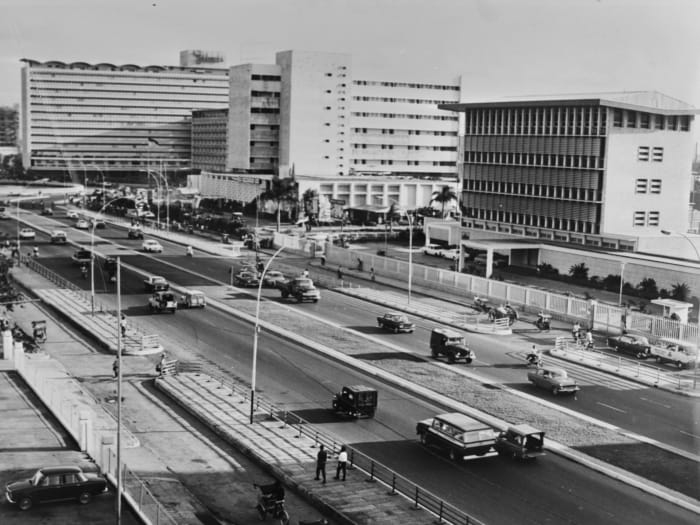
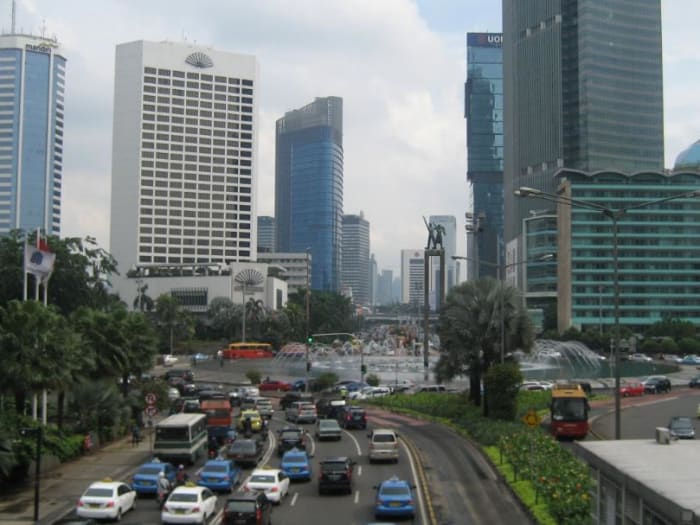
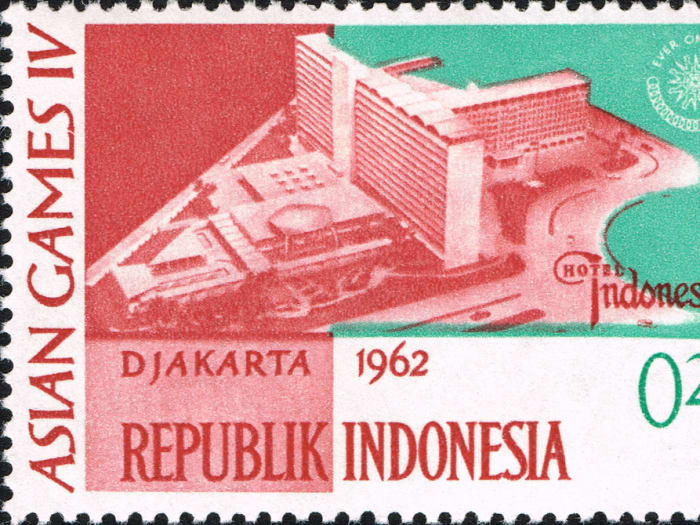
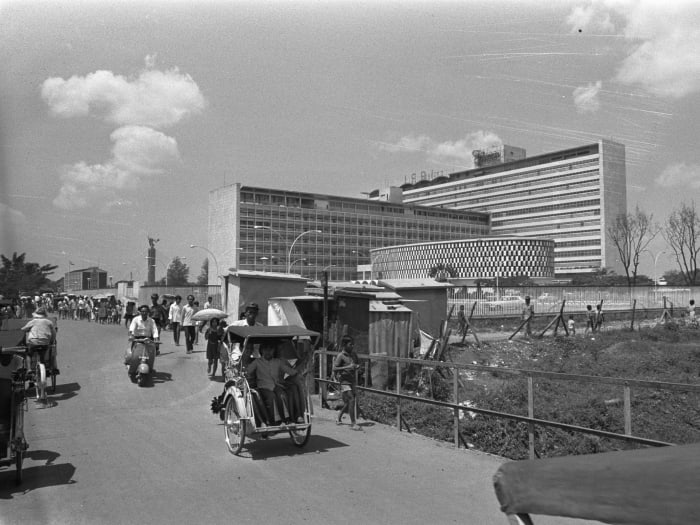
Few addresses in Jakarta carry as much symbolic weight as Hotel Indonesia Kempinski Jakarta. More than a straightforward urban luxury hotel, it belongs to the modern story of the Indonesian capital, at the intersection of international representation, business life and a certain idea of metropolitan hospitality. Its name itself refers to Hotel Indonesia, a landmark address long associated with Jakarta’s rise as a major South-East Asian capital. In a district now defined by corporate headquarters, leading shopping destinations and the constant movement of travellers, that historical continuity gives the hotel a particular presence: not merely well located, but embedded in the city’s urban imagination.
Its Kempinski affiliation introduces a contemporary reading of the grand international hotel. The brand’s European service culture and preference for properties with a strong sense of place suit this context well. Here, the hotel must answer the expectations of demanding business travellers, leisure guests in the capital and a local tradition of hospitality rooted in courtesy and reception. The result is neither a heritage pastiche nor an anonymous luxury tower, but an address that seeks balance between memory, efficiency and present-day elegance.
That sense of heritage is felt less through overt historical staging than through the role the hotel continues to play. It functions as a landmark. Guests stay here, certainly, but the address also matters because it sits at the centre of a Jakarta that counts: business appointments, major avenues, shopping destinations, meetings and fast-moving urban itineraries. In a city often described through its energy, density and contrasts, the hotel offers a reassuring continuity. It opens the city up while preserving a degree of distance, structure and calm.
For European travellers, this notion of heritage matters. It suggests that the experience rests not only on five-star standards, but on a genuine connection to Jakarta’s recent history. Staying here means choosing an address that engages with the city rather than retreating from it. The atmosphere is therefore more urban than theatrical, more established than showy, and all the more convincing for guests who want to feel Jakarta without giving up comfort.
Hotel Indonesia Kempinski Jakarta lends itself to several readings. Business travellers value an address that is central, legible and efficient. Couples appreciate the ease of a stay in which restaurants, shops and points of interest remain close at hand. Regular visitors to major Asian capitals recognise the blend of discreet prestige and operational fluency that defines truly well-conceived hotels. First-time visitors, meanwhile, gain a coherent base from which to understand a vast and sometimes overwhelming city.
In that sense, heritage here is not a fixed decorative theme. It is a way of inhabiting the present. The hotel continues a certain idea of the reference address: a place that accompanies the city’s transformations without losing its standing, welcomes international travellers without erasing its context, and turns its central position into something more than a practical advantage—into a defining part of its identity.
The hotel
The first appeal of Hotel Indonesia Kempinski Jakarta lies in its location, yet it would be reductive to see that as mere convenience. Being in the heart of Jakarta, in a lively district closely tied to the city’s main business areas, changes the nature of a stay entirely. This is not a remote retreat; it is a first-rate urban base for travellers who want to make the most of their time, moving from meetings to dinner, from shopping to sightseeing, without losing sight of the city’s energy.
That centrality is especially valuable in Jakarta, a vast metropolis where distance and traffic shape the travel experience. Choosing a central address simplifies the day, whether for a tightly scheduled business trip or a short leisure stay. Major thoroughfares, business districts and several key attractions remain within reach, while the immediate surroundings offer restaurants, shops and a lively urban rhythm. It creates a distinctly contemporary luxury: fluidity. Being able to step out, walk a little, reach an appointment or extend an evening without excessive logistics becomes a genuine comfort.
The hotel itself fits that logic of clarity and ease. A Kempinski address suggests poise, smooth organisation and a style of hospitality that never needs to be overstated. In a city as intense as Jakarta, that operational quality matters as much as design. Travellers want a place where arrival is straightforward, public spaces provide breathing room, and work, rest and city outings can be combined naturally. The hotel answers that expectation with an atmosphere that is elegant, contemporary and calm enough to offset the pace of the capital.
This is not a resort and not a heritage hideaway; it is a grand capital hotel designed for mobility, comfort and representation. That distinction matters. Guests come here to experience Jakarta at its most active while benefiting from a level of service that allows them to keep control of their own rhythm. Business travellers value that discreet efficiency. Couples appreciate the ease with which they can explore the city. Families, too, benefit from an address accustomed to different styles of stay.
The surrounding neighbourhood contributes greatly to the overall impression. A lively district with restaurants and shops extends the hotel experience beyond its walls. A stay here is therefore not confined to the property itself; it is nourished by the city around it—its lights, pace and habits. One can imagine a day beginning with an early meeting, continuing with shopping or a café stop, and ending with dinner, all without crossing the entire city. That continuity between hotel and neighbourhood forms part of its real value.
For first-time visitors to Jakarta, the address offers a reassuring point of entry. The city can feel overwhelming in scale and intensity; staying in a central, recognisable and well-positioned hotel makes it easier to approach with confidence. For returning travellers, the appeal is different: the pleasure of a reliable, immediately functional address that supports established routines and appointments. In both cases, the hotel fully assumes its role as an urban anchor.
In short, Hotel Indonesia Kempinski Jakarta embodies a very specific form of urban luxury: that of a hotel which understands its city, works with its constraints and opportunities, and turns that understanding into concrete comfort for its guests.
Rooms and suites
In a major capital, a hotel room is never merely a place to sleep. It becomes the balancing point of the stay: the space where one regains composure between appointments, gets ready before dinner and finds a degree of quiet after the density of the city. At Hotel Indonesia Kempinski Jakarta, rooms and suites belong to that logic of the contemporary refuge. They are expected to provide comfort, clarity and a sense of control without losing touch with the cosmopolitan identity of the address.
The likely style is that of a well-managed international five-star hotel, where elegance relies on clean lines, carefully chosen materials and an atmosphere calm enough to suit both business and leisure stays. In such properties, success does not depend on spectacle but on balance: good circulation, welcoming bedding, lighting suited to different moments of the day, practical storage and bathrooms conceived as an extension of comfort. These often discreet elements are what determine the true quality of a stay.
For business travellers, the room must also support work. A central hotel such as this naturally attracts guests who move between meetings, calls, preparation and rest. The value of a well-designed room lies in its versatility: one can open a laptop, focus for a while, receive assistance from the concierge, then quickly shift into a more relaxed mode. That flexibility is essential in a city where days can be long and fragmented.
Couples tend to look for something else: a sense of intimacy within a highly animated environment. After a day spent among shopping destinations, business districts or Jakarta’s busiest avenues, returning to a calm, well-ordered room has particular value. Suites, when chosen, heighten that feeling of space and pause. They allow different moments of the stay to be more clearly separated and turn the hotel into not just a place to sleep, but somewhere one genuinely enjoys returning to.
Families generally appreciate hotels able to combine structure with flexibility. In a property of this level, that tends to mean quality of execution rather than overt family staging: daily housekeeping, attention to detail and the ability to answer practical needs without making the experience feel complicated. Turndown service, for instance, contributes to that sense of continuous, almost invisible care that distinguishes truly well-run hotels.
It is also worth noting the psychological role of the room in a city like Jakarta. Travellers often seek a fixed point. The capital’s contrasts, soundscape, travel times and constant activity make simple, orderly spaces especially valuable. A good hotel room does not cancel the city; it makes it more liveable. It allows guests to experience Jakarta fully because it offers, in return, a stable, comfortable and predictable place.
At Hotel Indonesia Kempinski Jakarta, rooms and suites should therefore be understood as an essential part of the urban experience. They do not aim to distract from Jakarta, but to give the stay its proper measure. Guests find what they expect from a major international address: comfort, poise, service and the ability to adapt to varied uses. In a capital where every minute matters, that is often what separates straightforward accommodation from a true reference address.
Dining
In a grand capital hotel, dining plays a role that goes far beyond convenience. It structures the day, provides meeting places, extends the identity of the address and can even offer another way of reading the city. At Hotel Indonesia Kempinski Jakarta, this matters all the more because Jakarta is a metropolis where people eat at all hours, where business and social life often pass through the table, and where the surrounding culinary offer is abundant. In that context, the hotel’s restaurants and dining spaces must answer a double expectation: they need to meet the practical needs of an international clientele while offering an experience grounded enough not to feel interchangeable.
The advice to book the hotel’s popular restaurants in advance, especially at weekends, already says something meaningful about the property. It suggests demand beyond resident guests and confirms that dining here forms a genuine social hub. In major cities, that is often a good sign: when a hotel also attracts local diners or outside visitors, it stops being a mere transit point and becomes part of its neighbourhood. For travellers, that changes the experience. Dining in is no longer the easy option, but a coherent way of taking part in Jakarta’s energy without leaving the comfort of the hotel.
A Kempinski address suggests a culinary offer approached with seriousness, combining execution, setting and service. Breakfast, in this kind of hotel, is often a key moment. It must suit very different rhythms, from an early departure for meetings to a slower urban weekend morning. The quality of a generous buffet or à la carte service is measured by freshness, variety and smooth organisation, but also by the staff’s ability to maintain calm despite the flow of guests. It is a discreet scene, yet highly revealing of the hotel’s overall standards.
The rest of the day calls for other uses: business lunches, pauses between appointments, tea or coffee in an elegant setting, more settled dinners for couples or colleagues. A central hotel’s dining offer must support all these situations. The true luxury here often lies in the freedom to choose one’s own tempo. Guests may decide to remain within the hotel for a dense day of meetings and meals, or return in the evening to a controlled, comfortable setting after the city’s intensity.
The property’s location in a lively district of restaurants and shops further heightens the relevance of its own dining venues. The hotel is not isolated; it is in dialogue with a highly active urban food scene. That creates a certain obligation. To persuade, dining must offer more than polished décor: consistency, attentive service and the ability to host both a quick meal and a more ceremonial dinner. Such versatility is essential in an address welcoming very different kinds of guests.
For travellers discovering Jakarta, dining at the hotel can also provide a reassuring first introduction to the city’s rhythms. For those who already know the capital, it is a way to save time without compromising on quality. In both cases, food and drink shape the overall stay: they provide its daily texture, pauses, meetings and habits.
At Hotel Indonesia Kempinski Jakarta, dining should therefore be seen as a natural extension of the urban luxury the hotel offers. Neither showy nor secondary, it accompanies the real life of travellers. And in a city as energetic as Jakarta, that ability to nourish, host and pace a stay with accuracy matters as much as room comfort or service quality.
Wellbeing and the rhythm of the stay
Even when a brief does not detail a specific spa, wellbeing remains central to the assessment of a five-star hotel in Jakarta. In a dense, warm, active capital where logistics can be demanding, comfort is not limited to aesthetics. It depends on the hotel’s ability to create transitions, to slow the pace when needed and to offer moments of recovery between urban sequences. At Hotel Indonesia Kempinski Jakarta, wellbeing is best understood in a broad sense: hospitality that genuinely helps guests live the city better.
The first level of that wellbeing is spatial. A major urban hotel must create breathing room. That means relative quiet in the rooms, smooth circulation and public spaces where guests can settle without feeling exposed to the city’s constant intensity. Over the course of a trip, such details have a direct effect on fatigue. They turn what could be a fragmented stay into something more continuous and composed. This matters especially for international travellers arriving with jet lag, tight schedules or simply the need to adjust.
The second level is service. A 24-hour front desk, round-the-clock concierge, turndown service, daily housekeeping and discreet practical attention all contribute to a very concrete form of wellbeing. One sleeps better when the hotel functions smoothly. One recovers faster when practical needs are handled efficiently. In an intense urban environment, true luxury often lies precisely there: in the reduction of friction. Not having to think about logistics, being able to rely on a present team and returning each evening to a properly prepared room all create mental space.
For business stays, this is fundamental. Wellbeing does not necessarily mean total withdrawal, but the ability to remain effective without becoming depleted. A well-run hotel allows guests to alternate concentration and recovery, to pause before dinner and to begin the day in good conditions. For couples or leisure travellers, the issue is slightly different: preserving a sense of pleasure and availability despite the city’s intensity. Once again, the hotel acts as a regulator.
The lively district surrounding the property heightens that need for balance. Going out, exploring, dining, shopping or visiting attractions is part of the appeal. Yet that openness to the city only has value if one can later return to a setting that restores calm. Wellbeing here is therefore not a separate parenthesis; it is what makes successful urban immersion possible.
For some travellers, that may mean a slower morning, breakfast without haste and time to rest in the room before going out again. For others, it means knowing that assistance is available at any hour, that practical matters can be handled and that the next day can be organised with the concierge’s help. Each guest composes a personal rhythm, and that is precisely what a grand hotel should enable.
At Hotel Indonesia Kempinski Jakarta, wellbeing is therefore less an abstract promise than a quality of use. It resides in organisation, continuity of service and the ability to move from Jakarta’s intensity into a more controlled environment. In a metropolis that asks much of its visitors, protecting the traveller’s energy is one of the most relevant forms of contemporary luxury.
Concierge and services
In high-end hospitality, services are not an optional extra; they form the invisible framework of the experience. This is especially true in a city like Jakarta, where the success of a stay often depends on the quality of what happens behind the scenes. At Hotel Indonesia Kempinski Jakarta, several known elements already outline a clear promise: a 24-hour front desk, 24-hour concierge, daily housekeeping, turndown service, luggage storage, laundry, wake-up service and multilingual staff. Taken individually, these may seem expected in a five-star hotel. Taken together, they define a very concrete way of travelling better.
A continuously staffed front desk is essential in an international capital. Late arrivals, very early departures, schedule changes and unforeseen adjustments are all part of travel reality. Knowing that the hotel remains fully operational at any hour brings immediate reassurance. It is not only a matter of availability, but of continuity. The stay does not fragment according to service hours; it keeps its coherence whenever information, help or assistance is needed.
The 24-hour concierge is equally important. In a dense and active city, the concierge is not merely someone who books a table or arranges transport. The role becomes that of a local interpreter, a facilitator of rhythm and sometimes a valuable filter between the traveller and the complexity of the city. On a business trip, this may mean optimising a schedule, anticipating a constraint or suggesting a practical solution. On a leisure stay, it can mean guiding discovery: choosing the right moment to go out, recommending an address or helping to shape a smoother day. That practical intelligence lies at the heart of contemporary luxury.
Daily housekeeping and turndown service represent another form of attention, quieter but no less important. They remind guests that a grand hotel does not simply offer a beautiful room on arrival; it maintains the quality of that space throughout the stay. Returning to a room restored to order, finding it prepared for the evening and noticing that details have been handled without needing to ask—this is what creates the sense of continuous care. In an intense urban setting, such consistency has genuine restorative value.
Luggage storage, laundry and wake-up service may seem purely functional, yet they are decisive for travel fluidity. Bags stored for a few hours make it possible to enjoy the city between timings. Efficient laundry simplifies longer stays and back-to-back business travel. A wake-up call remains, for many guests, a reassuring marker before a flight or important meeting. Luxury is also measured by the seriousness with which practical details are handled.
Multilingual staff, finally, deserve emphasis. In an international address, the quality of human exchange directly shapes perceived comfort. Being understood quickly, being able to formulate a precise request and receiving a clear answer all sound simple, yet they determine the trust a guest places in the hotel. They also make hospitality feel more natural, less formal and better adjusted to different traveller profiles.
At Hotel Indonesia Kempinski Jakarta, the known services therefore suggest a promise of control and continuity. They do not seek to impress through accumulation, but to make the stay simpler, more flexible and more liveable. In a major capital, that is often the quality that separates a good hotel from one guests genuinely wish to return to.
The Jakarta way of life
Staying at Hotel Indonesia Kempinski Jakarta also means choosing a certain way of entering Jakarta. The city does not always reveal itself immediately. Vast, contrasted and shaped by multiple rhythms, it can unsettle as much as it fascinates. One often needs a strong point of support in order to appreciate its logic. A central hotel in a lively district, close to business areas as well as major attractions, provides exactly that form of mediation. It helps one understand that Jakarta is not a city to be admired from afar, but a city to be practised—in sequences, by neighbourhoods and according to the time of day.
The local way of life in such a metropolis lies first in the coexistence of uses. One moves, often without apparent transition, from a business meeting to shopping, from coffee to dinner, from a highly contemporary retail environment to a more ordinary street, from dense traffic to the intimacy of a hotel lounge. That layering forms part of Jakarta’s identity. For travellers, it may feel disorienting at first; it then becomes one of the stay’s greatest interests. The hotel, through its position and level of comfort, helps guests become familiar with that plurality.
The lively neighbourhood surrounding the property plays a central role here. Restaurants and shops are not secondary conveniences; they form part of the city’s daily landscape. They give the stay a more concrete, mobile and spontaneous texture. One can step out for a meal, extend a walk, enter an address noticed along the way and observe the city’s flow without having to organise an expedition. This direct relationship with the immediate surroundings is valuable in Jakarta, where the quality of a stay often depends on balancing proximity with ambition.
For business travellers, such immersion remains compatible with a structured schedule. Indeed, it is often in the intervals—a lunch, a late afternoon, a free evening—that the city’s atmosphere is best understood. For couples, the appeal lies in the possibility of composing a stay that is both urban and comfortable, alternating time together, exploration and returns to the hotel without disruption. Families, too, discover Jakarta more easily from an address that simplifies movement while maintaining a high level of service.
It is also worth remembering that the Indonesian capital cannot be reduced to its economic functions. It has a cultural life, social habits and a culinary and retail scene that tell a story beyond that of a business city. Attentive travellers sense a particular energy shaped by adaptation, modernity and exchange. Staying in a hotel at the heart of that dynamic prevents Jakarta from becoming a merely practical stop. It receives the time and attention it deserves.
The Jakarta way of life, for a visitor, may consist precisely in accepting the city as it is: fast, dense, often unpredictable, yet generous in possibilities. One does not come here in search of fixed picturesque charm; one discovers a capital in motion. Hotel Indonesia Kempinski Jakarta supports that reading well. It offers a setting stable enough to absorb the intensity outside while remaining connected to what gives the city its vitality.
In that sense, the address suits travellers who value hotels as active observation points—not refuges cut off from the world, but places that make their surroundings more legible. In Jakarta, that approach makes perfect sense. It turns the stay into something more nuanced, more vivid and more faithful to the reality of a contemporary Asian capital.
Book with MyConciergeHotel
Choosing Hotel Indonesia Kempinski Jakarta through MyConciergeHotel means favouring an editorial understanding of travel as much as a booking. In a city such as Jakarta, where location, rhythm and service quality matter as much as declared standing, it is useful to have a perspective capable of placing the hotel within its real context. This address cannot be reduced to its five-star category or a list of amenities. Its value lies in its centrality, in the way it simplifies both business stays and urban breaks, and in the balance it offers between metropolitan intensity and controlled comfort.
Booking with discernment begins with understanding who the hotel suits. Here, the ideal profile is broad yet precise. Business travellers find an especially efficient base thanks to proximity to key business districts and continuity of service. Couples appreciate an address that allows them to enjoy Jakarta without wasting time on unnecessary transfers. Families, meanwhile, benefit from a structured property accustomed to practical needs and the importance of reliable service. That versatility is meaningful: it suggests a hotel able to answer different uses without diluting its identity.
This is precisely where MyConciergeHotel adds value. Beyond the booking itself, the interest lies in helping guests make the right choice. Is this a strong option for a first stay in Jakarta? Yes, if one wants a central and reassuring anchor. Is it well suited to a short business trip? Equally so, because logistical fluidity is a decisive advantage. Does it work for travellers who like to go out, dine, shop and feel the city around them? Very clearly, since the lively neighbourhood forms part of the experience. Those seeking an isolated retreat or resort-style stay, however, should recognise that this is urban luxury fully embedded in the capital.
A reservation also benefits from being considered in relation to the rhythm of the stay. In a hotel where restaurants may be in demand, it makes sense to anticipate certain wishes, especially for weekend dinners. Likewise, a well-prepared Jakarta stay always benefits from a minimum of organisation: arrival times, concierge needs, luggage handling and practical services. A hotel with a 24-hour front desk and concierge allows that flexibility, but the experience becomes smoother still when priorities are defined in advance.
Booking through MyConciergeHotel also means seeking coherence. The aim is not simply to secure a room, but to choose an address suited to the way one wants to experience the city. In the case of Hotel Indonesia Kempinski Jakarta, that coherence rests on several clear strengths: a central location, a recognised international signature, a lively setting, solid services and a genuine ability to support different styles of stay.
For demanding travellers, such clarity is valuable. It avoids the common misunderstandings surrounding urban luxury, too often confused with aesthetic display alone. Here, the main interest lies elsewhere: in elegant efficiency, quality of welcome and the possibility of moving through Jakarta with greater comfort and control. It is exactly the kind of address an editorial concierge service can recommend with confidence, because it answers concrete expectations while retaining a real personality.
In short, booking this hotel through MyConciergeHotel amounts to making an informed choice: that of a major Jakarta address which does not promise escape from the world, but a more accurate, more fluid and more comfortable way of inhabiting the city for a few days.