History & heritage
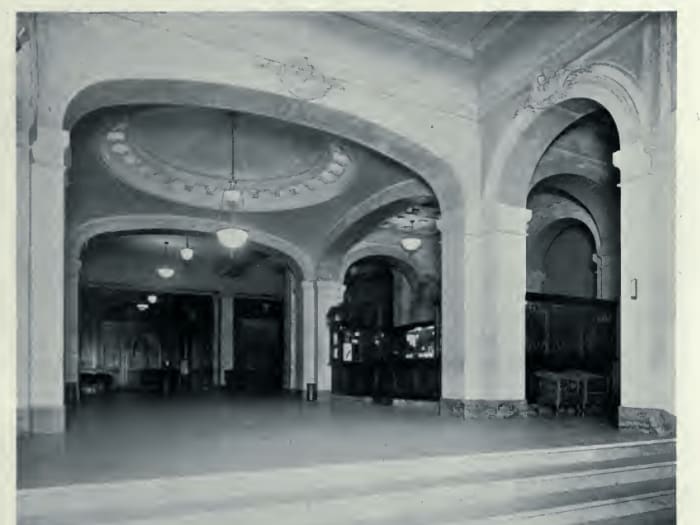
The Fairmont Palliser belongs to that rare category of addresses that tell the story of a city as much as they welcome it. In downtown Calgary, the hotel is part of a North American tradition of grand urban and railway-era properties designed to give tangible form to the idea of elegant travel. Its historic architecture, immediately apparent in the building’s profile as well as in certain interior details, recalls a time when hotels were not merely places to stay, but civic landmarks, social salons and anchors for local business life.
This heritage dimension does not feel applied or theatrical. It can be read in the way the property maintains a classical presence within a contemporary, vertical and fast-moving Calgary. The contrast works particularly well here: on one side, a Western Canadian city shaped by business, conventions, exchange and proximity to vast landscapes; on the other, a hotel that embraces a more ceremonial language, with generous volumes, measured ornament and a sense of service rooted in long-standing hospitality traditions. The result is not museum-like. It is continuity instead, a place that has moved through the city’s evolution without losing its role as a reference point.
To stay at the Fairmont Palliser is therefore to enter an address that has received several generations of travellers: business guests, couples on a city break, families in transit, visitors discovering Calgary before continuing towards the Rockies or wider Alberta. This variety of uses is part of its identity. The hotel is not designed for a single type of stay; it accommodates different rhythms, from the short corporate visit to a more leisurely interlude. That also explains its particular atmosphere: a blend of discreet formality and genuine warmth, where service seeks continuity rather than effect.
The property’s heritage lies, finally, in its ability to remain legible. In many historic hotels, the past is invoked as a selling point. Here, it shapes the experience more concretely: in the sense of arrival, in the feeling of staying at an address known to the city, in that relationship to long time spans that newer hotels often lack. For European travellers, and especially French guests, this steadiness can feel reassuringly familiar. It recalls those grand houses chosen as much for their location as for a certain idea of hospitality, built on mastered codes, proven comfort and elegance that never needs to become showy.
The Fairmont Palliser is therefore more than a well-located hotel in Calgary. It offers a way of inhabiting the city from within a place that has accompanied its history and that still provides, today, a refined reading of its urban identity.
The property
What strikes first at the Fairmont Palliser is the balance between historic stature and contemporary clarity. The hotel has the presence of a grand downtown address without becoming intimidating. From the moment of arrival, one senses an organisation designed for travellers with different expectations: some are here for an early meeting, others for a weekend for two, others still to explore Calgary on foot. This versatility is one of the property’s strongest qualities. It does not mean neutrality; rather, it reflects a mastery of use that is rare in hotels trying to do everything at once.
The carefully considered décor plays a full part in that impression. Without chasing fashion, the interiors favour a classical, legible elegance built on materials and tones that immediately create a sense of order and comfort. In an urban context often dominated by the codes of offices, transit and efficiency, the Fairmont Palliser introduces a pause. It offers what grand hotels do best: public spaces where one can take a break between appointments, continue a conversation, read, wait calmly before departure or simply observe the rhythm of the city from a more hushed setting.
The address benefits above all from a central location that shapes the entire stay. Being in the heart of Calgary changes the way the destination is experienced. Key downtown sights, shops, business districts and a number of social venues are easily reached, allowing guests to alternate between professional obligations and free time without effort. For a first-time visitor, this centrality simplifies the city: Calgary’s geography becomes easier to grasp, movement feels fluid, and returning to the hotel during the day never feels like wasted time. For regular visitors, it guarantees valuable efficiency.
This urban setting does not prevent the hotel from preserving a sense of retreat. It is one of the property’s successful paradoxes: fully embedded in downtown life while maintaining, indoors, a more contained atmosphere. The Fairmont Palliser is not an isolated refuge from the world; rather, it acts as a filter. One still feels Calgary’s energy, but organised, softened and made more comfortable. This quality matters especially in a city where the seasons strongly shape daily life. Whether during a sharper winter period or a busier season marked by local events, the hotel provides a stable, practical and elegant base.
In short, the property appeals less through spectacle than through overall coherence. Historic architecture, a central location, spaces designed for different rhythms of stay, and a welcoming atmosphere without excessive familiarity all combine to make the Fairmont Palliser a reference address for experiencing Calgary with ease. It is a hotel that understands the city and helps its guests move through it with greater comfort, clarity and style.
Rooms and suites
In a hotel of this standing, the room is not merely a place to sleep; it must extend the character of the house while meeting the very practical demands of contemporary travel. At the Fairmont Palliser, this takes the form of a classical comfort designed to last rather than to impress. Rooms and suites align with the overall spirit of the property: measured elegance, carefully considered décor, attention to spatial clarity and a desire to reconcile the charm of a historic address with present-day expectations of convenience.
This type of hotel attracts varied profiles, and that is reflected in the way the accommodation is experienced. The business traveller will look for a calm, orderly setting suited to preparing for a meeting or recovering after a demanding day. Couples are more likely to appreciate the enveloping atmosphere, the sense of staying in a grand urban house rather than a mere stopover. Families, meanwhile, usually value the structured service and reassuring organisation that such an address can provide, especially when a stay combines outings, rest and logistics.
The appeal of a room in a historic hotel often lies in something more subtle: a sense of depth, a different way of entering the city. Where some newer properties rely on immediate impact, the Fairmont Palliser appears to favour a more lasting relationship with comfort. One imagines spaces where the palette remains restrained, where the furnishings seek a balance between practicality and poise, and where the whole is designed to make a stay feel fluid, without visual excess. That restraint is an asset. It leaves room for what one truly expects from high-end accommodation: calm, sleep quality, ease of use and the feeling of being properly looked after.
Suites, in such a context, take on a particular dimension. They are not simply larger; they offer another way of inhabiting the hotel, with greater ease for receiving visitors, working or simply extending the stay in a more residential frame. For a multi-night business trip, a discreet celebration or a stop before a wider Canadian itinerary, that additional space can transform the experience. It allows the hotel to be lived not as a compressed interval, but as an address in its own right.
What ultimately distinguishes the accommodation at the Fairmont Palliser is its coherence with the property’s wider identity. Nothing suggests a desire for rupture between public spaces and private rooms; on the contrary, everything seems designed so that, once the door is closed, one finds the same promise of controlled comfort and quiet elegance. For discerning travellers, that is often where the true quality of a grand hotel is decided: in this discreet continuity that makes a stay simpler, more restful and, ultimately, more fitting.
Dining
In a grand urban hotel, dining plays a role that goes well beyond convenience. It shapes the rhythm of the stay, the perception of the property and the way the hotel belongs to its city. At the Fairmont Palliser, one can reasonably expect an offering in keeping with the house itself: structured, elegant, attentive to the different moments of the day and able to serve both the pressed traveller and the guest who wishes to make a meal an experience in its own right.
In the morning, in a downtown hotel, breakfast is often revealing. It must answer very different needs: an early departure for a meeting, a slower start for a couple, family organisation before a day of sightseeing. In that context, the quality of an address is measured by its ability to provide service that feels fluid and legible, without unnecessary bustle. The Fairmont Palliser, by its positioning, calls for this kind of mastery. One readily imagines a setting in which to begin the day methodically, in an atmosphere more hushed than merely functional, where service supports without rushing.
At lunch or dinner, the dining offer in a hotel like this must also act as an interface between the interior world of the property and the city outside. Some guests will seek the ease of eating on site between obligations; others will return after a day spent exploring Calgary. In both cases, the aim is not to multiply effects but to provide an experience coherent with the hotel’s identity. In a historic house, that often implies a certain composure of setting, menus designed to suit varied guests and service able to adjust its tone according to the occasion, from a business appointment to a more relaxed evening meal.
Room service, where available in this category of address, is also an important marker of hotel standards. For jet lag, a late arrival, a desire for discretion or simply the wish to prolong the comfort of one’s room, it contributes to the idea of a frictionless stay. This continuity between public spaces and private accommodation is essential in grand classical hotels: it allows guests to inhabit the address at their own pace, without the quality of the experience depending solely on time spent in the restaurant.
More broadly, dining at the Fairmont Palliser should be understood as part of a wider hotel lifestyle. It does not necessarily seek to become a stand-alone destination for the whole city; it first serves the promise of a well-run grand house where one can dine consistently, host correctly, enjoy a drink in an appropriate setting and organise one’s day without complication. For French travellers in particular, this approach has a specific virtue: it restores dining to its proper place, not as spectacle, but as an art of staying well. In a fast-moving Calgary, that steadiness carries real value.
Spa & wellness
In a city such as Calgary, where days may be shaped by meetings, urban movement, seasonal contrasts and sometimes jet lag, a five-star hotel’s wellness offer is not a mere extra. It is an essential counterpoint. At the Fairmont Palliser, this dimension fits naturally within the property’s logic: to provide, in the heart of downtown, a place capable of slowing the pace without breaking with the hotel’s overall elegance.
Wellness in a grand historic hotel is not necessarily conceived as spectacle. It often takes the form of a more discreet, integrated experience, one that helps restore balance. After a day of meetings, a long-haul flight or several hours spent discovering the city, the possibility of taking time to recover can significantly alter the quality of a stay. This is especially true for international travellers, who expect a property of this category to respond to very concrete needs: easing tension, regaining energy and creating a transition between the outside world and the privacy of the room.
In that spirit, the wellness offer in a hotel such as the Fairmont Palliser lends itself equally to occasional use and to a more established routine. Some guests will look for a targeted treatment or a moment of relaxation before dinner; others will prefer to integrate movement, rest or recovery into their daily schedule throughout the stay. This flexibility matters. It allows the hotel to make wellness relevant not only to leisure guests but also to business travellers, couples on a break and even those simply passing through.
The setting matters here as much as the treatment itself. In a property with carefully considered interiors, the wellness experience gains coherence when it extends the same sense of controlled calm found elsewhere in the hotel. What one expects is less a total rupture than a continuity: spaces where one immediately feels looked after, where time slows, where attention to detail helps lower accumulated tension. This approach is particularly suited to Calgary, a destination often chosen as a gateway to Western Canada. Before continuing towards a wider itinerary, or after a demanding programme, having such a decompression chamber makes complete sense.
Spa and wellness at the Fairmont Palliser should therefore be understood as part of the overall experience, on a par with the room, dining and concierge. They contribute to the idea of a well-orchestrated stay, in which each moment can be adjusted according to the traveller’s real needs. In the upper segment, it is often this quiet adaptability that makes the difference: not the accumulation of options, but the accuracy of a service that knows when to energise the day and when, on the contrary, to suspend it.
Concierge & services
True luxury in a landmark urban hotel is often measured by the quality of its invisible services: those that do not seek attention yet make every stage of a stay more fluid. Based on the known information, the Fairmont Palliser offers a 24-hour concierge, a 24-hour front desk, daily housekeeping, turndown service, luggage storage, laundry, wake-up service and multilingual staff. Taken separately, these may seem expected in a five-star property; together, however, they define a precise promise: that of a house organised to support varied, sometimes complex and always demanding travel rhythms.
The 24-hour concierge plays a central role here. In a city such as Calgary, it is not only there to book a restaurant or suggest a route. It becomes a point of support for structuring the stay, especially when time is limited. A business traveller may rely on it to optimise movements, adjust a programme or secure last-minute logistical help. A couple on a city break will find guidance for shaping a balanced day between walks, local addresses and returns to the hotel. A family will appreciate the ability to simplify organisation, particularly during early arrivals, late departures or unexpected changes of pace.
The round-the-clock front desk reinforces this sense of continuity. In major international hotels, permanent availability changes a great deal: it reassures late arrivals, absorbs transport disruptions, facilitates requests made at unusual hours and allows guests to inhabit the hotel without excessive time constraints. Daily housekeeping and turndown service extend that logic into the privacy of the accommodation. They remind us that an upscale stay depends not only on design or location, but on the way the room is maintained, prepared and reset throughout the day.
Laundry and luggage storage are equally important markers for a mobile clientele. They answer very practical needs, often underestimated in hotel descriptions yet decisive in the reality of travel. Being able to travel light, have clothing cared for, leave luggage before check-in or after departure — all this helps make the city more accessible and the stay less fragmented. As for wake-up service, it remains entirely relevant in the context of early flights, business appointments or jet lag.
Ultimately, the services at the Fairmont Palliser express a particular idea of classical hospitality: availability, consistency, discretion and precision. Nothing demonstrative, but a continuous attention to the details that truly matter. For French travellers accustomed to grand houses, it is often this underlying quality that marks the difference between a good hotel and an address one genuinely recommends. A central, historic property may charm at first sight; it is the solidity of service that makes guests want to return.
The Calgary way of life
Staying at the Fairmont Palliser also means choosing a particular way of entering Calgary. The city does not always reveal itself immediately to European travellers: it has neither the monumental heritage of certain capitals nor the obvious tourist profile of more heavily mapped destinations. Its interest lies elsewhere, in a singular combination of economic energy, Western Canadian culture, contemporary urbanism and proximity to landscapes among the most striking in the country. From a hotel located in the heart of downtown, that identity becomes easier to read.
Calgary is first discovered through its rhythm. It is an active, structured city where the business world coexists with a cultural and social life more discreet than it may initially appear. By staying at a central address, one can grasp its nuances on foot, alternating lively streets, shops, culinary stops and quieter moments. That ease of access is valuable: it prevents Calgary from being reduced to a mere stop before the Rockies and instead allows it to be experienced as an urban destination in its own right, at least for a few days. The Fairmont Palliser, by virtue of its location, encourages precisely this reading.
The local way of life also lies in the relationship between city and horizon. Even while remaining downtown, one senses that Calgary belongs to a wider territory, open and shaped by Alberta’s culture and by the imagery of the West. This gives the city a particular sense of breathing space. It partly explains why stays here often feel different from those in other North American cities: less saturated, more direct, sometimes more pragmatic, yet not devoid of refinement. For French travellers especially, this combination can be highly appealing. It offers an urban experience without excessive density, with the comfort of a grand historic hotel serving as a point of balance.
Depending on the season, Calgary changes noticeably. Local events, busier periods and climatic variation influence both the city’s atmosphere and that of the hotel. This is precisely why an address such as the Fairmont Palliser makes sense: it allows guests to enjoy the destination without being burdened by its logistical constraints. Days can be organised flexibly, with the possibility of returning to warm up or rest before heading out again for dinner, a walk or an appointment. This ability to accompany the city through its different tempos is part of the experience itself.
Ultimately, the Calgary way of life is not about folklore but about balance: between efficiency and openness, between downtown and the vast spaces in the background, between modernity and local heritage. The Fairmont Palliser fits perfectly within that equation. It offers a setting from which to understand the city from within, without simplifying it. For travellers seeking an address able to combine comfort, centrality and character, it is an excellent point of departure for approaching Calgary with accuracy.
Book with MyConciergeHotel
Choosing the Fairmont Palliser through MyConciergeHotel means treating the booking not as a simple transaction but as the beginning of the stay. For an address of this kind — historic, central and suited to both business travel and leisure breaks — the quality of preparation matters almost as much as the hotel itself. A successful stay in Calgary often depends on apparently modest details: arrival time, luggage handling, transfer arrangements, selecting a room category aligned with the length of the trip, or anticipating a busier period in the city. These are precisely the points on which editorial and concierge support become meaningful.
Booking with MyConciergeHotel allows the property to be approached through a more precise reading of its real strengths. The Fairmont Palliser is not merely a well-located five-star hotel; it is a house suited to several uses, and its appeal shifts according to the traveller’s profile. For a business trip, the priority will often be logistical fluidity, centrality and continuity of service. For a couple, atmosphere, room comfort and the ability to experience Calgary on foot may matter more. For a family, practical organisation and flexibility will be key. This ability to orient the booking from the right angle avoids generic choices and materially improves the experience on site.
One of the most relevant recommendations in this case is to anticipate the arrival from the airport. In a city where journey times and conditions may vary, arranging transport in advance significantly simplifies the start of the stay. One arrives more calmly, especially after a long-haul flight, and enters the rhythm of the hotel immediately. This attention to the pre-arrival phase is typical of a concierge approach: it does not merely confirm a room, it seeks to reduce friction before check-in even begins.
MyConciergeHotel also helps place the hotel within its destination context. Calgary experiences busier periods linked to its local calendar, events and seasonality. Booking early, choosing the right dates, understanding the value of a more urban stay or, conversely, of a stop before a wider itinerary through Western Canada — all these elements influence the quality of the trip. In that framework, the Fairmont Palliser appears as a dependable choice, provided it is approached with accuracy.
Ultimately, booking this address through MyConciergeHotel means looking for more than a rate or availability. It means seeking editorial recommendation, an understanding of the place and a more intelligent preparation of the stay. For a hotel built on continuity of service, discreet elegance and centrality, this way of booking is especially coherent. It extends the property’s promise before one has even crossed its threshold.