History & heritage
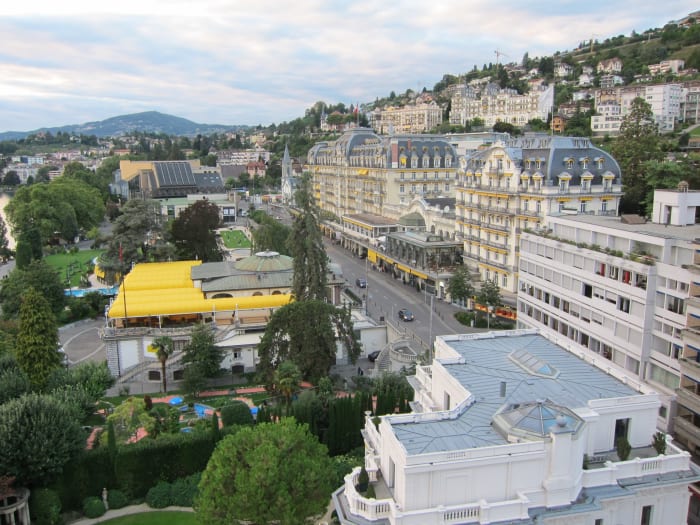
Facing Lake Geneva, in the stretch of shoreline where Montreux unfolds its promenade between water, palms and Alpine relief, Fairmont Le Montreux Palace belongs to the grand European hotel tradition shaped by the rise of continental travel. Its architecture immediately recalls the era of resort palaces born between the late 19th and early 20th centuries, when the Swiss Riviera drew an international clientele in search of mild weather, dramatic scenery and a certain idea of elegance. The property retains that legacy through its commanding façade, generous proportions and luminous public rooms, while balancing historic character with contemporary comfort.
What matters here is not simply the survival of a style, but the way it remains alive. This is not a static backdrop. It continues to fulfil the classic purpose of a grand hotel: to receive, to frame a stay, to offer viewpoints, conversation spaces and moments of retreat. The traditional codes of palace hospitality remain legible — an expansive lobby, attentive service, fluid circulation between rooms, restaurants and wellness areas — yet they are adapted to present-day expectations.
Montreux itself is central to this story. The town has long cultivated a reputation as a refined resort, outward-looking and culturally engaged, where music, lakeside leisure and a polished way of life meet. Its proximity to the renowned jazz festival underlines the destination’s dialogue between heritage and contemporary creation. In that setting, the hotel functions as a landmark. It contributes to the identity of Montreux as much as it benefits from it, embodying the spirit of the Swiss Riviera: almost Mediterranean softness in the landscape, balanced by Swiss precision in organisation and service.
To stay here is therefore to enter a continuity — that of the great lakeside hotels designed to elevate arrival, extend the gaze and make time spent on site an experience in itself. Fairmont Le Montreux Palace does not merely occupy a privileged address; it expresses a way of travelling in which one chooses a hotel for its atmosphere as much as for its comforts.
The property
The first luxury at Fairmont Le Montreux Palace is its relationship with the landscape. Set directly on the shores of Lake Geneva, the hotel occupies one of the most distinctive panoramas in French-speaking Switzerland: water in the foreground, mountains beyond, and a changing light that shifts the bay of Montreux from silvery softness to sharper contrast over the course of the day. From the property, the eye moves naturally between lake and peaks, creating a rare sense of being both in town and slightly removed from it.
The address also lends itself to discovering Montreux on foot, which matters in a destination where the lakeside promenade is part of the experience. Step outside and the rhythm of the stay quickly takes shape: the quay, gardens, terraces, boats and nearby cultural venues. The proximity of the jazz festival, when in season, adds a particular energy; outside major events, the town settles into a calmer, more contemplative pace.
Inside, the hotel balances scale with legibility. Public areas are designed to support different uses — a polished arrival, a business meeting, a quiet pause, reading with a lake view, a drink at the end of the day. That versatility is central to a contemporary grand hotel, where couples, families, business travellers and regular guests may all share the same spaces without disrupting the atmosphere.
Historic architecture gives the property its poise, yet the effect is not theatrical. Its elegance lies more in proportion, natural light and the continuity between spaces than in decorative display. It is a hotel that turns an exceptional setting into a daily experience.
Rooms and suites
In a hotel of this standing, a room is never merely a place to sleep; it must extend the character of the property while offering a refuge that feels fully resolved. At Fairmont Le Montreux Palace, that promise begins with the relationship to the landscape. Depending on orientation, rooms and suites draw in the presence of Lake Geneva, the light of Montreux and, in many cases, the surrounding mountains. That visual openness shapes the stay from the outset: the lake sets the tone in the morning and accompanies the return to calm at day’s end.
The overall spirit combines the charm of a historic grand hotel with contemporary standards of comfort. One expects well-considered proportions, high-quality bedding, bathrooms designed for lingering, and layouts that work equally well for short stays and longer retreats. Daily housekeeping and turndown service reinforce that discreet continuity associated with classic palace hospitality.
Suites typically answer a different rhythm of travel. They allow space to receive, to work, to withdraw or simply to inhabit the hotel more fully. For a couple’s weekend, they add ease; for a family stay, flexibility; for business travel, a clearer separation between meetings and private time. What matters is not only size, but usability: clear circulation, distinct zones and a preserved sense of privacy.
What truly distinguishes rooms in a lakeside palace is the way they frame the outside world. In Montreux, that matters immensely. Light, climate and topography are constantly shifting, and the room becomes a privileged observatory from which to experience them.
Dining
Dining in a grand hotel is never simply a matter of having several restaurants; it is part of the choreography of the stay. At Fairmont Le Montreux Palace, the presence of multiple on-site dining options supports that idea of controlled variety. Guests need not leave the property to change tempo or atmosphere: breakfast with the lake in view, a lighter lunch between meetings or walks, a more settled dinner, or a drink in a quieter setting at the end of the day.
In Montreux, food and drink are inseparable from the setting. The light on Lake Geneva, the movement along the promenade, the changing seasons and the relative softness of the climate all shape the dining experience. Whenever architecture allows, the view becomes part of the occasion. It does not replace what is on the plate, but it alters the perception of time.
A varied dining offer is also valuable because it accommodates different travel rhythms. A couple on a romantic break, a family on holiday and a business traveller do not seek exactly the same thing. Some want a destination restaurant; others value flexibility, reliable service or the ease of dining in-house without excessive formality. A well-run grand hotel must answer those differing expectations without losing coherence.
Breakfast deserves special mention, as it often becomes the defining ritual of a stay on the lake. In a town such as Montreux, where morning light transforms the shoreline, beginning the day in a setting open to the landscape immediately changes the mood of travel.
Spa & wellness
In a destination such as Montreux, wellness is not only about treatments; it begins with the place itself. The lake, the light, the long walks along the promenade and the slower pace naturally encouraged by the waterfront all contribute to a sense of ease. The wellness facilities at Fairmont Le Montreux Palace extend that logic rather than imposing an abstract spa concept upon it.
In a contemporary palace hotel, the spa serves several purposes. It answers practical expectations — a swim, recovery after travel, release after meetings or a counterpoint to a busy sightseeing schedule — but it also creates an internal rhythm for the stay. Between outings, between morning and evening, between activity and contemplation, it acts as a transition space.
The value of on-site wellness facilities lies in their immediacy. There is no need to organise an additional outing or break the rhythm of the hotel in order to unwind. That continuity matters. It allows a treatment or a quiet pause to be integrated naturally into the day.
For many travellers, the spa is what turns an overnight stay into a real interlude. Here, wellness complements the views, service and historic architecture with a more intimate, sensory dimension.
Concierge & services
The standard of a grand hotel is often revealed by what is not immediately visible. At Fairmont Le Montreux Palace, the known services — 24-hour concierge, round-the-clock reception, daily housekeeping, turndown, luggage storage, laundry, wake-up service and multilingual staff — define a clear promise: a stay made fluid by discreet but constant organisation.
The concierge is central to that experience. In a destination such as Montreux, the role goes beyond handling requests; it helps shape the stay itself. A restaurant booking, guidance on a lakeside walk, advice on quieter timings, or assistance with arrival and departure logistics may seem modest individually, yet together they materially improve the quality of travel.
A 24-hour front desk and multilingual team provide welcome reassurance in an international hotel. Late arrivals, early departures and last-minute adjustments are part of real travel life; in a well-run property, they are absorbed calmly rather than becoming complications.
More discreet services — turndown, housekeeping, laundry and luggage storage — also matter. They allow guests to focus on the purpose of their stay rather than its logistics. Whether for a weekend break, a longer holiday or a business trip, the aim is the same: to lighten the invisible burden of travel.
Here, service follows the best traditions of international grand hospitality: attentive without being intrusive, reliable in its fundamentals, and supportive of very different travel rhythms.
The Montreux way of life
To stay at Fairmont Le Montreux Palace is also to enter a very particular way of inhabiting Montreux. The town offers a rare balance between discreet sophistication, lakeside softness and cultural openness. That way of life begins with geography. Lake Geneva shapes everything: the light, the walks, the sense of time and even the way one structures the day.
The promenade along the lake is perhaps the clearest expression of this spirit. It allows the town to be experienced at walking pace, through changing light, passing boats and the constant presence of the mountains. For a guest staying on the waterfront, that proximity changes the nature of the trip: one can step outside without a fixed programme and let the destination reveal itself gradually.
Montreux also has a strong cultural identity, with the jazz festival as its best-known emblem. Even outside the event itself, that musical heritage contributes to the town’s image: international without being showy, cultivated without stiffness, and attached to a certain idea of conviviality.
The wider Swiss Riviera adds further depth, inviting unhurried exploration of villages, slopes, viewpoints and lake connections. The hotel supports that rhythm particularly well, offering both access to the town and a complete enough setting that guests never feel compelled to fill every hour.
Book with MyConciergeHotel
Booking Fairmont Le Montreux Palace through MyConciergeHotel is not simply about reserving a room in a grand lakeside hotel; it is about preparing the stay with greater accuracy, taking into account context, rhythm and the traveller’s actual expectations. A property of this kind can be experienced very differently depending on season, length of stay, purpose of travel and room category.
In Montreux, timing matters. Summer naturally draws more visitors, and major events can alter both the mood of the town and hotel availability. Other periods offer a calmer, more contemplative experience, often better suited to those travelling primarily for scenery, rest or a couple’s break.
Room choice deserves equal care. In a hotel where the view is so central, orientation can transform the stay. For some guests, waking up to the lake is the priority; for others, the need is for more generous space, a suite suited to family travel or a setting conducive to work.
MyConciergeHotel also helps frame the hotel beyond accommodation alone: on-site dining, wellness facilities, concierge support and the property’s immediate relationship with Montreux itself. The aim is not to overstate, but to guide precisely.