Between Geneva, Lausanne, Montreux, and Évian-les-Bains, Lake Geneva presents a rare hotel landscape. The decor matters, of course. However, here, design is never merely about a spectacular signature. It is rooted in a precise geography, between urban shores, grand alpine landscapes, and thermal heritage. This is what makes this segment particularly intriguing. On this lake, a design hotel can take the form of a reinterpreted historic palace, a castle by the water, or a major international establishment with more contemporary lines. Thus, the subject is not solely about aesthetics. It also concerns how a place organises views, light, circulation, and its relationship with the lake. It is important to note that Lake Geneva offers both situational design and object design.
To establish this ranking, MyConciergeHotel does not adopt a decorative vision of the term design. Our advisors first observe the overall coherence. Architecture, renovation, choice of materials, spatial clarity, and dialogue with the site weigh more heavily than mere fashion trends. We also consider a hotel's ability to create a lasting visual experience. A beautiful room is not enough if the common areas, terraces, or views do not support this promise. Another important criterion is personality. A grand historic hotel can be very design-oriented if it embraces its heritage with precision. Conversely, a more classic establishment may lose its impact if its identity remains too generic. Finally, we take into account brand reputation, hotel standards, and local anchorage.
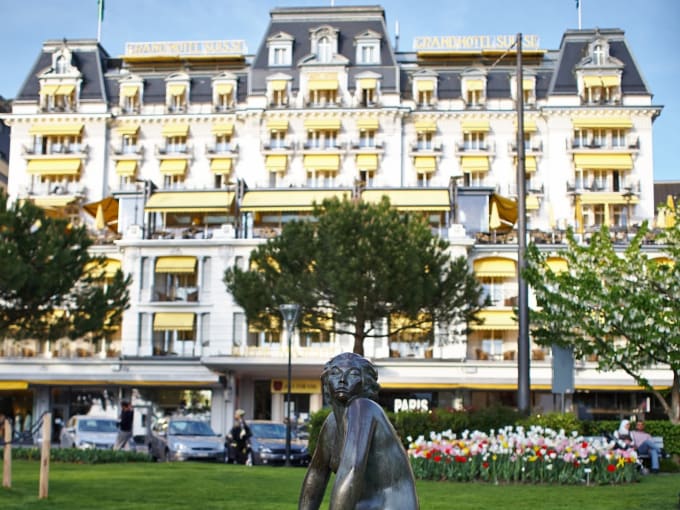
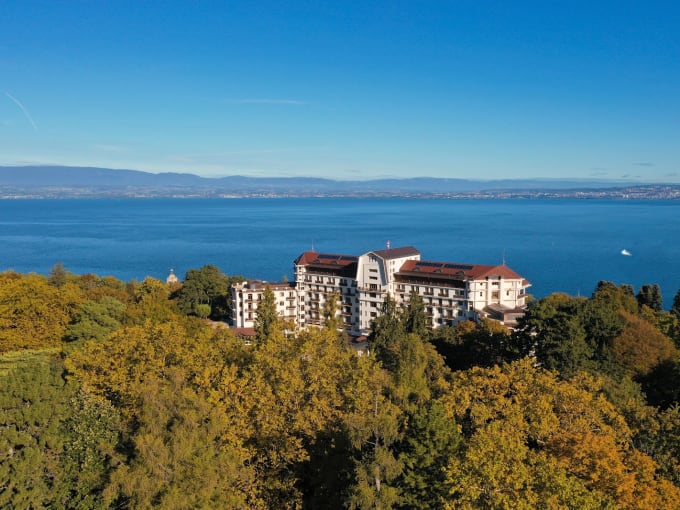
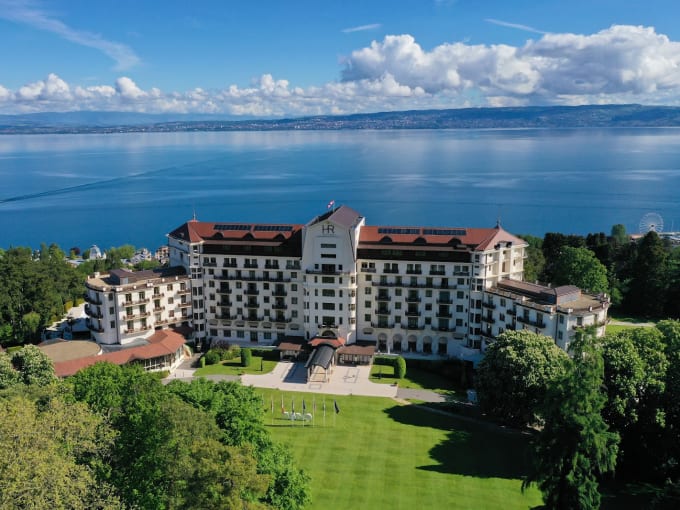
The Lake Geneva panorama indeed brings together several expressions of hotel design. In Évian-les-Bains, the Hôtel Royal Palace - Evian Resort and the Hôtel Le Royal Evian remind us how thermal tradition and Belle Époque leisure can inform a contemporary reading of spaces. In Lausanne, the Chateau d'Ouchy offers a different visual grammar. The approach here is more heritage-focused, with a strong presence of the built environment and a direct relationship to the shore. In Montreux, the Fairmont Le Montreux Palace is part of the history of grand promenade hotels, with its monumental scale typical of international lakeside resorts. In Geneva, the Four Seasons Hotel des Bergues Geneva shifts the perspective once more. The design engages with urban location, diplomacy, the river, and the precision of a globally significant establishment. This diversity makes the ranking particularly stimulating.
For 2025 and 2026, several trends are emerging around Lake Geneva. The first concerns the return of clearly defined large volumes. Travellers are seeking spaces that breathe, rather than saturated decor. The second relates to materials. Wood, stone, heavy textiles, and measured palettes are coming to the forefront, often to better frame the light from the lake. The third movement sees design becoming more contextual. The most compelling hotels no longer aim to resemble interchangeable addresses. They highlight their façade, history, park, or horizon. Our advisors also observe a clearer expectation for rooms with views, well-oriented terraces, and wellness spaces designed as extensions of the landscape. In short, Lake Geneva's design is moving away from demonstrative gestures. It prioritises use, perspective, and a sense of calm.
This perspective aligns with a certain idea of French luxury, or more broadly, of traditional European luxury. Refinement does not necessarily come from accumulation. It rests on measure, restraint, and quality of execution. Along the shores of Lake Geneva, this translates into hotels capable of combining heritage and contemporary comfort without one overpowering the other. A well-designed suite, a lobby that frames the lake, a terrace where the furniture respects the architecture—these are often what makes the difference. My advice is to not just seek the most spectacular hotel in photographs. Look for the one whose aesthetic language corresponds to your stay. A city weekend in Geneva, a holiday retreat in Évian, a romantic getaway in Lausanne, or a grand promenade classic in Montreux, each context calls for a different sensitivity.
Thus, this ranking should be read as a guiding tool, not as a universal verdict. The best design hotel for one traveller is not necessarily the best for another. Some will favour the monumentality of a historic palace. Others will prefer a more intimate address, with a more immediate connection to the shore. Some will seek a reassuring international brand. Others will desire a place with a more local personality. We have ranked these hotels based on their overall aesthetic strength, coherence, and ability to embody Lake Geneva. This does not detract from the qualities of other mentioned addresses. On the contrary, it highlights the richness of a territory where multiple visions of design coexist. This is also the interest of this selection. It juxtaposes different hotel narratives, yet comparable in their demands.
Now, let’s move on to the Top 5. Here, you will find hotels where design is not merely ornamental. It structures the way of inhabiting the lake, observing it, and projecting oneself into it.