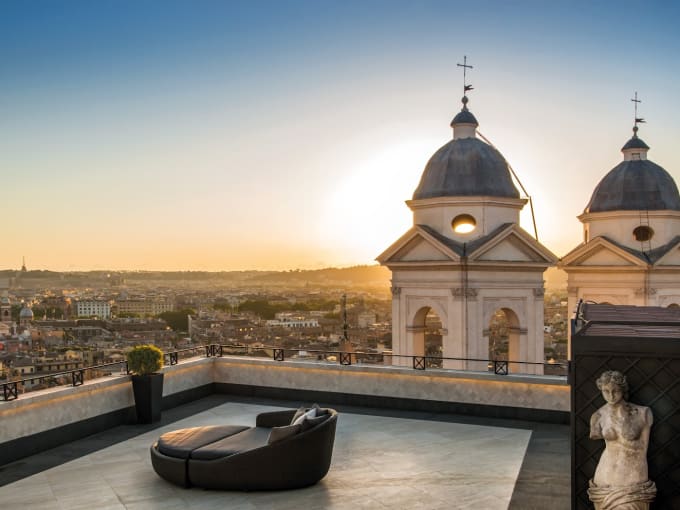
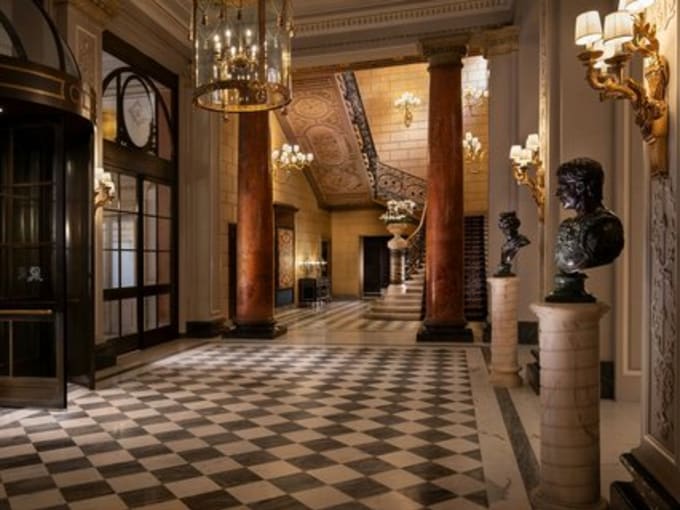
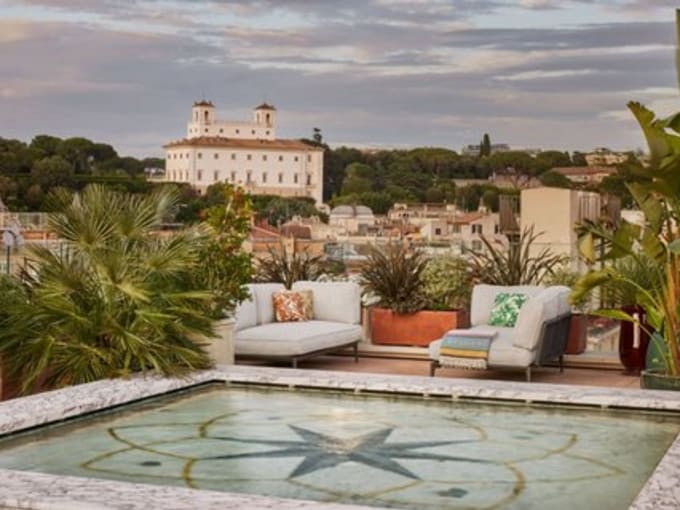
Rome can never be reduced to a single notion of a grand hotel. The city juxtaposes historic addresses, stylish homes, discreet retreats, and international signatures. This is precisely what makes this ranking useful. Between the Piazza di Spagna, the Tridente, Campo Marzio, the Pantheon, and the vicinity of the Colosseum, the experience varies significantly. A stay may seek a terrace with a view, a destination spa, a family suite, or a more intimate address. In Rome, hotel luxury is also assessed by its relationship to the urban fabric. One does not merely sleep in a beautiful building; one chooses a way to inhabit the city. This is what establishments like Hotel de Russie, Hotel Eden, Hotel Hassler, Portrait Roma, Hôtel Vilòn, and Palazzo Manfredi each demonstrate in their own way.
At MyConciergeHotel, we do not rank a city based solely on appearances. Our assessment intertwines several criteria, guided by a simple requirement. Each hotel must fulfil its promise of a stay. We first consider the location. In Rome, a few minutes' walk can change everything. Next, we examine the coherence of positioning. An urban palace is not judged in the same way as a more discreet establishment. The level of service matters, as does the quality of communal spaces, the intelligence of the suites, and the consistency of the experience. We also incorporate brand reputation, architectural uniqueness, the presence of a spa when it structures the offering, and the ability to create a sense of place. It is important to note that this ranking prioritises overall balance. It does not reward decor alone.
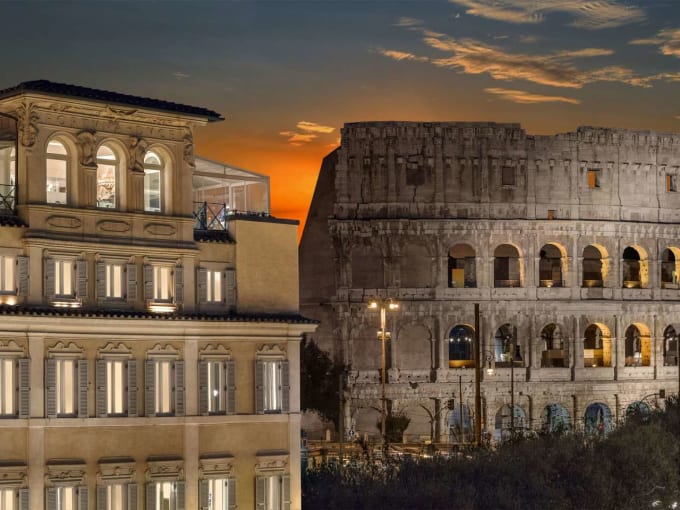
The Roman panorama is particularly rich, as it does not follow a single model. Some addresses rely on a strong international reputation, such as Bulgari Hotel Rome, Hôtel de la Ville, Rocco Forte Collection, or Hotel de Russie, Rocco Forte Collection. Others opt for a more understated scale, with a more direct connection to the neighbourhood, like Margutta 19, Babuino 181, or Hôtel Vilòn. Rome also knows how to host hotels where the view becomes a central argument. This is the case for Palazzo Manfredi, facing the Colosseum, or the Hassler, perched at the top of the Spanish Steps. Conversely, some establishments charm with their ability to shield from the tumult. What our advisors often observe is this Roman duality. The best hotel is not always the most visible; it is often the one that aligns with the rhythm of the journey.
For 2025 and 2026, several trends are confirming themselves in the luxury hotel sector in Rome. The first concerns the rehabilitation of grand historic buildings, with increased attention to materials, light, and circulation. The second relates to well-being. The spa is no longer a mere addition; it becomes a criterion for choice, especially for short stays. The third trend is intimacy. Even in very identified establishments, travellers seek spaces that evoke a well-serviced Roman apartment. Finally, panoramic dining and rooftops remain decisive, but they are no longer sufficient. My advice is simple. In Rome, a beautiful terrace attracts; a well-thought-out address fosters loyalty. The hotels that sustainably rise are those that combine location, relative calm, clear service, and true personality.
The French interpretation of luxury greatly aids in understanding Rome. It favours moderation, poise, quality of execution, and a sense of inevitability. A grand hotel does not need to overdo it; it must be just right. This idea applies particularly well here. In a city saturated with history, elegance often consists of not competing with the urban decor. The best addresses know how to frame Rome rather than overplay it. They offer attentive service, well-proportioned volumes, sustainable materials, and a stable atmosphere from morning to night. This is also why very different hotels can coexist in our selection. Casa Monti does not express the same essence as Hotel d'Inghilterra. Orient Express La Minerva does not narrate the same Rome as Portrait Roma. Yet, each can meet a specific expectation with coherence.
Thus, this ranking should be read without a reflex for superlatives. Being first does not mean being suitable for everyone. Being twelfth does not detract from the quality of an address. We rank hotels, not travellers. Some will prioritise ultra-centrality around the Spanish Steps, while others will desire a rare garden in the city, a more residential immersion, or a face-to-face with a monument. Couples do not have the same expectations as families. A first stay in Rome is not constructed like a return visit of three nights. What our advisors find is that a good hotel choice simplifies the entire city. One walks better, dines more aptly, returns with pleasure, and enjoys the quieter hours more. This top 12 should thus be read as an expert cartography. It ranks but primarily guides.
Now, let us turn to the ranking. You will find twelve Roman hotels that truly matter, each for specific and non-interchangeable reasons.