History & heritage
In Rome, some addresses feel less like hotels than a way of inhabiting the city. Hotel d’Inghilterra belongs to that rare category: long-established houses whose prestige rests not on display, but on continuity of presence, style and use. Its name immediately suggests a cosmopolitan tradition, that of cultivated travellers who have long chosen Rome’s historic centre not only for its proximity to the monuments, but for the idea of living the city on foot, between palazzi, squares, cafés and ateliers.
In this part of Rome, history is never an added backdrop. It is legible in the urban fabric, in the façades, in the particular relationship between narrow streets and grand monumental openings, in the city’s way of alternating intimacy and spectacle. To stay at Hotel d’Inghilterra is to take part in that tradition of central Roman hospitality where elegance is measured less by demonstration than by proportion, by the calm preserved behind a central address, and by the sense of being welcomed into a house that understands its own era without denying its past.
The hotel cultivates a classical identity, with all the restraint that implies. Refinement here does not chase effect. It is expressed through atmosphere, through a certain decorative density inherited from Italian interiors, through the use of materials and tones that evoke aristocratic and literary Rome more than a standardised international luxury code. That fidelity to a spirit of place matters. In a capital where there can be a temptation to turn every historic address into a theatrical statement, Hotel d’Inghilterra retains the appeal of houses that prefer conversation to manifesto.
Its membership of Small Luxury Hotels of the World helps define its positioning. One finds here the idea of hospitality on a human scale, attentive to detail and individuality, where personalised service is not an abstract promise but a practical way of shaping a stay. This suits Rome particularly well, a city of nuances, personal itineraries and discreet loyalties. Many travellers are not simply looking for a base between visits; they want an address that sets the tone of the journey, that creates the right frame of mind, that offers a sensitive reading of the destination.
The heritage of Hotel d’Inghilterra lies precisely in this: an ability to convey Rome without ever caricaturing it. One senses a memory of European hospitality, a taste for hushed interiors, a privileged relationship with a district where heritage, elegant shopping and everyday Roman life meet. For couples, it has the self-evidence of hotels that understand intimacy. For business travellers, it offers the privilege of a representative setting without institutional coldness. For all, it is a reminder that in Rome, true luxury often lies in staying somewhere that seems always to have been there, and that continues, naturally, to welcome the city as much as its visitors.
The hotel
The first privilege of Hotel d’Inghilterra is geographical, yet it goes beyond simple centrality. To be in the heart of Rome here means being able to reach on foot a constellation of places that shape the city’s imagination: celebrated squares, shopping streets, churches, palazzi, sudden views of a fountain or monumental staircase. That proximity changes the stay profoundly. It allows Rome to be experienced in short, repeated sequences: going out early, returning in the afternoon, setting off again at dusk, without depending on heavy logistics. The city immediately becomes more fluid, more personal, almost domestic.
The surroundings contribute to that feeling. The district combines the elegance of historic addresses with the controlled liveliness of a living centre. One finds that very Roman mixture of sophistication and everyday life: luxury shopfronts, old façades, passing crowds, cafés for brief pauses, lanes opening onto more theatrical spaces. For a traveller, such density is invaluable. It avoids the sense of isolation that some grand monumental hotels can produce, while retaining the advantage of a distinguished setting.
Hotel d’Inghilterra fits into this context with discreet presence. It does not seek to dominate the street through spectacle. Its luxury is that of houses that know the address speaks for itself. Once across the threshold, the atmosphere becomes more contained, more hushed, as though the pace outside naturally settles. This is one of the chief charms of well-run historic-centre hotels: they offer an immediate transition between urban intensity and a world of relative calm, without ever severing the link with the city.
The décor, described as classical with modern comfort, takes on its full meaning here. In a city as visually charged as Rome, a successful interior does not need to add more. It should instead extend the experience of place, offering spaces where one finds coherence, softness and a kind of legibility. The classical register suits this address particularly well because it speaks to the surrounding architecture and to the very idea of an elegant Roman stay. Contemporary comfort ensures that such aesthetic fidelity never comes at the expense of use.
This alliance of location, intimate atmosphere and personalised service explains the hotel’s enduring appeal. One may stay here for a first discovery of Rome, given how accessible the landmark sights are, but also for a return visit, when the aim is less to tick off stages than to recover a certain rhythm. The address then suits those who like to set out walking without too rigid a programme, to enter a church almost by chance, linger in a street, return to rest, then go out again for dinner.
In a Roman market rich in prestigious hotels, Hotel d’Inghilterra stands out through this balanced relationship between representation and intimacy. It offers the advantage of a sought-after central address without slipping into the anonymity of large-scale properties. It gives access to monumental Rome, but also to a subtler city made of details, street corners, habits and returns. For many travellers, that is precisely what creates the feeling of having chosen the right place: not simply being well located, but being located in a way that turns the city into lived experience.
Rooms and Suites
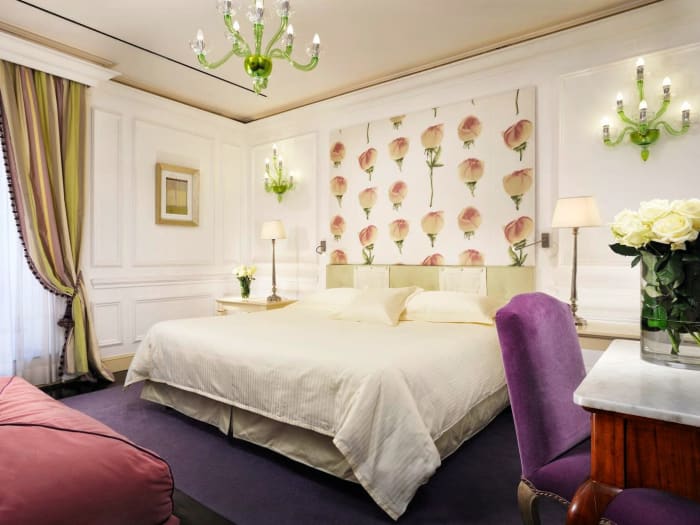
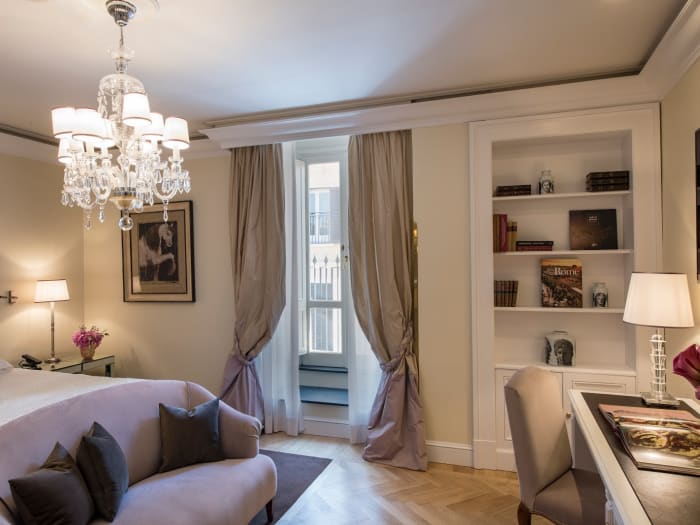
In a hotel of this calibre, the room is not merely a space between outings. It extends the promise of the establishment: an elegant, calm, and personal Roman refuge.
At the Hotel d’Inghilterra, the classic decor, modern comforts, and intimate atmosphere evoke rooms designed as city interiors. This nuance is significant. In the finest establishments of the historic centre, a room should provide an immediate sense of belonging, without losing the stature of a grand hotel.
The classic vocabulary is particularly well-suited to Rome. It places the stay within an aesthetic continuity with the city, without falling into mere reproduction. One expects warm materials, a measured palette, and details that recall Italian interior elegance. The overall effect should promote relaxation.
In such a dense capital, true luxury often lies in returning in the evening to a space where the eye and mind can unwind. A successful room in Rome need not be spectacular; it should be just right, enveloping, and silent in its expression.
Modern comfort plays an essential role here. It allows one to enjoy a classic setting without sacrificing the contemporary expectations of a five-star hotel. For both business travellers and couples, this balance is crucial.
In a member establishment of Small Luxury Hotels of the World, one also expects a certain uniqueness from room to room. The charm of the hotel lies in the distinct personalities of the spaces and the refusal to standardise the experience. This is often what distinguishes a characterful hotel from a large international chain.
The service enhances this impression of a lived-in comfort. The presence of turndown service, daily maintenance, and an available team contributes to the quality of the stay. One leaves the room to explore Rome, only to return later to a state of calm and care that enhances the pleasure of coming back.
When choosing a room in such an establishment, it is best to think in terms of purpose. A short urban stay calls for a room well-placed within the rhythm of the hotel. A romantic getaway invites a focus on intimacy and atmosphere. A business trip primarily demands serenity and functionality.
In Rome, where one is tempted to spend all their time outdoors, the quality of this refuge often lends depth to the stay.
Dining
In Rome, dining is never limited to the plate. It engages a rhythm, a sociability, a way of occupying the day. In a central hotel like the Hotel d’Inghilterra, the dining options take on particular significance. They accompany the stay and structure its highlights.
In the morning, they set the tone. Throughout the day, they provide a moment of respite. In the evening, they create a transition between the city's intensity and a more subdued atmosphere. At this level, one expects an experience consistent with the identity of the establishment: elegant, intimate, and attentive.
Breakfast deserves special attention. In a city of walking and sightseeing, it often represents the first true moment of stability in the day. It is best appreciated in a calm setting, with that blend of precision and discretion characteristic of fine establishments. A well-organised start to the day makes all the difference.
The appeal of a hotel located in the heart of Rome also lies in its dialogue with the surrounding culinary scene. One can choose certain meals at the hotel for the comfort and continuity of service, while also relying on the concierge to discover local eateries, Roman institutions, or more discreet addresses. This flexibility is invaluable.
In a house with a refined atmosphere, the dining spaces also serve an aesthetic and social function. They allow guests to extend the pleasure of being at the hotel without retreating to their rooms. A leisurely coffee, an afternoon drink, or a simple meal after a long day can become defining moments of the journey.
For couples, this dimension is particularly important. An intimate hotel benefits from offering dining interludes without complex arrangements. After a day in the city, the pleasure of staying on-site for a quiet moment is an integral part of the experience. For business travellers, being able to rely on smooth service in a representative yet informal setting remains a tangible advantage.
The dining experience at the Hotel d’Inghilterra is envisioned as an extension of its art of hospitality. It accompanies the stay more than it monopolises it. In a city where the gastronomic offerings are vast, this position is just. It proposes an elegant and pleasant anchor while allowing Rome to play its role as a grand culinary stage.
Concierge and services
In urban luxury hospitality, the quality of service is often measured by its discretion. The smoother it is, the less it draws attention to itself, and the simpler the stay appears. Hotel d’Inghilterra promises personalised service; the known facilities support that promise with a solid operational base: 24-hour concierge, round-the-clock reception, daily housekeeping, turndown service, luggage storage, laundry, wake-up service and multilingual staff. Taken separately, these elements may seem expected in a five-star hotel; together, however, they shape a very specific experience, particularly suited to Rome and to the variety of rhythms the city imposes.
The concierge, first of all, plays a central role. In a capital so dense in heritage, pedestrian movement and cultural possibilities, a trip benefits enormously from a team able to guide, reserve, prioritise and sometimes simply reassure. True personalised service does not only mean answering a request; it means understanding the kind of stay a guest is seeking. A couple on a weekend break will not have the same expectations as a business traveller or a Rome regular wishing to explore certain districts more deeply. A good concierge knows how to adjust recommendations at that level of nuance.
Round-the-clock availability is especially valuable in a city where days begin early and often end late. Early departures, late arrivals, changes of plan, logistical assistance or a simple practical question: continuity of presence prevents the stay from running into unnecessary rigidity. This matters all the more in a city-centre hotel, where one comes and goes frequently, sometimes several times a day, according to visits, shopping, meetings or walks.
Turndown and daily housekeeping belong to another register, quieter but just as important. They contribute to that sense of continuous comfort that distinguishes well-run houses. In Rome, where one walks a great deal and absorbs a large quantity of visual and sonic stimuli, returning in the evening to a room restored to order and prepared for the night has something deeply restorative about it. It is not an incidental detail; it is a real component of hotel wellbeing.
Luggage storage and laundry, meanwhile, answer very concrete needs of contemporary travel. They make arrivals and departures more flexible, allow a final day in the city to be used to good effect, or help maintain a welcome level of comfort during a longer stay. For business travellers, these services simplify organisation; for leisure guests, they lighten logistics and free up time.
Finally, the presence of multilingual staff is far from anecdotal. In an international address, it conditions the quality of exchange, the precision of recommendations and the guest’s overall confidence. At Hotel d’Inghilterra, it fits naturally within a cosmopolitan tradition of welcome. Service here is not merely a sequence of amenities; it is the very language of the house. When well executed, it gives travellers that rare feeling of being supported without being managed, recognised without being exposed, free without ever being left alone with the city’s complexities. More than visible signs of luxury, that is often where the lasting value of a great Roman stay truly lies.
Roman art of living from the hotel
There are cities one visits, and others one learns to inhabit, even briefly. Rome clearly belongs to the latter category. Its art of living is not revealed only through major monuments, but through the way moments are linked: a coffee taken standing or seated according to mood, a walk without exact purpose, a church discovered between two boutiques, a square crossed several times at different hours, a dinner that begins late, a conversation that lingers. Hotel d’Inghilterra, through its central location and intimate atmosphere, is particularly well suited to this experience of the city as a succession of lived scenes rather than a simple programme of visits.
The great advantage of such an address is that it makes a walkable Rome possible. That changes everything. One no longer undergoes the city as a sequence of transfers; one experiences it in continuity. Distances become pretexts for observing, slowing down and turning aside. One may set out early for a landmark sight, return to rest, go out again for lunch or some shopping, then take up the city once more in the late afternoon, when the light softens the façades. That freedom of movement is one of the most concrete luxuries offered by a hotel in the heart of Rome.
The district itself encourages an elegant reading of the capital. The proximity of luxury boutiques, historic streets and major central sights creates an environment in which refinement is not separated from urban life. One can move from a highly heritage-focused sequence to a more social moment, then find a quieter lane, almost residential in scale. This alternation is typically Roman. It gives the city its depth, and a well-located stay its richness of tone.
For couples, the address makes it possible to improvise a romantic trip without excessive effort. Rome lends itself to wandering, pauses and unplanned returns. An intimate, well-placed hotel then becomes a silent partner in that experience. It offers a point of departure and return that never interrupts the emotional thread of the day. For business travellers, the logic is different but equally favourable: between meetings, it becomes possible to capture something of the real city, not as a tourist backdrop but as a daily presence.
Roman art of living also depends on repetition. One often understands Rome better on the second passage through the same street than on a first visit to a monument. From Hotel d’Inghilterra, that repetition comes naturally. One passes again, recognises, compares the light, the crowds, the mood of the district. Little by little, the city ceases to be an image and becomes a relationship. That is precisely what many discerning travellers seek: not to see everything, but to feel that they have genuinely lived something of Rome.
From this perspective, the hotel does not serve merely as accommodation; it becomes an instrument of interpretation. Its location, relative calm, personalised service and more intimate scale allow guests to enter the city with accuracy. It does not overplay Rome; it makes it accessible. And that may be the most valuable quality of a great urban address: helping the traveller find their own rhythm in an immense capital, move from the spectacular to the sensitive, and discover that luxury here often lies in the possibility of living the city naturally.
Book with MyConciergeHotel
Choosing Hotel d’Inghilterra through MyConciergeHotel means approaching the property not as a simple room booking, but as the preparation of a coherent, fluid and well-directed Roman stay. In a city as dense as Rome, the value of editorial and concierge guidance becomes clear very quickly. Between districts, visiting rhythms, busy periods and the diversity of expectations — a romantic escape, a business trip, a first stay or a more informed return — the same address can be experienced in very different ways. The point of our approach is precisely to help align the hotel, the room and the tempo of the journey.
Hotel d’Inghilterra is particularly suited to travellers seeking elegant centrality without giving up intimacy. That is an important nuance, and one worth understanding properly at the time of booking. Some guests will prioritise immediate access to landmark sights; others will be more sensitive to the hushed atmosphere, classical charm, the possibility of living Rome on foot and returning easily to the hotel during the day. Our role is to clarify those priorities so that the choice of address is fully intentional and corresponds to the reality of the stay desired.
Booking with MyConciergeHotel also makes it possible to anticipate practical uses. For a weekend for two, we can help shape the stay around the moments that matter most: arrival, walking rhythm, neighbourhood recommendations, meal planning and departure timing. For a business trip, the emphasis may be placed on logistical fluidity, the flexibility of 24-hour services and the relevance of a central address that limits wasted time. In both cases, the objective remains the same: to turn a good booking into a well-composed stay.
Rome has periods of heavy demand, particularly in spring and summer. Booking ahead is therefore especially wise in order to secure the best available options and preserve genuine freedom of choice. This anticipation concerns not only availability; it also allows additional requests, stay preferences and personalised recommendations to be prepared more calmly. In a house with an intimate atmosphere, the fit between expectations and the right type of booking often matters more than one imagines.
MyConciergeHotel finally brings an editorial reading of luxury hospitality that goes beyond lists of amenities. We are interested in how an address is actually lived: its relationship to the city, its tone, its use, its relevance according to traveller profiles. For Hotel d’Inghilterra, that reading highlights a characterful, central, refined and measured house, particularly suited to those who want to discover Rome elegantly without losing touch with its real rhythm.
If this vision of travel suits you, we recommend booking early and sharing your priorities with us from the initial enquiry. The more we understand your way of travelling, the more usefully we can shape your stay. In Rome, choosing the right hotel is not only about sleeping near the monuments; it is about finding the address that will set the tone for the entire experience. Hotel d’Inghilterra is one of those houses capable of providing that tone. Our role is to help you approach it under the best possible conditions.