Our criteria for ranking Rome’s charming hotels
Our ranking weighs heritage, address, human scale, service, Roman character, design, views, dining and consistency.
Questions about this section
Which Rome neighborhoods work best for a boutique stay?
Choose the neighborhood based on pace, walkability, atmosphere, and how central you want to be.
Why Rome remains a capital of heritage stays
Rome’s most compelling charm hotels extend the city’s historic fabric, turning a stay into a direct reading of its palaces, convents, hills and piazzas.
Questions about this section
Are Rome boutique hotels often housed in historic buildings, and why does it matter?
Yes, historic settings add atmosphere, but they can also affect layout, soundproofing, and accessibility.
2025-2026 trends in Rome’s charming hotels
In Rome, boutique hospitality is moving toward smaller scales, heritage-led renovations, panoramic terraces and quieter, more restorative stays.
Where to stay in Rome when dining matters
In Rome, the most compelling charm hotels often win as much through the table as through the room.
The most compelling addresses for a stay for two
For couples in Rome, we prioritize intimacy, usable outdoor space, suite quality, views, and a neighborhood that matches the pace of the stay.
Questions about this section
What matters most when choosing a romantic hotel in Rome?
For romance, intimacy, quiet, views, and thoughtful service matter more than a long facilities list.
Value, Location, and Experience in Rome
In Rome, the relationship between price, location, and experience is often measured at the street level. Staying near the Piazza di Spagna, the Pantheon, or the Via del Corso does not yield the same city experience. Therefore, the price does not merely cover a room; it also compensates for the pace of your stay, ease of walking, and sometimes a rare view. This is why we focus on overall coherence. We are not seeking the cheapest address; we are looking for one where the price is justifiable based on what it truly offers on-site.
In the historic centre, hotels situated in ancient palaces often justify their price point through their location and architectural context. An establishment close to the Pantheon or Piazza Navona provides immediate access to Rome's major landmarks. This reduces transfer times and enhances the quality of short days. Our advisors frequently observe a simple truth: a prime location can sometimes compensate for a more compact room. Conversely, a slightly less central address must offer more space, tranquillity, or services. In Rome, this equation is particularly clear. A few minutes saved walking in the morning and evening can make a significant difference.
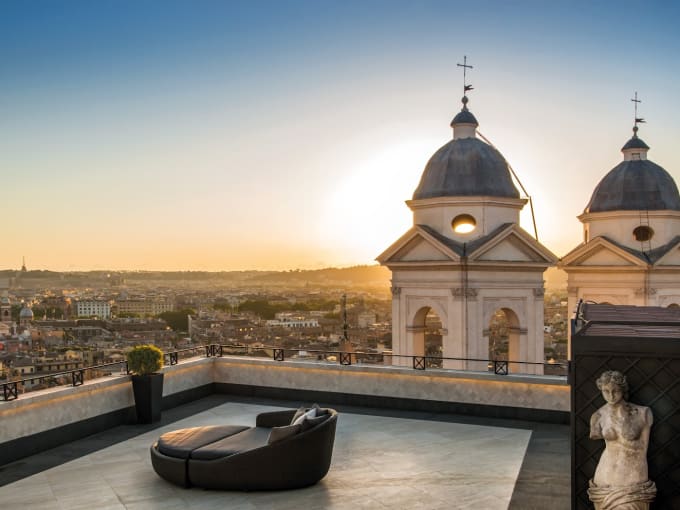
The view is another decisive factor in assessing price. A rooftop terrace, a perspective on a dome, or a commanding position over the city can make a rate more justifiable. However, this promise must be consistent. A beautiful view from a bar does not always replace a well-proportioned room. Therefore, we consider the whole picture. Room size, quality of bedding, presence of pleasant communal spaces, and level of service must all align. My advice is never to isolate a single argument. In Rome, a hotel may charm with its heritage but disappoint in daily comfort. The best value is found when the emotion of the place continues into actual use.
Heritage, indeed, carries significant weight in this city. Sleeping in an old palace, a historic building, or an address associated with a prestigious hotel chain can justify a higher price. But this is only valid if the experience remains seamless. Charm alone is not enough. Complex staircases, limited soundproofing, or inconvenient layouts can diminish perceived value. Conversely, some more discreet establishments impress with their well-executed offerings. They may not always have the most spectacular façade, yet they provide a more balanced stay. Attentive service, precise hospitality, helpful concierge, and thoughtfully designed dining are just as important as square footage. In a culturally dense city, a hotel must also simplify the experience of Rome.
Finally, price coherence depends on the travel profile. For a first-time visit, we often favour addresses that allow for everything to be done on foot. Their prices may be higher, but the experience becomes more intense. For a second stay, a slightly more secluded neighbourhood may become more relevant, often offering more space and tranquillity. For a trip for two, the terrace, light, and intimacy become more significant. For a family stay, room size and service flexibility become central. It is important to remember that the right price in Rome is never abstract. It is measured by what the hotel saves you from, what it brings you closer to, and how it supports your own way of experiencing the city.
How to choose the right charming hotel for your Rome
The right charming hotel in Rome depends less on the room than on the neighborhood and the pace you want for your stay.