History & heritage
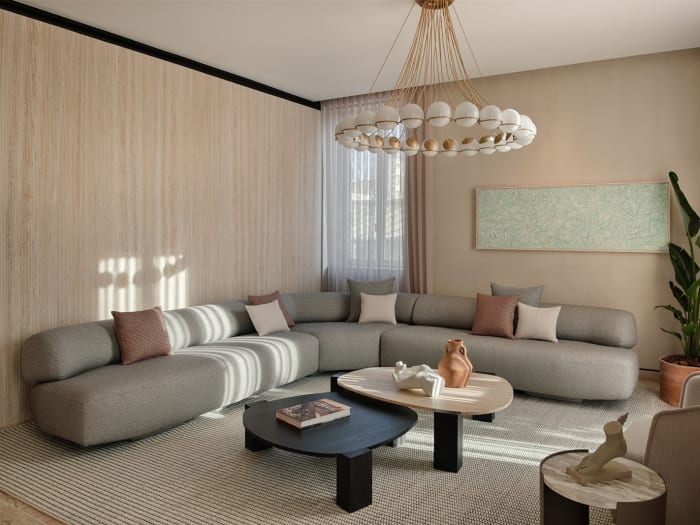
In Rome, history is never merely a backdrop: it shapes the way one inhabits the city, moves through it and looks at it. Six Senses Rome fits into that logic with an approach that does not attempt to compete with the city’s monumentality, but rather to align itself with it. Set in the historic centre, the hotel occupies a building that speaks to the urban memory of the Italian capital, among classical façades, long-established architectural rhythms and an especially dense contemporary city life. Here, luxury is not based on display, but on a careful reading of place, volume, light and the relationship to the street.
The appeal of the address lies precisely in this meeting between an international brand known for its language of wellbeing and a city whose identity is made of layers, contrasts and permanence. In Rome, every central district juxtaposes palazzi, churches, squares and institutions within a tight urban fabric. Staying here therefore means experiencing a certain balance: on one side, the energy of the historic city, with its vistas, cobbles, visitor flows and Roman daily life; on the other, a retreat designed to slow the pace, restore privacy and reintroduce calm into a stay that can otherwise be highly stimulating.
The positioning of Six Senses Rome can also be understood through the brand’s sensitivity to sustainability and wellbeing. In a city where heritage commands respect, that philosophy takes on particular meaning. It invites guests to see the hotel not as an enclave cut off from its surroundings, but as a contemporary address seeking to inhabit Rome with restraint. Materials, atmosphere and the attention paid to the overall experience all support the idea of a more conscious form of luxury, less demonstrative and more focused on the quality of time spent on site.
This notion of heritage is therefore not only architectural. It is cultural as well. Rome is a city of rituals: coffee taken standing at the bar, the early-evening stroll, the art of moving from one square to another without too rigid a plan, the conversation that lingers. A hotel that succeeds in Rome is often one that understands this particular tempo. Six Senses Rome appears to belong to that tradition by offering a stay that goes beyond accommodation and accompanies a way of being in the city: observing, pausing, returning, heading out on foot again, then coming back to a calmer setting.
For the traveller, this heritage dimension is expressed less through an emphatic historical narrative than through a sense of continuity. One is fully in Rome, without artificial distance. The address allows guests to experience the centre intensely while preserving a sense of breathing space. That is perhaps where its singularity lies: offering a contemporary reading of the grand urban hotel in a city where the past remains visible everywhere, yet where the art of staying must remain firmly rooted in the present.
The Establishment
The foremost asset of Six Senses Rome is its location. Nestled in the heart of Rome, it transforms the way one experiences their stay. From the hotel, the city unfolds on foot. The routes naturally connect squares, fountains, churches, shopping streets, and major landmarks of the historic centre. This proximity allows for a flexible arrangement of one's days. You can set off early, return late morning, venture out again at dusk, and then easily return.
In a capital as visited as Rome, this centrality holds significant value. It makes the stay more fluid. The traveller is not relegated to a peripheral neighbourhood or a hotel bubble that feels disconnected. Instead, they are immediately immersed in the city. This is particularly appreciated for short stays. It is equally beneficial for those who are already familiar with Rome and wish to experience it differently.
The address also stands out for its ability to maintain a calming atmosphere amidst the bustling city. In Rome, the visual and auditory intensity can be constant. Six Senses Rome has been designed as a counterpoint. Here, one finds a sense of tranquility without losing connection to the outside world. This duality between immersion and retreat is sought after in high-end urban hospitality. It allows guests to enjoy the cultural density of the destination while also providing genuine moments of recovery.
The establishment caters to various types of travellers. Couples will find a setting conducive to strolls, wellness breaks, and city dining. Business travellers will appreciate the clarity of the location, the ease of movement within the centre, and a discreet environment after a day of meetings. City break enthusiasts will benefit from an address that makes the city immediately accessible while retaining the hallmarks of a contemporary five-star hotel.
The identity of the place also rests on a harmony between refinement, nature, and sustainability. In the Roman context, this translates into a way of introducing softness, materiality, and breathing space into a dense urban environment. The result is not the erasure of the city, but rather its taming. One stays here for Rome, of course, but also for the way the hotel modulates the experience, making it more serene and balanced.
Practically speaking, this address will suit those looking to combine cultural discovery with personal time. It is a relevant base for a first visit, as the major landmarks are close by. It is also a good option for a return to Rome, when one wishes to choose their moments. Six Senses Rome offers contemporary urban hospitality that is central, elegant, and designed to make the city a pleasure.
Rooms and Suites
In a city hotel of this calibre, the room serves more than just a place to sleep. It becomes a transitional space between the city and oneself.
After hours spent walking through Rome, one expects more from a room than standard comfort. At Six Senses Rome, the guiding idea is that of a contemporary refuge. The overall design remains consistent with the establishment's holistic approach.
The rooms and suites are designed to slow down the pace. Well-being extends beyond the spa. It continues into the private spaces. Luxury here prioritises balance over ostentation.
This is achieved through a soothing palette, carefully crafted lighting, and clean lines. The impression of order helps to decompress upon returning from the outside.
In Rome, this quality is particularly valuable. The city constantly demands attention. A successful room must offer visual rest without coldness.
Here, one seeks a balance between sophistication and simplicity. Thoughtful details, welcoming bedding, and well-planned storage contribute to this. The bathroom extends the moment of relaxation. The acoustics protect, as much as possible, from the urban tumult.
The suites cater to a different way of experiencing the city. They allow for hosting, occasional work, or extending the morning without feeling cramped. They are also suitable for a more residential stay.
In the context of a high-end city break, this additional space alters the perception of time. One no longer merely passes through the hotel; they truly inhabit it.
The appeal of Six Senses Rome also lies in the coherence between the rooms and the rest of the experience. Well-being and sustainability are felt even in the intimacy of the accommodation. This is reflected in the attention given to materials, thermal comfort, sleep quality, and overall harmony.
For the traveller, the right choice will depend on the rhythm of their stay. A room will suit those who experience Rome intensely. A suite will make more sense if one wishes to allow for long pauses or requires a more spacious setting in the heart of the city.
In any case, the expectation remains the same: to find behind the door a rare sense of serenity in such a vibrant historic centre.
Dining
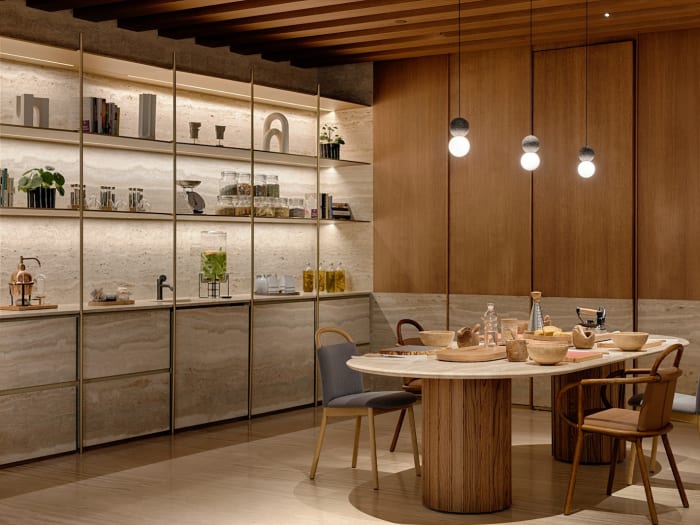
In Rome, gastronomy is part of the journey with particular obviousness. One may come for the monuments, but one lingers for the rhythm of meals, the apparent simplicity of great culinary traditions and that very Italian way of giving everyday life a certain depth through the table. In that context, the dining offer of a five-star hotel cannot merely be convenient; it must provide an accurate reading of the destination while meeting the expectations of an international clientele. At Six Senses Rome, one may reasonably expect an approach aligned with the identity of the house: attentive to wellbeing, product quality and a form of elegance without heaviness.
The value of such an address lies in the ability to alternate between outward immersion and inward comfort. Some travellers will want to head out for lunch in a neighbourhood trattoria, take a coffee on a lively square, then return to the hotel for a more composed dinner. Others will appreciate beginning the day on site, in an orderly setting, before venturing into the Roman streets. In both cases, the hotel’s dining plays a role of punctuation. It structures the stay, offers continuity of service and helps modulate the intensity of the day.
In a property that foregrounds a holistic approach, the table often takes on a broader meaning than simple gastronomic pleasure. It becomes one of the vehicles of wellbeing. This may be expressed through attention to freshness, balance, seasonality or preparations that favour clarity of flavour. In Rome, that philosophy finds a natural ground: Italian cuisine, when well interpreted, rests precisely on the clarity of ingredients and on a generosity that does not exclude precision.
For guests, the value of a good hotel table also lies in its ability to answer several uses. Breakfast must be fluid enough for early departures, yet pleasant enough to encourage lingering. Lunch, if offered, should suit both a light pause and an informal meeting. Dinner, finally, must provide a credible alternative to going out into the city, especially after a dense day of sightseeing or work. In an address such as Six Senses Rome, one generally expects this discreet versatility: dining that supports the stay without weighing it down.
Atmosphere matters as much as the plate. In a hotel centred on calm and sustainability, dining spaces are meant to prolong that sense of breathing room. One looks for service that is precise but not intrusive, an ambience that allows equally for conversation and retreat, and an aesthetic coherent with the rest of the property. In Rome, where so many meals are lived outdoors, within the movement of the city, the hotel restaurant must offer something else: not a copy of the street, but a more composed, enveloping and consistent version of it.
In practical terms, this table is likely to appeal to travellers who wish to retain a degree of control over their stay: beginning the day well, planning a comfortable pause between visits, or allowing themselves dinner on site when the city has already offered plenty. It is also an asset for business stays, where the quality of a meal available without further travel becomes a genuine comfort. Rather than a gastronomic destination in the spectacular sense, Six Senses Rome seems to offer dining conceived as a daily art of living, coherent with the overall experience.
Spa & Well-being
At Six Senses Rome, well-being is central to the stay. In Rome, this promise takes on a unique significance.
The city is experienced intensely. There is much walking, a flurry of visits, and attention is constantly demanded. In this context, the spa transcends mere indulgence.
The holistic approach places rest, recovery, and balance at the heart of the experience. Here, the traveller finds a natural counterpoint to the city's energy.
The most fitting spa is not always the most spectacular. It is the one that addresses the genuine needs of the urban traveller.
After a day spent outdoors, one often seeks simple and precise gestures. Releasing tension, regaining energy, improving sleep, and finding calm.
The sustainable dimension reinforces this coherence. The care given to the body is part of a broader consideration for resources, materials, and practices.
This coherence is significant in today’s luxury hospitality. Travellers are less interested in an accumulation of services and more in a clear vision.
The spa will appeal to couples on a getaway as well as business travellers. It can also help to rebalance a short cultural stay.
A treatment booked upon arrival, or in the late afternoon, often changes the perception of a city break.
It is advisable to book treatments in advance, especially during peak periods. At Six Senses Rome, well-being is part of the house's language.
Concierge & Services
In five-star hospitality, the quality of services is rarely measured by their mere existence. What matters is their integration into the stay. They simplify the days and create the impression that everything operates discreetly.
Six Senses Rome offers a solid foundation of essential services: 24-hour concierge, 24-hour reception, daily room service, turndown service, luggage storage, laundry, wake-up service, and multilingual staff. Taken individually, these elements may seem expected. However, when combined and executed well, they form the backbone of a successful stay.
The 24-hour concierge takes on particular importance in a city like Rome. The rhythms of visiting can vary. Arrivals may be late, departures early, and needs can change quickly depending on the season or nature of the trip. The value of a good concierge lies in their ability to guide, book, confirm, adjust, and sometimes simply reassure.
The continuously open reception complements this sense of constant availability. In a city-centre hotel, where comings and goings are frequent, this aspect remains essential. It ensures a calm arrival, even in the event of delays. It also allows for great freedom in organising one’s days.
The daily room service and turndown service contribute to this sense of consistency that characterises good establishments. You leave your room in the morning and find it tidied upon your return. You come back in the evening to a space prepared for the night. These are silent attentions, but they enhance the perceived quality of the stay.
Luggage storage is invaluable in a destination as active as Rome. It optimises the first and last days. Laundry services become particularly relevant during extended stays, business trips, or summer getaways. The wake-up service remains useful for very early departures or tightly scheduled days.
Finally, multilingual staff is a key marker of international hospitality. It is not just about speaking multiple languages. It also involves understanding different travel styles, varying service expectations, and different levels of support.
Ultimately, the services at Six Senses Rome respond to a simple idea: to reduce friction. Everything that could complicate the stay is anticipated, absorbed, or facilitated. This fluidity allows the traveller to focus on what matters: discovering Rome, resting, working if necessary, and then returning to an environment where the logistics remain invisible.
The Roman art of living
Staying at Six Senses Rome also means choosing a certain way of living Rome. By virtue of its central location and calm atmosphere, the address invites guests less to tick off sights at speed than to enter into the city’s tempo. Rome is understood as much through its monuments as through its intervals: an early morning in streets that are still cool, a pause in the shade of a church, a square that changes character according to the hour, an unexpected detour towards an inner courtyard, a coffee taken quickly and then extended into a walk without any precise aim. The true luxury here often lies in having the time to let the city come to you.
From a hotel set in the heart of the historic centre, that experience becomes particularly natural. The major landmarks are close at hand, certainly, but the interest also lies in being able to approach them differently. Setting out early allows one to reach certain places before the crowds. Returning to the hotel in the middle of the day offers valuable breathing space, especially in warmer seasons. Heading out again in the late afternoon opens onto another Rome, more golden, slower and often more beautiful. Then comes the evening, when the city regains a kind of quiet theatricality, between illuminated façades, conversations on terraces and a gentler circulation in certain streets.
Six Senses Rome seems especially well suited to this nuanced reading of the destination. Its holistic approach encourages guests not to oppose discovery and rest, activity and recovery, culture and wellbeing. In Rome, that articulation is essential. A day that is too full eventually flattens sensation; a well-paced day, by contrast, leaves room for surprise and emotion. The hotel then becomes a partner in rhythm. One returns to recentre, to pause, to recover calm before setting out again.
This way of travelling will suit those who love heritage cities without wishing to consume them too quickly. It will appeal to couples seeking a stay that is both cultural and sensorial, but also to regular visitors to Rome, who know that the city often reveals itself better in details than in accumulation. Even a business trip can benefit from this philosophy: a few well-used hours, an evening walk, a carefully chosen dinner, and the perception of the stay changes entirely.
Seasonality also matters. Summer makes the city denser and hotter; spring and autumn often offer a more balanced relationship between light, temperature and visitor numbers; winter, outside festive periods, can reveal a more introspective Rome. In every case, a hotel capable of preserving a calm atmosphere in the centre plays a decisive role. It allows guests to modulate their energy rather than simply endure the city’s pace.
Ultimately, the Roman art of living to which Six Senses Rome gives access is nothing theoretical. It lies in simple gestures: walking rather than rushing, pausing rather than chaining activities, choosing a few right experiences rather than multiplying obligations. The address seems to provide the ideal framework for this: a refined, central and serene anchor point from which Rome can be lived not as a succession of sights, but as an inhabited, sensorial and deeply alive city.
Book with MyConciergeHotel
Booking Six Senses Rome through MyConciergeHotel means approaching the property with the logic of a stay rather than a purely rate-driven logic. For a hotel of this nature, in the heart of Rome, the quality of the experience depends as much on the choice of room, the rhythm of the trip and personal priorities as on the displayed price. Editorial and concierge guidance makes it possible to turn a reservation into a coherent stay project, especially in a city where the cultural, gastronomic and heritage offer can quickly become abundant.
The value of booking through MyConciergeHotel lies first in clarifying the best use of the hotel. Depending on whether one is travelling as a couple, for business, for an anniversary, for a first discovery of Rome or for a more contemplative return, expectations will differ. Some will prioritise immediate proximity to the city’s landmark sights; others will place greater importance on the spa, on the possibility of building in pauses, or on the fluidity of services. Being well advised in advance helps align the address with the reality of the stay and avoids choices that are too generic.
This kind of intermediation is particularly meaningful in a city with strong seasonality. Busy periods alter the atmosphere, availability and sometimes even the way the historic centre is experienced. Booking sufficiently early can make a real difference, especially if one wishes to integrate spa treatments into the programme or secure the most sought-after dates. Conversely, quieter periods may better suit travellers in search of a more breathable, introspective Rome, more favourable to spontaneous walks. Here again, a concierge perspective helps one choose not only the hotel, but the right moment.
MyConciergeHotel also brings interpretive value. In the luxury segment, many addresses promise centrality, refinement and service. What matters is understanding the true tone of each. Six Senses Rome stands out, according to the available elements, through its holistic approach, its grounding in wellbeing and sustainability, and its ability to offer a calm atmosphere in the middle of the city. This is not the same kind of experience as a grand classic hotel, a highly social address or a purely design-led boutique property. To book with discernment is to choose an ambience as much as a comfort level.
For the traveller, this translates into better decisions: how many nights to allow in order to enjoy the address properly; whether to favour a room or a suite; how to articulate sightseeing and downtime; when to book a treatment; how to organise arrival and departure so as not to lose the first and last useful hours in Rome. All these details, taken together, determine the quality of the stay far more reliably than an abstract comparison between hotels of the same category.
In short, booking through MyConciergeHotel means choosing a more informed, more personalised and more fluid approach. For an address such as Six Senses Rome, where the experience rests on the balance between urban immersion and retreat, that preparation makes all the difference. It allows guests to begin the stay with a clear intention: to live Rome intensely, but without unnecessary fatigue; to enjoy the centre, while preserving calm; to choose luxury not as accumulation, but as rightness.