History & heritage
Waldorf Astoria Lusail Doha stands at the intersection of two lineages that define its identity. On one hand, it belongs to a hospitality name long associated with a certain style of service: polished, international and quietly formal. On the other, it is set in Lusail, one of greater Doha’s most recent urban developments, conceived as a forward-looking extension of the Qatari capital. The result is not an attempt to recreate an old-world palace, but to express contemporary luxury within a distinctly modern setting.
Here, heritage is less about age than about approach. The Waldorf Astoria name brings with it expectations of attentive service, elegant interiors and a carefully choreographed guest experience. Those ideas are translated through the hotel’s architecture, its shared spaces and the overall consistency of tone from arrival onwards. Guests do not simply check into a high-end hotel; they enter a place shaped by recognisable codes of international luxury.
Doha provides the wider context. Over recent decades, the city has emerged as a major centre for business, culture and hospitality in the Gulf. Its skyline, waterfronts and new districts reflect an ambitious urban trajectory. Lusail, in particular, represents this future-facing vision: a planned city designed to host residential, commercial and leisure life on a large scale. Staying here means engaging with a destination that is still defining its next chapter.
Within that setting, Waldorf Astoria Lusail Doha occupies a clear role. It offers the reassurance of a globally recognised luxury brand while responding to the pace and profile of a lively district. The hotel’s design and interiors, described as bearing the Waldorf Astoria signature, speak to an international clientele seeking comfort, clarity and refinement. It suits business travellers, couples and guests who value a polished base from which to experience Doha.
Its sense of heritage therefore lies in standards rather than chronology: round-the-clock reception, concierge support, personalised service and welcoming public spaces. In a new urban environment, such constants matter. They lend the stay a sense of continuity and confidence, making the hotel feel established not because it is old, but because it understands the rituals of high-end hospitality.
The Establishment
In the context of Doha, choosing Lusail represents a contemporary interpretation of the destination. The Waldorf Astoria Lusail Doha is situated in a vibrant neighbourhood. The experience unfolds within a lively environment, fuelled by the energy of a city in motion. For some travellers, this location is a decisive advantage, allowing for a combination of hotel comfort, access to an active area of the capital, and engagement with a modern Doha, focused on business, leisure, and new urban practices.
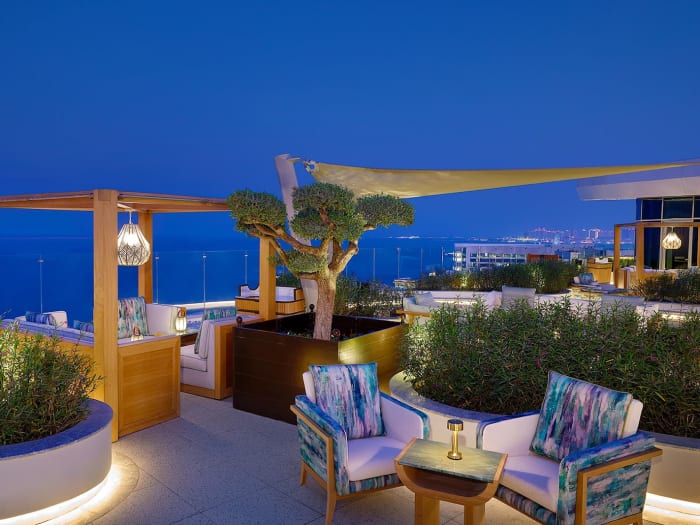
One of the standout features of the establishment is its view of the city. In a metropolis where verticality and architectural lines are significant, this visual openness carries weight. It situates the hotel within its context. From certain spaces, one can capture the urban fabric, the changing light, and the grandeur typical of major Gulf cities. By day, the clarity highlights the volumes; by night, the urban lighting reshapes the horizon, giving the address a more subdued tone.
The architecture and decor, designed by Waldorf Astoria, contribute to this staging. The establishment seeks a balance between presence and restraint. In this logic, the common areas play a crucial role.
The communal spaces are designed for welcoming. In a large hotel, the lobby, lounges, transitional areas, and meeting spots often determine the quality of the stay as much as the room itself. They set the tone upon arrival, allowing for informal meetings, a pause between travels, a moment of reading, or simply the feeling of being awaited. When well-designed, these spaces avoid cold monumentality and favour a readable hospitality.
Thus, the Waldorf Astoria Lusail Doha meets a very contemporary expectation. It offers urban luxury that is both representative and functional. The business traveller finds a setting that aligns with their demands for pace, availability, and comfort. The couple on a getaway discovers an elegant environment, rooted in the city, without sacrificing the tranquillity sought in a five-star establishment.
Finally, the address benefits from its position as a starting point for exploring Doha. Even for a short stay, being located in a lively area facilitates the organisation of one’s days. One can alternate between meetings, urban discoveries, moments of relaxation, and returns to the hotel without cumbersome logistics. The establishment provides a refined base from which the city remains accessible, visible, and present.
Rooms and Suites
In a hotel of this calibre, the room transcends its basic function as mere accommodation. It becomes a space for deceleration and a vantage point over the city.
At the Waldorf Astoria Lusail Doha, the experience is built upon modern amenities, personalised service, a view of the city, and the essence of Waldorf Astoria.
The rooms and suites cater to contemporary needs without compromising on comfort. The arrangement of space, bedding, lighting, and acoustics shape the quality of the stay.
Luxury also lies in the subtle details. Ease of setup, logical storage solutions, discreet technology, and the quality of rest make a significant difference.
The view of the city adds a distinctive character. In Doha, the urban horizon accompanies the stay from morning until night.
For both business travellers and leisure visitors, this visual connection to the city enriches the time spent in the room.
Personalised service plays a crucial role. It tailors the stay to individual habits, rhythms, and practical needs.
The turndown service, daily maintenance, and a reception available at all hours reinforce this continuity. The hotel thus adapts to the guest.
The suites extend this concept with more space. They offer a clearer separation between rest and reception areas.
The rooms and suites at the Waldorf Astoria Lusail Doha are envisioned as true living interiors. They facilitate a seamless transition from meetings to relaxation.
Dining
At the Waldorf Astoria Lusail Doha, dining is an essential component of the hotel experience.
In a five-star urban hotel, gastronomy unfolds across various dimensions. Breakfast remains a pivotal moment. It sets the tone through the quality of the products, the precision of the welcome, and the fluidity of the service.
In Doha, where business travellers, families, and couples converge, this initial sequence must blend efficiency with enjoyment. The setting is as important as the plate. Light, space, and tranquillity contribute to the overall experience.
Daytime dining caters to multiple uses. Whether it's a business lunch, a light break, an informal meeting, or a snack between outings, the quality of communal spaces takes on significant meaning.
A well-designed lounge, attentive service, and a clear menu transform a practical moment into a comfortable experience. In the finest establishments, this fluidity appears effortless.
In the evening, dining takes on another dimension. It becomes one of the places where the hotel's identity is most clearly expressed. A Waldorf Astoria establishment typically aims for an international elegance, tailored to a cosmopolitan clientele.
This entails meticulous execution, measured service, and an atmosphere conducive to both business dinners and more intimate meals. In Doha, this precision in hospitality takes on a particular significance.
Personalised service also requires attention to individual preferences, time constraints, and specific requests. This flexibility allows the dining experience to adapt to the guest's stay.
An early departure, a late arrival, a day of meetings, or a need for discretion should not compromise the culinary experience.
In a grand hotel like this, dining contributes to a broader notion of comfort. It eliminates the need to venture out for a good meal while also providing a pleasant setting for those who choose to remain on-site.
In a bustling city, where days can be packed, dining naturally extends the experience of the room and communal spaces. The same level of attention and coherence is found here.
For the visitor, the challenge is not only to know what one is eating but how one experiences it. At the Waldorf Astoria Lusail Doha, the culinary experience hinges on this orchestration of quality.
Spa & Well-being
The overall atmosphere encourages relaxation. The common areas are designed to be welcoming. The hotel showcases modern facilities and personalised service.
In a contemporary luxury hotel, well-being extends beyond treatments; it begins upon arrival, in the way the space absorbs the fatigue of travel.
After a long-haul flight, a day of meetings, or exploration under Doha's climate, the traveller first seeks immediate relief. A smooth welcome, clear spaces, a ready room, and attentive service all contribute significantly to this.
The setting of Lusail adds a unique dimension to this pursuit of balance. Doha combines urban intensity, abundant light, and a fast pace. It also nurtures a taste for temperate interiors and moments of pause.
The Waldorf Astoria Lusail Doha thus offers an anchoring point between two highlights of the day. Here, one finds a controlled atmosphere and its own rhythm.
In high-end hospitality, functional modernity directly contributes to physical and mental comfort. Simple adjustments, reliable connectivity, a functional environment, and services accessible at any hour are all part of the real experience.
The luxury of well-being often resides in this absence of friction. One rests better when everything operates seamlessly.
Personalised service further enhances this impression. An alarm set according to your needs, a room maintained at the right time, an evening cover prepared, or assistance available at all hours lighten the stay.
For the business client, this allows for quicker recovery between obligations. For leisure travellers, it preserves the ease sought in such an address.
The Waldorf Astoria Lusail Doha appears designed to offer a form of refined urban relaxation. Rest is cultivated through the quality of the volumes, the availability of service, and the overall coherence of the experience.
In a city like Doha, this promise takes on full meaning. True well-being also consists of having a place capable of tempering its intensity.
Concierge & services
It is often through service that the distinction between a merely high-end hotel and a truly accomplished address becomes clearest. Waldorf Astoria Lusail Doha highlights several essentials which, taken together, suggest a notably smooth stay: 24-hour concierge, 24-hour front desk, daily housekeeping, turndown service, luggage storage, laundry, wake-up service and multilingual staff. None of these is dramatic on its own; all become meaningful when delivered consistently.
The concierge remains one of the strongest markers of luxury hospitality. At its best, it does more than provide information. It acts as an interface between guest and city, simplifying arrangements, resolving unforeseen issues and lending the stay a tailored quality. In Doha, where schedules, reservations and transport needs can vary greatly depending on the purpose of travel, having that support available around the clock can materially improve the experience.
A continuously staffed front desk extends the same sense of reliability. In an international destination, late arrivals, early departures and changing plans are routine. Knowing that the hotel remains fully operational at any hour offers a quiet but important reassurance. Modern luxury is also the confidence that service does not diminish outside conventional timings.
Daily housekeeping and evening turndown shape the rhythm of the room itself. They help ensure that the room remains orderly and ready to receive the guest at different points in the day. On a business stay, that supports efficiency; on a leisure stay, it sustains comfort. The details matter: returning to a refreshed room, finding a softer atmosphere in the evening and sensing that nothing has been left to chance.
Laundry and luggage storage answer practical needs, but their value should not be underestimated. They make longer stays, complex stopovers and transitional days significantly easier. Guests can arrive early, leave late or move between engagements without logistics becoming burdensome.
The presence of multilingual staff is equally important. In an international hotel in Doha, this is more than a convenience. It shapes the quality of communication itself. To be understood precisely, to express a nuanced request and to feel that dialogue is easy all contribute to trust and to a more refined service relationship.
Ultimately, the hotel’s services point to a mature understanding of luxury hospitality. The goal is not to multiply amenities for effect, but to make each stage of the stay simpler, clearer and more pleasant. When that works well, it is almost invisible — which is often the best sign of all.
The art of living in Doha
A stay at Waldorf Astoria Lusail Doha also offers a way into Doha’s broader way of life, even over a short visit. The city cannot be reduced to its business profile or its skyline alone. It expresses a distinctive balance of architectural modernity, formal hospitality, urban ambition and a marked appreciation for interior comfort. For travellers, that complexity makes Doha especially compelling.
Doha is first and foremost a city shaped by climate and light. Heat and brightness influence the rhythm of the day, the importance of cooled interiors and the timing of social and urban life. This creates a culture of elegant refuge: comfortable lounges, carefully managed environments and service attuned to practical needs created by the setting. In that sense, a hotel such as Waldorf Astoria Lusail Doha is not merely a base; it becomes one of the places through which that relationship between dramatic exterior and protective interior can be understood.
Lusail represents another aspect of this local art of living: a future-facing Doha. As a newer district and planned city, it reflects the ambition to organise urban life according to international standards, with recent infrastructure and a strong sense of projection. For visitors, that offers a different experience from older quarters or more heritage-oriented areas. The interest lies in observing a modern cityscape still taking shape.
Yet life in Doha is not only about newness. It is also defined by hospitality, presentation, generosity of service and a culture of availability. Even in highly contemporary settings, those codes remain perceptible. Attentive travellers notice them in daily interactions, in the care given to spaces and in the tone of welcome. That is often what gives a stay its depth: the sense that local modernity does not erase the forms of civility that underpin regional hospitality.
From a hotel in a lively district, guests can organise their stay at different tempos. Some will prioritise business and efficiency; others will alternate urban exploration with pauses back at the hotel and quieter moments overlooking the city. That flexibility suits Doha well, as it is a destination that accommodates both intensity and measured ease.
In this respect, Waldorf Astoria Lusail Doha offers an interesting lens on the city. It allows guests to approach Doha not simply as a stopover, but as a place with its own codes of comfort, representation and sociability. Luxury here is not only visual; it is also a way of organising space, time and human interaction.
Book with MyConciergeHotel
Booking Waldorf Astoria Lusail Doha through MyConciergeHotel means choosing an editorial and guided approach to luxury travel rather than a simple transaction. For a property of this kind, the booking channel matters. A five-star hotel in a lively district of Doha can suit very different travel patterns: business stays with tight schedules, couples’ breaks, short urban stopovers or wider Gulf itineraries. The value of a specialist intermediary lies in placing the hotel within the right travel scenario.
That guidance begins before arrival. It starts with assessing whether the property genuinely fits the trip. In the case of Waldorf Astoria Lusail Doha, several points are clear: a Lusail location, city views, a recognisable brand aesthetic, welcoming shared spaces, modern facilities and personalised service. The question is how those characteristics align with the guest’s priorities, pace and season of travel.
MyConciergeHotel’s role is to read the property with nuance. Rather than reducing it to a score or a handful of images, the aim is to understand what it truly offers: a contemporary luxury base in an active part of Doha, well suited to travellers seeking international comfort alongside a sense of the city’s present-day energy. That framing helps avoid mismatched expectations.
The value of support also becomes clear when anticipating the conditions of the stay. Seasonality and busier periods matter in Doha, where climate, events and demand patterns can shape both availability and experience. Booking ahead is therefore sensible not only to secure preferred room types, but also to preserve ease in the wider organisation of the trip.
Using MyConciergeHotel also means benefiting from an editorial perspective that favours accuracy over generic promise. In a crowded luxury landscape, that matters. It allows Waldorf Astoria Lusail Doha to be presented for what it appears to be: a contemporary luxury address shaped by Waldorf Astoria standards, well suited to guests who value continuous service, polished surroundings and a coherent position within Lusail’s urban momentum.
Ultimately, booking through a specialist platform is about seeking a more considered relationship with travel. It is not simply about confirming dates, but about shaping a stay: arrival times, preferred room style, service needs and the role the hotel will play within the wider journey. In Doha, where urban, climatic and professional contexts can all influence the trip, that perspective is especially useful.