History & heritage
In Doha, the history of high-end hospitality is closely tied to the city’s rise as a regional capital, diplomatic hub and international business destination. Four Seasons Hotel Doha belongs to that story: an established international address on the waterfront, conceived to accompany a fast-changing metropolis while upholding a very clear idea of classic luxury hospitality. Here, heritage is not expressed through centuries-old walls or an aristocratic past in the European sense, but through continuity of service, poise and savoir-faire.
The hotel’s identity rests first on that promise of consistency. In a city where skylines evolve quickly, districts are continually reshaped and travel patterns blend business, leisure and high-end stopovers, the property cultivates a sense of permanence. Guests find the codes expected of a major international five-star hotel: smooth arrivals, generous public spaces, attention to the rhythm of a stay, and the ability to combine discretion with efficiency. It is a heritage defined less by ornament than by behaviour, less by narrative than by day-to-day experience.
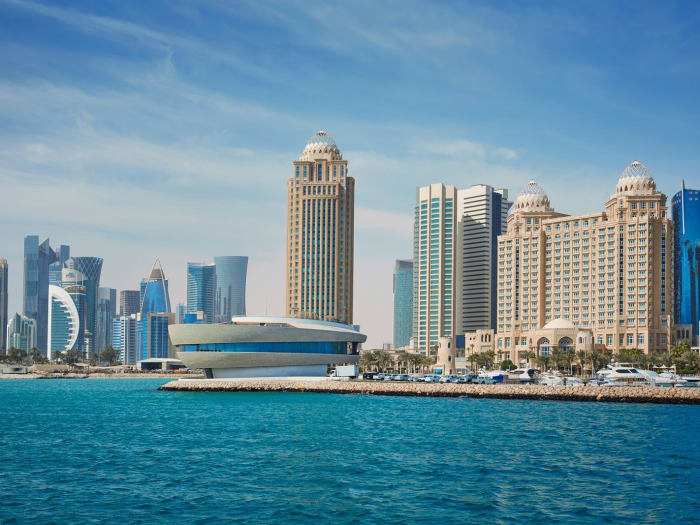
Its relationship with the sea also contributes to this impression of continuity. In Doha, the waterfront is not merely a backdrop; it structures the urban experience. Staying in a hotel directly facing the Arabian Gulf reconnects the traveller with one of the peninsula’s defining geographies: maritime exchange, light reflected off the water, and coastal breezes that soften the atmosphere at certain hours. Four Seasons Hotel Doha translates that relationship into an address that privileges views, openness and a sense of remove, even while the city remains within easy reach.
The hotel’s heritage also lies in the role it plays within the imagination of travel to Doha. For an international clientele, it serves as a point of reference: a property capable of accommodating a tightly scheduled business trip as comfortably as a restorative seaside break. In luxury hospitality, that versatility is never incidental. It requires well-trained teams, invisible logistics and a nuanced understanding of expectations, whether the guest is leaving at dawn, travelling with family or extending a weekend in the Gulf.
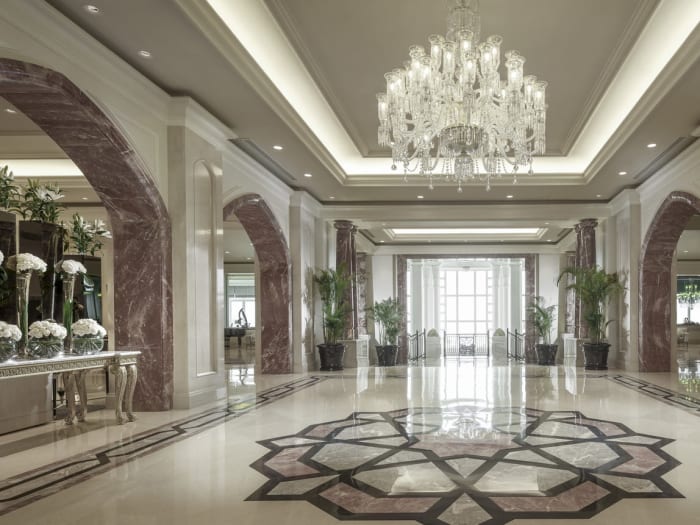
Rather than relying on spectacle, the hotel appears to belong to a tradition of controlled luxury. Materials, volumes, circulation and service come together in a whole designed to endure in use. That is often how a great hotel reveals itself: not through display, but through the quality of an experience that remains dependable over time. In Doha, where high-end hospitality often expresses itself through scale and staging, this address retains the appeal of a well-kept classic, oriented towards genuine comfort.
In that sense, its heritage is twofold. It belongs both to the Four Seasons signature, with its emphasis on service and consistency, and to the more recent history of Doha as a luxury destination on the Gulf. The result is a hotel that does not attempt to invent a past, but instead offers a credible continuity between city, sea and contemporary expectations of refined travel.
The Establishment
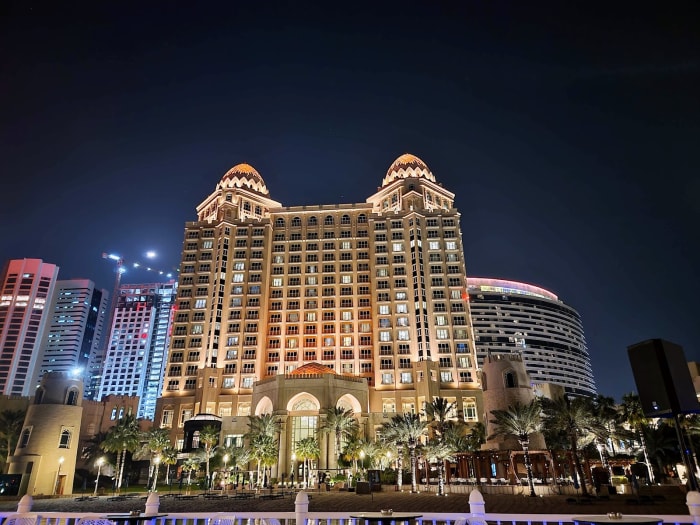
The Four Seasons Hotel Doha stands out for its rare seaside location in Doha. The address faces the Persian Gulf, allowing light to enter in unique ways, broadening horizons, and creating a sense of proximity to the city while still feeling distant.
This setting provides a clear balance between convenient access to major districts and a feeling of retreat.
The establishment caters to various needs without losing focus. Business travellers find a coherent base, well-connected to the city's points of interest. Visitors seeking a few days of relaxation enjoy the sea as an immediate counterpoint to the energy of Doha.
This duality structures the stay. One can have a busy day and then return in the evening to a more tranquil environment, enhanced by views of the water.
Access to Doha's main attractions is easy. The address is suitable for those wishing to explore the capital without lengthy travel times. The waterfront, business districts, cultural sites, shopping centres, and evening promenades can be arranged flexibly.
The atmosphere prioritises relaxation without excluding formality. The interest lies in this balance. Elegance is less about decor and more about rhythm. Attentive service, thoughtfully designed spaces that do not induce fatigue, and discreet mastery facilitate the stay.
Finally, the hotel fully benefits from Doha's light. In the morning, the sea captures sharp reflections. By the end of the day, the tones warm up, and the city gains depth. A place oriented towards the gulf thus changes from hour to hour, without losing its calm.
Rooms and Suites
In a hotel of this calibre, the room serves more than just a place to sleep; it defines the quality of the stay. At the Four Seasons Hotel Doha, the rooms and suites extend the promises made by the communal spaces: serenity, elegance, comfort, and the light of the Gulf. Often, it is the details, rather than decorative effects, that distinguish a luxurious room from one that is truly restful.
The primary quality sought here is balance. In Doha, the day can be busy, filled with meetings, travel, and the exploration of a city of contrasts. Returning to a thoughtfully designed room means encountering a controlled temperature, welcoming bedding, clear storage, adjustable lighting, and a bathroom crafted for comfort. The turndown service contributes to this logic, facilitating the transition from day to evening.
Naturally, the views are a major asset. With a seaside location and a panorama of the Persian Gulf, the room also becomes a vantage point. The presence of water transforms the perception of space. In the morning, it brings a clear brightness; by the end of the day, it creates a softer atmosphere. For some travellers, this visual connection to the outside is as important as the size or style of the room, providing an immediate sense of local immersion.
The suites, in a grand five-star international hotel, cater to more specific needs: extended stays, business trips, family travel, or simply a desire for space. Their appeal lies less in accumulation than in the quality of the layout. A separate living area, smoother circulation, and the ability to host or work without encroaching on the resting space significantly enhance the experience. In Doha, where stays often blend obligations with leisure time, this flexibility is particularly relevant.
Daily maintenance also plays a crucial role. A prestigious establishment is recognised by the consistency of this service: impeccable linen, discreet tidying, unobtrusive restocking, and attentive yet never intrusive presence. Here, luxury lies in the sensation that everything operates effortlessly. This invisibility of service is one of the surest signs of a well-run establishment.
Ultimately, the rooms and suites at the Four Seasons Hotel Doha are designed to offer a refuge. In a spectacular, vibrant city, a successful room does not seek to compete with the outside; rather, it allows one to escape from it. Guests expect silence, a softness of materials, clarity of purpose, and that rare feeling of being instantly at home. For both business travellers and visitors seeking to enjoy the seaside, it is often here that loyalty to a destination is forged.
Dining
In a prestigious international establishment in Doha, dining transcends mere practicality. It punctuates the stay and complements the traveller's needs.
At the Four Seasons Hotel Doha, the culinary offerings cater to a variety of moments: an early breakfast, a business lunch, a more leisurely dinner, snacks, and moments by the sea.
Breakfast is often revealing. It must satisfy an international clientele with diverse habits, all while conveying a sense of abundance that is well-managed.
In Doha, during the high season, starting the day with a view of the Gulf adds a special dimension to the meal. The light, the winter air, and the presence of water alter the morning's rhythm.
It is also one of the few times when business travellers and holidaymakers cross paths, as they all seek a well-orchestrated start to the day.
At lunchtime, the hotel restaurant serves as a transitional space. Guests look for clear cuisine, flexible service, and an atmosphere conducive to conversation.
In a city like Doha, this flexibility is crucial. A great establishment knows how to provide meals that do not weigh down the day.
In the evening, dining takes on a different significance. It extends the stay and can become a destination in its own right.
In a seaside hotel, the onset of dusk alters the atmosphere. Temperatures become more pleasant for part of the year, and the views gain depth.
At this time, dining venues are expected to take advantage of this context. Perspectives on the outside and fluid service remain essential, whether for dinner or a more relaxed moment.
Doha's culinary scene is cosmopolitan. A hotel of this stature must appeal to diverse clientele through its cuisines, timings, and service formats.
True luxury lies in this precision: meeting different expectations without losing coherence.
A solo traveller does not seek the same experience as a family, nor does a couple on a weekend getaway, or a host entertaining business partners.
Finally, dining contributes to the hotel's sensitive identity. One remembers a coffee by the sea, a seamless dinner, attentive service.
It is often through the accumulation of these precise moments, rather than through the pursuit of effects, that a place becomes memorable.
At the Four Seasons Hotel Doha, dining accompanies the journey with elegance, precision, and a keen sense of context.
Spa & Well-being
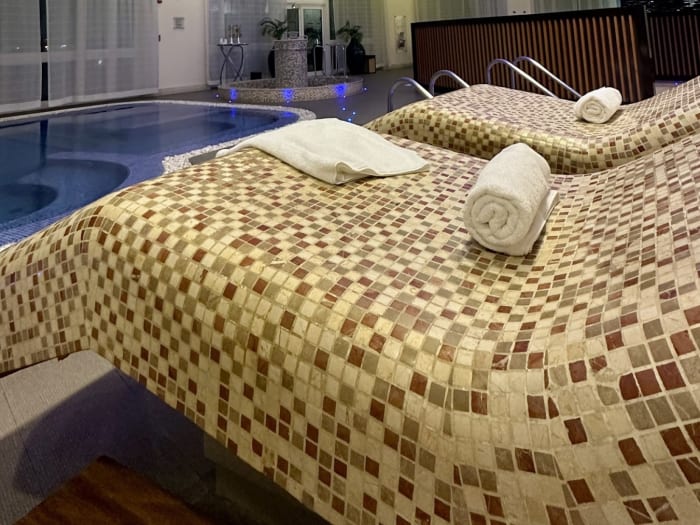
It is advisable to book the spa in advance, especially during peak season. This recommendation speaks volumes about its significance in the experience at the Four Seasons Hotel Doha.
Well-being is genuinely valued here. It is not an afterthought but a sufficiently sought-after aspect that requires anticipation.
In Doha, the climate, the pace of movement, and the density of days challenge the body differently depending on the season. The spa thus becomes a space for rebalancing.
In a large urban hotel by the sea, well-being often hinges on the quality of the transition it offers. One moves from the outside world into a quieter, more temperate environment.
A successful spa experience is not merely about a treatment menu. It relies on a calm welcome, well-thought-out spaces, and a keen attention to the traveller's needs.
In Doha, seasonality plays a particular role. Winter attracts more visitors due to milder weather, which explains the higher footfall.
In this context, the spa becomes a strategic location during the stay. One might book a massage after a long-haul flight, a facial treatment before an evening out, or a moment of recovery.
For business travellers, it provides a chance to unwind without leaving the hotel. For holidaymakers, it extends the beachside and contemplative aspects of the address.
The relationship with the sea also influences the concept of well-being in this hotel. An address open to the Persian Gulf naturally invites relaxation rituals attuned to light and warmth.
Guests often seek treatments that release tension, rehydrate, soothe, and invigorate after travel or sun exposure. The spa thus becomes a sensitive place for rejuvenation.
Personalisation remains essential. Well-being is most effective when it adapts to the pressure of the massage, the duration of the treatment, and the need for silence or recovery.
This capacity for listening extends the spirit of Four Seasons service. The spa is not a separate world; it is part of the hotel's continuity.
At the Four Seasons Hotel Doha, well-being is rooted in tangible expectations. This is also why it is best to book early.
Concierge & Services
Hotel luxury is often measured less by what is visible than by what operates quietly. At the Four Seasons Hotel Doha, the promise rests on essential services: 24-hour concierge, 24-hour reception, daily housekeeping, turndown service, luggage storage, laundry, wake-up service, and multilingual staff. Together, they form a comfort infrastructure designed to keep the stay seamless, regardless of arrival time or trip duration.
The continuously open reception is a valuable landmark in an international destination like Doha. Flights often arrive at odd hours. Being able to rely on a team available at all times immediately transforms the experience. A late arrival ceases to be a burden. An early departure can be prepared with precision. Unexpected situations find prompt solutions.
The 24-hour concierge plays a more subtle role. It helps to organise the stay. Booking a transfer, advising on departure times, directing guests to main attractions, facilitating specific requests, or adjusting the itinerary to the client's pace are all gestures that prevent friction. In a city that one sometimes explores in a short time, this practical intelligence is invaluable.
Multilingual staff is also essential in Doha, which welcomes an international clientele for both business and leisure. Beyond language, it involves understanding different habits, expectations, and ways of travelling. A great hotel knows that effective service is not just about speed; it is also attentive to customs. This finesse contributes to the feeling of being understood without having to explain everything.
Daily housekeeping, turndown, and laundry services fall under the realm of invisible management. Yet, they have a direct impact on the overall experience. A shirt ready on time before a meeting, a room tidied during an absence, a bed prepared upon return from dinner: these details lighten the mental load of travel.
Luggage storage and wake-up services complete the offering with discreet efficiency. They cater to pivotal moments of the journey: waiting before a flight, organising an early departure, or the possibility of enjoying the city until the last moment without being burdened.
Ultimately, the quality of service at the Four Seasons Hotel Doha rests on a simple idea: to be present without being intrusive. This is one of the most delicate balances in luxury hospitality. It requires well-trained teams, rigorous organisation, and a true culture of discretion.
The art of living in Doha
Staying at Four Seasons Hotel Doha also means entering into a particular reading of the city. Doha does not reveal itself all at once; it is understood in successive layers, between shoreline, contemporary architecture, cultural spaces, business districts and places of sociability that come fully into their own at dusk. In that context, a seafront hotel with easy access to the city’s main attractions offers more than convenience: it provides a framework for interpretation. One discovers the city from an anchoring point that constantly recalls the presence of the Gulf, and therefore the deeper geography of the place.
The art of living in Doha lies first in this coexistence of control and scale. The avenues are broad, horizons often open, and buildings converse with a very particular light, clear and at times almost mineral. Yet the city cannot be reduced to an image of spectacular modernity. It also reveals itself in the details of daily life: the slower rhythm of certain winter mornings, the importance of air-conditioned interiors, evening outings when the temperature falls, and the attention paid to hospitality and social codes. For the visitor, understanding that temporality is essential. Doha is not lived in the same way at midday, at sunset or after dinner.
From a hotel such as this, the sea acts as a guiding thread. It brings visual breathing space and recalls that the city was built in an old relationship with the coast. Even when the day is spent exploring more urban districts or moving between appointments, returning towards the water in the late afternoon changes the perception of the stay. This alternation between intensity and calm forms part of Doha’s specific appeal, especially for travellers drawn to destinations capable of combining efficiency with a sense of openness.
Winter, identified as the busiest period, is likely the season in which this art of living is most easily grasped. The milder climate encourages promenades, terraces and more flexible movement around the city. Doha then becomes particularly pleasant for those wishing to combine discovery with relaxation. Days can be organised more freely, exterior views enjoyed more fully, and the stay placed in a more direct relationship with the landscape. It is also the season when the best-located addresses make the most sense.
Doha also appeals through its distinctive cosmopolitanism. One encounters business travellers, international residents, families on holiday and visitors staying only a few days. That diversity produces a form of pragmatic elegance: places must be able to accommodate multiple uses without excessive rigidity. A hotel such as Four Seasons Hotel Doha reflects that reality well. It allows guests to move from one register to another without rupture, from a professional appointment to an evening oriented towards the sea, from a tightly organised stay to a more contemplative interlude.
Finally, the art of living in Doha requires a certain openness to contrast. One must accept that a city can be at once highly contemporary and deeply shaped by its desert and maritime environment; that it may be defined by air conditioning, verticality and fast roads, but also by low light, mild evenings in season and moments of calm by the water. Four Seasons Hotel Doha offers precisely a comfortable way of inhabiting those contrasts. It does not seek to erase them; it makes them legible, and that may be its greatest quality for anyone wishing to discover Doha with accuracy.
Booking via MyConciergeHotel
Booking the Four Seasons Hotel Doha means approaching this destination with a mindset focused on the experience rather than merely on pricing. In a hotel of this calibre, the difference lies not only in the choice of room but also in how the journey is prepared. Understanding the rhythm of the stay, anticipating needs, and paying attention to the season and the customs of the destination are all crucial. Doha is best experienced when certain parameters are considered in advance, particularly in winter. Demand increases during this time, making spa appointments and room preferences more sensitive.
This is where the value of concierge assistance comes into play. It involves tailoring the booking to the traveller's profile. A short business trip does not have the same priorities as a romantic getaway or a family holiday. Some guests prioritise smooth transfers and quick services, while others place greater importance on views, the spa, or proximity to the sea. Intelligent booking involves asking the right questions before arrival.
In the case of the Four Seasons Hotel Doha, several factors deserve particular attention at the time of booking. Firstly, the season. Winter corresponds to a peak period due to the milder climate. It is advisable to confirm your stay well in advance, especially if you wish to take advantage of the best availability. Secondly, the spa. It is one of the experiences that should be planned ahead of time.
Doha can serve as a primary destination, a stopover in the Middle East, or a respite between work commitments. Depending on the situation, the ideal length of stay, the pace of the days, and expectations regarding the hotel will vary. Thus, it is useful to think of the hotel not merely as a place to rest, but as a base from which to explore the city, the sea, and moments of relaxation.
The Four Seasons Hotel Doha caters to both business and leisure stays. This versatility requires a clarification of priorities. Late arrivals, the need for continuous services, a desire for a more contemplative stay, the importance of natural light, or time dedicated to wellness are all considerations. The more contextualised the booking, the more coherent the experience is likely to be.
In the realm of luxury, not all exquisite addresses suit every traveller in the same way. What matters is the alignment between a place, a season, a purpose, and an expectation. The Four Seasons Hotel Doha showcases its qualities for those seeking a grand hotel by the sea, well-located in the city, capable of combining attentive service, international comfort, and a sense of space overlooking the Gulf. However, it is essential to book at the right time, with the right insights.