MyConciergeHotel
5★

Kempinski Hotel Suzhou

1 Guo Bin Lu, Wu Zhong Qu, Su Zhou Shi, Jiang Su Sheng, Chine, 215122, Suzhou

Hotel 5-star in Suzhou, China, 1.9 km from Base Contemporary Art Museum, featuring 24-hour concierge, laundry service and bar.

Hotel gallery

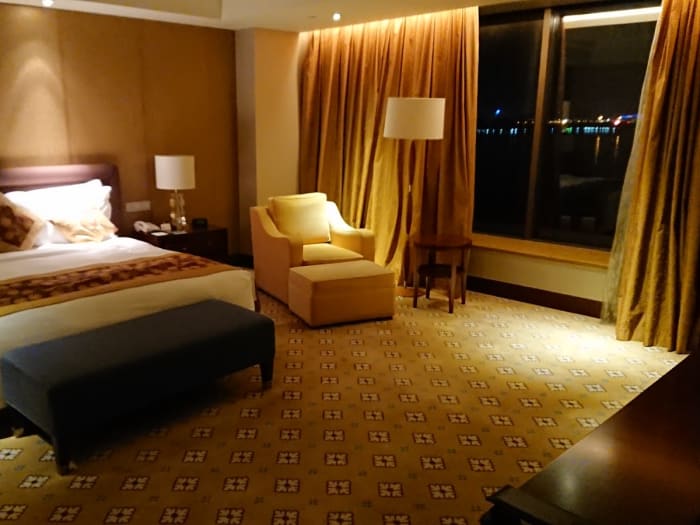
Panoramic Kempinski Hotel Suzhou Suzhou

1 / 10

Panoramic Kempinski Hotel Suzhou Suzhou

About

Kempinski Hotel Suzhou is located in Suzhou, China. This 5★ hotel offers an elegant and refined setting, perfect for travelers seeking comfort. Nestled in a peaceful environment, it allows guests to explore the city's beauty while enjoying quality services. The hotel is part of the prestigious Kempinski chain, known for its hospitality and attention to detail.

What sets Kempinski Hotel Suzhou apart is its calming atmosphere and contemporary design. The common areas and facilities are designed to provide a relaxing experience. Guests appreciate the harmony between modernity and tradition, creating a unique setting for both business and leisure stays. The attentive service from the staff also enhances the overall experience.

Before your visit, know that this hotel suits various types of travelers, including couples, families, and business professionals. Seasonality may affect occupancy, so plan your stay accordingly. Suzhou is famous for its gardens and canals, offering numerous activities nearby.

_My tip from the Concierge: book in advance to take advantage of the best offers and secure your stay in this calming setting._

History & sense of place

Kempinski Hotel Suzhou can be read through two complementary lenses: that of an international luxury hotel shaped by the heritage of the Kempinski name, and that of a destination whose cultural identity remains one of the most distinctive in China. Here, history is not expressed through a dramatic heritage narrative or the conversion of an ancient palace into a hotel; rather, it is felt in the way the property inhabits Suzhou with restraint, in a discreet dialogue between contemporary comfort, local aesthetic references and a cultivated sense of calm.

Suzhou occupies a singular place in the Chinese imagination. For centuries, the city has been associated with scholarly elegance, meticulously composed gardens, canals, stone bridges and a culture of balance in which architecture, water and landscape answer one another. Staying in a hotel of this calibre in Suzhou therefore carries a particular meaning: one does not simply seek a comfortable base, but an address capable of extending the city’s atmosphere, its relationship to quietness, spatial composition and a certain idea of harmony. Kempinski Hotel Suzhou appears to position itself precisely along those lines, favouring a soothing experience over overt display.

Belonging to the Kempinski collection adds another layer. The brand is known for its European roots and for a style of hospitality that values service, well-kept public areas and a form of updated classicism. In Suzhou, that signature reads less as a uniform aesthetic than as a promise of continuity: high standards, structured welcome, attention to detail and the ability to host both business travellers and guests in search of a restorative stay.

The spirit of the hotel rests on an alliance of modernity and traditional references. The contemporary design mentioned in the brief does not imply a break with the local context; rather, it suggests a current interpretation of older elements, whether in materials, decorative rhythm or the way spaces are arranged to create gentle transitions between activity and rest. In a city where garden culture elevated composition into a language of its own, the idea of progression, threshold and pause matters as much as appearance.

This is what gives the hotel its character. Not an accumulation of effects, but coherence. A peaceful address in Suzhou, contemporary design with traditional touches, shared spaces conceived for relaxation: together these elements describe a property that seeks less to impress than to place its guests within a slower, more measured tempo. For leisure travellers, that means returning from the city to a setting that feels stable, legible and restorative. For business guests, it means preserving a quality of concentration and recovery that is often rare in large urban environments.

In that sense, Kempinski Hotel Suzhou belongs to a form of contextual hospitality. It does not claim to summarise Suzhou in itself; it offers a contemporary, measured and hospitable interpretation of it. Very often, that is where true luxury lies: in a hotel’s ability to understand the city around it and translate it into a place one can genuinely inhabit, without forced folklore or generic international abstraction.

The hotel

The first defining feature of Kempinski Hotel Suzhou is its peaceful setting. In a city renowned for the delicacy of its gardens, the flow of its canals and a culture of retreat, that quality is far from incidental. It shapes the entire stay. The hotel appears to have been conceived as a calm counterpoint to the pace of the contemporary city: a place to return to after a day of sightseeing, meetings or movement, and recover a sense of order, space and relative quiet.

That impression is reinforced by the design of the shared areas, which are explicitly intended for relaxation. In high-end hospitality, public spaces play an essential role: they are not merely transitional zones, but true mediators of the guest experience. A well-proportioned lobby, legible circulation, lounges where one can sit without feeling exposed, lighting designed to accompany different moments of the day: such elements determine the quality of a stay with almost invisible precision. The brief places emphasis on this dimension, suggesting genuine attention to practical comfort beyond appearance alone.

Contemporary design with traditional touches forms the other major axis of the property. In a destination such as Suzhou, that balance may take several forms: current lines softened by local references, a material palette that evokes craft or landscape, motifs or details inspired by classical vocabulary without becoming literal quotation. The value of such an approach lies in avoiding two common pitfalls: on the one hand, international neutrality that could place the hotel anywhere; on the other, an over-insistent thematic décor that reduces local culture to scenery. Kempinski Hotel Suzhou seems to pursue a more measured and enduring middle way.

The calm atmosphere, highlighted as one of the address’s distinguishing traits, also has practical value. It suits a wide range of travellers. Couples will find a setting conducive to an urban escape without excessive bustle. Families may appreciate clear, reassuring spaces. Business travellers, meanwhile, benefit from an environment in which it is possible to work, receive or simply recover between commitments. That is often the mark of a well-conceived hotel: not speaking to a single use, but accommodating different rhythms without losing coherence.

Belonging to the Kempinski collection adds a layer of familiarity for those who know the brand. One can expect a certain rigour in the welcome, consistency of service and careful attention to operational detail. In a property of this kind, luxury is often measured through smoothness: a frictionless arrival, clear bearings, available staff, discreet daily housekeeping and a stable overall atmosphere. The brief indeed mentions core services in that direction, including a 24-hour front desk and concierge, turndown service and luggage storage.

Ultimately, the hotel is defined less by a spectacular gesture than by an overall composition. Calm, visual coherence, the quality of shared spaces and the feeling of being received in a thoughtfully considered setting form its true signature. For first-time visitors to Suzhou, it can serve as a serene base from which to explore the gardens, waterways and many nuances of the city. For returning guests, it offers what one often values most: a dependable, composed address capable of creating continuity between the energy outside and the inward need to slow down.

Rooms & suites

In a hotel such as Kempinski Hotel Suzhou, the room is more than a place to sleep; it is the true centre of gravity of the stay. It is here that the success of an address claiming calm, coherence and a certain contemporary elegance is ultimately measured. Even without detailing specific room categories or unconfirmed sizes, the general intention is clear: to offer a space where modern comfort aligns with a soothing atmosphere faithful to the spirit of the property.

Rooms and suites in a five-star hotel of this kind are expected to perform on several levels at once. There is, of course, immediate comfort, perceived from the moment one enters: quality bedding, a clear layout, sufficient storage, a bathroom designed for smooth use, lighting capable of shifting from practical to intimate. Yet there is also a subtler dimension, namely the way a room absorbs the noise of the world and recreates a sense of retreat. In a city such as Suzhou, where many travellers come in search of something more contemplative than frenetic, that ability to generate calm carries particular value.

Contemporary design with traditional touches likely finds its most convincing expression in the guestrooms. It is often in private spaces that local references can be integrated with the greatest accuracy: a material detail, a chromatic range inspired by water, stone or wood, a decorative restraint recalling Asian interiors without slipping into caricature. The right balance preserves the legibility of an international luxury room while giving it a tone rooted in its setting. It is precisely this sort of nuance that turns comfortable accommodation into a more memorable experience.

For business travellers, the room must also function as an efficient transitional space. One expects intuitive organisation, uncluttered surfaces and a sense of order that supports both occasional work and recovery. For couples, the challenge is different: creating atmosphere, intimacy and the possibility of slowing down. For families, success often lies in overall ease, in how straightforward it is to settle in and in the feeling of being in a welcoming place without excessive rigidity. A hotel capable of serving all three uses without contradiction demonstrates real hospitality maturity.

The turndown service mentioned in the brief deserves note, as it contributes to that quality of stay one feels more than one articulates. Returning at the end of the day to a room that has been refreshed and prepared for the night, with the discreet impression that the space has adapted to the present moment, belongs to a very old art of hospitality. Daily housekeeping works in the same direction: maintaining consistency, freshness and overall order so that the traveller can focus on the stay rather than on logistics.

Ultimately, the rooms and suites at Kempinski Hotel Suzhou may be understood as contemporary refuges designed to extend the hotel’s central promise: a peaceful stay in a carefully composed setting where luxury never feels overstated. True comfort then lies in the balance between aesthetics and use, in a sense of mental as well as physical space, and in the precious impression of being installed in a place that understands the need for rest, quiet and continuity. In Suzhou, that quality resonates all the more strongly because it echoes the identity of the city itself.

Dining

Although the full details of the hotel’s restaurants or culinary signatures are not provided here, it is still possible to situate what dining represents within the experience of a property such as Kempinski Hotel Suzhou. In five-star hospitality, food and drink are not merely ancillary services; they structure the rhythm of a stay, from the first coffee of the morning to the final drink taken in a calm setting at day’s end. They also shape the way a hotel anchors itself in its destination, between international hospitality and local sensibility.

In Suzhou, this question takes on a particular tone. The city belongs to a region where food culture is longstanding, refined and attentive to balance. Without claiming specific dishes not included in the brief, one may recall that the gastronomy of the Jiangnan region is often associated with delicacy of flavour, precision of texture and a subtle relationship to seasonality. A hotel of this category, when well conceived, does not necessarily seek to compete with the entire urban dining scene; rather, it should offer a hospitable reading of that context, capable of satisfying varied expectations without losing coherence.

One may therefore imagine dining at Kempinski Hotel Suzhou as a natural extension of its overall identity: contemporary, considered and soothing. Breakfast in particular often plays a decisive role. In grand hotels, it sets the tone for the day and reveals much about the philosophy of service. Controlled variety, clear presentation, a calm atmosphere and attentive yet unobtrusive staff are all signs of a house that understands that morning luxury lies not in demonstrative abundance, but in the quality of the experience. For a business traveller, it is the moment to prepare efficiently for the day. For a leisure stay, it often becomes a suspended, almost ritual pause.

The rest of the culinary offer typically responds to complementary uses. Lunch taken on site may be valued for convenience, especially between meetings or after a morning of visits. Dinner at the hotel must persuade in another way: through the comfort of the setting, consistency of execution and the sense that one can remain within the hotel’s universe without feeling cut off from the destination. That is the challenge of good hotel dining: not merely to be convenient, but genuinely desirable.

In a hotel whose shared spaces are designed for relaxation, dining venues also play a broader social role. They become meeting points, transitional spaces, at times hushed refuges where one may extend a conversation, work informally or simply observe the rhythm of the day. This dimension matters especially in properties welcoming a mixed clientele of leisure and business travellers. Dining then becomes a common language, a shared territory that contributes to the identity of the address.

Finally, belonging to the Kempinski collection suggests a certain command of fundamentals: attentive service, reliable standards and the ability to respond to international habits while leaving room for local context. In the absence of more precise details, that is likely the key idea to retain. At Kempinski Hotel Suzhou, dining can be understood as part of a logic of balance: comfort, clarity, quality of execution and atmosphere. In a city where the art of living is nourished by nuance, such restraint may prove more valuable than over-insistent staging. It allows a meal to recover its primary role in travel: to offer a pause, a rhythm and sometimes a very simple way of entering into relation with a place.

Wellbeing & time to unwind

The brief does not specify dedicated spa facilities, and it would be inaccurate to invent them. Yet wellbeing remains central to understanding the experience offered by Kempinski Hotel Suzhou. One of the clearest features highlighted is the soothing atmosphere that runs throughout the property. In contemporary luxury hospitality, that quality extends far beyond the presence of a spa in the strict sense: it involves an overall way of conceiving the stay, from interior architecture to the rhythm of service.

Wellbeing often begins before any treatment. It lies in the feeling of arriving in a place that does not constantly demand one’s attention, that creates breathing spaces and allows both body and mind to slow down. The shared areas designed for relaxation play a decisive role here. They provide thresholds, pauses and intermediate moments between the room and the city, between an active day and a return to oneself. This gradation is especially valuable in a destination such as Suzhou, whose cultural identity has long valued balance, contemplation and a harmonious relationship between people and their surroundings.

From this perspective, Kempinski Hotel Suzhou may be understood as a hotel of recovery as much as of residence. For the business traveller, that means the possibility of regaining stability after journeys, meetings and constant demands. For the leisure guest, it is the chance to experience the city without being exhausted by it, alternating exploration and retreat. True hotel wellbeing does not depend solely on a treatment menu; it depends on a place’s ability to support realistic human rhythms and not turn every moment into performance.

The contemporary design with traditional touches also contributes to this sensation. When well handled, interior aesthetics can act almost physically on the quality of rest. Legible lines, balanced materials, a non-aggressive palette and carefully judged lighting all influence the way one inhabits a space. In a city associated with classical gardens, where composition relies as much on emptiness as on fullness, this intelligence of measure carries particular meaning. Calm then becomes not merely an atmosphere but a structure.

The services mentioned in the brief reinforce that reading. A 24-hour front desk and concierge, daily housekeeping, turndown service, luggage storage and laundry all help reduce the traveller’s mental load. In a hotel, wellbeing also passes through such means: not having to think of everything, being able to rely on a dependable organisation and feeling that practical needs are anticipated. This form of invisible comfort is often more decisive than any explicit discourse about relaxation.

Finally, the experience should be placed within the context of Suzhou itself. The city invites not so much frenetic consumption as a form of attention: observing the geometry of a garden, following the line of a canal, accepting variations of light and season. A hotel that claims a peaceful atmosphere naturally resonates with that way of being in the world. Even without a detailed wellness programme, Kempinski Hotel Suzhou appears to offer something essential: a setting in which a stay can recover a calmer density, where one sleeps, breathes and recentres oneself. In today’s hotel landscape, that promise of well-orchestrated simplicity is often worth far more than an accumulation of facilities.

Concierge & services

Luxury hospitality is often judged by what is not immediately visible. Beyond décor, scale or address, it is the services that give a stay its true fluidity. On that front, Kempinski Hotel Suzhou presents several solid fundamentals in the brief: a 24-hour concierge, 24-hour front desk, daily housekeeping, turndown service, luggage storage, laundry, wake-up service and multilingual staff. Taken separately, these elements may seem expected in a five-star hotel; together, however, they form a very concrete promise of comfort and continuity.

A round-the-clock front desk is first and foremost an essential marker for an international clientele. Late arrivals, early departures, changes of plan and unforeseen circumstances are all part of travel. Knowing that someone is available at any hour profoundly alters the perception of a stay: the hotel becomes a reliable point of support, capable of absorbing contingencies without drama. This availability is all the more important in a city such as Suzhou, often included in broader itineraries through China, where transport schedules and travel rhythms may vary.

The 24-hour concierge goes further than a simple welcome. In a property of this category, it represents the practical intelligence of the house. It can guide, facilitate, recommend, organise and resolve. Even without detailing unconfirmed services, its function is clear: to turn a destination that may seem complex to visitors into a more legible experience. In Suzhou, that might mean helping to structure a day between gardens, historic quarters and moments of rest, suggesting more favourable timings, arranging transfers or responding discreetly to particular requests. A good concierge does not merely execute; it puts the stay in order.

Multilingual staff directly contribute to that relational quality. In international hospitality, language is not merely a communication tool; it conditions trust. Being understood precisely, being able to formulate a nuanced request, receiving a clear explanation about a service or transfer: such details change the way one inhabits a hotel. They reduce friction, reinforce the traveller’s autonomy and allow service to become genuinely personalised.

Daily support and upkeep services are equally important. Daily housekeeping ensures continuity of comfort, especially valuable during stays of several nights. Turndown service, more discreetly, introduces an almost domestic rhythm into the hotel experience: the room changes over the course of the day, moving from a space of use to a space of rest. Laundry, meanwhile, answers very concrete needs, particularly for business travellers or longer stays. Luggage storage and wake-up service belong to those fundamental attentions that simplify transitions and secure the organisation of travel.

What matters, ultimately, is not only the list of services but the philosophy it reveals. Kempinski Hotel Suzhou appears to favour a supportive form of hospitality, shaped by presence, consistency and discretion. In a peaceful setting, that approach makes particular sense: service does not overload the experience, it lightens it. This is a valuable quality, especially at a time when travel is often saturated with demands. Here, the hotel seems to embrace a clear function: to welcome, simplify and accompany. For many travellers, that is where the true privilege of a grand hotel begins.

The Suzhou art of living

Choosing Kempinski Hotel Suzhou also means choosing a certain way of entering the city. Suzhou does not reveal itself in quite the same manner as a metropolis of rapid consumption. Its charm lies in slower forms of attention: the reading of a garden, the presence of water, the succession of bridges, the relationship between architecture and landscape, the variations of light on whitewashed walls and dark roofs. Often evoked for its classical gardens and canals, the city asks less to be conquered than to be explored with measure. A hotel with a peaceful atmosphere therefore makes a particularly coherent starting point.

The Suzhou art of living rests on an idea of balance. Historically, the city is linked to a scholarly culture in which refinement is not confused with ostentation. The gardens, among the most accomplished expressions of that tradition, are not merely green spaces; they are intellectual and sensory compositions made of perspectives, pavilions, rocks, water and carefully managed voids. They teach the visitor another tempo. One moves slowly, observes, compares and lets the eye circulate. This inner disposition can transform an entire stay, provided one does not approach it too hastily.

The canals and older quarters extend that experience. They recall that Suzhou was long a city of exchange, gentle circulation and urban life connected to water. Even today, despite the modernity of the metropolis, that memory remains perceptible. Attentive travellers discover a more nuanced urban China here, less vertical in expression, more attached to the texture of places than to monumentality alone. That is precisely what makes the destination so compelling for an upscale stay: it offers something other than spectacular scenery. It offers a culture of nuance.

Within this context, a hotel such as Kempinski Hotel Suzhou can play a mediating role. Its contemporary design with traditional touches and calm atmosphere echo this city of transitions, where old and new coexist without always opposing one another. After a day spent exploring gardens, following canals or discovering different faces of Suzhou, returning to a property that extends that search for balance makes sense. The stay gains coherence, and the hotel ceases to be mere accommodation to become part of the travel narrative.

It is also worth noting that Suzhou suits several styles of discovery. Heritage enthusiasts will find a dense cultural fabric. Travellers in search of atmosphere will appreciate above all the quality of ambience, detail and subtler urban rhythms. Business stays, meanwhile, may benefit from this relative gentleness, rare in more pressured environments. The city allows efficiency and breathing space to coexist, which helps explain its appeal to varied profiles.

Ultimately, the art of living in Suzhou lies in a form of tranquil precision. Nothing is necessarily spectacular at first glance, yet much reveals itself to those willing to slow down. It is a destination of perception as much as of sightseeing. From that perspective, Kempinski Hotel Suzhou appears as a fitting base: an address that does not seek to distract from the city, but to prepare the eye, offering a stable setting from which to grasp its nuances. For the contemporary traveller, often caught between intensity and fatigue, this alliance between a subtle destination and a calming hotel may represent one of the most accurate forms of luxury.

Book with MyConciergeHotel

Booking Kempinski Hotel Suzhou through MyConciergeHotel means approaching the stay with a logic of clarity and guidance rather than through the mechanics of a standard reservation alone. In five-star hospitality, the difference lies not only in the choice of address, but in the way the journey is prepared. A destination such as Suzhou, with its own rhythm and its contrasts between heritage, waterways and contemporary city life, often deserves an editorial eye and a level of assistance capable of turning a simple booking into a more coherent stay.

The value of a well-considered reservation begins before arrival. First, it is about choosing the right tempo. Seasonality may influence demand, the atmosphere of the city and hotel availability; the brief rightly points this out. Planning ahead not only helps secure favourable booking conditions, but also allows the experience on site to be better shaped. A couple’s escape will not have the same priorities as a business trip or a family stay. The value of an editorial concierge service lies precisely in helping to define those priorities and then guiding travellers towards the most suitable setting.

In the case of Kempinski Hotel Suzhou, several elements argue in favour of attentive preparation: its peaceful setting, contemporary design with traditional touches, shared spaces conceived for relaxation and membership of the Kempinski collection. These characteristics do not merely describe a level of comfort; they outline a style of stay. Booking with full awareness therefore means ensuring that this style genuinely matches the purpose of the trip: a need to recover, a desire for a serene base from which to discover Suzhou, or the search for a hotel equally at ease with leisure and business.

MyConciergeHotel can also bring a more refined reading of the experience. Not all five-star hotels answer the promise of luxury in the same way. Some focus on animation, others on architectural exception, and others still on discretion and quality of use. Kempinski Hotel Suzhou appears to belong to the latter family: addresses that value calm, continuity of service and the rightness of space. For travellers, that distinction is essential. It allows one to book not a status, but an atmosphere.

Support also proves valuable in practical details. Arrival and departure times, laundry needs, the presence of a 24-hour concierge, luggage handling or requests linked to the rhythm of the stay can all be anticipated with greater ease when one has an interlocutor who understands the property and its positioning. This does not replace the hotel’s own service; it prepares it. In the upper segment, that preparation often makes the difference between a correct stay and a genuinely seamless one.

Finally, booking through MyConciergeHotel means choosing an approach to travel founded on relevance. In Suzhou, a city of nuance and measured slowness, that philosophy feels especially apt. Kempinski Hotel Suzhou does not seem to call for an impulsive booking, but for a considered choice: that of a calm, contemporary and well-structured address capable of accommodating different uses without losing its identity. If that promise matches your way of travelling, then the reservation becomes more than a formality. It becomes the first gesture of a well-composed stay.

Signature experiences

Exclusive on-site programmes that define this property's character, beyond the room key.

  • A quiet breakfast before the city

    Beginning the day within the hotel’s calm atmosphere allows guests to enter Suzhou at the right pace. This experience focuses on morning comfort, attentive service and the chance to slow down before heading out to explore gardens, canals and historic quarters. A simple yet meaningful way to set a more measured tone for the stay from the very first hours.

    Signature MyConciergeHotelIncluded in your stay
  • A restorative return after Suzhou’s gardens

    After a day devoted to classical gardens and walks along the waterways, returning to shared spaces designed for relaxation becomes part of the experience. This signature highlights the contrast between discovering the city and coming back to a contemporary, calm and legible setting where one can rest, reflect on the day and slow down without effort.

    Included in your stay
  • A seamless business stay

    For business travellers, the hotel’s appeal lies in smoothness: a 24-hour front desk, available concierge, daily housekeeping, laundry and an overall sense of dependable organisation. This experience is designed for those who wish to combine efficiency with recovery, in a setting that supports the rhythm of travel without adding unnecessary complexity.

    Idéal affairesIncluded in your stay
  • A couple’s escape in a gentler Suzhou

    The property lends itself well to a stay for two thanks to its peaceful setting and measured aesthetic. The experience lies in using the hotel as an urban refuge: heading out to discover the city at one’s own pace, then returning to a carefully prepared room and shared spaces suited to conversation, rest and a discreet form of intimacy.

    Included in your stay
  • Concierge guidance for discovering Suzhou well

    The concierge can become a genuine thread running through the stay. Its value is not merely logistical: it also lies in gaining a clearer reading of the city, pacing visits more intelligently, optimising travel time and adapting plans to one’s rhythm. A valuable form of support for discovering Suzhou without haste or unnecessary dispersion.

    Sur demandeReservation required
  • A restorative pause within an urban stay

    This experience is aimed at travellers seeking not an accumulation of activities but the quality of the stay itself. It rests on what the hotel appears to do best according to the brief: offering a soothing atmosphere, relaxing shared spaces and discreet yet constant service. A way of experiencing Suzhou by alternating discovery with time to oneself, without ever breaking the balance of the journey.

    Included in your stay

Highlights

  • Peaceful setting in Suzhou
  • Contemporary design with traditional touches
  • Calm atmosphere throughout the hotel
  • Shared spaces designed for relaxation
  • Part of the Kempinski collection

Services & amenities

Dining

  • Bar

Services

  • 24-hour concierge
  • Laundry service

Connectivity

  • Free Wi-Fi

Accessibility

  • Elevator

Other amenities

  • 24-hour front desk
  • Air conditioning
  • Bathrobes and slippers
  • Blackout curtains
  • Breakfast service
  • Daily housekeeping
  • Flat-screen TV
  • In-room safe
  • Luggage storage
  • Minibar
  • Multilingual staff
  • Nespresso machine
  • Non-smoking property
  • Premium toiletries
  • Restaurant
  • Turndown service
  • USB charging ports
  • Wake-up service

Rooms & suites

Room catalog coming soon.

Stay policies

Check-in & check-out

Check-in
From 14:00 to 00:00
Check-out
Until 12:00

Pets

Pets are not allowed.

Pets are not allowed.

Wi-Fi

Complimentary high-speed Wi-Fi in all rooms and public spaces.

Location & access

Address: 1 Guo Bin Lu, Wu Zhong Qu, Su Zhou Shi, Jiang Su Sheng, Chine, 215122

Map showing the location of Kempinski Hotel Suzhou
Map data © OpenStreetMap contributors · Tiles courtesy of the Wikimedia Foundation

View on the map

Less than 43 minutes on foot from the heart of the neighbourhood: museums, Michelin tables, and the everyday shops you actually need.

What we visit in the neighbourhood

Three places I send my guests to on their first day.

My tip: start early — you save 30 minutes at the door.

  • Base Contemporary Art MuseumMuseum
    1.9 km · 23 min walk
  • Dushuhu ChurchChurch
    1.9 km · 23 min walk
  • 白鹭园Tourist attraction
    2.2 km · 26 min walk
  • Suzhou Ferris WheelTourist attraction
    3.7 km · 44 min walk
  • Ferris Wheel Paradise (North Gate)Tourist attraction
    3.8 km · 45 min walk
  • YuanrongTourist attraction
    4.2 km · 50 min walk
  • Suzhou Culture and Arts CentreTourist attraction
    4.3 km · 52 min walk
  • Suzhou True Color Art MuseumArt gallery
    4.5 km · 54 min walk

What we do nearby

What I book for them when they have a free half-day.

My tip: book the day before — the best tables close fast.

  • Jinji Lake Scenic Area (South Gate)National park
    1.8 km · 22 min walk
  • Lotus ParkPark
    3.0 km · 36 min walk
  • Dushuhu ParkPark
    3.0 km · 36 min walk
  • Jinji Lake Wind ParkPark
    3.4 km · 41 min walk
  • Taman Tasik PerdanaPark
    3.7 km · 45 min walk
  • Jinjihu ParkPark
    3.8 km · 45 min walk

Distinctions & affiliations

Sources & verification

The factual information on this page is sourced from and verifiable against open encyclopaedias and reference databases.

External references

Data collected on 31 May 2026.

Why book with MyConciergeHotel?

  • IATA-accredited agency

    GDS net rates negotiated directly, no intermediary, no markup.

  • APST financial guarantee

    Your payments are protected by the Association Professionnelle de Solidarité du Tourisme.

  • Secure 3DS2 payment

    Amadeus Payments — PCI DSS level 1, 3-D Secure strong authentication.

  • Data hosted in the EU

    Supabase Europe hosting — GDPR-compliant, your details are never resold.

  • Advisors 7 days a week

    A French-speaking team replies to your enquiries by email within 24 business hours.

Why choose Kempinski Hotel Suzhou?

Kempinski Hotel Suzhou is an exceptional address in Suzhou, chosen by the Concierge for its location, service and character. This page gathers verified facts — rooms, dining, amenities, access and policies — together with the Concierge's tip, the operational secret worth knowing before you go. Updated 1 June 2026.

The Concierge's 5 top answers about this hotel

The questions my guests ask me most. Direct answers, no fluff.

  1. Does the hotel have parking facilities?

    The hotel has on-site parking, but spaces may be limited. It is recommended to contact the concierge to reserve a spot and inquire about any associated fees.

    My tip : Signalez votre heure d'arrivée la veille, cela aide à sécuriser une place aux périodes les plus chargées.

  2. What kind of breakfast is served?

    The breakfast offered is typically a buffet with a selection of continental dishes. It may be included in certain rates or available at an additional cost. Hours and room service options can be confirmed with the concierge.

  3. Is Wi-Fi available throughout the hotel?

    Yes, Wi-Fi is available for free throughout the hotel, including in the rooms and common areas. It is a high-speed service.

  4. Are pets allowed at Kempinski Hotel Suzhou?

    Pets are not allowed at Kempinski Hotel Suzhou. For specific requests or dedicated services, please contact the concierge.

  5. How far is the hotel from the airport?

    The hotel is located about 90 minutes by car from Shanghai-Suzhou International Airport. Transfers can be arranged by the concierge.

Frequently asked questions

Before your stay

  • Does the hotel have parking facilities?

    The hotel has on-site parking, but spaces may be limited. It is recommended to contact the concierge to reserve a spot and inquire about any associated fees.

  • What kind of breakfast is served?

    The breakfast offered is typically a buffet with a selection of continental dishes. It may be included in certain rates or available at an additional cost. Hours and room service options can be confirmed with the concierge.

  • Is Wi-Fi available throughout the hotel?

    Yes, Wi-Fi is available for free throughout the hotel, including in the rooms and common areas. It is a high-speed service.

  • Are pets allowed at Kempinski Hotel Suzhou?

    Pets are not allowed at Kempinski Hotel Suzhou. For specific requests or dedicated services, please contact the concierge.

  • How far is the hotel from the airport?

    The hotel is located about 90 minutes by car from Shanghai-Suzhou International Airport. Transfers can be arranged by the concierge.

  • Does the hotel have a pool?

    Yes, the hotel has an indoor pool. It is heated and accessible to hotel guests.

  • Is early check-in available?

    Early check-in is subject to availability. It is advisable to contact the concierge in advance to check the possibilities and usual hours.

  • Are airport transfers offered?

    Private airport transfers are offered, usually at an additional cost. The concierge can arrange these services for guests.

  • What is the hotel's cancellation policy?

    The hotel's cancellation policy varies depending on the rate and season. Generally, cancellation is free up to 24-72 hours before arrival. For more details, please contact the concierge.

  • Are there any tourist taxes to pay?

    Yes, there are tourist taxes to pay. The amount varies and is collected on-site, usually per night and per person.

Loyalty rewards from the first night for Little catalog hotels.