History & identity
In Al Khobar, the Kempinski name immediately suggests a particular idea of international hospitality: service-led luxury rather than display, close attention to the details of a stay, and a way of making guests feel they are arriving at an address designed to endure. Kempinski Al Othman Hotel Al Khobar belongs to the contemporary tradition of the grand business-and-leisure hotel as it developed across Gulf cities at the turn of the 21st century. Its identity does not rest on an old-world heritage narrative, but on a more current promise: to offer, in the heart of a fast-moving city, an elegant, carefully orchestrated refuge.
That identity is expressed through a balance between international standards and local context. Al Khobar forms part of Saudi Arabia’s eastern seaboard, shaped by trade, mobility and business travel, with an urban life structured around major roads, retail centres, residential districts and commercial hubs. In that setting, a five-star hotel such as Kempinski Al Othman serves a precise purpose: not merely a place to sleep, but a base for the stay, a meeting point, and a transition space between appointments, visits, family time and moments of retreat.
The atmosphere described by guests and suggested by the public areas reflects that role. There is a legible elegance without excess, and a sense of welcome that matters as much as the décor itself. Luxury here is measured by the smoothness of the experience: an uncomplicated arrival despite the pace of the city, teams available around the clock, spaces designed to accommodate both representation and comfort, and a standard of service that aims less to impress than to support.
The fact that the hotel stands in one of Al Khobar’s lively districts is significant. It says something about its character: an address connected to the real city, its energy and contemporary rhythms, rather than an isolated property in a bubble. Its convenient access to local attractions and active neighbourhoods strengthens its appeal for different kinds of travellers, from couples on a city break to business visitors and families seeking a practical base.
In that sense, Kempinski Al Othman Hotel Al Khobar embodies a very current form of upscale hospitality in the region: cosmopolitan, efficient and attentive to the expectations of a mobile clientele, while still preserving a warm ambience. Its heritage is not that of a historic palace; it is the heritage of a hotel brand and an operational savoir-faire built on consistency, poise and quality of execution. For the traveller, this translates into a reassuring impression: that of a well-run house capable of providing the setting, relative calm and services needed to experience Al Khobar well, whether for a short stop or a longer stay.
The hotel
The first strength of Kempinski Al Othman Hotel Al Khobar lies in its location within one of the city’s lively districts. For travellers discovering Al Khobar, that setting has immediate value: it allows them to step quickly into the city’s rhythm without giving up the comfort of an upscale address. This is a city where movement shapes the experience of a stay, and where proximity to main roads, commercial areas and meeting points matters almost as much as the quality of the accommodation itself. The hotel answers that need for high-end practicality.
Arrival usually sets the tone. In a contemporary grand hotel in the Gulf, public spaces play an essential role: they must welcome, impress in measured fashion, absorb movement and create an immediate sense of order. Based on the known elements, Kempinski Al Othman pays particular attention to that dimension. The elegant atmosphere throughout the common areas is not merely decorative language; it forms part of the overall experience. A well-composed lobby, fluid circulation, comfortable seating, controlled lighting and the discreet presence of staff all help establish a sense of calm, even while the city outside remains active.
That elegance is paired with a warm and welcoming ambience, which is not always a given in large urban hotels. Many properties can create impressive volumes; fewer manage to make them genuinely hospitable. Here, the intended impression seems to be that of a place capable of accommodating different uses without losing coherence: a couple heading out to explore the city, a business traveller between appointments, a family in transit or on a longer weekend. The hotel presents itself as a versatile setting, but not an impersonal one.
Its relationship with the city is central. From the hotel, access to local attractions is described as convenient, which matters greatly in Al Khobar. The city is often experienced in sequences: promenades, urban landmarks, shopping addresses, business meetings and evening outings. Staying in a lively district makes it easier to shape one’s days freely, without relying on heavy logistics. For business visitors, that means saving time; for couples and families, it allows a better balance between outings, rest and meals.
The property therefore speaks to a varied clientele, but with a clear line: to provide an environment that is legible, comfortable and well run. In today’s Saudi context, where cities are evolving quickly and expectations around hospitality are becoming more sophisticated, this type of address answers a very real need. Guests seek reliability as much as refinement. The 24-hour front desk, round-the-clock concierge and related services reinforce the impression of a hotel designed for very different travel rhythms.
What ultimately distinguishes the place is its ability to reconcile outside energy with inner composure. The district is lively, the city is in motion, schedules fill up; yet once across the threshold, the experience recentres on comfort, clarity and attention. For a stay in Al Khobar, that is often what one expects most from a grand hotel: not to be cut off from the world, but to have an elegant, welcoming and dependable base within it.
Rooms and suites
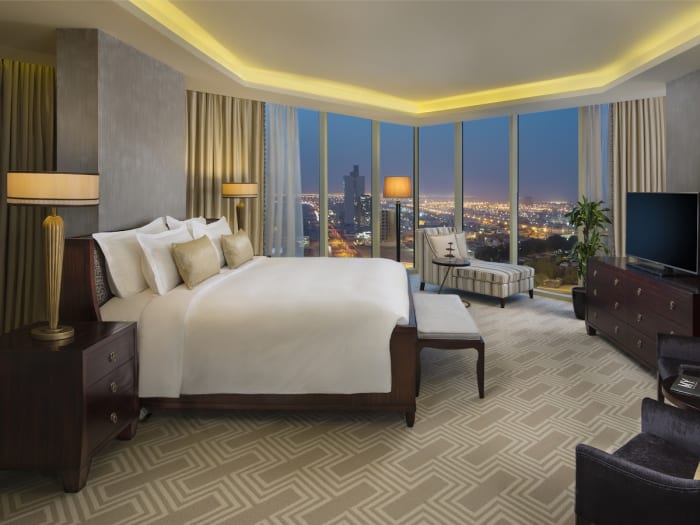
In an urban hotel of this calibre, the room is not simply a place to sleep: it becomes an observation point, a temporary office and a space for recovery between the different sequences of travel. At Kempinski Al Othman Hotel Al Khobar, one can reasonably expect this part of the experience to extend the qualities suggested by the public areas: elegance, comfort, welcome and attention to detail. Even without entering into unconfirmed specifications, the positioning of the property makes clear what guests are looking for here: a room that soothes, functions well and supports multiple uses.
In an active city such as Al Khobar, the first criterion is often the sense of retreat. After transfers, meetings or outings, the quality of a room is measured by its ability to reintroduce calm. That depends on balanced proportions, dependable bedding, well-controlled air conditioning, materials chosen for their durability and a layout that avoids any feeling of clutter. In an international five-star hotel, the expected comfort is not theatrical; it is consistent, legible and immediately perceptible.
Rooms and suites in an address like this must also respond to very different styles of stay. The business traveller needs an efficient base, with simple reference points, intuitive circulation and reliable services. Couples look for a more enveloping atmosphere, suited to quieter moments after the city. Families choosing this type of hotel generally seek frictionless logistics above all: available service, daily upkeep, flexibility with requests and a sense of security. The known services, such as daily housekeeping, turndown, laundry, luggage storage and wake-up calls, contribute directly to that quality of stay.
Turndown service in particular says something about the level of attention. In high-end hospitality, it is not incidental: it marks the transition from day to evening, restores order to the room, prepares for the guest’s return and reinforces the impression of a place carefully looked after. In the same way, daily housekeeping is not merely about maintenance; it creates that precious sense of continuity, as though the room were always ready to receive you, whatever the pace of your programme.
It is also easy to imagine that the suites in a property of this standing appeal to those seeking more space or a clearer separation between rest and receiving. In a destination that combines business stays with urban breaks, that flexibility is essential. It allows the room to become a genuine temporary living environment without sacrificing the overall elegance.
What matters, ultimately, is not only the list of amenities but the way everything comes together. A good hotel room knows how to disappear behind the comfort it provides. It does not demand attention; it frees it. At Kempinski Al Othman Hotel Al Khobar, the rooms and suites experience likely follows that logic: to offer a controlled, restful environment coherent with the rest of the house. For the traveller, that is often the most accurate definition of urban luxury: returning in the evening to a space that already seems set to your rhythm.
Dining
In a grand urban hotel, dining structures the day. It creates landmarks and extends the welcome, comfort, and service.
At the Kempinski Al Othman Hotel Al Khobar, dining is integral to this philosophy. It discreetly and coherently accompanies your stay.
In the morning, breakfast sets the tone. It should be fluid, varied, and serene, with attentive service.
For business travellers, it needs to be efficient. For couples or families, it becomes a more leisurely moment before exploring the city.
At lunch and dinner, dining takes on a different significance. It offers flexible options without necessitating movement for every meal.
Whether it's a quick lunch, a more relaxed dinner, an informal coffee, or an important meeting, everything hinges on the precision of the service and the coherence of the setting.
In the Saudi context, hotel dining also serves as a social space. It is where people gather, host, and extend conversations.
The atmosphere should remain refined and comfortable. A good hotel restaurant accommodates both discreet meals and more formal exchanges.
Room service extends this philosophy. After a busy day, dining in the privacy of your room remains a cherished comfort.
At the Kempinski Al Othman Hotel Al Khobar, dining thus embodies an art of accompaniment. An elegant setting, serious execution, and constant availability make all the difference.
Wellbeing & moments of pause
Even when an urban hotel is chosen primarily for its location or the smoothness of its service, wellbeing remains central. In a city such as Al Khobar, where days may alternate between meetings, transfers, visits and long periods spent in air-conditioned interiors, the body eventually imposes its own programme. A grand hotel understands this: it does not simply accommodate, it helps guests recover a more balanced rhythm. At Kempinski Al Othman Hotel Al Khobar, this dimension of the stay should be seen as a natural extension of the warm ambience and the attention paid to guests’ needs.
Wellbeing in this context is not limited to the existence of a spa in the strict sense. It begins with more diffuse yet decisive elements: the quality of sleep, the discretion of service, the ability to return at any hour without a break in comfort, and the sense that the hotel remains available when one wishes to slow down. The 24-hour reception and concierge contribute directly to that peace of mind. They allow travellers not to feel constrained by the property’s clock, which is already a very concrete form of luxury.
In the world of five-star hotels, relaxation and fitness spaces often play a balancing role. They provide a counterpoint to the intensity of the city and make it possible to reintroduce moments of recovery into busy schedules. For some guests, this means a brief pause before dinner; for others, a morning ritual that shapes the whole day. What matters, more than display, is the quality of the experience: calm spaces, fluid organisation, attentive staff and the possibility of adapting one’s pause to one’s own rhythm.
Business travellers are particularly sensitive to this dimension. After several hours of meetings or travel, even a short period devoted to unwinding can profoundly change the perception of a stay. Couples find in it a way of turning a simple urban stop into a softer interlude. Families, meanwhile, appreciate above all the fact that a hotel can create breathing spaces and moments of return to oneself within what may otherwise be a dense programme.
Turndown service and daily room care also belong to this logic of discreet wellbeing. A room restored in the evening, an immaculate bathroom, personal belongings respected, an atmosphere prepared for the night: all these elements contribute to a broader sense of care. It is often underestimated how much such gestures influence the quality of rest.
In an address such as Kempinski Al Othman Hotel Al Khobar, wellbeing therefore depends less on theatrical promise than on a coherent sum of details. It is the ability to modulate one’s stay, to alternate activity and retreat, and to recover a stable form of comfort throughout the day. For many travellers, especially in a dynamic urban environment, that is exactly what one expects from a contemporary grand hotel: not a decorative idea of relaxation imposed on the city, but a genuine capacity to absorb its pace and make it more liveable.
Concierge & Services
In the realm of luxury hospitality, services form the invisible architecture of a stay. A beautiful hotel captivates at first sight; only the organisation can confirm this impression over time. At the Kempinski Al Othman Hotel Al Khobar, this aspect is particularly significant. The facilities paint a picture of a property designed to accommodate varied travel rhythms.
The 24-hour concierge service and the continuously open reception form the foundation of this promise. For the international traveller, the busy professional, the family arriving late, or the couple who decides on a whim, this availability makes all the difference. It simplifies arrival, streamlines requests, and establishes a relationship of trust.
The quality of a concierge service also lies in its interpretative ability. In Al Khobar, visitors do not all have the same expectations. Some wish to optimise their journeys to local attractions. Others seek recommendations tailored to a business trip, a couple's outing, or a family programme. An attentive service adjusts its responses without burdening the experience.
The room and housekeeping services complement this impression of mastery. Daily cleaning ensures a continuity of comfort, especially during extended stays. The laundry service meets a concrete need for travellers on prolonged trips or for those wishing to travel lighter. The luggage storage adds welcome flexibility on arrival or departure days. The wake-up service remains a discreet classic, particularly useful in a hotel that caters to a business clientele.
The turndown service also deserves mention. Its presence signals a commitment to maintaining a certain level of attention. It is not merely about preparing for the night; it reminds the guest that their room is subject to ongoing care.
Finally, the presence of multilingual staff is particularly relevant in an international destination like Al Khobar. It facilitates communication, reduces misunderstandings, and contributes to that essential feeling for a traveller of being immediately understood.
Ultimately, the services at the Kempinski Al Othman Hotel Al Khobar convey a particular vision of contemporary luxury: less ostentatious than precise, less ceremonial than efficient. They allow each guest to experience the hotel according to their own priorities, without unnecessary friction.
The Art of Living in Al Khobar
Staying in Al Khobar means discovering a city shaped by an evolving urban lifestyle. Located on the eastern coast of Saudi Arabia, facing the Gulf, it combines exchanges, mobility, and contemporary influences. The Kempinski Al Othman Hotel Al Khobar, with its convenient location, allows for a straightforward engagement with this reality.
Al Khobar is often experienced in fragments. There are times for commuting, shopping sequences, business meetings, coffee breaks, and evenings in social venues. For the visitor, this necessitates a reliable, well-situated anchor point capable of making these transitions seamless. This is where the hotel truly comes into its own.
The stay can be easily organised between exploration and comfort. Guests can discover neighbourhoods, observe the commercial and social rhythm of the city, and then return to a calmer setting. This flexibility is crucial in a destination where heat, distances, and urban tempo influence the days.
For business travellers, Al Khobar remains linked to the economic activities of the Eastern Province. However, the city also attracts visitors seeking a contemporary Saudi urban experience. Couples find short, intense stays, while families appreciate the infrastructure, leisure options, and ease of movement when well situated.
The local art of living is also rooted in a certain culture of hospitality. In the region, receiving guests remains an important gesture, whether in cafés, restaurants, or international hotels. The Kempinski Al Othman continues this tradition, offering cosmopolitan hospitality founded on attentiveness and availability.
Choosing Al Khobar means embracing a form of travel that is less spectacular but often more revealing. It invites one to understand a rhythm, a regional modernity, and a way of living that balances indoors and outdoors. In this light, the hotel is not just a practical address; it provides an insightful vantage point on the city, balancing vibrancy with perspective.
Book with MyConciergeHotel
Booking Kempinski Al Othman Hotel Al Khobar through MyConciergeHotel means choosing an editorial, guided approach to the stay rather than a simple transaction. In a destination such as Al Khobar, where the experience depends greatly on understanding the city, the district and the rhythm of travel, that difference matters. A grand hotel is not chosen solely on its rating or a handful of photographs; it is chosen according to the use one intends to make of it. Is this a business stay with little free time? A couple’s interlude? A family stop requiring reliable services and simple logistics? Our role is precisely to help define that framework.
Kempinski Al Othman Hotel Al Khobar is especially well suited to travellers seeking a five-star urban address capable of combining elegance, accessibility and quality of service. Its setting in a lively district, convenient access to local attractions and welcoming atmosphere make it a relevant choice for those who want to experience the city without complicating their organisation. Booking with MyConciergeHotel makes it possible to place those elements within the logic of a stay: how many nights to plan, how to organise arrival and departure times, when to prioritise outings, and which services to use in order to keep everything fluid.
Our approach also consists in highlighting what truly makes a difference once on site. In the case of this hotel, that lies less in theatrical promise than in quality of execution: 24-hour reception and concierge, daily housekeeping, turndown, laundry, luggage storage and attention to guests’ specific needs. All these elements can seem secondary at the moment of booking; in reality, they often become decisive during the stay. It is frequently through them that the relevance of an address is measured.
Booking through MyConciergeHotel also means benefiting from an independent editorial perspective designed to guide without exaggeration. We favour precise descriptions, clear positioning and useful advice. For Al Khobar, that means remembering that a well-located hotel allows one to make better use of the city, that days should be planned with transfers and climate in mind, and that an address offering continuous service brings genuine comfort, particularly for short stays or tight schedules.
We especially recommend planning activities and appointments in advance when the programme is dense. This simple preparation helps guests make the most of the hotel’s location and avoid unnecessary downtime. For travellers wishing to alternate obligations and discovery, it is often the best way to enjoy Al Khobar without undue fatigue.
Ultimately, choosing this property through MyConciergeHotel means favouring a particular idea of high-end travel: informed, fluid and adapted to the reality of the stay. Luxury does not lie only in décor or in the reputation of a brand; it lies in the accuracy of the choice. When a hotel truly matches the way one wishes to experience a city, everything becomes easier. That is the alignment we seek to illuminate, so that booking itself becomes the first right gesture of the journey.