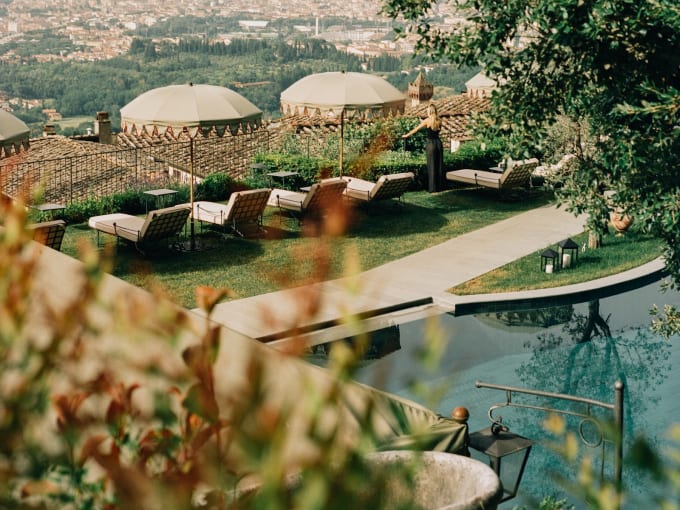
Florence does not lend itself well to quick rankings. The city requires time, context, and a nuanced understanding of its addresses. Here, a hotel is never just a place to stay. It extends a way of experiencing the Renaissance, the Tuscan hills, the Arno, or the more discreet neighbourhoods. This is precisely why this ranking exists. It does not seek to designate an absolute winner. Instead, it aids in making an informed choice. Between a grand institution like The St. Regis Florence, a design address such as 25hours Piazza San Paolino, or a more residential retreat like Hotel Regency, the experience varies profoundly. In Florence, the right hotel depends on the rhythm of your stay. It also hinges on the relationship you wish to cultivate with the city.
At MyConciergeHotel, we do not merely rank well-known names. We observe concrete, comparable criteria that are useful to the discerning traveller. Location matters, of course. Sleeping near the Arno, in the historic centre, or on the heights offers different perspectives of Florence. We also consider the coherence of the hotel project. An urban palace, a historic villa, a central boutique hotel, or a more peripheral resort do not meet the same expectations. The brand's reputation comes into play. Distinctions, the level of service, the quality of communal spaces, the presence of a spa, a garden, a terrace, or a view also structure our analysis. Finally, our advisors favour hotels that keep their promises without unnecessary flair.
The Florentine panorama is more varied than one might imagine. Four Seasons Hotel Firenze and Four Seasons Hotel Florence embody the grand international hospitality in a city rich in heritage. Belmond Villa San Michele and Il Salviatino shift the gaze to more airy positions, offering a different relationship with the landscape. Hotel Lungarno, Palazzo Vecchietti, and Hotel Calimala appeal more to travellers who wish to experience Florence on foot, from morning until the last drink. 25hours Piazza San Paolino brings a more contemporary, almost narrative energy to an urban fabric often dominated by historical references. Collegio alla Querce draws attention with its reinterpreted heritage identity. Finally, Castelfalfi opens a more Tuscan option than strictly urban. Notably, Florence today allows for very different stays while maintaining a high level of expectation.
For 2025 and 2026, several trends are solidifying. Firstly, the return of hotels with strong architectural personalities. Travellers desire less of a standardised luxury. They seek more context, memory, and uniqueness. Secondly, the demand for large gardens, terraces, and unobstructed views remains strong. In such a heavily visited city, having a breathing space genuinely alters the experience. We also observe a growing interest in hotels capable of articulating heritage and contemporary uses. This applies to discreet technology, wellness, or dining designed for longer stays. Lastly, clients are making better choices between urban immersion and retreat. Some wish to walk to museums, while others prefer to return in the evening to a quieter villa or estate.
This selection also reflects a certain idea of luxury, close to the service culture we advocate. The French luxury, as we understand it, is not limited to ostentation or accumulation. It rests on precision. A smooth arrival. A well-proportioned room. Staff who anticipate without being intrusive. A pleasant table, even without showmanship. A view that makes sense because it dialogues with the city. Florence particularly lends itself to this interpretation. Its finest face is not always the most ostentatious. It often appears in the balance between heritage, silence, light, and service. What our advisors frequently observe here is that a successful hotel leaves space for the city. It does not seek to replace it.
It is therefore essential to read this ranking without seeking an absolute. The top position is not necessarily the best for you. It is the most convincing according to our editorial criteria at a given moment. However, a couple on a cultural getaway, a family, a design enthusiast, or a regular at grand establishments will not make the same choice. The St. Regis Florence does not meet the same expectations as Hotel Calimala. Belmond Villa San Michele does not offer the same experience as Palazzo Vecchietti. And that is perfectly fine. Here, we highlight addresses that each excel in their own right. My advice is simple. Start by defining your ideal Florence. Only then should you choose the hotel that will make it possible.
In the following Top 8, you will find institutions, characterful retreats, and more contemporary addresses. Each has a clear reason for being included. It is up to you to identify the one that resonates with you.