History & heritage
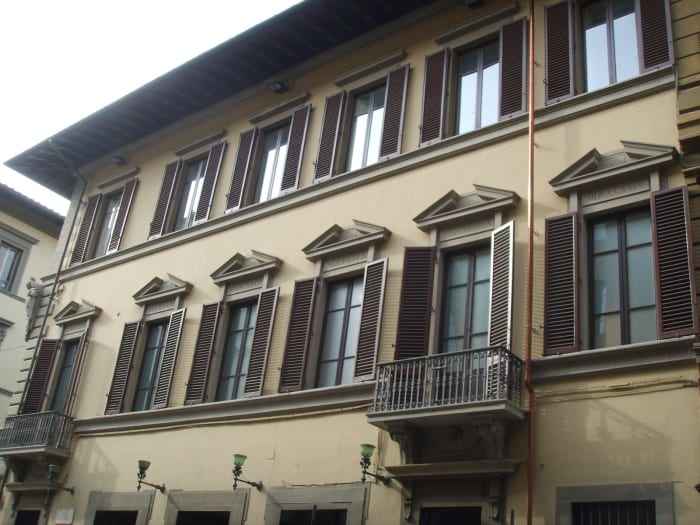
Staying at Palazzo Vecchietti means choosing an address that belongs naturally to Florence’s long urban tradition: that of private palazzi, discreet façades concealing carefully proportioned interiors, and a way of living in which restraint matters as much as display. The hotel occupies a historic building in the old centre, a setting that immediately establishes its tone. The experience here does not rely on an overplayed staging of the past, but on an authentic architectural presence, visible in the proportions, materials and the way history remains legible without compromising contemporary comfort.
In a city such as Florence, where every street seems to carry several layers of memory, the value of such a place lies precisely in this balance. Palazzo Vecchietti does not attempt to compete with the city’s great museums or monumental palaces; it offers something else, and for the discerning traveller something rarer: the chance to inhabit, for a few days, a credible fragment of historic Florence. The language of the Florentine palazzo is interpreted here with restraint. One senses the density of heritage that defines the city centre, but also an intimacy that sets the property apart from larger or more demonstrative hotels.
Its membership of Small Luxury Hotels of the World helps clarify the positioning. This is not a resort-scale property, but a house of character designed for travellers who value the singularity of place, the quality of welcome and the precision of detail. That affiliation suggests a particular idea of luxury: one based on discretion, attentive service and preserved calm rather than accumulation. In Florence, that nuance matters. The city has long attracted art lovers, collectors, architects, couples on a cultural escape and business travellers with an eye for beauty; an address such as this can speak to that variety without losing its identity.
The heritage of Palazzo Vecchietti also lies in its ability to allow memory and use to coexist. The historic building is not treated as a static backdrop. It serves as a living setting for contemporary hospitality, with today’s expectations of comfort, service and ease. This is often where a hotel in an old building succeeds or fails: preserving spirit without sacrificing the practical pleasure of staying there. In Florence, where visual delight can quickly give way to fatigue from the crowds, returning in the evening to a human-scale, enveloping place has particular value.
The property therefore appeals to travellers who like to understand a city through its interiors as much as through its monuments. Palazzo Vecchietti is not merely a central base; it is a way into Florence through a quieter, more residential, almost domestic door. Its heritage is not only historical in a chronological sense. It is also cultural: it extends a Florentine tradition of contained refinement, in which elegance comes from proportion, patina and continuity. For the guest, that translates into a rare feeling: staying somewhere that truly belongs to its city, rather than in an interchangeable hotel placed against a prestigious backdrop.
The property
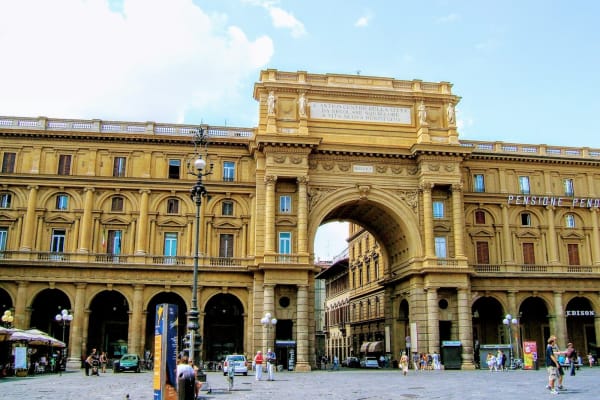
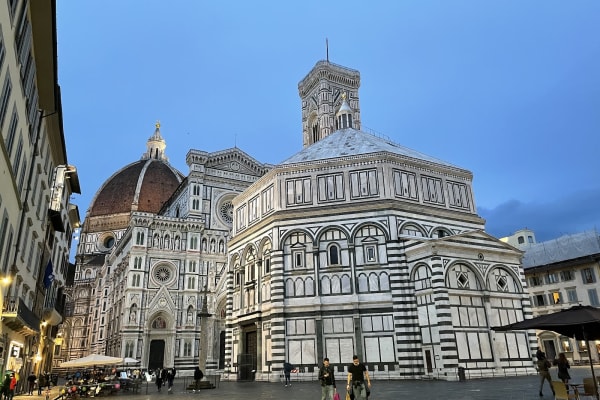
The first appeal of Palazzo Vecchietti lies in its location: in the heart of Florence, within that dense urban fabric where, in a matter of minutes, one moves from a shopping street to a historic square, from a church to a museum, from a discreet café to an artisan’s window. This centrality is more than a practical advantage; it shapes the way the city is experienced. From the hotel, Florence reveals itself on foot, at a very natural rhythm of outings, returns, pauses and improvisations. One can leave early to enjoy softer light on the façades, come back at midday, head out again at dusk, and then easily recover the calm of the address.
The property itself favours an intimate scale. This is one of its most valuable qualities in such a heavily visited destination. Where some central hotels rely on bustle or on a form of monumentality that can feel impersonal, Palazzo Vecchietti opts for a quieter atmosphere. That sense of intimacy does not mean austerity. It is expressed instead in the way the spaces seem designed to create gentle transitions between city and rest: attentive arrival, measured circulation and volumes that retain something residential.
The historic charm and modern comfort highlighted among the hotel’s distinguishing features are not abstract notions here. In a well-interpreted old building, comfort should not erase character; it should make it liveable. That is precisely what seasoned travellers in art cities tend to seek: the truth of place without giving up sleep quality, ease of service, the efficiency of a front desk available at all hours, or the feeling of being expected. Palazzo Vecchietti appears to answer that expectation through an elegance without stiffness, in which refinement comes more from coherence than from theatrical effect.
This address particularly suits guests who want to experience Florence from a central yet non-intrusive base. For a couple, it offers the pleasure of a discreet refuge after museums and long walks. For a business stay, it allows meetings and cultural interludes to flow together with ease. For a first visit or a return to the city, it has a precious advantage: it does not impose a programme. It accommodates different ways of travelling, whether the days are devoted to Florentine Renaissance masterpieces, shopping, galleries, churches or simply observing urban life.
The historic building also plays an essential role in how the place is perceived. In Florence, one quickly understands that the finest experiences are not always the most spectacular. They often reside in the curve of a staircase, the height of a ceiling, filtered light, or an old material in dialogue with contemporary design. Palazzo Vecchietti belongs to that logic of sensitive detail. It does not need to overstate itself to persuade. Its identity comes from a well-judged address, a genuine heritage setting and a small-scale hospitality particularly suited to travellers looking for a more inward, more hushed Florence without giving up the energy of the centre.
Rooms and Suites
At Palazzo Vecchietti, a room is not merely a space between two excursions; it extends the Florentine experience.
After a day spent walking through a bustling city, returning to a tranquil interior transforms the stay. In an intimate setting, one expects more than standard comfort. There is a search for seclusion, aesthetic continuity, and genuine rest.
The historical backdrop of the building adds weight to the character of the place. In a Florentine urban palace, the balance lies in the preserved architecture and contemporary comfort. The traveller appreciates this union. Residing in an ancient space without sacrificing modern conveniences makes the heritage more accessible.
In a small hotel, the rooms and suites feel less interchangeable. Here, one seeks an ambiance, a play of light, a relationship with the street's silence or the vibrancy of the centre. In Florence, this matters. The city can be intense. Finding a space to read, work, prepare for dinner, or simply do nothing contributes to the quality of the journey.
For couples, this type of room offers an elegant refuge, understated yet refined. For business travellers, the advantages are equally clear. Central location, relative calm, attentive reception, daily room service, and turn-down service enhance the stay.
The daily room service and turn-down service reinforce this impression of discreet care. These gestures maintain a continuity of comfort. One returns to a tidied room, ready for the evening or a new day. In a historic hotel, this level of upkeep is as significant as the decor.
The rooms and suites at Palazzo Vecchietti are envisioned as breathing spaces in the heart of Florence. Their balance rests on historical character, a muted atmosphere, contemporary comfort, and attentive service.
Dining
The Palazzo Vecchietti does not boast its own gastronomic scene. Situated in the heart of Florence, its dining experience discreetly complements your stay.
In this intimate hotel housed within a historic building, the culinary experience often follows the rhythm of your travels. This approach suits Florence well, where the external dining options are plentiful.
In Florence, guests often prefer a central yet tranquil location. This allows for easy access to cafés, trattorias, contemporary restaurants, wine bars, and hidden gems in the historic centre.
In this light, the Palazzo Vecchietti serves as an elegant anchor point. Here, you can flexibly plan your days and evenings.
Enjoy a leisurely breakfast, return in the late afternoon, and then choose a dinner based on your current cravings. In Florence, this freedom often proves more suitable than a fully scheduled itinerary.
Luxury also lies in this freedom—the ability to start your day without haste and then reserve a table according to your desires.
Travellers familiar with art cities appreciate this flexibility. It allows for spontaneity, which can often be pivotal during an Italian stay.
In this context, the concierge naturally extends the gastronomic experience. Available 24/7, they guide you to dining options that align with the style of your visit.
Whether it’s a romantic dinner, a quick lunch between two visits, a traditional eatery, or a more discreet venue for a business meeting, this mediation is invaluable in a bustling city.
In Florence, dining extends beyond just restaurants. Coffee, aperitifs, or a gourmet stop all contribute to the same art of living.
A centrally located hotel like the Palazzo Vecchietti allows you to embrace this culture in segments. You venture out early, return late, and adjust your plans according to the weather or your mood for the day.
Without attempting to concentrate the entire culinary experience within its walls, the Palazzo Vecchietti offers a serene setting and attentive support, enabling you to fully enjoy Florence through its flavours and local customs.
Concierge & services
In a city as in demand as Florence, the quality of services often makes the difference between a stay that is merely well located and one that feels genuinely seamless. Palazzo Vecchietti, through its intimate scale and five-star positioning, appears to place particular emphasis on that ease. The known amenities point in this direction: 24-hour concierge, 24-hour front desk, daily housekeeping, turndown service, luggage storage, laundry, wake-up service and multilingual staff. Taken separately, these may seem expected; taken together, they define an attentive form of hospitality designed to lighten the stay at every stage.
A 24-hour concierge is especially valuable in Florence’s historic centre. Travellers often arrive at unusual hours and must navigate museum reservations, transfers, changes of plan or last-minute requests. Being able to rely on a team available at all times brings a discreet sense of security. It is also a considerable time-saver in a city where days are often full. A good concierge does more than respond; it anticipates, prioritises and simplifies. It knows how to suggest a quieter route, recommend the right time slot for a visit, direct guests to an appropriate table or help shape a day without unnecessary friction.
The 24-hour front desk follows the same logic. In a characterful hotel, this service is less a formality than a sign of continuity. It ensures that one can arrive late, leave early, ask for assistance or simply find a reliable point of contact at any hour. For international travellers, couples on a city break and business guests alike, that availability contributes to a very tangible sense of calm.
Daily housekeeping and turndown service belong to a quieter but equally important category of comfort. In a city where one walks a great deal and alternates between visits, meetings and evenings out, returning to a perfectly kept room changes the quality of the evening. Turndown adds that end-of-day attention that distinguishes well-run houses: not ostentatious luxury, but a way of preparing rest. Laundry, luggage storage and wake-up service are equally useful, especially for short stays, multi-stop Italian itineraries or early departures.
The multilingual staff also deserves mention. Florence welcomes a highly international clientele, and the quality of human exchange remains central to luxury hospitality. Being understood without effort, being able to make a precise request, receiving a nuanced recommendation or a clear explanation of local customs all form part of real comfort. In a small-scale address, this relational quality stands out even more, because it reinforces the feeling of personalised rather than standardised service.
Ultimately, the services at Palazzo Vecchietti seem to answer a mature idea of urban luxury: making the city more accessible, simpler and more enjoyable without flattening it. They do not seek to distract from the destination; on the contrary, they allow guests to enjoy it better. For a stay in Florence, that is perhaps one of the most convincing forms of refinement.
The Florentine art of living
Choosing Palazzo Vecchietti also means choosing a particular way of experiencing Florence. Not by mechanically collecting the city’s must-sees, but by entering the specific rhythm of a place that reveals itself as much through daily habits as through masterpieces. The hotel’s central location encourages precisely this approach. It allows guests to cross Florence on foot, return easily to their base, and alternate moments of cultural intensity with looser intervals in which one simply watches the city at work.
Florence is often approached as a concentration of art history, and of course it is. But to reduce a stay to a succession of visits would be to miss its way of life. The city is also understood in the way light moves across stone in the early morning, in the animation of a shopping street, in the relative silence of a cloister, in a coffee taken standing at the bar, in the time devoted to choosing a notebook, a leather good, a fabric or an art book. An address such as Palazzo Vecchietti, discreet and central, is especially well placed to accompany this more nuanced reading.
Guests can therefore shape their days with flexibility. Leave early to enjoy the streets before the crowds, devote a few hours to the major sights, then move towards lighter sequences: a bookshop, a gallery, an artisan’s boutique, a pause on a less exposed square. Return to the hotel in the middle of the day, rest, then head out again towards another quarter or dinner. This freedom to move back and forth is a real luxury in a dense city. It avoids the fatigue of an overpacked programme and allows one to feel Florence changing with the hours.
The Florentine art of living also depends on precision. Details matter here: the cut of a garment, the quality of paper, the patina of wood, the sobriety of an interior, the accuracy of a service gesture. Palazzo Vecchietti, with its elegant and warm atmosphere, appears to belong to this culture of controlled detail. This is not local folklore, but an old urban sensibility in which beauty is embedded in everyday use. For the visitor, that translates into an experience deeper than simple contemplation: one senses continuity between heritage, craftsmanship, hospitality and ways of living.
The shoulder seasons, especially spring and autumn, suit this approach particularly well. The city is then more conducive to walking, detours, terrace pauses and longer visits without the pressure of summer heat. It is also when one most appreciates a central refuge capable of offering calm between urban sequences. The advice to book museums in advance remains sound, as Florence stays in high demand; but once that practical side is secured, the finest part of the stay often lies in what was not entirely planned.
In short, Palazzo Vecchietti speaks to travellers who want to experience Florence with precision rather than haste. Its luxury is not to remove the guest from the city, but to provide the right conditions to inhabit it a little better: on foot, at one’s own pace, in balance between culture, comfort and openness to the unexpected.
Book with MyConciergeHotel
Booking Palazzo Vecchietti through MyConciergeHotel means approaching the property in the right way: with a stay considered in advance, yet without rigidity. In a city such as Florence, where visitor flows remain strong for much of the year and the best time slots disappear quickly, preparation is part of the experience. It is not about over-planning everything; it is about travelling more freely once on site. For an intimate hotel and a member of Small Luxury Hotels of the World, such anticipation makes even more sense, as availability is naturally more limited than in larger properties.
The value of assisted booking lies first in suitability. Not every traveller is looking for the same Florence. Some prioritise a highly cultural stay centred on museums and churches; others want a romantic escape shaped by walks, good tables and time to rest; others still combine business appointments with time to discover the city. An address such as Palazzo Vecchietti, thanks to its central location, warm atmosphere and more confidential scale, can suit these different profiles provided the stay is well calibrated: duration, season, pace, service expectations and organisation of visits.
MyConciergeHotel makes it possible to place the hotel within a coherent whole. The role is not simply to confirm a room, but to help give shape to the journey. In Florence, that may mean recommending the most pleasant periods, stressing the importance of booking museums in advance, organising highlights without overloading the days, or ensuring that the experience remains smooth from arrival and settling in to discovery and departure. In such a dense city, that discreet orchestration makes a real difference. It avoids wasted time, reduces last-minute compromises and protects what matters most: mental availability.
For couples, booking with guidance often helps balance the essentials with more personal moments. For business travellers, it is a way to optimise a tight agenda while preserving genuine access to the city. For seasoned Italy travellers, it offers reassurance that the property has been chosen with precision and that the stay has been prepared accordingly. Palazzo Vecchietti does not lend itself to undifferentiated hotel consumption; it is best selected for what it truly is: a historic, central and intimate refuge suited to a subtler reading of Florence.
Booking early remains advisable, especially in spring and autumn, when visiting conditions are often at their best. This applies as much to the hotel as to major museums and sought-after tables. Once those elements are secured, the stay can recover all its flexibility. That, ultimately, is where the value of good support lies: not in multiplying interventions, but in creating the conditions for a simpler, more accurate and more fluid journey.
With MyConciergeHotel, Palazzo Vecchietti is therefore understood not as a mere room in central Florence, but as the balancing point of a tailored stay. A place of character, chosen with discernment, for experiencing the city with greater comfort, calm and precision.