History & heritage
Waldorf Astoria Dubai Palm Jumeirah belongs to a newer chapter of luxury hospitality than Europe’s grand palace hotels, yet it draws on a very clear lineage: that of a brand born in New York and long associated with ceremonious service, quiet elegance and carefully orchestrated comfort. In Dubai, that heritage takes on a distinctive form. It is expressed not through antique panelling or royal anecdotes, but through the translation of a classic art of hospitality into a resolutely contemporary setting: Palm Jumeirah and its seafront facing the Arabian Gulf.
What makes the address compelling is precisely this balance. On one hand, the hotel belongs to the codified world of international luxury brands, with all the consistency of service, attention to detail and high standards of welcome that implies. On the other, it engages with Dubai’s own identity: a city built at remarkable speed, yet one that has made hospitality a strong cultural marker. Here, luxury does not attempt to imitate a past that is not its own; it embraces a contemporary aesthetic, generous and light-filled, designed to frame space, sea views and the mild winter climate for which the emirate is known.
The Waldorf Astoria name also suggests a certain sense of arrival. In this hotel, that promise is conveyed less through display than through an impression of order, calm and ease. The scale of the interiors, the sightlines and the relationship to natural light all contribute to the feeling of entering a place apart, where guests come both to step away from the city’s pace and to enjoy it. This dual purpose matters in Dubai: many travellers want access to attractions, restaurants and shopping, while still returning in the evening to a more restful environment.
The hotel therefore appeals to an international clientele familiar with the codes of the contemporary luxury beach resort. Couples on a short escape, families on holiday, travellers marking a special occasion: all can find here a coherent reading of luxury based on space, service and setting. Direct beach access, views over the Arabian Gulf and a clear focus on wellbeing place the property within the tradition of the high-end resort, yet with a more urban and more structured signature than that of a simple seaside hotel.
Within the context of Palm Jumeirah, the Waldorf Astoria occupies an interesting position. The man-made island has become one of Dubai’s most recognisable symbols, and staying here means experiencing a very specific local imagination: that of a destination that has made architecture, engineering and hospitality central to its story. The hotel is a refined expression of that ambition, not as a showpiece monument, but as a place designed for enduring comfort. Its heritage is therefore twofold: that of an international house with well-established rituals, and that of a beachside Dubai that has learned to combine ambition, comfort and a strong sense of service.
The setting
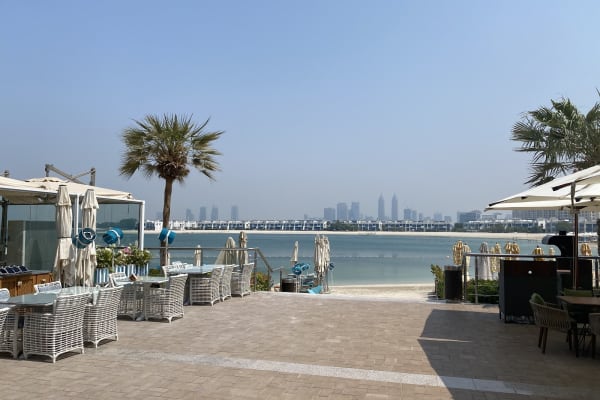
Staying at Waldorf Astoria Dubai Palm Jumeirah means choosing an address whose location is central to the experience. Set on Palm Jumeirah, the hotel enjoys a distinctive setting within Dubai: a man-made island that has become one of the city’s emblems, at once residential, beach-oriented and striking in concept. This position allows for a privileged relationship with the sea, with open views across the Arabian Gulf and a sense of relative remove, while Dubai’s main points of interest remain reachable by car.
The first quality of the setting is this sense of breathing space. Where some downtown addresses favour verticality and urban intensity, Palm Jumeirah offers a more horizontal experience, more closely tied to the horizon and the rhythms of the shoreline. The eye moves between gardens, terraces, beach and sea. For many travellers, this changes the nature of the stay: one is not simply sleeping in a luxury hotel, but adopting a slower tempo shaped by bright mornings, afternoons by the water and evenings in which the city feels slightly held at bay.
Direct beach access strengthens this impression of a complete resort. In a destination where the quality of the seafront matters as much as proximity to attractions, this immediate relationship with sand and swimming is a genuine advantage. It makes it easy to alternate between beachside relaxation, family time and outings to Dubai’s livelier districts. The setting suits both restful breaks and more active holidays, which helps explain why the hotel appeals to couples and families alike.
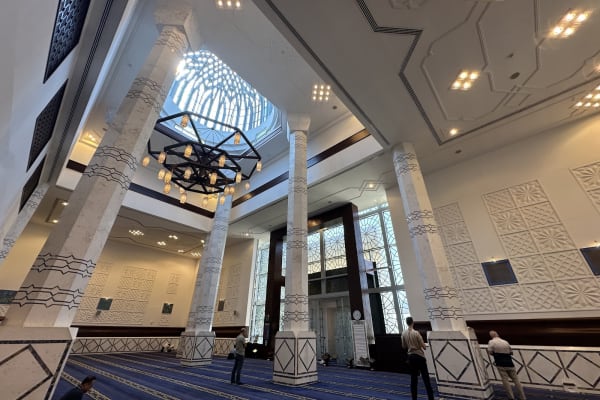
The architecture and public spaces support this reading of the place. Without relying on decorative excess, the property aims to create an atmosphere of composed refinement: clean lines, generous volumes, fluid circulation and a constant presence of light. In a climate where outdoor living plays an essential role for much of the year, the transition between interiors and open-air areas matters greatly. Terraces, poolside spaces, beach access and lounges offer varying degrees of privacy and activity, allowing guests to shape the stay to their own rhythm.
The winter season is often regarded as the most pleasant time to discover Dubai, and the hotel makes full use of it. Milder temperatures make outdoor days especially enjoyable, whether for breakfast facing the sea, time on the beach or a long dinner on a terrace. This seasonal softness contributes to the property’s popularity and helps explain why booking ahead is often wise during the busiest periods.
Finally, the Palm Jumeirah location allows the hotel to reconcile two expectations that are often difficult to combine: the feeling of a resort holiday and access to an international metropolis. Dubai’s restaurants, shopping and attractions remain within reach, yet the hotel retains the identity of a retreat. This is perhaps its most enduring quality: offering a stable, elegant and legible base in a city that values movement, novelty and spectacle. For the traveller, that means something simple but valuable: the ability to experience Dubai fully without giving up the calm of a true seaside stay.
Rooms and suites
In a hotel of this category, the room is not merely a place to sleep; it is an essential extension of the overall experience. At Waldorf Astoria Dubai Palm Jumeirah, that principle is expressed through an approach to comfort based on space, light and continuity with the seafront setting. Accommodation is conceived as a place of retreat where, after the beach, dinner or a city outing, guests return to an atmosphere of order and restfulness. Views over the Arabian Gulf, where available, play a central role: they are not simply a visual pleasure, but an element that shapes the stay and constantly recalls the singularity of the location.
The style one expects in an address of this kind generally favours a clear, international elegance without excess. The emphasis is on pleasing materials, calming palettes, comfortable furnishings and a fluid organisation of space. In Dubai, where the light is strong and the relationship to the outdoors is important, this controlled restraint works especially well. It allows the room to remain a tempered refuge conducive to rest while still preserving a sense of openness. Large windows, clear sightlines and the quality of the bedding matter as much as the more immediately visible decorative elements.
Suites, meanwhile, answer different needs. They suit longer stays, family travel or guests seeking more privacy and volume. In a Palm Jumeirah resort, having a separate sitting area or more clearly divided zones can make a marked difference to daily comfort, especially when the stay alternates between beach time, spa treatments, meals on site and excursions into the city. This spatial generosity forms part of the legitimate expectations of a five-star clientele, and the hotel belongs to that tradition of accommodation conceived as a temporary living space rather than simply a hotel room in the narrow sense.
Service also plays a decisive role in how the rooms are experienced. Daily housekeeping and turndown service contribute to the feeling of a stay managed with precision. These are sometimes discreet gestures, yet they matter greatly in luxury hospitality: returning to a room restored after a day in the sun, feeling the rhythm of the stay supported without visible effort, sensing that the practical side of travel is handled without ever becoming intrusive. This kind of attention is particularly appreciated in a holiday destination, where guests expect the hotel to simplify life.
For couples, the room often becomes a privileged vantage point over the sea and the lights along the shoreline. For families, it must remain practical, comfortable and calm enough to absorb the different moments of the stay. One of the strengths of Waldorf Astoria Dubai Palm Jumeirah is that it can answer both expectations without contradiction. The register remains refined, yet the use is straightforward. One can spend time there without feeling confined to a static set.
Ultimately, the rooms and suites are fully part of the hotel’s identity: a structured, calm resort luxury oriented towards wellbeing and the clear legibility of comfort. In a city where high-end options are abundant, that coherence matters. It makes the accommodation not merely an expected standard, but a genuine component of the pleasure of staying on Palm Jumeirah.
Dining
In Dubai, dining is an integral part of the travel experience. Over just a few decades, the city has developed a notably international culinary scene, bringing together major hotel restaurants, destination dining, world cuisines and more relaxed addresses shaped by the shoreline. In that context, a property such as Waldorf Astoria Dubai Palm Jumeirah cannot be content with merely functional food service: it must offer a genuine continuity of style between accommodation, setting and table. Even without detailing each outlet here, dining can be understood as one of the pillars of the stay, alongside the beach and the spa.
The first pleasure in a Palm Jumeirah resort lies in the rhythm of meals. Breakfast often takes on particular importance. It opens the day in the light of the Gulf, in an atmosphere that is still calm, before beach activities or departures into the city. In an address of this kind, guests expect smooth service, a sufficiently broad offering for an international clientele and a setting that encourages them to linger. For holidaymakers, this meal can become a central ritual, almost a marker of the stay itself.
Lunch and lighter meals belong more closely to the life of the resort. Between swims, after a restful morning or before heading to the spa, dining needs to remain flexible, pleasant and suited to the uses of a high-end beach hotel. That generally implies attention to freshness, well-executed simplicity and ease of service. In a destination that is warm for much of the year, the manner of lunch matters as much as what is on the plate: one looks for well-considered spaces, a natural transition between indoor and outdoor areas, and a sense of effortlessness.
Dinner introduces a different tempo. As evening falls, Palm Jumeirah takes on a quieter tone, and the hotel becomes as much a meeting place as a place to stay. Travellers who choose to dine on site expect a more composed atmosphere, suited to an evening for two, a family meal without logistical complication, or a discreet celebration. In a major international hotel, the quality of the dining offer is also measured by its ability to provide several registers: a more formal dinner, a simpler meal, a drink in an elegant setting, all without a break in tone from the rest of the experience.
The clientele at Waldorf Astoria Dubai Palm Jumeirah is naturally varied, and dining must accompany that diversity. Couples often seek intimacy, views and the feeling of an evening set apart. Families appreciate flexibility, clarity and the possibility of eating well without excessive formality. A strong resort can answer both expectations at once, maintaining a consistent level of service and an impression of quiet control.
Finally, dining in a hotel like this also means enjoying a very specific form of Dubai luxury: the ability to move from a day on the beach to a polished evening without leaving the property. That continuity is valuable. It avoids unnecessary dispersal, preserves the rhythm of a holiday and reinforces the idea that the hotel is not simply accommodation, but a complete environment. Dining therefore plays an essential role: it punctuates the day, gives texture to the stay and contributes to the beachside art of living that Palm Jumeirah expresses particularly well.
Spa & Wellness
Wellness is central to the identity of the Waldorf Astoria Dubai Palm Jumeirah. The spa is one of the highlights of this establishment. In a beachfront hotel of this calibre, this aspect plays a significant role in the overall experience. Guests do not come here solely to see Dubai or enjoy the beach; they also seek a more mindful relationship with time, the body, and relaxation. The spa thus becomes a transitional space between the city's energy and the tranquillity sought on Palm Jumeirah.
What distinguishes a good hotel spa is not merely the treatment menu but how it integrates into the overall experience. In a resort oriented towards the sea, wellness often begins even before entering the treatment room. It is reflected in the morning light, the slowed pace of the days, and the alternation between swimming, resting, gentle movement, and targeted treatments. The spa gives a more precise form to this general disposition. It provides a setting to refocus, recover after travel, release tension, or simply indulge in a moment of silence and comfort.
For travellers exploring Dubai at a brisk pace, a treatment during their stay can serve as a balancing act. The city demands a lot: travel, climatic contrasts, visual intensity, and a multitude of activities. Returning to the hotel and dedicating an hour or two to wellness allows for a reintroduction of balance. Booking a treatment upon arrival often enables guests to select a more suitable time slot. This foresight is particularly beneficial during the winter season when visitor numbers are higher.
The spa also caters to very different uses. Couples find a moment to share, more intimate within their stay. Solo travellers often seek deep recovery, away from external demands. Families appreciate the opportunity for adults to carve out time for themselves within a more collective programme. This versatility is significant in a hotel suited for both romantic getaways and family stays.
Beyond treatments, the concept of wellness here refers to an overall quality. Direct access to the beach, a serene environment, attentive service, and the possibility to take one’s time all contribute. Luxury, in this context, is not merely about an abundance of facilities. It resides in the coherence between the various moments of the day. A morning by the water, a visit to the spa, a light lunch, a nap in the room, followed by a more formal evening. This sequence creates a very comprehensive experience of contemporary relaxation.
In Dubai, where high-end hospitality often competes with spectacular effects, wellness represents a quieter form of distinction. The Waldorf Astoria Dubai Palm Jumeirah makes it a strong pillar of its identity. For the traveller, the stay can thus be envisioned as a rejuvenation of both body and mind, in a maritime setting conducive to relaxation.
Concierge & Services
The measure of luxury hospitality often lies less in what is visible than in what operates seamlessly. At the Waldorf Astoria Dubai Palm Jumeirah, this aspect is built on discreet and consistent services. The 24-hour concierge and the continuously open reception set the tone. The hotel accommodates various travel rhythms, from late arrivals and early departures to last-minute requests.
In Dubai, this availability is particularly significant. Flights arrive at odd hours, and schedules change rapidly. An efficient concierge guides, simplifies, recommends, confirms, and organises. Their presence reassures and smooths the stay. It is one of the most tangible markers of a great hotel.
The daily room service ensures a regular base of comfort. The evening turndown service enhances the return to the room at night. Luggage storage, laundry, and wake-up calls fall under practical services. Yet, they fully contribute to the experience, allowing for lighter travel and better management of transitions.
The multilingual staff also plays a crucial role. Dubai welcomes a global clientele. The quality of interaction hinges on the ability to understand diverse expectations and respond accurately. In luxury hospitality, service relies on listening, tempo, and phrasing. It knows how to be present without being intrusive, precise without rigidity, warm without excessive familiarity.
For families, these services significantly lighten the stay. For couples, they create an impression of natural continuity. In both cases, they free up mental space for enjoyment, relaxation, and exploration.
At the Waldorf Astoria Dubai Palm Jumeirah, services are not ancillary. They form the invisible framework of the stay. It is through them that the establishment asserts its high-end comfort, in concrete gestures that make each day simpler and smoother.
The Dubai art of living
Staying at Waldorf Astoria Dubai Palm Jumeirah also means approaching a certain idea of Dubai, beyond the quickest clichés. Certainly, the city impresses through its architecture, infrastructure and taste for controlled grandeur. Yet it is also discovered through subtler habits: the way the shoreline is lived, the role hotels play in urban sociability, the importance of meals, promenades, shopping, wellbeing and time spent outdoors when the season allows. Palm Jumeirah captures this side of the emirate particularly well, somewhere between contemporary resort life and metropolitan living.
The great advantage of staying on the island is that it allows for a more nuanced reading of the destination. One is neither entirely in the business centre nor in complete beachside isolation. Instead, one occupies a very Dubai-like in-between, where the day can begin facing the sea, continue in a shopping or cultural district, and return to calm by late afternoon. This alternation is part of the local pleasure. Dubai is not experienced only as a succession of attractions, but as a city of organised contrasts, where ease of movement and the quality of services allow travellers to set their own rhythm.
Winter is the season that best reveals this art of living. Milder temperatures restore terraces, beaches, outdoor activities and long evenings to their full appeal. One understands why so many travellers choose this period: the city becomes more breathable, more walkable in places, more enjoyable in its open spaces. From Palm Jumeirah, this softness is felt immediately. In the morning, the light on the Arabian Gulf gives the stay an almost meditative tone; in the evening, outings and dinners take on a more relaxed quality.
Dubai is also distinguished by its cosmopolitanism. Visitors encounter influences from everywhere, in the languages heard, the cuisines offered, styles of dress and patterns of consumption. This diversity does not erase local identity; it recomposes it within a highly international framework. For the traveller, this means great freedom of use. One may seek a deeply restful experience centred on beach and spa, or instead multiply discoveries, restaurants, shopping and outings. Waldorf Astoria Dubai Palm Jumeirah works particularly well within this logic because it offers a point of balance between these different desires.
The Dubai art of living is also a particular relationship to service. In the best addresses, everything is designed to reduce friction: easier movement, constant welcome, readily available dining, spaces conceived for climatic comfort. This fluidity is part of local luxury. It is not incidental; it allows guests to enjoy fully a city that might otherwise feel intense. From a well-located hotel on Palm Jumeirah, that intensity becomes chosen rather than imposed.
In that sense, the property does more than accommodate its visitors: it offers them a way of inhabiting Dubai temporarily. A way shaped by sea views, well-paced days, freedom of movement and a return to calm. For travellers wishing to understand the city without giving up relaxation, it is a particularly relevant base, capable of bringing the energy of the metropolis into dialogue with the simple pleasure of a stay by the sea.
Book with MyConciergeHotel
Booking Waldorf Astoria Dubai Palm Jumeirah through MyConciergeHotel means approaching the stay not as a simple transaction, but as an experience to be prepared with method and discernment. In a destination as sought-after as Dubai, and especially on Palm Jumeirah, the quality of the journey often depends on details decided in advance: the chosen period, the room type, the value of a sea view, the desired balance between resort time and city time, or the early reservation of key moments such as a spa treatment. Editorial and concierge guidance helps turn those choices into a coherent stay.
The first value of a well-considered booking lies in matching the hotel to the traveller’s profile. Waldorf Astoria Dubai Palm Jumeirah suits couples seeking an elegant seaside interlude, but also families wishing to combine comfort, beach access and reliable services. This dual positioning is a strength, provided the most suitable configuration is selected. Depending on the length of stay, the season and the intended use of the hotel, some accommodation categories or holiday rhythms will be more relevant than others. This is where an expert perspective becomes meaningful.
The winter season deserves particular attention. It is one of the most pleasant times to discover Dubai, thanks to milder temperatures and a more active outdoor life. It is also a period when demand can be strong. Booking ahead not only helps secure the best availability, but also makes it possible to shape a smoother programme: flight times that work with the stay, spa slots, the organisation of outings, and time genuinely preserved to enjoy the beach and the hotel’s facilities.
Booking through MyConciergeHotel also means benefiting from a more qualitative approach to information. Rather than getting lost in a mass of generic promises, travellers can rely on a clear reading of the property’s real strengths: its location on Palm Jumeirah, views over the Arabian Gulf, direct beach access, a wellbeing-focused spa, and suitability for both couples and families. That hierarchy is valuable. It helps determine whether the hotel truly matches one’s idea of Dubai: a deeply beach-oriented stay, a balance between relaxation and outings, or a restful pause in an upscale setting.
The benefit of concierge support ahead of arrival is also practical. It may involve highlighting the importance of booking a treatment on arrival, advising on a realistic length of stay, helping to think through transfer times, or simply guiding guests towards a smoother experience. In luxury hospitality, the success of a trip often lies in this invisible preparation. It avoids last-minute compromises and allows guests to enter the stay with an immediate sense of ease.
Ultimately, choosing MyConciergeHotel to book Waldorf Astoria Dubai Palm Jumeirah means favouring a very contemporary form of luxury: time well used, the right decisions at the right moment, and a stay that genuinely reflects one’s expectations. In a destination where the offer is abundant, that precision makes the difference. It turns a fine address into an experience that feels right, clear and lastingly memorable.