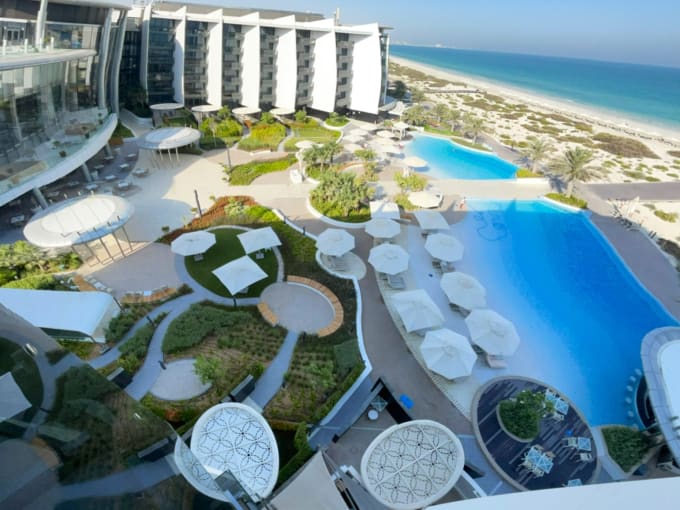
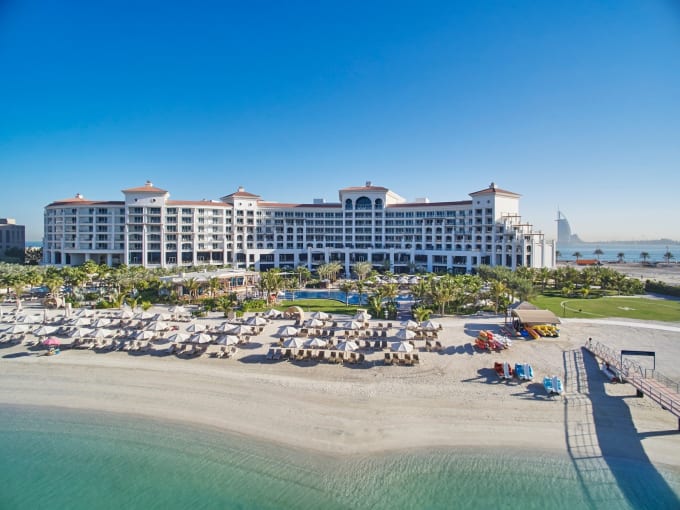
In the United Arab Emirates, seaside hotels hold a unique position. They offer more than just a beach; they create a precise relationship with the coastline. Between the Arabian Gulf, private islands, the long stretches of Jumeirah's sands, and the calmer shores of Ajman or Saadiyat, the country has developed multiple visions of the beach holiday. Some prioritise architectural icons, while others focus on space, intimacy, or the sensation of escape just a short distance from urban centres. This makes this segment particularly intriguing. In Dubai, the waterfront engages in a dialogue with the city and its rhythms. In Abu Dhabi, it often takes on a more residential tone. On Sir Bani Yas Island, it transforms yet again, becoming a refuge, almost insular.
To establish this ranking, we have selected clear and verifiable criteria. First, the actual relationship to the sea: direct beach access, shoreline quality, views, a sense of openness, and coherence between architecture and coastal environment. Next, the level of hospitality: we assess brand reputation, service consistency, quality of communal spaces, and the hotel's ability to fulfil its promises. We also consider the specific destination; a hotel on Palm Jumeirah does not meet the same expectations as one on Saadiyat Island or Sir Bani Yas Island. Finally, we look at usage: whether it's a couple's getaway, a family break, a weekend from Europe, a more discreet retreat, or a grand resort experience. It is important to note that this ranking does not solely reward a beach; it distinguishes a way of inhabiting the coastline.
The Emirati landscape is more varied than one might imagine. The general public often remembers the most famous silhouettes of Dubai. However, the local waterfront cannot be reduced to a single image. The Burj Al Arab Jumeirah embodies a form of instantly recognisable icon. The Four Seasons Resort Dubai at Jumeirah Beach offers a more classic and urban interpretation of the beach resort. The Jumeirah hotels within the Madinat Jumeirah complex, such as Jumeirah Al Naseem, Jumeirah Al Qasr, Jumeirah Mina A'Salam, and Jumeirah Dar Al Masyaf, develop a more landscaped relationship with the sea. Anantara The Palm Dubai Resort and Jumeirah Zabeel Saray present Palm Jumeirah in two different registers. Further afield, Jumeirah Saadiyat Island and Fairmont Ajman remind us that the Emirati coastal experience extends beyond Dubai. Anantara Sir Bani Yas Island Al Yamm Villa Resort opens up a rarer avenue.
For 2025 and 2026, several trends are becoming clear. The first concerns intimacy. Travellers are seeking less social visibility and more space, fluid access, well-oriented villas or suites, and beaches that maintain a sense of breathing room. The second relates to the clarity of the stay. A good seaside hotel should immediately convey its rhythm: is it a place to alternate between city and beach, to stay for several days, or to truly isolate oneself? The third trend pertains to the maturity of family luxury. In the UAE, several resorts now manage to balance children, relative calm, and structured service. Finally, environmental considerations are increasingly influencing expectations. Without excessive discourse, our advisors observe that the quality of the landscape, shoreline preservation, and flow management are more significant than ever in the final choice.
At MyConciergeHotel, we also approach these addresses with a French sensibility towards luxury. This does not mean seeking ornate decor or constant demonstration; it means favouring precision over effect. A great seaside hotel succeeds when it creates a clear experience. The arrival should be straightforward. Circulation should be calming. The room should frame the stay. Dining should support the day's rhythm without weighing it down. Service should know how to be present and then recede. In this region, where hospitality can sometimes favour monumentality, the best addresses are often those that master restraint. My advice is simple: look beyond mere name recognition. Observe how the hotel showcases the sea. This is often where the difference lies between a lovely stay and a truly well-chosen experience.
It is also essential to read this ranking without a reflex for superlatives. Number one is not the only valid answer. Each hotel listed here corresponds to a specific use. Some travellers want an iconic address close to Dubai's active districts. Others prefer a long beach, a more serene atmosphere, or an island setting. Some seek the efficiency of a large international resort, while others favour a more enveloping experience with gardens, villas, or lagoons. What our advisors often observe is that a successful stay depends less on displayed prestige and more on the alignment between the hotel and the travel project. A couple on a short stay will not necessarily choose like a family. A regular visitor to Dubai will not choose like a first-time guest. This top 10 should thus be read as a targeted, reasoned, and useful selection.
Here is our take on the best seaside hotels in the United Arab Emirates. We have prioritised addresses that give the coastline a central role, not just as a backdrop but as an experience.