History & heritage
In Dubai, the notion of hotel heritage follows different codes from those of Europe. Here, history is not that of a 19th-century palace converted into a grand hotel, but of a coastal city that has, within a few decades, become one of the world’s most compelling laboratories of hospitality. Four Seasons Resort Dubai at Jumeirah Beach belongs precisely to that recent chronology: a destination where architectural ambition, service culture and seaside leisure have learned to coexist. In that context, the property holds a distinctive place. It does not attempt to imitate an imagined oriental past, nor does it retreat into a purely international vocabulary. Instead, it offers a contemporary reading of luxury in Dubai, where modern lines are tempered by discreet Arabic references.
The Four Seasons identity is central here. For many travellers, the brand stands first for consistency: assured welcome, attention to detail that never turns theatrical, and a rare ability to combine operational precision with a residential atmosphere. In a city where hotels often compete through visual impact, that restraint is already a signature. The Jumeirah Beach resort therefore appeals to those seeking balance rather than excess: the sea without isolation, the city without constant agitation, refinement without undue spectacle.
Its setting in Jumeirah is no coincidence. This stretch of Dubai’s coastline belongs to the city’s residential imagination, with villas, beaches, clubs and destination addresses shaping its character. For a hotel of this calibre, being here means taking a position within an urban landscape where quality of life matters as much as visibility. The resort benefits from that particular geography: facing the Gulf while remaining connected to the city’s cultural, retail and dining districts. This dual identity, both seaside and urban, explains much of its appeal.
The property’s heritage is therefore less that of a monument than of a hospitality savoir-faire applied to a strategic location. It rests on a simple but demanding promise: to provide a calm refuge in a city that rarely slows down. That translates into spaces designed for ease, service that anticipates rather than interrupts, and an aesthetic that favours coherence over spectacle. The result is a hotel that has established itself in Dubai as a place of continuity, valued equally for longer leisure stays and shorter restorative breaks.
In that sense, Four Seasons Resort Dubai at Jumeirah Beach says something accurate about the evolution of luxury in the Middle East: a luxury now less demonstrative than before, more attentive to lived experience, to the rhythm of a stay, and to the quality of transitions between room, beach, table and city. That maturity gives the property its depth. Not historical depth in the patrimonial sense, but the depth of use, reputation and style, which often matters more to the seasoned traveller.
The property
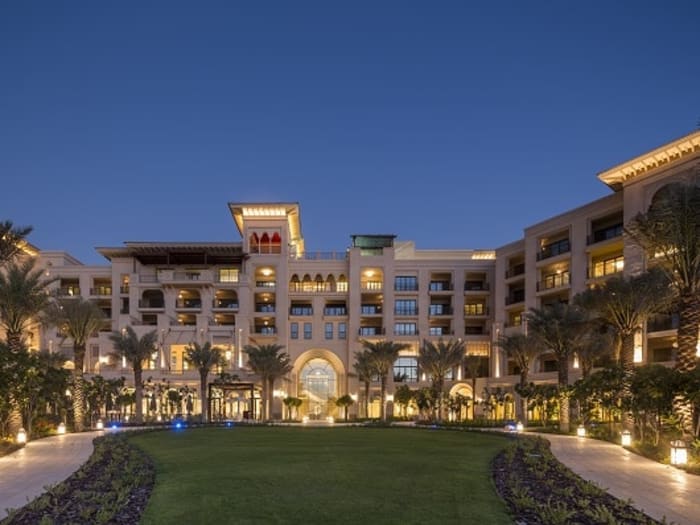
What first stands out at Four Seasons Resort Dubai at Jumeirah Beach is the way the property engages with its immediate setting. In Dubai, the line between an urban hotel and a seaside resort is often clear-cut; here, it becomes porous. The address offers direct access to Jumeirah Beach and sea views, while maintaining genuine proximity to some of the city’s most active districts. That position allows several stays to unfold within one: a morning by the water, lunch on a terrace, an afternoon in town, and a return to calm before dinner. Few hotels make that alternation feel so natural.
The architecture and layout contribute to that sense of ease. The resort favours a horizontal, open reading of space, with circulation areas that welcome light and create outward perspectives. Contemporary design is punctuated by Arabic touches, not as applied décor but as an atmospheric language: materials, patterns, tones and furnishing details that acknowledge the regional context without weighing it down. The whole remains legible and serene, conceived to age gracefully beyond passing trends.
Public areas are central to the experience. The on-site pools and restaurants structure the stay, offering different points of focus depending on the hour and the mood. One may seek the gentle animation of lunch, the quieter pause of an afternoon in the sun, or the sociable ease of dinner after a day in the city. In this way, the resort creates varied atmospheres without losing its unity. It is a hotel where one may withdraw or be seen, without either register fully dominating.
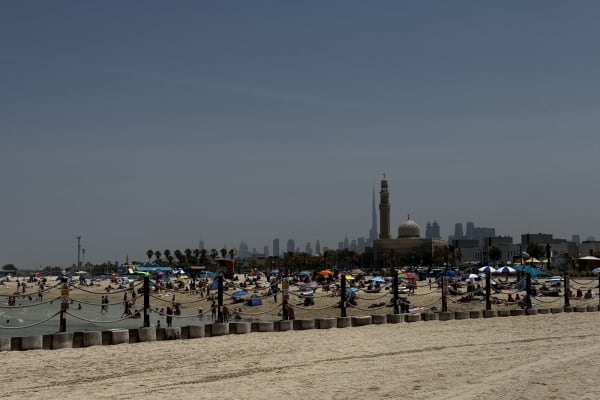
Its relationship with the beach deserves particular mention. Direct access to Jumeirah Beach is not merely a practical advantage; it fundamentally alters the perception of a stay. In Dubai, immediate proximity to the sea brings a distinct sensory clarity: softer light towards evening, an open horizon, and a naturally slower rhythm. For travellers more accustomed to city-centre hotels, that opening onto the shoreline changes the quality of time spent on property. The resort becomes less a base and more a temporary way of living.
Despite its resort dimension, the property retains a welcoming scale. It does not feel like an impersonal complex, but like an address designed so that guests quickly find their bearings, establish habits, and move from room to beach or from restaurant to lounge without unnecessary friction. That fluidity matters greatly in a high-end stay. It allows luxury to be expressed not through accumulation, but through ease.
In short, Four Seasons Resort Dubai at Jumeirah Beach is compelling because it brings together qualities not often combined with such precision: a peaceful setting within the city, a genuine relationship with the sea, a contemporary aesthetic tempered by local references, and public spaces designed to accompany the different rhythms of travel. It is less a backdrop than a well-considered mechanism for living well while away.
Rooms & suites
In a property of this calibre, a room should not merely be attractive; it should restore rhythm. At Four Seasons Resort Dubai at Jumeirah Beach, accommodation appears to have been conceived with that in mind. After Dubai’s visual intensity, one expects a hotel to provide a space where the eye can rest, where use is intuitive, and where one immediately regains a sense of order. The resort answers that expectation through an approach that privileges clarity of volume, quality of finish and measured elegance. The contemporary design already present in the public areas continues here with greater intimacy, enriched by Arabic touches that add depth without burdening the whole.
One of the property’s principal attractions naturally lies in its relationship with the sea. Marine views, where available, alter the tone of a stay: they open the room, extend the holiday feeling and establish a horizon often absent from major cities. In Jumeirah, that visual connection to the shoreline forms part of the experience itself. Even if little time is spent in the room, knowing that one returns to a space linked to the Gulf’s light changes the quality of rest.
Comfort is also expressed through service details. Daily housekeeping, turndown service, the responsiveness of a 24-hour front desk and the presence of round-the-clock concierge support create the sense of continuity that distinguishes leading hotels. Nothing ostentatious, but a series of attentions that make a stay easier: returning to a perfectly refreshed room, arriving late without any break in service, requesting logistical help or recommendations at any hour. In an urban resort, that permanent availability is especially valuable, as days do not always follow a fixed programme.
The rooms and suites suit both couples and families, which is not always the case in beachfront resorts. The overall atmosphere remains calm, with a cocooning quality that allows guests to recover between different parts of a trip. One can easily imagine slow mornings, curtains open to the light, coffee taken without haste before heading down to the beach or pool; but also evening returns after an excursion or a session of shopping, when the room once again becomes a tempered, quiet refuge, almost residential in its comfort.
What makes these accommodations successful, ultimately, is a delicate balance. They do not try to compete with the city in intensity, nor with the beach in picturesque effect. They offer something else: a form of luxurious neutrality in the noblest sense, meaning a décor sufficiently considered to be memorable, yet calm enough never to impose itself. In Dubai, that is a rare quality. It allows the room to become a genuine place of recovery rather than a mere extension of the hotel’s image.
For the discerning traveller, this is often where loyalty to an address is decided. One returns less for novelty than for the certainty of a particular comfort lived in practice: the right bed, the right level of quiet, the right light, service discreet yet available, and a sense of space and control. Four Seasons Resort Dubai at Jumeirah Beach appears to understand that expectation with precision, offering rooms and suites designed to accompany a stay rather than overstate it.
Dining
In a high-end urban resort, dining is never secondary: it structures the day, sets the tone for the evening and contributes directly to the memory of a stay. At Four Seasons Resort Dubai at Jumeirah Beach, the presence of on-site restaurants provides precisely that continuity. Guests do not come merely to eat between activities, but to establish a rhythm, choose an atmosphere, extend the beach, or mark the transition towards the city and the night. This ability to offer several dining moments within one address is one of the strengths of a well-conceived grand hotel.
Dubai’s dining scene is inherently cosmopolitan. Travellers tend to expect a wide range of influences, a high technical standard and service capable of adapting to varied uses: business breakfast, outdoor lunch, more dressed-up dinner, family meal or late snack. In that context, a property such as this distinguishes itself less through announcement than through execution. True luxury at the table often lies in precision: a well-oriented terrace, fluid service, respected pacing, a legible menu and an environment that allows both conversation and observation.
The seaside setting adds a particular dimension. Lunch near the pool or in a space open to the outdoors does not carry the same feeling as a meal taken in a purely urban hotel. The light, the proximity of the sea and the possibility of moving from beach to table without undue rupture give the stay an appreciated suppleness. For families, that means easier days to organise; for couples, a more spontaneous way to alternate between relaxation and a dining rendezvous; for business travellers extending a trip, a way of shifting the journey into a more pleasurable register.
Breakfast deserves special attention in a property of this kind. It is often the moment when one truly takes the measure of a hotel: the quality of morning service, the management of flow, the comfort of seating, the relationship with light, generosity without heaviness. In a beach resort in Dubai, it can become a genuine ritual, especially when the day opens onto the sea or carefully kept grounds. More than a meal, it establishes the tempo of the stay.
In the evening, dining serves another function. It becomes a space of sociability, gentle staging and sometimes a transition between the intimacy of the room and the energy of the city. The appeal of a hotel such as Four Seasons Resort Dubai at Jumeirah Beach lies precisely in allowing that gradation. One may choose to remain on property for a dinner without logistical effort, in an environment already understood, or use the hotel as an anchor before or after going out. In both cases, dining contributes to the sense of ease that defines a successful stay.
What remains in the memory is not simply the presence of several restaurants, but the way they fit into a coherent experience. They extend the property’s identity: contemporary, elegant, outward-looking and attentive to practical comfort. In a city where culinary choice is abundant, that coherence matters as much as variety. It allows the hotel to be more than accommodation with restaurants, but a temporary way of living where, if one wishes, an entire day may unfold without ever feeling repetitive.
Spa & wellness
Wellness in Dubai is not only about treatment; it is also a matter of rhythm. Between the heat, movement, the city’s visual intensity and the temptation to multiply activities, the body calls for genuine pauses. In a resort such as Four Seasons Resort Dubai at Jumeirah Beach, that dimension becomes especially important. The presence of pools, direct beach access and the property’s peaceful atmosphere already amount to a programme of restoration. Even without speaking of a spa in the strict sense, the hotel creates the conditions for a gradual, almost natural unwinding.
The beach plays an essential role. Walking on the sand early in the morning, settling by the sea before the day gathers pace, alternating between swimming and reading, returning to shade to slow down: these simple gestures acquire unusual value in a metropolis as symbolically dense as Dubai. Direct access to Jumeirah Beach makes this possible without transfers or complicated planning. Wellness begins with the removal of friction. One does not need to “go” somewhere to relax; one simply descends, crosses a few spaces, and lets the shoreline do its calming work.
The pools extend that logic. In grand hotels, they are not merely facilities; they define ways of inhabiting a stay. One reads there, lunches there, pauses between appointments, accompanies children, watches the day change. When well integrated into a resort, they become destinations in their own right. Here, they contribute to that sense of refuge within the city, offering an alternative to the beach depending on the hour, weather or mood. For some travellers, this is where contemporary luxury is decided: in the ability to choose one’s own tempo without leaving the hotel.
The property’s general calm reinforces the impression. Not every seaside hotel manages to preserve a serene atmosphere, particularly when welcoming both couples and families. Four Seasons Resort Dubai at Jumeirah Beach seems instead to cultivate a form of balance, where everyone can find space without the whole tipping into agitation. That quality is precious for mental rest. It allows guests to enjoy wellness facilities without feeling caught in an over-animated or overly codified scene.
In that context, treatments and wellness rituals, when one chooses to book them, ideally fit into a day already well composed: an active morning, a pause by the water, a treatment in the middle or late afternoon, a return to the room, dinner on property. It is this continuity that marks the difference between a hotel that is equipped and one that is genuinely designed for recovery. Service available at all hours also contributes to that sense of flexibility. Being able to organise one’s time without excessive constraint is a very concrete form of luxury.
Ultimately, wellness here is less about display than orchestration. Everything works towards slowing down: the nearby sea, open views, outdoor spaces, pools, calm and fluid service. For the contemporary traveller, often divided between the desire to explore and the need to recover, that combination is particularly relevant. It allows Dubai to be experienced not only as a destination of energy and contrast, but also as a place where one can truly rest.
Concierge & services
Luxury hospitality is often measured less by what is visible than by what works quietly in the background. At Four Seasons Resort Dubai at Jumeirah Beach, that truth takes a very concrete form through the services available and the way they support a stay. The 24-hour concierge and round-the-clock front desk first represent a promise of continuity. In Dubai, where late arrivals are common, plans may change at short notice and days readily extend into the night, such permanent availability is not merely a comfort: it is a condition of ease.
In a property of this level, the role of concierge extends far beyond practical management. Certainly, it facilitates reservations, transport, special requests and the organisation of daily life. But its real value lies in its ability to adjust a stay to the traveller’s profile. A couple will not inhabit the hotel in the same way as a family; a purely restorative break will not require the same support as an urban stopover punctuated by appointments. A good concierge understands these nuances and proposes solutions without burdening the experience. It is an intelligence of service rather than simple execution.
Core services matter just as much when they are properly maintained. Daily housekeeping and turndown service contribute to that sense of continuous care that distinguishes leading houses. Returning to a room put back in order after a few hours at the beach, finding in the evening an atmosphere prepared for the night, noticing that details have been anticipated: these gestures may appear modest, but they are decisive in the overall perception of a stay. They create an impression of constancy and reliability that often matters more than more visible effects.
The presence of luggage storage, laundry service and wake-up service also reminds us that a grand resort must know how to manage the realities of travel, not merely its fantasy. Stays in Dubai may be brief, segmented, combined with other destinations or shaped by professional obligations. In that context, the ability to have clothing cared for, to leave luggage securely or to organise an early departure without stress becomes valuable. Luxury here consists in absorbing logistical constraints so that more room is left for chosen time.
A multilingual staff, finally, contributes to the quality of welcome in a deeply international destination. Dubai brings together travellers from very different backgrounds, with habits, expectations and rhythms that may diverge considerably. A hotel’s ability to maintain a simple, clear and courteous relationship with that diversity is a genuine marker of maturity. It prevents misunderstandings, reassures, and allows each guest to feel immediately looked after without excessive protocol.
What truly distinguishes a great address, however, is not the sum of services but their orchestration. At Four Seasons Resort Dubai at Jumeirah Beach, the aim is that everything should feel natural: a request handled quickly, a need anticipated, an unforeseen issue resolved without drama, a stay kept light even when it involves complex logistics. This quality of execution is particularly important in a hotel welcoming holidaymakers, families and travellers accustomed to the highest international standards. When successful, it produces that rare sensation of being supported without ever feeling crowded. More than décor, that is often where a great hotel reveals itself.
The Dubai art of living
Staying at Four Seasons Resort Dubai at Jumeirah Beach also means choosing a certain way of inhabiting Dubai. Seen from afar, the city sometimes suffers from a reductive reading: skyline, shopping, architectural records, speed. All of that exists, certainly, but it does not exhaust the experience. From Jumeirah, another facet appears, more nuanced and almost more everyday: a coastline where life is lived outdoors for much of the year, where the sea structures the day, and where addresses are chosen as much for atmosphere as for status. The resort allows entry into precisely that subtler version of the city.
The Jumeirah district occupies a singular place in the local imagination. It evokes the beach, villas, a certain residential softness and proximity to sought-after places to spend time. For the traveller, that changes everything. One is not merely in a spectacular destination; one is in an environment with its own habits, rhythms and hours. Going out in the morning, following the shoreline, taking lunch without haste, returning to the hotel for a pause, then heading out again in the late afternoon when the light softens: that sequence says something about Dubai’s way of living when detached from clichés of performance.
Climate obviously plays a central role. The most agreeable months attract more visitors, and winter is a period of high demand precisely because the city then becomes especially hospitable. Terraces regain their full importance, the beach once again becomes an extended living space, and one better understands why certain addresses are so sought after at that time of year. In that context, a hotel offering both a peaceful setting, an opening onto the sea and simple connection to the rest of the city holds a genuine advantage.
Dubai is also discovered through contrasts. One may move from a calm seaside environment to denser districts, from a morning of relaxation to an afternoon devoted to urban pleasures, galleries, boutiques or destination dining. The appeal of Four Seasons Resort Dubai at Jumeirah Beach lies in providing a base that does not force a choice. The hotel allows guests to compose their stay freely, according to a very contemporary logic: neither isolated retreat nor total urban immersion, but a controlled alternation between energy and withdrawal.
This freedom is particularly appreciated by French and European travellers accustomed to stays where the hotel matters as much as the destination. Here, the address is not simply somewhere to return to after the city; it becomes a filter, almost an interpreter. It makes Dubai more habitable, more legible and gentler. One rediscovers the pleasure of returning at day’s end to a calm place, dining on property or extending the evening without complication, while knowing the city remains within easy reach.
The local art of living, in its most attractive form, lies precisely in this ability to assemble elements: international refinement, attentive hospitality, outdoor culture, a taste for good tables and a strong service ethic. Four Seasons Resort Dubai at Jumeirah Beach offers a convincing translation of that. It allows Dubai to be understood not as a succession of spectacular images, but as a city of stays, rituals and addresses. For those willing to look beyond appearances, that is perhaps where its true charm lies.
Book with MyConciergeHotel
Booking Four Seasons Resort Dubai at Jumeirah Beach through MyConciergeHotel means approaching the property through the logic of a stay rather than through price alone. In a hotel of this category, the quality of the experience often depends on details prepared in advance: the right time to travel, the atmosphere one seeks, the importance given to the beach, and whether the desired rhythm is calm or more active between sea and city. Well-supported booking can turn a very good hotel into a stay that feels genuinely tailored.
Dubai follows particular seasonal patterns. The most sought-after periods correspond to the months when the climate is at its mildest, especially in winter, when the city is lived outdoors and beachfront addresses become especially desirable. In that context, booking ahead has a concrete advantage. It offers more latitude over room categories, the organisation of the stay and the preferences that matter most once on property. For a hotel with direct beach access, such preparation is especially meaningful: the experience is not limited to sleeping by the sea, but to understanding how one wishes to inhabit the place.
MyConciergeHotel provides precisely that editorial and practical reading. The aim is not merely to secure a room, but to help define the right angle. A couple seeking rest will not have the same expectations as a family wishing to alternate between beach, pool and urban outings. Likewise, a traveller accustomed to major international brands may primarily seek consistency of service, while another may prioritise atmosphere, light, relationship to the sea or ease of movement. Asking these questions in advance allows the stay to be shaped with greater precision.
The value of specialist guidance is also measured in simple but decisive advice. In a sought-after address, certain habits are worth anticipating from the moment of arrival. Reserving one’s preferred place on the beach early, for instance, can alter the quality of the first hours on property. This kind of recommendation, practical and without flourish, often makes the difference between a stay that is merely successful and one that feels smooth from day one. That too is the role of an editorial concierge: to translate a hotel’s codes into useful gestures.
Booking through MyConciergeHotel also means choosing a more selective approach to travel. Not multiplying promises, but clarifying what truly matters: the peace of a resort within the city, the quality of Four Seasons service, direct access to Jumeirah Beach, and the possibility of experiencing Dubai at a more balanced pace. For travellers already familiar with leading hotels, that precision is essential. It avoids poorly calibrated expectations and highlights what the property does best.
In short, this booking should be seen as part of the preparation of the stay itself. It allows guests to arrive with the right bearings, understand the hotel’s seasonality, anticipate periods of high demand and approach the experience with a clear sense of purpose. In a destination as codified and fast-moving as Dubai, such preparation is not an extra; it is part of comfort itself. That is precisely where MyConciergeHotel proves its value.