History & Heritage
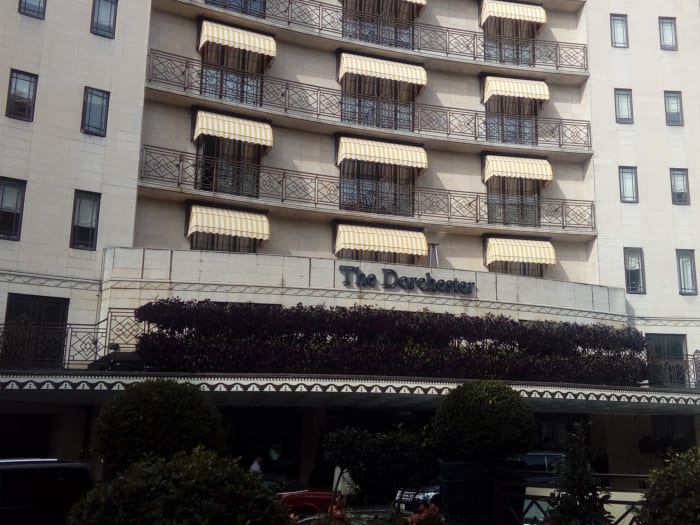
In London, some hotels do more than occupy a prestigious address: they form part of the city’s memory. The Dorchester belongs to that rare category. Set opposite Hyde Park, in the calmer reaches of Mayfair, it has established itself over the course of the twentieth century as one of the capital’s great stages for hospitality. Its name immediately suggests a certain idea of an English stay: traditional luxury, a sense of ceremony that never feels rigid, and that distinctly British ability to balance grandeur with deeply felt comfort.
The Dorchester’s appeal lies precisely in that balance. It is not a museum-piece hotel. It retains the codes of a great classic house — generous proportions, a cultivated art of receiving, close attention to detail, and an easy flow between public rooms and more intimate salons — while meeting the expectations of contemporary travellers. That continuity is essential to understanding its status. Here, heritage is not confined to a façade or a historical narrative; it is present in the way service anticipates without intruding, in the preservation of a hushed atmosphere despite the pace of the capital, and in the quiet assurance of a house that knows its place within London’s hotel landscape.
Mayfair has always had a particular relationship with institutions of luxury. A district of elegant residences, historic addresses, private clubs, galleries and fashion houses, it provides The Dorchester with a natural setting. The hotel belongs to this geography of distinction without resorting to display. That is part of its appeal for travellers who prefer established places to demonstrative ones. Guests come as much for the quality of the stay as for the feeling of stepping into a more enduring London, one that runs deeper than the postcard version.
Its place within Dorchester Collection extends that reading. The group is associated with a vision of the grand hotel in which each property’s identity takes precedence over uniformity. In the case of The Dorchester, this translates into fidelity to the spirit of the house: an assured classicism, legible elegance, and a service culture built on consistency. For the traveller, that continuity matters. It means the experience rests not on fashion but on accumulated expertise.
To stay here is therefore to choose more than a five-star London hotel. It is to inhabit, for a few nights, an address that has crossed decades without losing its own language. In a city that constantly reinvents itself, The Dorchester suggests that a grand hotel can remain contemporary precisely because it understands its history. That depth gives a stay here a particular density: one does not simply settle into a room, but into a tradition of hospitality that has helped shape London’s international image.
The Hotel
The Dorchester owes much to its location, but it is not defined by it alone. Certainly, the address matters: Mayfair, with Hyde Park opposite, major shopping avenues within walking distance, London’s cultural institutions close at hand, and that particular feeling of being central without enduring the full force of the city centre. Yet what truly distinguishes the hotel is the way it turns that privileged setting into a coherent experience of stay.
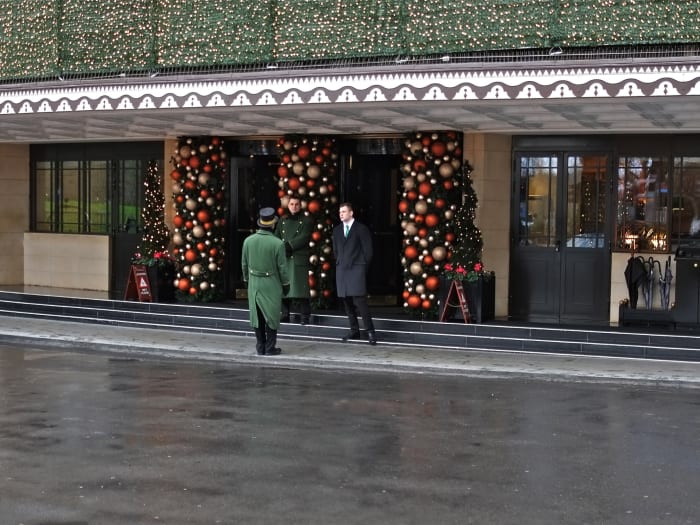
From the moment of arrival, the pace shifts. One moves from London traffic into a calmer, almost choreographed sequence in which the welcome, the scale of the interiors and the light create a clear transition between city and hotel. That threshold quality matters in a grand urban property. It shapes the sense of refuge. The Dorchester understands this well: it does not set outside and inside in opposition, but places them in dialogue. London remains near, visible and available; it simply stops being intrusive.
The public spaces contribute greatly to this impression. One finds the codes of a great London house: lounges suited to meetings or quiet reading, circulation designed to preserve privacy, and a classic décor that favours balance over effect. Luxury here does not strive to astonish at any cost. It is expressed through the felt quality of materials, the upkeep of the rooms, and careful attention to acoustics and practical comfort. For an international clientele, that legibility is an asset: the tone of the house is immediately understood.
The hotel is particularly well suited to those who want to experience London at several tempos. Shopping enthusiasts appreciate the proximity of luxury boutiques; business travellers find a discreet and central base; couples see it as an elegant starting point for a cultural weekend; families benefit from a service culture able to smooth the logistics of a city stay. This versatility does not dilute the property’s character. On the contrary, it reflects a rare hospitality maturity: the ability to welcome different uses without losing identity.
The relationship with the city is one of the great pleasures of staying at The Dorchester. Guests can set out on foot towards galleries, museums, parks, theatres or shopping streets, then return to an atmosphere that seems to slow time. That alternation is part of London luxury at its most convincing. It allows a stay to be composed to measure, balancing appointments, walks, purchases, visits and moments of rest.
Ultimately, The Dorchester is not merely well located: it is rightly located. Its position in Mayfair, its closeness to the capital’s leading addresses and its ability to offer a sense of retreat in the heart of London make it a particularly relevant base from which to discover the city with style, clarity and comfort.
Rooms and Suites
In a hotel of this calibre, the room must extend the identity of the establishment. At The Dorchester, this philosophy is particularly evident. The realm of rooms and suites embodies a classic and elegant style, accompanied by a precise calm that is appreciated after a busy day in London. Here, the traveller finds what they seek in Mayfair: order, comfort, and continuity.
The charm of yesteryear does not stem from a decorative nostalgia but rather from a language of hospitality. In the rooms, this translates into proportions designed for comfort, an emphasis on rest, and seamlessly integrated modern amenities. The aim is not to accumulate external signs of luxury but to create a sensation of authenticity. One notices the overall coherence of the space, the quality of the lighting, and the feeling of a room that is genuinely lived in.
For business travellers, this coherence is invaluable. A successful room in London must facilitate work, preparation, and ultimately provide a genuine quality of sleep. For couples, the focus shifts; the room should become a refuge between outings, conducive to a leisurely breakfast or a moment of retreat. Family stays also require discreet and efficient logistics.
Suites play a unique role. They offer not only more space but also an alternative way to inhabit the hotel. For a long weekend, a business trip, or a special occasion, they evoke something of a London apartment, complete with the service of a grand establishment. It is often here that the relationship between tradition and contemporary comfort is most clearly defined: more generous volumes, better-defined uses, and enhanced intimacy.
One of the pleasures of The Dorchester lies in its ability to make the room a counterpoint to the city. London is stimulating, fast-paced, and sometimes overwhelming. Returning to a space designed to simplify the stay holds real value. Daily service, evening room preparation, and the presence of well-trained staff reinforce this sense of fluidity. Nothing is ostentatious, but every detail matters.
Ultimately, the rooms and suites of The Dorchester cater to travellers who expect more from a grand hotel than mere style. They seek a quality of experience, a stable atmosphere, comfort that does not strain the eye, and a sense of ease. It is this controlled discretion, more than any decorative effect, that leaves a lasting impression of their stay.
Dining
In a prestigious London address, dining is an integral part of the venue's identity. The Dorchester exemplifies this perfectly. Reserving a table as soon as the stay is confirmed speaks volumes. The dining spaces attract both guests and Londoners alike, making the meal a highlight of the journey.
The primary appeal of such an establishment lies in its ability to offer various dining rhythms. Breakfast is a pivotal moment in an urban hotel. In a refined setting, it takes on an almost ritualistic dimension. Guests settle in to organise their plans, catch their breath, or observe the discreet choreography of the service. Lunch serves different purposes, ranging from business meetings to a break between visits. Dinner often draws the most attention, as this is when the hotel most clearly asserts its culinary style and hospitality.
What sets The Dorchester apart is the consistency of its classic and elegant atmosphere. At the table, this idea is paramount. One finds a carefully curated presentation, attentive service, and a clear understanding of the codes of a grand hotel restaurant. The environment is equally suited for celebrations and more discreet meals. Luxury is not solely defined by the plate; it is also reflected in the punctuality of the service, the quality of the welcome, the upkeep of the dining room, the noise level, and the precision of recommendations.
For the traveller, the benefits are twofold. Dining on-site avoids turning every evening into a logistical operation in a city where distances, traffic, and reservations can quickly complicate plans. It also allows one to experience the hotel beyond the room. Guests discover another facet of the establishment: its sociability, rhythm, clientele, and relationship with the London scene. In major institutions, restaurants often serve as privileged observatories of local style.
Travellers who appreciate well-curated stays should consider gastronomy in advance. Booking early, clarifying expectations, noting special occasions or dietary restrictions—these are all useful details. In a hotel of this calibre, anticipation significantly enhances the quality of the stay.
The dining experience at The Dorchester is rooted in a very London tradition of the grand hotel as a meeting place as much as a place of accommodation. Guests come here to enjoy fine dining, gracious hospitality, and to extend a day in the city or begin another. More than a mere convenience, dining here contributes to the art of living of the establishment.
Spa & Wellness
Even when a brief does not detail the wellness offer, it is worth recalling what a grand hotel such as The Dorchester represents for the contemporary traveller: a place in which the stay can be rebalanced. In London, days fill quickly. Between appointments, shopping, visits, transfers and social life, fatigue accumulates almost unnoticed. That is why the wellness dimension — whether in the form of a spa, treatments, relaxation spaces or simply a culture of comfort — matters so much to the overall judgement of an address.
In a house with a classic and elegant atmosphere, wellbeing is not usually demonstrative. It forms part of a continuity of service. Quiet circulation, quality of sleep, evening turndown, the availability of teams, the possibility of arranging a treatment or a moment of repose: all of this belongs to the same idea, that of a luxury which protects the guest’s time. This approach particularly suits an international clientele that does not always need a spectacular programme, but rather a reliable framework in which to recover between phases of travel.
True refinement in an urban hotel of this level often lies in the ability to offer breathing spaces. A treatment booked at the right hour can transform an arrival after a long journey. A pause in mid-afternoon can send one out to dinner or the theatre with renewed energy. A simple routine — rest, turndown, a well-timed wake-up call, a properly paced breakfast — may be enough to make a stay feel more harmonious. Wellness is therefore not only a matter of facilities; it is also a matter of rhythm.
For couples, this dimension adds a particular quality to the stay. In a city as stimulating as London, it is valuable to create pauses for two without leaving the hotel. For business travellers, the benefit is more functional but no less real: maintaining a level of physical and mental comfort that allows meetings, events and transfers to follow one another without excessive wear. Longer stays make the importance of a restorative environment more evident still.
What one expects from a house like The Dorchester is precisely this intelligence of tempo. Ideally, wellbeing takes the form of discreet yet constant attention, able to adapt to the needs of the moment. The aim is not to impose a programme, but to make possible a more balanced experience of the city.
In that sense, modern luxury here meets a very classical intuition: to travel well is also to know how to slow down. Through its atmosphere, its service and its ability to create a soothing distance from London’s intensity, The Dorchester answers that expectation. Even without spectacle, wellness becomes a structural quality of the stay — a way of ensuring that London remains stimulating without ever becoming exhausting.
Concierge & Services
The true test of a grand hotel lies not only in its décor or address, but in the quality of its day-to-day services. On this point, The Dorchester offers the fundamentals expected of a major international house: 24-hour concierge, 24-hour front desk, daily housekeeping, turndown service, luggage storage, laundry, wake-up service and multilingual staff. Taken separately, these elements may seem standard in the five-star segment. Taken together, and above all well executed, they define the difference between a merely comfortable stay and one that feels genuinely seamless.
The concierge plays a central role here. In a city such as London, where the cultural, gastronomic and retail offer is immense yet often saturated, human intermediation retains considerable value. Securing a table, arranging a transfer, shaping a day around a guest’s priorities, recommending a walking route, adjusting plans according to weather or traffic: all these gestures, in a grand house, should be carried out with precision and without fuss. The luxury of service lies less in promising the impossible than in making the possible remarkably simple.
A round-the-clock reception provides very concrete reassurance, particularly valuable in an international capital where arrival and departure times are often irregular. For long-haul travellers, professionals on the move or families, this continuity reduces friction. Luggage storage, too, may seem minor; it becomes decisive when one wishes to enjoy a final day in the city without material constraints.
Daily housekeeping and evening turndown belong to another register, quieter yet equally important. They contribute to that restored sense of order which is one of the rewards of a grand urban hotel. Returning to a room to find everything reset, the evening rhythm prepared, and the space arranged to support rest rather than hinder it: this quality of care is among the most tangible signatures of high-end hospitality.
Laundry and wake-up service answer highly practical needs that are often underestimated. A garment ready in time for dinner or a meeting, a wake-up call timed precisely before an early departure: these are details, but details are exactly what determine the serenity of a stay. Multilingual staff, finally, ensure a more natural relationship with a varied international clientele, reinforcing the sense of ease and control.
At The Dorchester, these services matter because they are delivered within an atmosphere of restraint. Nothing should feel mechanical; everything should feel obvious. That obviousness, the result of strong organisation and real expertise, is what distinguishes the great houses. The traveller does not need to think about logistics: the hotel absorbs them, simplifies them and gives time back. In a city as dense as London, that gain in fluidity is already a form of luxury.
London Living from Mayfair
To stay at The Dorchester is also to choose a particular way of living London. Every city has its grand hotels, but few offer such a direct dialogue between address and local way of life. In Mayfair, that dialogue is especially rich. The district brings together dimensions of the capital that can seem contradictory: residential elegance, commercial intensity, proximity to cultural institutions, the tradition of clubs and salons, the presence of the parks, and the constant movement of an international clientele. From The Dorchester, these different layers become immediately accessible.
For the visitor, one of the great privileges is walking. London does not always reveal itself at a single glance; it is often understood in sequences. Leaving the hotel, skirting Hyde Park, reaching the shopping streets, turning towards a gallery, stopping for lunch, continuing on to a museum or theatre: this progression creates an experience very different from a stay organised solely around transport. The Dorchester allows precisely this pedestrian reading of a sophisticated London, where each detour may lead to a notable shopfront, a Georgian façade, a cultural institution or a revealing urban detail.
Mayfair also offers the advantage of a less ostentatious version of luxury. Here, elegance is legible in the quality of addresses, the discretion of façades and the continuity of habits. Travellers attuned to this dimension appreciate being able to alternate between major fashion houses, hushed meeting places and the nearby green spaces. Hyde Park, close at hand, plays an essential role in the balance of the stay. It introduces immediate breathing space, the possibility of a morning walk or a pause at day’s end that changes one’s perception of the city.
The proximity of London’s cultural attractions is another major asset. Without needing to produce an exhaustive list, it is clear that a stay at The Dorchester can easily incorporate exhibitions, concerts, theatre, collections and emblematic institutions. This cultural density increases the appeal of the address both for couples on a city break and for regular visitors wishing to rediscover London from a more selective angle.
London living, from The Dorchester, is therefore not about ticking off highlights. It is about composing a stay with accuracy: a morning in the park, late-morning shopping, a well-placed lunch, an afternoon visit, a return to the hotel to prepare, then dinner or an evening performance. This flexibility, made possible by the location and the quality of service, gives the trip a notably controlled rhythm.
In that sense, The Dorchester speaks to those who want a London that is both classic and alive. Not a city frozen in its symbols, but a capital one inhabits with ease, enjoying its contrasts without suffering its complications. From Mayfair, the experience gains coherence: one does not merely pass through London, one learns to adopt its tempo.
Book via MyConciergeHotel
Booking The Dorchester through MyConciergeHotel means approaching a prestigious London establishment with a methodical mindset. In a hotel of this calibre, the distinction lies not only in the choice of a room or suite but also in the preparation of the stay. The more sought-after the establishment, the more crucial anticipation becomes. This is particularly true during peak periods, cultural weekends, major London events, or last-minute trips.
The primary advantage of concierge assistance is the qualification of needs. Not all stays at The Dorchester are alike. A couple on a romantic getaway has different expectations than a business traveller, a family on a city break, or a London regular looking to enjoy Mayfair and its offerings. Clearly articulating the intended stay helps to better guide the choice of category, pace, and associated services. The ideal reservation is not necessarily the most extravagant; it is the one that precisely matches the intended use.
The second essential point concerns dining. It is advisable to reserve the main table as soon as confirmation is received. This is a recommendation to be taken seriously. In prestigious establishments, restaurants can be fully booked well in advance of the stay. This is often the case for the most sought-after time slots. Incorporating this reservation into the planning stage avoids last-minute compromises, thereby enhancing the overall experience.
MyConciergeHotel also allows for a holistic approach to the stay. Arrival times, special needs, luggage management, service requests, daily rhythms, and potential city appointments all benefit from being clarified in advance. In a hotel like The Dorchester, where the quality of service also relies on anticipation, precise preparation enhances the on-site experience. The aim is not to over-schedule the trip but rather to secure the key points, allowing for greater spontaneity later on.
For discerning travellers, this approach has a simple virtue: it reduces uncertainty. London is a generous yet dense city. Reservations, travel, and timings can quickly complicate a stay that was meant to be seamless. By working on the structural elements in advance, one transforms the address into a base for living rather than just a stopover.
Choosing The Dorchester through MyConciergeHotel thus prioritises a well-prepared experience, true to the standards of the establishment and the style of the traveller. In such an iconic venue, luxury often begins before arrival, in the quality of advice, the accuracy of recommendations, and the ability to orchestrate the stay without burdening it. This is where accompanied booking truly comes into its own.