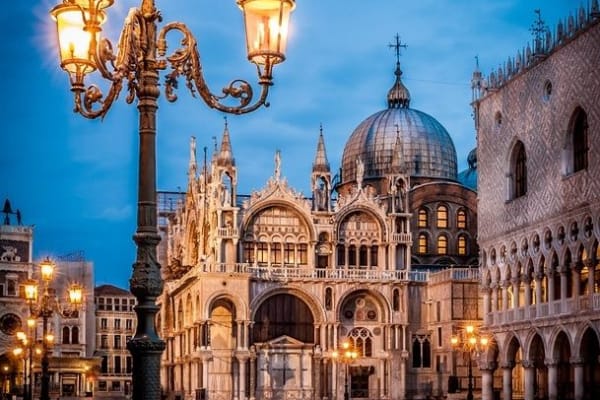
History & heritage
In Venice, few addresses express the fruitful tension between memory and reinvention as clearly as Sina Centurion Palace. The hotel belongs fully to the Venetian imagination: façades opening onto the water, shifting light over the Grand Canal, a setting of historic buildings, and that singular rhythm of a city where arrival often happens by boat before one has even crossed a threshold. Here, the experience does not begin in an anonymous lobby but in a distinctly Venetian choreography of arrival, with the immediate sense of entering a place that converses with the city rather than withdrawing from it.
The building itself reinforces that impression of historical continuity. Without resorting to decorative reconstruction, the property embraces a legible heritage setting: noble volumes, traces of older architectural detail, a direct relationship with water and stone, all reminding guests that they are staying in a museum city that remains deeply lived-in. Sina Centurion Palace is not a palace frozen in postcard nostalgia; it belongs to that category of Venetian hotels that prefer to honour what already exists while framing it within a more contemporary language. That contrast is precisely where its identity lies.
Its Venetian inheritance is present without heaviness. It can be felt in certain stylistic references, in the attention paid to materials, and in the way the interiors seek atmosphere rather than display. Venice rarely rewards excessive demonstration: the most convincing places are often those that allow the city to speak for itself. Sina Centurion Palace appears to follow that logic, favouring an elegance built on perspective, light, texture and a close relationship with the Grand Canal. The balance between Venetian tradition and modern comfort, one of the hotel’s known hallmarks, becomes especially meaningful in this context.
Its membership of Small Luxury Hotels of the World also helps define the nature of the stay. This is less a standardised grand hotel than a property with a distinct personality, where scale, service and the staging of spaces aim for a sense of intimacy. That affiliation implies a certain level of quality, but above all a way of thinking about hospitality as an experience of place. In Venice, this matters greatly: travellers do not come merely to sleep, they come to inhabit, however briefly, a city unlike any other.
To stay here, then, is to choose a hotel that offers more than a fine view. It takes its place within a broader urban history. The Grand Canal is not simply a backdrop; it is the living axis through which part of Venice’s grandeur can still be read. From this address, one senses what Venice once was and still remains: a city of circulation, commerce, ceremony and beauty shaped by water. Sina Centurion Palace succeeds in condensing that idea into a contemporary, refined form of hospitality without ever breaking its link with the historic setting around it.
The property
The first strength of Sina Centurion Palace lies in its setting and in the way it makes use of it. In Venice, location is never merely a point on a map: it shapes one’s relationship to quiet, crowds, light, movement and even to the perception of the city itself. Here, the views over the Grand Canal are central to the experience. They bring a distinctly Venetian sense of spectacle, but also a rare visual depth: passing boats, reflections on the water and the changing colours of the day lend the stay an almost cinematic quality.
The hotel works particularly well as a convenient base for exploring Venice while preserving an atmosphere of welcome retreat. This is one of the city’s most sought-after balances: to be close enough to major sights to move around easily, yet not constantly exposed to the full intensity of visitor traffic. Sina Centurion Palace answers that expectation with real precision. Guests can experience Venice on foot, by vaporetto or by water taxi, then return at day’s end to a calmer setting where water and architecture once again take precedence over bustle.
The property’s aesthetic identity rests on an alliance between Venetian tradition and modern comfort. Often overused as a phrase, it becomes more meaningful here when translated into spaces that seek neither a radical break from heritage nor a historicist imitation of it. The result is a hotel that embraces its Venetian setting while offering the contemporary comforts expected of an international five-star address: smooth circulation, attentive service, spaces designed for rest, discreet technology and a clear reading of volume.
The historic backdrop naturally contributes to the charm, but what matters even more is the way it is inhabited. A hotel of this category must know how to create atmosphere. At Sina Centurion Palace, that atmosphere appears to come from several combined elements: the constant relationship with the canal, a certain theatricality of arrival, sophisticated interiors without excess, and the feeling of being in a singular place rather than an interchangeable brand. For travellers who value character, this is decisive.
The address is especially well suited to couples and to guests seeking tranquillity. That does not exclude other profiles, but it says something about the overall mood: one comes here to slow down, observe, savour the intervals between visits, enjoy sunrise over the water or return to calm after a day in the calli. In this context, luxury is not only a matter of amenities; it lies in the quality of one’s relationship with place.
Ultimately, Sina Centurion Palace suits those who wish to experience Venice without reducing it to a checklist of monuments. Its position naturally allows easy access to the city’s major landmarks, but the hotel also encourages a subtler form of travel: seeing Venice from the water, understanding its rhythms, appreciating its quieter hours and returning each evening to an elegant refuge. It is this combination of accessibility, historic character and measured comfort that makes the address so compelling.
Rooms and Suites
In a city like Venice, a hotel room transcends mere functionality. It extends the relationship with the urban decor, light, and the overall experience of the stay.
At the Sina Centurion Palace, the rooms and suites embody this philosophy. They blend Venetian heritage with contemporary comfort, without excess.
Refinement here is measured by tangible elements. Bedding, tranquillity, flow, lighting, storage, and bathrooms are as significant as the decor itself.
Certain categories boast views of the Grand Canal. In Venice, this perspective profoundly alters the experience of one's stay.
Opening the curtains to the water, observing the morning movements, witnessing the façades transform throughout the day, adds a contemplative dimension to the room.
Modern comfort is interpreted here as a promise of simplicity. Within a historic building, the balance lies in integrating current practices without erasing the spirit of the place.
Discreet air conditioning, effective connectivity, meticulous maintenance, nightly turndown service, and daily housekeeping form an essential foundation.
The suites follow a different logic. They offer more space and a more residential way to inhabit Venice.
For a long weekend, a celebratory trip, or a romantic getaway, this spaciousness can alter the rhythm of the stay.
One seeks less ostentation and more a private, elegant refuge, well-located, to retreat to after visiting museums, taking boat rides, and enjoying long walks.
The rooms and suites at the Sina Centurion Palace cater to travellers who appreciate ambiance, authenticity, and a comfort that is not rigid.
In a city where the outside imposes itself forcefully, the interior finds its place in a form of restraint.
Dining
In Venice, dining in a luxury hotel plays a particular role. It is not simply about eating well or enjoying a pleasant setting; it should offer a pause within the city’s rhythm. Between visits, vaporetto crossings, detours through narrow lanes and stops in the campi, returning for lunch or dinner to a composed, well-served place with a genuine relationship to the landscape can transform the balance of a stay. Sina Centurion Palace appears to understand this well, to the point that reserving a table on arrival is already among the most useful pieces of advice associated with the property.
That recommendation says a great deal. First, that there is real demand for the restaurant; second, that dining forms an integral part of the experience rather than a merely ancillary service. In a hotel overlooking the Grand Canal, setting naturally matters. Eating in Venice by the water is never incidental: morning light, the discreet animation of the canal, the passing boats and the presence of historic façades create a scene that accompanies the meal without overwhelming it. The pleasure lies as much in that perspective as in what is on the plate.
Without inventing a precise culinary signature, one can reasonably expect from such an address a cuisine attentive to its Italian and Venetian context, served in a spirit of legible refinement rather than display. In the city’s best hotels, the table often acts as a bridge between international travellers and local culture: seasonal produce, a contemporary reading of Italian classics, room for maritime flavours, and careful attention to the rhythm of service and the quality of breakfast. Breakfast in particular has a special value in Venice. Beginning the day by the water, before the city grows busier, allows guests to glimpse a gentler, almost domestic Venice.
A hotel restaurant also answers a very practical need: the possibility, on certain evenings, of enjoying a pause without logistics. In a city where movement sometimes requires more anticipation than elsewhere, knowing that one can dine on site in an elegant setting is a real comfort. For couples especially, it can become one of the most successful moments of the stay: returning from a walk, pausing in the room, then dining without leaving the property, with the feeling of fully inhabiting the place into the evening.
One may also expect a hotel of this standing to pay attention to the in-between moments: morning coffee, an aperitif at day’s end, attentive service able to support a flexible travel rhythm. Luxury hospitality lies not only in grand gestures but in the continuity of small ones. A well-conceived dining offering contributes to that continuity by providing a stable anchor in a city that constantly engages the eye and the body.
At Sina Centurion Palace, dining should therefore be understood as part of the wider stay. More than a gastronomic destination in the strict sense, it appears to belong to an art of hosting: eating well, at the right moment, in a setting coherent with the spirit of the hotel. In Venice, where the visual experience is so dominant, that coherence is essential. A fine table truly matters only if it extends the city—its rhythm, its light and its restrained elegance.
Concierge & Services
In Venice, the quality of service is defined by its relevance. Arrivals by boat, variable schedules, less intuitive routes, luggage, reservations, and transfers all require a seamless experience.
At the Sina Centurion Palace, the 24-hour concierge service and continuously open reception address this challenge. They assist with every stage of the stay, from arrival to daily recommendations.
In Venice, a good concierge also helps navigate the city. They suggest optimal timings, more serene routes, and facilitate late arrivals or early departures.
The presence of multilingual staff enhances this ease of use. Daily housekeeping maintains a constant level of comfort, especially when days alternate between long outings and brief returns.
The evening turndown service introduces a more subdued rhythm at the end of the day. The room is prepared, lighting softened, allowing for a calmer return after dinner or a night stroll.
The luggage storage and laundry services cater to very practical needs. They simplify departures and provide useful comfort during extended stays.
The wake-up service remains highly relevant. An early morning boat transfer or a very early visit demands punctuality without compromise.
As a member of the Small Luxury Hotels of the World, this establishment embodies a commitment to personalised service. A discreet, precise, and reliable presence at just the right moment.
Thus, the Sina Centurion Palace is well-suited for travellers who value quality execution. In Venice, this operational solidity allows guests to fully focus on what truly matters.
The Venetian art of living
Choosing Sina Centurion Palace also means choosing a particular way of experiencing Venice. The city can be visited quickly, through an accumulation of major sights, or discovered slowly, by accepting that an essential part of its charm lies in the intervals: an almost empty quay early in the morning, a façade revealed at the turn of a rio, a coffee before museums open, a return by boat at dusk. By virtue of its setting and atmosphere, the hotel appears to encourage the latter approach—more sensitive, more lasting and often more accurate.
Venice rewards travellers who know how to pace their gaze. From an address opening onto the Grand Canal, one immediately understands that the city is read as much from the water as from its lanes. Watching circulation, deliveries, daily crossings and the comings and goings of boats means seeing Venice not as a frozen backdrop but as a living city. That education in local rhythm often begins from the hotel itself, even before the first formal visit. It is one of the privileges of a well-located property: it allows guests to enter the city without abruptness.
Spring and autumn, noted as the best seasons to visit, correspond well to this idea of a more nuanced stay. Light is often softer, temperatures more agreeable and movement easier. Yet beyond the seasons, Venice is above all best enjoyed at certain hours: very early, when the stone still seems cool; at midday, when a quieter district offers respite; in the evening, when the main flows dissipate and the city regains part of its mystery. A hotel that combines comfort, relative calm and convenient access to key sights becomes a true observation point.
For couples, the experience takes on a particular dimension. Venice has long suffered from an overly conventional romantic image; in reality, its refinement lies less in cliché than in the quality of shared moments. Walking without a precise aim, changing banks, stopping to watch the light on a church or palace, returning to the hotel for a pause before dinner—these simple gestures often make for the most successful stays. Sina Centurion Palace appears to provide a setting well suited to that rhythm, balancing visual intensity with elegant retreat.
The Venetian art of living also requires letting go of total control. One must accept a few detours, a little slowness, the particular logic of a city without cars, where water imposes its own tempo. In that context, the comfort of a well-run hotel becomes valuable not because it isolates guests from reality, but because it supports it. One explores more readily when one knows that a well-kept room, reliable service and a coherent atmosphere await on return.
In that sense, Sina Centurion Palace is more than an upscale place to stay; it can become a way of reading Venice. It helps one understand that luxury here lies not only in rarity but in the quality of one’s presence in the city. Seeing the Grand Canal from the hotel, setting out on foot towards neighbouring districts, returning to calm, dining on site or nearby, then beginning again the next day: that gentle repetition may be the truest form of Venetian privilege.
Booking via MyConciergeHotel
Booking the Sina Centurion Palace through MyConciergeHotel offers a more serene and comprehensible approach to Venice. In such a unique destination, the quality of the stay often hinges on details arranged in advance: choosing the right room category, the benefits of a view over the Grand Canal, organising the arrival, prioritising schedules, reserving a table at the hotel, and balancing visits with downtime. An editorial and concierge support system makes perfect sense here, as it allows for adjustments to the experience before departure.
This address caters to travellers seeking a refined atmosphere, a historic setting, and well-integrated modern comfort. It is particularly suited for couples, short stays, cultural getaways, and trips where one wishes to alternate exploration with tranquillity. Booking discerningly involves matching the right type of stay with the right address. The Sina Centurion Palace is not just a five-star hotel in Venice; it is a place for those who desire an immediate connection to the city, the water, and a certain idea of Venetian elegance.
One of the first considerations naturally concerns the room. Depending on the length of stay, the season, and the importance placed on the view, it may be wise to opt for a more generous or better-positioned category. In Venice, the room is not merely a place to rest. It can become a vantage point, a midday refuge, a backdrop for waking and returning in the evening. Being advised on this aspect truly alters the perception of the trip. Similarly, anticipating the busiest periods, particularly in spring and autumn, allows for preserving choice and avoiding default decisions.
Booking a table at the restaurant should also be part of the preparation. Seats are limited and fill up quickly. In a city where improvisation is not always the best ally, especially for the most sought-after addresses, securing certain key moments of the stay provides real comfort. This applies to a dinner overlooking the canal, as well as transfers, arrival times, and special requests.
Using MyConciergeHotel ultimately means benefiting from a more qualitative understanding of the stay. Beyond price or availability, it is about identifying what will make a difference once on-site: the exact atmosphere of the hotel, its suitability to your travel style, the appeal of certain periods, and the right balance between discovery and retreat. Venice is a city that can reveal itself to be profoundly different depending on the chosen address. A well-selected hotel not only enhances the comfort of the stay but also influences how the city is experienced.
For the Sina Centurion Palace, the essentials are present: a view of the Grand Canal, a historic setting, membership in Small Luxury Hotels of the World, solid services, and an atmosphere conducive to a more composed Venetian stay. Booking this address via MyConciergeHotel means choosing a more accurate and fluid way to enter Venice.