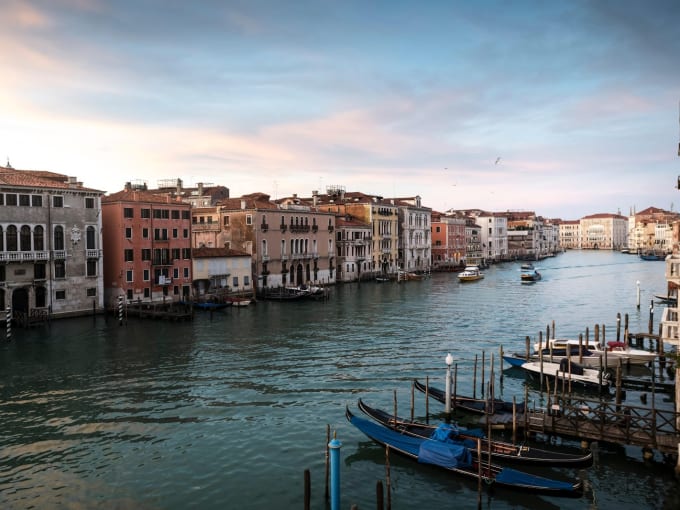
Venice is particularly suited to the concept of boutique hotels. The city imposes a different relationship with time. Visitors often arrive by water, and navigate on foot, by vaporetto, or in private boats. Each establishment thus engages with an unspoilt urban backdrop of palaces, campi, and canals. In this context, charm is not merely a decorative style; it stems from a fitting location, a human scale, and a readable architectural memory. It also depends on how a hotel allows one to experience Venice without reducing it to a mere backdrop. Between Aman Venice, Ca' Sagredo Hotel, Hotel Cipriani, Sina Centurion Palace, and The Gritti Palace, Venice offers multiple interpretations of its hotel heritage.
To establish this ranking, we do not seek sensationalism. We first observe concrete criteria. The first is the heritage quality of the building. A Venetian palace, a historic address, or a contemporary reinterpretation by the Grand Canal does not provide the same experience. The second criterion is the hotel's connection to the city. A large hotel can be central, secluded, or slightly apart. This nuance changes everything. We then consider the coherence between architecture, service, and the actual use of spaces. Finally, we take into account a hotel's ability to create a credible Venetian experience. It is important to note that charm here arises from the harmony between place, rhythm, and memory, far more than from a uniform appearance.
The Venetian panorama is more varied than it appears. Aman Venice embodies the most residential interpretation of a private palace, favouring space, restraint, and a direct relationship with rare interior heritage. Ca' Sagredo Hotel advocates a more museum-like approach, with the building itself almost becoming a subject of the stay. The Gritti Palace, a Luxury Collection Hotel, Venice, plays the card of great hotel tradition, with a strong historical presence on the Grand Canal. Sina Centurion Palace introduces an interesting tension between heritage and a more contemporary gesture. Finally, Hotel Cipriani offers a slightly off-centre Venice, more airy, turned towards the lagoon and the distance. These are five distinct ways to inhabit the city. It is precisely this plurality that informs our selection.
For 2025 and 2026, several trends are confirmed in Venice. The first concerns the quest for intimacy. Savvy travellers increasingly favour hotels that shield them from the tourist flow, without breaking away from the city. The second touches on living heritage. It is no longer enough to occupy an old building; it must be made readable, habitable, and relevant for a contemporary stay. We also observe a stronger expectation around arrivals and departures. In Venice, the first impression is often nautical, and it matters more than elsewhere. Finally, luxury is shifting towards usage. A beautiful suite is not enough; guests expect smooth circulation, genuinely lived-in lounges, meaningful views, and service that can adjust the stay according to the neighbourhood, season, and desired intensity.
This perspective aligns with a certain idea of French luxury, as we advocate at MyConciergeHotel. Refinement is not an accumulation; it is a clear hierarchy of pleasures. A good boutique hotel in Venice must first know what it wants to be: a discreetly inhabited historic palace, an iconic house facing the canal, a more breathable lagoon refuge, or a design address set within a heritage structure. What our advisors observe is consistency. A spectacular lobby does not compensate for a disjointed experience. Conversely, a less ostentatious address can leave a lasting impression through its accuracy. My advice in Venice is always to choose a hotel according to how you wish to experience the city: early in the morning, between exhibitions, on a romantic getaway, or in a mindset of urban retreat.
Therefore, this ranking should be read without seeking a universal winner. The first does not negate the second, and the sixth is not a secondary choice. Each hotel meets a specific expectation. Some travellers desire the historical density of the Grand Canal, while others prefer a quieter relationship with the lagoon. Some seek a decor steeped in history, while others want a clearer dialogue between heritage and contemporary lines. Our role is not to distribute superlatives but to illuminate the useful differences. We favour addresses that deliver on their promises, valuing coherence, location, conservation quality, and the ability to offer an embodied Venetian experience. In a city so often commented upon, this precision matters more than ready-made formulas.
Here is our interpretation of the best boutique hotels in Venice. You will find iconic palaces, historic addresses, and more singular houses, all with a strong connection to heritage. The difference lies in the style of stay.