History & heritage
In Singapore, some hotels tell the story of a city that has, in just a few decades, become one of Asia’s great crossroads for business travel and contemporary luxury. Mandarin Oriental, Singapore belongs to that urban narrative, not as a theatrical backdrop but as an expression of a certain kind of international hospitality: precise, seamless and attentive to detail, yet firmly rooted in its surroundings.
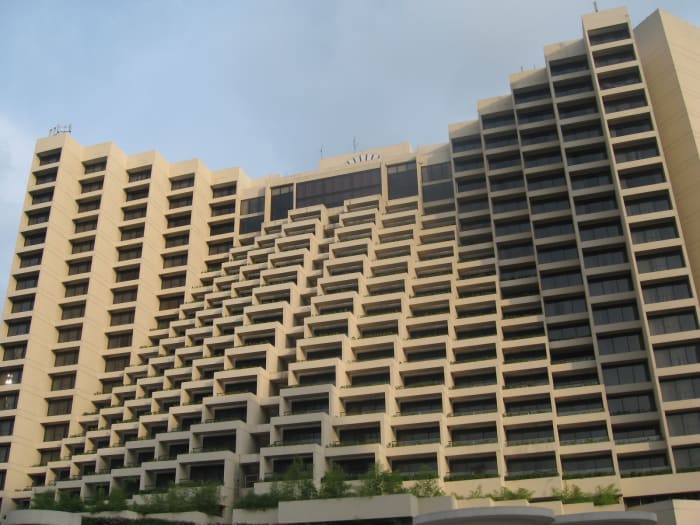
Its heritage is not that of an old palace or a grand historic residence turned hotel. Rather, it lies in the continuity of a distinguished hotel house known for its service culture, and in its ability to translate that ethos into a resolutely metropolitan setting. In a city where architecture is in constant dialogue with commerce, finance, culture and leisure, the property has established itself over time as a landmark of Marina Bay.
That setting gives it a distinct identity: a hotel that moves in step with Singapore itself, from the early morning when the towers are outlined in soft light to the evening when the bay becomes a theatre of reflections, routes and appointments. The sense of heritage comes partly from this. Not from a fixed past, but from a longstanding way of staying in the city, poised between efficiency and elegance.
The Mandarin Oriental spirit traditionally rests on a subtle balance between Asian codes of welcome and the standards of international luxury hospitality. In Singapore, that balance can be felt in the overall atmosphere: the care given to arrivals, the discretion of the teams, the sense of order without stiffness, and the impression that everything has been designed to make a stay easier without making it impersonal. Business travellers find a highly polished operation; leisure guests, a sophisticated base from which to explore.
What stands out most is the way the hotel reflects Singapore itself: cosmopolitan, exacting, future-facing, yet attentive to cultural nuance. The traditional touches noted by guests do not amount to overt display; they are expressed instead through aesthetic restraint, a sense of harmony, a refined service culture and the importance given to quiet comfort.
To stay here is also to enter a broader story, that of a city made for hotels, where excellence is not an embellishment but a prerequisite. Mandarin Oriental, Singapore conveys that standard with calm assurance. It does not overstate its status; it expresses it through spaces designed to endure, a location that truly matters, and service that values accuracy over spectacle.
The hotel
The first privilege of Mandarin Oriental, Singapore is its position. Just steps from Marina Bay, in one of the city’s most dynamic districts, the hotel allows guests to experience Singapore at its most legible: a compact, organised metropolis, striking without being chaotic, where major points of interest connect with unusual ease.
For a short stay or a longer one, that centrality makes a tangible difference. It allows a guest to move from a business meeting to a waterfront walk, from a shopping district to a cultural outing, without the sense of distance that often accompanies major international cities. The immediate surroundings are lively, yet the liveliness here is never abrasive. Marina Bay concentrates much of Singapore’s energy: architectural silhouettes, carefully planned promenades, convention spaces, retail addresses, restaurants, public areas and open views across the skyline.
From the hotel, the city appears almost composed, as if choreographed. This visual relationship with the urban landscape is one of the property’s defining strengths. The skyline views are not merely brochure language; they genuinely shape the experience, giving a stay a distinctly Singaporean dimension of height, light and water.
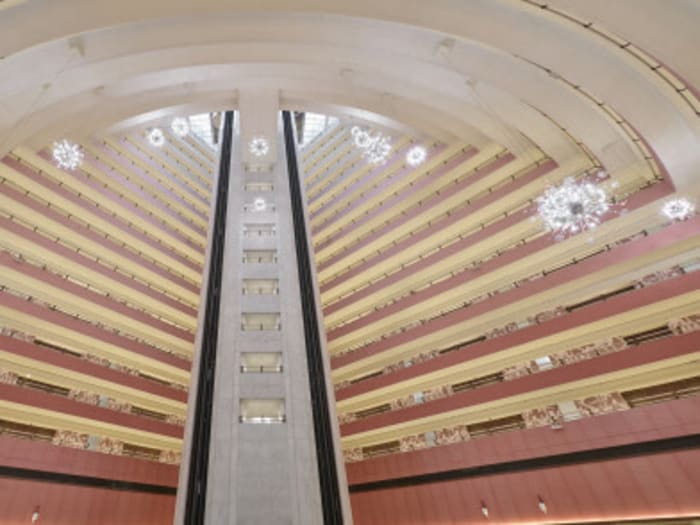
Inside, the hotel cultivates a contemporary elegance softened by warmer touches. Modern comfort is fully present, but it does not overwhelm the atmosphere. Instead, there is a clear intention to create spaces where one can meet, work, wait for an appointment or simply slow down. The public areas support this fluid movement between uses. They do not rely on constant theatrical effect; they favour clarity, relative calm and a discreet sophistication that suits the city well.
This is the kind of hotel that particularly suits travellers who want to experience Singapore without friction. Couples will appreciate the urban character and easy access to Marina Bay walks, evening outings and emblematic views. Business travellers will find a natural base thanks to the proximity of activity hubs and the efficiency of the services. First-time visitors, meanwhile, benefit from an intuitive starting point: it is easy to understand where one is, how to move about and what to include in the day.
In short, Mandarin Oriental, Singapore is not merely well located; it is meaningfully located. It offers a point of view over the city as much as access to its principal rhythms.
Rooms and suites
In an urban hotel of this calibre, the room is never merely a place to sleep. It becomes an observation point, a place to recover, sometimes a temporary office, sometimes a refuge in which to reset the rhythm of the day. At Mandarin Oriental, Singapore, that versatility appears central to the experience.
The rooms and suites are shaped by a logic of contemporary comfort, with the kind of attention to ease and flow that distinguishes strong business-and-leisure addresses when they are properly conceived. One of the most obvious attractions lies in the views. In a city where the urban landscape is part of the spectacle, having an outlook over the skyline or the Marina Bay environment materially changes the feel of a stay.
Morning light gives the city its crisp geometry; by evening, façades and reflections add another layer of depth. Even on a tightly scheduled trip, that visual connection to the outside creates a sense of release. It reminds the guest that this is not an interchangeable hotel, but one closely tied to its setting.
The decorative register rests on the stated blend of modern comfort and traditional touches. In practice, this suggests an aesthetic of controlled restraint rather than decorative display. In such an environment, materials, tones and furniture placement matter as much as the amenities themselves. The aim is not to distract, but to support a smooth use of space: preparing quickly for a meeting, working comfortably, reading at the end of the day or simply enjoying a quiet interval between outings.
The suites answer the needs of those seeking greater scale, more privacy or a clearer separation between the different tempos of a stay. They suit business travellers who may occasionally receive, as well as couples who value space and longer-stay comfort. In a city like Singapore, where days can be full, that spatial generosity has particular value.
What appeals here, ultimately, is balance. The rooms and suites do not attempt to compete with the city through excess or theatricality. Instead, they provide a measured counterpart to urban intensity: comfort, clarity, views and a carefully maintained atmosphere.
Dining
In Singapore, dining is never merely a hotel service. It is part of the journey itself. A city of crossings, culinary dialogue and high standards, it requires every major address to maintain a certain gastronomic discipline, even when a stay is not primarily motivated by food. At Mandarin Oriental, Singapore, the dining experience belongs to that logic of precision and range.
Without attempting to summarise Singapore’s entire culinary scene, it supports the stay coherently, whether through a well-judged breakfast before a full day, an efficient lunch between appointments or a more settled dinner against the energy of the city. In this kind of hotel, breakfast is often the decisive first moment. In a destination where days begin early, it matters not only for abundance but for rhythm: enough choice for an international clientele, while maintaining freshness, clarity and service standards that set the tone for the day.
Daytime dining must usually answer very different needs. Some travellers want something simple, quick and impeccably executed; others want lunch to become a genuine pause. The value of a major hotel house lies precisely in accommodating both expectations without contradiction. The setting, service and location make it possible to move naturally between the two.
In the evening, the question shifts. Singapore is a city of late dinners and abundant outside options. A hotel of this level must therefore offer more than the convenience of staying in. It needs real consistency of execution, the right atmosphere and the ability to make guests feel that dining in-house is not a retreat from the city but an extension of its elegance.
Dining here should therefore be understood as a whole: cuisine, service, atmosphere and timing. In a city as food-conscious as Singapore, it aims less to impress through declarations than to form part of a well-orchestrated luxury stay.
Spa & wellness
In a city as dense and active as Singapore, wellness takes on a particular meaning. It is not simply about treating oneself to a pleasant moment, but about reintroducing slower time into a stay often shaped by meetings, movement, heat, evening plans and the constant stimulation of the urban environment. Mandarin Oriental, Singapore answers that need with an approach to wellbeing that sits naturally within the spirit of the house: precise service, a carefully composed atmosphere and a search for balance rather than display.
The advice to reserve the spa in advance already says something important. In leading hotels, the most sought-after treatments are not incidental extras; they form part of the experience guests actively come for. This is especially true for couples on an urban break, but also for business travellers who use the spa as a practical way to decompress between demanding sequences.
The value of a hotel spa in Singapore lies in its role as counterpoint. After hours spent in the city, between air-conditioning, walking, appointments and shifting rhythms, returning to a space dedicated to calm can alter the feel of the day entirely. The body slows, attention recentres, and one regains the sense of inner continuity that city travel can fragment.
Wellness, however, extends beyond the spa in the strict sense. It is also reflected in the way the hotel organises overall comfort: the quality of rest in the room, the smoothness of service, the sense of security, the availability of staff and the ease with which pauses can be built into the day. In major cities, true luxury often lies precisely there.
At Mandarin Oriental, Singapore, wellbeing is not presented as a world apart from the rest of the hotel, but as a logical extension of its hospitality. Guests come not only for a treatment, but for a quality of transition: between outside and inside, activity and rest, intensity and release.
Concierge & services
In a major urban hotel, services are not simply a list of amenities. They form the invisible architecture of the stay. When they are properly conceived, one barely notices them: everything seems to happen naturally, requests are answered at the right moment, transitions are smooth, and the traveller can focus attention on what matters most.
At Mandarin Oriental, Singapore, this dimension is essential, all the more so because the hotel naturally welcomes varied profiles, from couples on a city break to business travellers with tightly structured schedules. The presence of a 24-hour concierge and front desk sets the tone. In an international city such as Singapore, where late arrivals, early departures and last-minute adjustments are common, that continuity of service is not an abstract luxury; it is a condition of peace of mind.
Daily services build confidence over time. Housekeeping, turndown, luggage storage, laundry and wake-up calls belong to a discreet but decisive logistics. They allow the stay to retain its shape even when the schedule is full. Multilingual staff further reinforce this quality of welcome. In a cosmopolitan destination, the ability to communicate clearly, quickly and with nuance is central to good service.
Ultimately, the quality of service here is measured by its ability to lighten the city. Singapore is remarkably organised, but it remains a dense, fast and demanding metropolis. A hotel of this level must therefore do more than provide a beautiful setting: it must simplify, anticipate and accompany.
The Singapore way of life
Staying at Mandarin Oriental, Singapore also means adopting, for a few days, a particular way of inhabiting the city. Singapore is not discovered like a European capital nor like a tropical beach destination. Its way of life lies in a singular balance between urban discipline, international openness, attention to detail and a search for comfort.
Everything seems designed to function with precision, yet that precision does not exclude pleasure, curiosity or the softness of very simple moments: walking by the water at day’s end, watching light move across the towers, lingering over dinner, or returning to the hotel with the feeling of having crossed several worlds in a matter of hours.
The hotel’s location makes it easy to enter this rhythm. Marina Bay is not merely an emblematic backdrop; it is a concentrated expression of Singaporean modernity. One senses the city there in its most graphic dimension, but also in its ability to make urban experience unexpectedly comfortable. For the visitor, this creates a rare sensation: the ability to improvise while retaining a sense of control.
Singapore’s way of life also rests on variety of use. One can shape the day with unusual freedom: work, shopping, dining pauses, visits, appointments, wellness moments and evening outings. The city encourages this modularity. A central, well-serviced hotel such as this becomes an ideal anchor because it supports that freedom rather than constraining it.
Ultimately, Singapore offers a lesson in contemporaneity. It shows that a highly modern environment can remain hospitable, legible and pleasant when it is well designed. Mandarin Oriental, Singapore belongs fully to that vision.
Book via MyConciergeHotel
Choosing the Mandarin Oriental, Singapore through MyConciergeHotel means approaching your stay with precision. In Singapore, the quality of a reservation hinges on the alignment between the traveller's profile, the pace of the stay, the chosen period, and the actual use of the hotel. A location in the heart of the city, close to Marina Bay, deserves to be booked methodically.
The value of concierge support begins well in advance. It involves identifying the right travel tempo: whether it’s a very short stay, a romantic getaway, a combination of work and leisure, or a first-time exploration of Singapore. Depending on the situation, expectations for the room, arrival time, meals, or the allocation of time for the spa can vary significantly. The expertise of a specialised concierge is to transform these parameters into coherent choices.
The timing of the stay is also crucial. The winter months see a significant influx of visitors. Anticipation becomes essential to secure accommodation and maintain the quality of the experience. Booking early allows for better targeting of an appropriate category, a more relaxed approach to spa slots, and greater flexibility during the stay.
MyConciergeHotel also provides an editorial perspective on the location. It’s about understanding what the hotel truly offers: a strong centrality, immediate access to Marina Bay, urban views, a sophisticated atmosphere, and the ability to cater to mixed uses. This insight helps determine if the location meets your needs. For some travellers, proximity to major activity hubs will be a priority. For others, the ability to experience Singapore on foot, with easy access back to the hotel, is paramount.
Booking through MyConciergeHotel ultimately means benefiting from a meticulous approach to the details of your stay. An early arrival, a late departure, quick laundry service, dining at a specific time, and organising days around Marina Bay: these elements concretely shape the experience. In a hotel where service is paramount, this preparation allows guests to fully enjoy the location.
For a discerning traveller, booking is never just a transaction. It is the first gesture of the stay. At the Mandarin Oriental, Singapore, where location, views, wellness, and seamless service play a decisive role, this step deserves precise support. MyConciergeHotel is aligned with this philosophy: to make the preparation as precise as the stay itself.