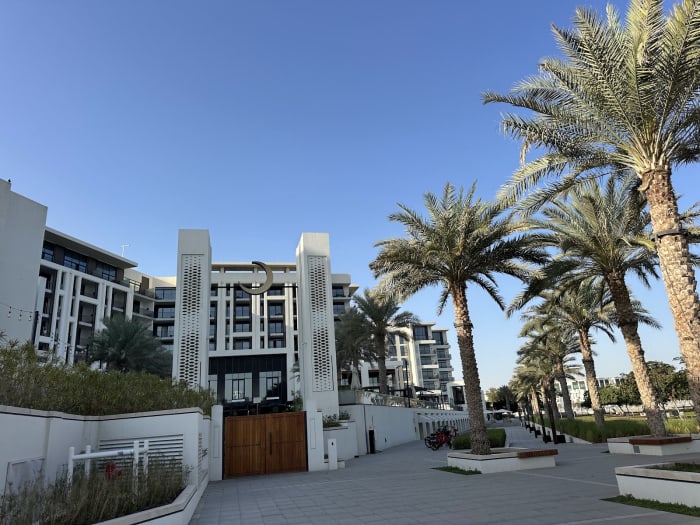
History & Spirit of the Place
In Muscat, luxury is not merely about ostentation; it is expressed through moderation, light, and the quality of materials. The Mandarin Oriental, Muscat embodies this local interpretation of refinement, cultivating a reputation built on precise service. Here, the heritage is rooted in an Omani culture of hospitality, discretion, and attention to detail.
Muscat possesses a unique identity within the Gulf, favouring low lines, open perspectives, mineral reliefs, and the Arabian Sea. Its architecture converses with the landscape. In this context, the Mandarin Oriental, Muscat combines the brand's standards with an Omani sensitivity, evident in the atmosphere, decorative references, and the way it puts visitors at ease.
The spirit of the place rests on a balance between grounding and modernity. Omani influences contribute to a coherent narrative, allowing guests to feel the essence of Muscat while enjoying the comforts of a prestigious international address. Regular patrons of Mandarin Oriental will recognise the constant attention, fluid interactions, and an understanding of the guest's rhythm. Here, this signature takes on a more serene and luminous form.
This notion of calm is essential. In a city of contrasts, having a serene anchor enhances the quality of one’s stay. The establishment is designed as an orderly interlude within Muscat. It offers reliable service and spaces that do not overwhelm the eye. Luxury here prioritises coherence over accumulation.
For French travellers, the hotel also holds cultural significance, allowing them to approach Oman without disruption, thanks to international comfort standards. A real local identity remains perceptible. The stay gains meaning as one understands that the city, the hotel, and Omani hospitality share a common quality: a reserved elegance. The Mandarin Oriental, Muscat thus offers a contemporary interpretation of Muscat, attentive to light, relative silence, and the politeness of forms.
The Establishment
One of the advantages of the Mandarin Oriental, Muscat lies in its location: a venue designed for exploring the city while maintaining a sense of retreat.
This dual benefit is rare. Too often, urban hotels sacrifice tranquillity for centrality, or vice versa. Here, the peaceful setting in the heart of Muscat is one of the keys to its appeal.
Guests can organise their days around appointments, visits, or strolls, then return to an environment that shields them from the hustle and bustle.
The establishment presents itself as an elegant interface between the city and relaxation. In Muscat, geography is as important as architecture. The light is bright, horizons are often clear, and the relationship between indoors and outdoors is integral to the experience.
The address features a contemporary aesthetic tempered by Omani influences, suggesting a focus on textures, natural tones, and a certain sobriety of lines.
The best addresses in Muscat allow the context to enter without being dominated by it. The hotel does not need to overplay exoticism. Local influences may appear in patterns, materials, artisanal references, or the way light is filtered.
Contemporary design offers clarity, comfort, and a sense of space. Together, these two registers avoid both standardised international decor and folkloric reconstitution, resulting in a calm, readable elegance that is never cold.
For leisure stays, this location allows easy access to the various faces of Muscat: iconic neighbourhoods, waterfronts, cultural venues, shopping spots, or more contemplative outings.
For business travellers, it provides an efficient base where one can work, host meetings, or simply recuperate between engagements.
For families, the appeal is similar: the city remains accessible, yet the hotel retains enough serenity for a truly restful return at the end of the day.
The establishment accommodates various rhythms. Some travellers will use it as an active base, with early departures and late returns, while others will seek a more residential experience, characterised by slow moments, pauses, extended meals, and wellness activities.
The Mandarin Oriental, Muscat offers the city without the agitation, and calm without isolation. In a destination where the balance between exploration and retreat matters, this precise positioning makes all the difference.
Rooms and Suites
In a hotel of this calibre, the room becomes the focal point of the stay. At the Mandarin Oriental, Muscat, the rooms and suites embody the essence of an urban retreat, blending Omani influences with contemporary design.
In Muscat, a successful room interacts harmoniously with light. It favours understated features and a palette that softens brightness. The most refined interiors avoid harsh contrasts, favouring wood, stone, textured fabrics, matte finishes, and artisanal details. Here, sophistication remains evident without being ostentatious.
Comfort extends beyond just the bedding or the bathroom; it also hinges on how the room accommodates various uses. A flexible ergonomics is essential. One should be able to relax, work, read, prepare, and store belongings effortlessly. The turn-down service contributes to this discreet quality, as returning to a room prepared for the night enhances the experience.
The suites extend this philosophy, offering more space and a clearer separation of functions. They are ideal for longer stays, for guests who entertain, or for those seeking a more residential feel. The key lies in the overall coherence. Smooth circulation, preserved intimacy, and pleasant materials reduce the frictions of daily life.
The Omani identity is reflected in the decor, geometric references, and a palette inspired by sand, stone, and sea. Contemporary design brings clarity, discreet technology, and international comfort. When the balance is right, the room becomes an intimate translation of the location.
This is often where loyalty to a hotel is forged. A striking lobby may be quickly forgotten, but a room where one has slept well, worked without constraints, or simply watched the light change is remembered. At the Mandarin Oriental, Muscat, the rooms and suites fulfil this role with a quiet and attentive luxury.
Dining
In a prominent urban establishment, dining plays a role far beyond that of mere hotel service. It structures the days, sets the tone for the stay, and can even serve as a gateway to the destination. At the Mandarin Oriental, Muscat, it would be reductive to expect only impeccable execution of international classics. The Omani context invites a more imaginative offering that can articulate multiple registers: comfort food for the international clientele, a contemporary interpretation of regional flavours, the art of breakfast as a moment of awakening, and a service sufficiently flexible to accommodate both business agendas and leisurely stays.
Breakfast deserves particular attention, as it often encapsulates the intelligence of a hotel. In a city like Muscat, where the morning light is already quite present and days can start early, this first meal must be precise, calming, and generous without being heavy. One expects a house like the Mandarin Oriental to provide a discreet presentation, attentive service, well-prepared products, and the ability to satisfy very different habits. The hurried traveller does not have the same expectations as one who wishes to linger over the morning. A grand hotel knows how to make both experiences equally natural.
Beyond the morning, dining truly comes into its own when it reflects the locale. This can be achieved through the use of certain spices, a sensitivity to seafood, nods to the region's hospitality traditions, or simply by crafting the experience around conviviality and a leisurely pace. Here, luxury does not lie in complicating the plate, but in giving the meal an obviousness: precision in cooking, clarity of flavours, rhythm of service, acoustic comfort, and the feeling of being exactly in the right place.
Business travellers will likely appreciate the opportunity to have lunch or dinner in an environment where conversation flows effortlessly and elegance prevails. Couples will find it a natural extension of their stay, especially in the evening when the city slows down and the hotel becomes a more intimate refuge. Families, on the other hand, often seek a dining experience that balances quality and flexibility without excessive rigidity. Thoughtful dining must cater to these diverse needs without losing its identity.
One must also consider room service, which is often decisive in high-end hotels. After a flight, a day of sightseeing, or a series of meetings, being able to dine in the privacy of one’s room with the same level of attention as in public spaces is a hallmark of a well-run establishment. Even when not detailed, this aspect extends the overall promise of the hotel: seamless comfort.
Ultimately, dining at the Mandarin Oriental, Muscat likely embodies the idea of measured luxury that characterises the best addresses in the city. More than a gastronomic theatre, it seeks to provide a coherent, elegant, and hospitable experience that can accompany the various tempos of the stay and, through subtle touches, offer a sensitive interpretation of Muscat.
Spa & Well-being
At the Mandarin Oriental, Muscat, well-being is one of the key attractions of the stay. It is advisable to book treatments in advance during peak season.
In the brand's universe, the spa holds significant importance. In Muscat, this aspect takes on a particular prominence.
Well-being is not limited to a one-off treatment; it accompanies the rhythm of the stay. It aids recovery after travel, allows one to slow down, or helps to regain energy.
A spa of this calibre must meet varied expectations without standardisation. Some seek a deep massage after a long flight, while others prefer a facial, a wrapping ritual, or relaxation spaces.
In Muscat, well-being is conceived in harmony with the environment. The light, warmth, mineral landscape, and proximity to the sea create a strong sensory backdrop.
In a house like the Mandarin Oriental, a high level of execution is expected. The welcome must be precise, therapists experienced, and transitions well managed.
During peak season, demand confirms the spa's importance in the overall experience. For some travellers, it is as vital as the location or the quality of the rooms.
Well-being extends beyond the spa; it encompasses the quality of sleep, the tranquillity of spaces, turn-down service, and the availability of staff.
At the Mandarin Oriental, Muscat, this dimension aligns with the identity of the address. Booking treatments in advance allows for structuring the stay around genuine recovery moments.
Concierge & Services
True luxury is often measured in what is almost invisible. At the Mandarin Oriental, Muscat, it lies in a continuous quality of service.
24-hour concierge, 24-hour reception, daily housekeeping, turn-down service, luggage storage, laundry, wake-up service, and multilingual staff form a coherent ensemble. These services make the stay smoother, absorbing unforeseen events and reducing logistical fatigue.
The concierge occupies a central role. In Muscat, it facilitates the organisation of visits, shopping, professional appointments, and last-minute reservations. Its value lies in its ability to orient, adjust, and anticipate according to the traveller's profile.
The continuously open reception caters to delayed flights, late arrivals, and early departures, providing a constant presence and solutions at any time.
Daily housekeeping and turn-down service reflect a silent hospitality. An immaculate room remains the foundation of the experience, while turn-down service complements the rhythm of the stay and reinforces the feeling of care.
Laundry, luggage storage, and wake-up service meet very concrete needs. Their efficiency contributes to the memory left by the address. Multilingual staff adds a valuable ease for an international clientele.
In Muscat, service takes on a subdued yet demanding tone, characterised by calm availability, constant precision, and genuine situational awareness. This is what transforms an address into a place of trust.
The Art of Living in Muscat
Staying at the Mandarin Oriental, Muscat, also means choosing a particular way to engage with the Omani capital. Muscat does not reveal itself as a city of rapid consumption; it requires an attentive gaze, an appreciation for nuances, and a willingness to embrace the local rhythm. Visitors come for the sea as much as for the city, for the landscapes as much as for the architecture, for the sense of space as much as for the quality of hospitality. In this context, a well-located and tranquil hotel becomes more than just accommodation; it serves as a vantage point, a filter, and a balance point.
The art of living in Muscat is primarily rooted in light. It shapes the landscapes, brightens certain facades, softens the sea at different times of the day, and transforms movement into a visual experience. A traveller who takes the time to explore the city quickly learns to work with this light. Early outings, leisurely pauses, returning to the hotel during the hottest hours, and then venturing out again in the late afternoon are essential. An establishment like the Mandarin Oriental, Muscat, supports this rhythm, thanks to its serene setting in the heart of the city.
Another essential dimension is that of moderation. Muscat is not a destination that seeks to impress at every turn; its elegance is more understated. It is evident in the open perspectives, a certain architectural homogeneity, the relationship between built structures and landscape, and the care given to hospitality. For visitors, this implies a different kind of availability. To observe, to slow down, to accept that the pleasure of the stay comes as much from the transitions as from the destinations themselves. A leisurely coffee, a stroll, a return to the hotel to refresh, a quiet dinner—these simple sequences often lend depth to Muscat.
From November to March, the cooler months allow for more outdoor living, more comfortable exploration, and a fuller enjoyment of the city. This is also a time when high-end hotels operate at full capacity, making it wise to anticipate certain reservations, particularly at the spa. However, beyond the season, the key remains in how one constructs their stay. Muscat rewards flexible itineraries that allow for spontaneity and relaxation.
For couples, the city offers a setting conducive to an elegant getaway without excessive hustle. For business travellers, it provides a rare form of respite in the region. For families, it combines accessibility, perceived safety, and a generally gentle atmosphere. In all cases, the role of the hotel is to translate this quality of life into a tangible experience: seamless service, calming spaces, straightforward organisation, and the ability to guide guests towards what suits them best.
The Mandarin Oriental, Muscat, appears particularly well-suited to this interpretation of the destination. More than just a luxurious backdrop, it offers a setting to inhabit Muscat with grace. Its true value may lie in allowing guests to discover the city without haste, and then return to an environment that extends its understated elegance.
Book via MyConciergeHotel
Booking the Mandarin Oriental, Muscat through MyConciergeHotel means preparing your stay with precision and flexibility. In a hotel where service is as important as location, the reservation should not merely be a transactional act. It represents the first level of support. When handled well, it allows for tailoring the stay to the traveller's profile, clarifying priorities, and anticipating the essentials: travel pace, room type, specific needs, arrival and departure times, or booking treatments during peak periods.
The value of an editorial and concierge intermediary like MyConciergeHotel lies in its ability to interpret a destination beyond its technical specifications. The Mandarin Oriental, Muscat is not merely a list of amenities. Its appeal lies in a balance between location, tranquillity, style, service, and suitability for various travel purposes. Some will seek an elegant base to explore Muscat, while others will prioritise wellness. Still, others may require a hotel suited to a professional agenda. Smart booking means identifying this centre of gravity before departure.
This approach is particularly beneficial in Muscat, where seasonality greatly influences the experience. The period from November to March is especially favourable, and it is also when demand can be at its highest. Anticipation allows for securing accommodation, as well as the elements that add texture to the stay: treatment schedules, transfers, special requests, or choosing a room category appropriate for the length and purpose of the trip. A short getaway is not prepared in the same way as a longer stay or a trip that combines work and leisure.
Booking through MyConciergeHotel also provides a more qualitative understanding of expectations. For a couple, the focus might be on a serene experience, dining, and spa treatments. For a family, the priority may be logistical ease and the ability to alternate outings with downtime. For a business trip, attention will be paid to the simplicity of services, flexibility of timings, and reliability of the welcome. This adjustment work often determines the success of the stay.
Finally, in a house where service is a signature, arriving with a thoughtfully planned reservation allows for quicker enjoyment of the hotel’s best offerings. Less time spent on last-minute decisions means more availability to experience Muscat, relax, or work under optimal conditions. This is particularly true for the spa, where slots can fill up quickly during high season, as well as for all aspects of invisible comfort: specific requests, timings, and stay preferences.
Thus, the role of MyConciergeHotel is not merely to facilitate the booking. It is to shape the journey appropriately. For the Mandarin Oriental, Muscat, this approach makes sense. It respects the essence of the destination and enables a more coherent and seamless experience.