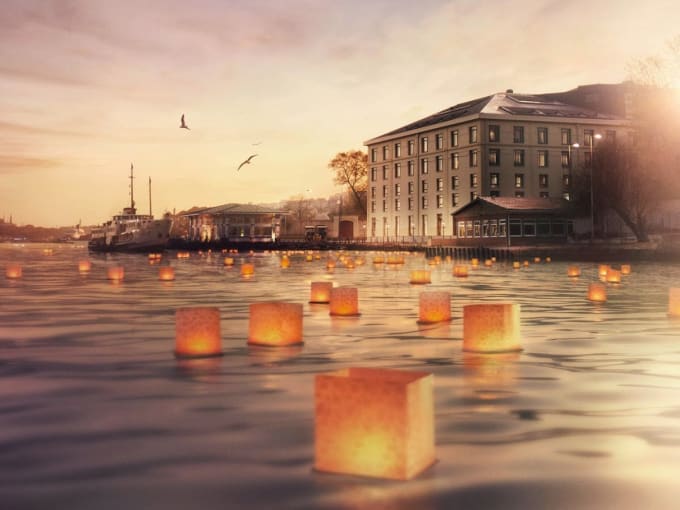
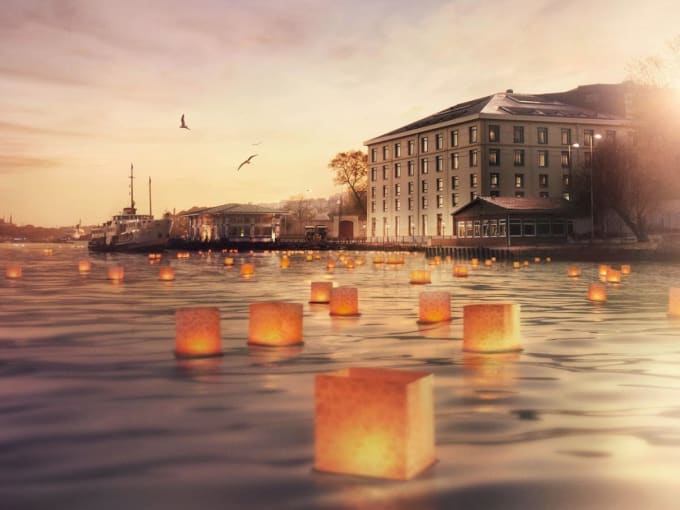
Since its inception in Singapore in 1971, Shangri-La has cultivated a distinct vision of Asian hospitality. This vision is rooted in warm service, seamless urban stays, and a genuine appreciation for views. The group has also established a recognisable signature, characterised by towering structures, business addresses, Cantonese restaurants, and CHI spas. This selection focuses on this promise as it intersects with vertical cities and powerful horizons. In London, Shangri-La The Shard transforms the skyline into a hotel experience. In Paris, Shangri-La Paris takes a different approach, where the former princely residence engages in dialogue with the Eiffel Tower. In Hong Kong, Island Shangri-La exemplifies how the brand thrives in financial centres. In Istanbul, Tokyo, and Boracay, the same grammar takes on very different accents.
To establish this Top 8, we have only included addresses that are part of our selection. This is a straightforward rule that avoids approximate comparisons. We first examine the coherence between the Shangri-La promise and the actual experience. Service is paramount, as is the quality of execution. We also consider the strength of the location; a tower is only worthwhile if the view truly enhances the stay. An urban palace only makes sense if the history, architecture, and address create lasting memories. Our advisors then assess several concrete markers: the city, positioning, room clarity, the presence of a CHI spa, the reputation of Asian dining options, and the suitability for business clientele, families, and leisure travellers.
The panorama presented here clearly showcases the group's elasticity. Shangri-La The Shard in London belongs to the most pronounced sky-high category, with rooms that dominate the capital from an instantly recognisable skyscraper. Shangri-La Hotel Tokyo follows a similar logic, appealing to an international clientele seeking efficiency, tranquillity, and metropolitan views. In Hong Kong, Island Shangri-La and Island Shangri-La, Hong Kong remind us of the brand's historical roots in major Asian cities. In Paris, the vocabulary shifts; Shangri-La Paris is not a tower but a Palace, where the allure lies in the convergence of aristocratic heritage, a Parisian address, and a perspective on the Eiffel Tower. In Istanbul, Shangri-La Istanbul and Shangri-La Bosphorus embrace the strait. Finally, in Boracay, the group steps away from verticality to rediscover the high-end beach resort experience.
Looking ahead to 2025 and 2026, several trends enhance the appeal of these hotels. The first concerns the sustainable return of urban stays with high utility value, as travellers seek to save time and favour hotels that simplify arrivals, meetings, transport, and dining. The second trend pertains to panoramic suites, which are no longer merely a luxury image but have become functional retreats for work, hosting, or relaxation. The third trend focuses on well-being; the CHI spa remains a strong reference point, as it extends the group's Asian identity. Lastly, we observe a sustained demand from affluent Asian families who favour clear brands, consistent standards, and a service capable of blending discretion, attentiveness, and intergenerational flexibility.
What distinguishes Shangri-La, viewed through a French luxury lens, is not a flashy display but rather a way of embedding comfort as a language. The gesture is often understated, with a focus on continuity rather than impact. In a market where many hotels tout personalised service, the brand maintains a rather classic interpretation of hospitality, providing reassurance, structure, and anticipation. This is particularly evident in complex cities like London, Tokyo, or Hong Kong. My advice for understanding this family of hotels is not to oppose heritage and height. Shangri-La Paris demonstrates that a historic palace can embody the group's DNA, while Shangri-La The Shard proves the opposite; a tower can also offer a deeply immersive experience if the view, service, and spaces truly engage with one another.
It is also important to avoid automatic superlatives. This ranking does not claim that one hotel is universally superior to others; rather, it indicates which establishment best expresses a specific facet of the brand. Some travellers will prioritise a view, while others may favour a Palace status, a business address, quick access to financial districts, or a family beach holiday. What our advisors often observe is that Shangri-La performs well when the hotel is chosen for its precise context: London for verticality, Paris for the interplay of history and panorama, Hong Kong for urban energy, Istanbul for the Bosphorus, Tokyo for precision, and Boracay for relaxation. Each address thus has its own audience, rhythm, and ideal season of use.
The following Top serves as a map of this Asian hospitality applied to very different settings. Some addresses dominate a skyline, while others dominate the imagination.