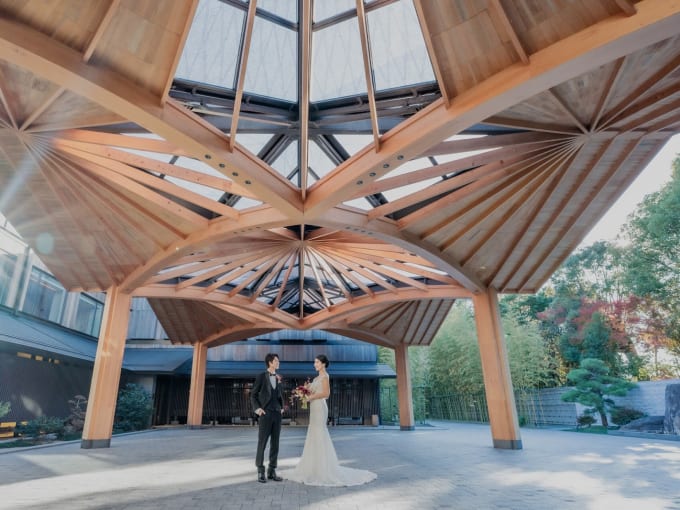
In Japan, hotel romance is never merely about a suite with a view. It is more about the quality of silence. It also relates to the rhythm of the stay. A couple comes here seeking something beyond mere decor; they seek a shared breath. This is what makes this ranking particularly intriguing. Between Tokyo, Kyoto, Hakone, Shima, and Yufuin, the country offers various expressions of intimacy. Some hotels emphasise urban energy and night-time vistas, while others focus on baths, gardens, and a retreat from the world. Notably, Japan excels in the art of creating pauses. Aman Tokyo and Bulgari Tokyo appeal to city lovers, while Aman Kyoto, Fufu Kyoto, and Hakone Ginyu cater to those desiring a more secluded experience.
To establish our editorial perspective, we do not seek sensationalism. We observe concrete criteria. The immediate destination matters significantly. A romantic hotel does not offer the same promise in Otemachi as it does in Hakone. We also consider architecture, the sense of intimacy, and the prominence given to the landscape. The relationship between the room and its environment is crucial. The presence of a bath, an onsen, a garden, or a defining view naturally weighs in. We also take into account the brand's reputation. An Aman, a Four Seasons, or a Hoshino Resorts carries an identifiable hospitality grammar. Finally, our advisors assess the overall coherence. A romantic stay often hinges on the details. Arrival, calm, fluidity, and discretion make all the difference.
The Japanese panorama is more varied than one might imagine from Europe. Tokyo concentrates several expressions of contemporary luxury. Aman Tokyo, Four Seasons Hotel Tokyo at Otemachi, ANA InterContinental Tokyo, Grand Hyatt Tokyo, Fairmont Tokyo, and Homeikan do not tell the same story. Kyoto, on the other hand, delves deeper into cultural richness. Aman Kyoto, Four Seasons Hotel Kyoto, Fufu Kyoto, and Ace Hotel Kyoto showcase four distinct approaches. One is contemplative, another engages with heritage, while a third embraces a more creative register. Outside the major centres, romance takes on yet another texture. Amanemu gazes towards Ago Bay. Hakone Ginyu and Hoshino Resorts KAI Hakone immerse couples in the ryokan experience. Enowa Yufuin opens a more intimate path, oriented towards the nature of Oita.
The trends for 2025 and 2026 confirm what we have been observing for several seasons. Affluent couples are no longer just seeking space; they desire a comprehensible experience. Japan responds well to this expectation. The first trend is that of intentional retreat. Hotels that offer a strong relationship with the landscape gain relevance. The second concerns thermal well-being. Establishments with onsens or private baths remain central to the romantic imagination. The third trend is urban. In Tokyo, travellers seek hotels capable of shielding them from the city's pace while keeping them connected to its key districts. Finally, the notion of discreet luxury is on the rise. It favours understated, well-controlled places where service recedes without disappearing. What our advisors observe is a more mature demand.
This maturity aligns with a certain idea of French luxury—not a model to impose on Japan, but rather a way to interpret excellence. At MyConciergeHotel, we value hotels that can create a complete experience. Romance is not a floral decoration added at the last minute; it is a staging of time, light, and attention. Japan possesses a rare precision in this regard. In a ryokan like Hakone Ginyu, intimacy flows through the bath and the landscape. In a prestigious establishment like Four Seasons Hotel Kyoto, it may arise from a garden, a highly calibrated service, and a sense of shelter. In a more design-oriented hotel like Ace Hotel Kyoto, it takes on a freer form. My advice is to first choose the ambiance, then the destination.
It is also essential to approach this ranking without absolute reflexes. The best romantic hotel in Japan does not exist in the abstract; it exists for a specific type of couple, for a season, and for a travel project. Some travellers wish to celebrate an anniversary in the city, while others want to disappear for two nights amidst forest, steam, and tatami mats. Others still seek a first trip to Japan with an international level of comfort. This is why we avoid hollow superlatives. A hotel can be remarkable without being suitable for everyone. Aman Kyoto does not offer the same experience as Bulgari Tokyo. Homeikan does not tell the same story as Fairmont Tokyo. Enowa Yufuin does not aim for the same stay as Grand Hyatt Tokyo. Our role as concierges is to match an address to a precise intention.
In the following Top 10, you will find hotels for seclusion, celebration, slowing down, or rediscovering Japan as a couple. Each address has its own logic, and it is this logic that we have prioritised.