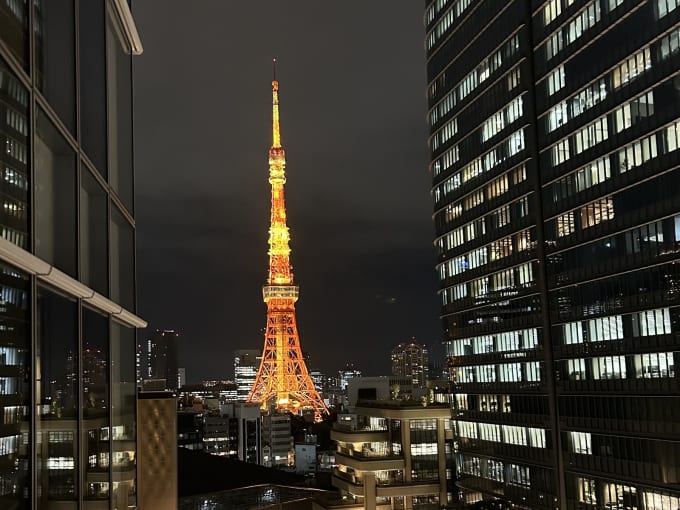
Discussing design hotels in Japan necessitates precision. Here, design is not merely the signature of an architect or a collection of rare objects. It encompasses space, rhythm, light, silence, and the way one inhabits a room. This is what makes this segment particularly exciting. Japan masterfully balances minimalism with urban density, the tradition of ryokan with contemporary verticality, raw wood with glass, and moss gardens with city skylines. In a single journey, one can transition from Aman Tokyo to Ace Hotel Kyoto, and then to Amanemu or Gôra Kadan Hotel. It is important to note that this ranking does not seek spectacular décor. Instead, it focuses on hotels where form genuinely enhances the experience of the stay.
At MyConciergeHotel, we interpret design as an invisible service. A hotel qualifies for this selection if it demonstrates a strong coherence between architecture, location, circulation, materials, comfort, and local identity. We also consider the quality of the relationship between private and communal spaces. A beautiful room alone is not sufficient; a holistic vision is essential. We take into account verifiable facts. Brand reputation matters, as does the establishment's connection to a specific city or landscape. The level of hospitality, consistency of experience, and clarity of intent are also significant. What our advisors observe is straightforward: the best design hotels are those that are immediately comprehensible and continue to reveal themselves throughout the stay.
Japan offers a rare diversity in this regard. Tokyo showcases several expressions of hotel design, from the subdued monumentality of Aman Tokyo to the Italian elegance of Bulgari Tokyo. Four Seasons Hotel Tokyo at Otemachi exemplifies a more contemporary interpretation of the grand urban hotel. Further afield, Kyoto presents a different tempo. Ace Hotel Kyoto engages in a dialogue between creative culture, heritage, and international hospitality. Fufu Kyoto adopts a more intimate approach. Traditional ryokans and houses complete this panorama. Andon Ryokan in Tokyo, Hotel Asaba in Izu, Hotel Beniya Mukayu in Kaga-shi, Bettei Senjuan in Minakami, and Gôra Kadan Hotel in Hakone demonstrate that Japanese design can also embody restraint, texture, and a relationship with bathing, gardens, or landscapes.
The trends for 2025-2026 confirm several key themes. Firstly, the end of demonstrative design. The most discerning travellers seek less theatricality and more authenticity in a place. Secondly, there is a resurgence of tactile materials. Wood, stone, paper, textiles, patinated metal, and ceramics are regaining central importance. Sensory design is also advancing. Acoustics, natural light, thermal transitions, and connections to the outdoors are becoming crucial. Another clear trend is the reinterpretation of ryokan language within very contemporary settings. Amanemu is a refined example of this. Finally, major international brands present in Japan are adapting their vocabulary more. They aim less to impose a global style and more to engage with the local context. My advice in Japan is to pay attention to thresholds, corridors, framed views, and bathrooms. It is often here that design reveals its truth.
This perspective aligns with a certain idea of French luxury. Not a verbose luxury, but one of composition, measure, and attention. Japan speaks this language fluently. In the best design hotels in the country, refinement is not proven; it is felt in the precision of a line, the quality of an empty space, the fluidity of service, or the harmony between the building and its surroundings. This is also why these addresses interest our concierge service. They cater to travellers seeking more than just a beautiful photo. They look for a place that endures, that complements a business trip, a honeymoon, a cultural itinerary, or a restorative retreat. Here, design is never merely decorative; it shapes the way one experiences the hotel.
This ranking should also be read methodically. A number one does not negate the qualities of number ten. Each hotel serves a purpose, a mood, a geography, and an idea of Japan. Some travellers will desire a highly structured urban immersion. Others may prefer a thermal refuge, a ryokan with a strong identity, or a more creative address. A design hotel can be spectacular or almost monastic. It may seek a view, as in Tokyo, or blend into the landscape, as in certain regional retreats. We do not reward style for style's sake. We value places that maintain a strong coherence between promise and experience. This is an important nuance. In Japanese hospitality, restraint can be more demanding than ostentation.
Thus, our selection of the best design hotels in Japan brings together very different expressions of the same level of expectation. You will find major urban addresses, more confidential houses, and retreats where space becomes almost therapeutic. It is precisely this diversity that makes the country so compelling in the realm of hotel design.
Now, let us present our Top 10.