History & Heritage
In Fukuoka, the arrival of a Ritz-Carlton property is part of the city's broader transformation. Today, it stands as one of the major urban centres in southern Japan.
The Ritz-Carlton, Fukuoka belongs to a generation of international hotels that are attuned to the identity of their destination. Here, the heritage is rooted in two traditions: the Ritz-Carlton's commitment to service and the Japanese culture of hospitality.
Fukuoka occupies a unique position in the archipelago. As the gateway to Kyushu, a city of commerce and exchange, it looks towards the Asian continent as much as it does towards the rest of Japan. This openness is reflected in its rhythm and urban design, combining metropolitan efficiency with a gentle way of life.
A luxury hotel here takes on a different tone compared to those in Tokyo or Osaka. It is less ostentatious, more fluid, and more grounded in the idea of genuine comfort than in mere display.
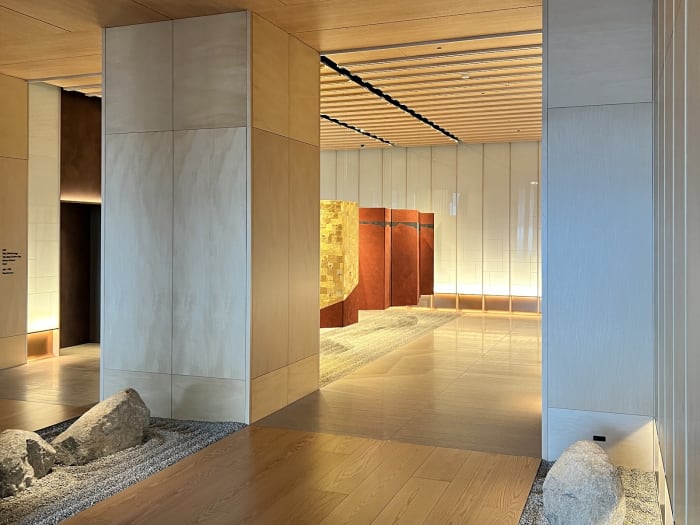
The identity of the place rests on a balance between international modernity and Japanese references. Contemporary design incorporates traditional touches, expressed through materials, light, the relationship with space, the restraint of lines, and the tactile quality of surfaces. This is also evident in the transitions between public spaces and rooms. This discreet vocabulary creates a luxury defined by calm, execution, and coherence.
The Ritz-Carlton brand brings a continuity of standards. For the traveller, this translates into a comprehensible experience. Attention to detail, structured welcome, service available at all hours, and consideration for both leisure stays and business trips.
In Fukuoka, this international grammar takes on a particular resonance in the context of the local environment. The establishment also serves as a vantage point over a Japanese metropolis brimming with confidence. More accessible than other major cities in the country, it remains equally stimulating.
The hotel caters to both couples and business travellers, offering softness, intimacy, and ceremony while remaining functional and efficient.
This dual purpose corresponds to the very nature of Fukuoka—a city of work and urban pleasures, of economic meetings and lively evenings. The Ritz-Carlton, Fukuoka thus embodies a contemporary promise. In the heart of a city in motion, high-end hospitality takes the form of quiet precision.
The Establishment
The primary allure of The Ritz-Carlton, Fukuoka lies in its location within a vibrant neighbourhood. This detail immediately shapes the experience of the stay.
In Fukuoka, urban life unfolds within a dense tapestry of shops, cafés, offices, and bustling streets. Staying here means choosing an address that is connected to the local fabric. For leisure travellers, it allows for a swift immersion into the city's rhythm. For business travellers, it simplifies movement.
The establishment presents itself as a vertical refuge above this lively scene. One enters from an active city and then transitions into a more subdued universe. This shift is part of the experience, creating a clear separation without severing ties with the outside world. It is not a resort detached from reality, but rather a tranquil urban address.
The modern design with Japanese touches provides coherence throughout. Elegance is born here from clean lines, a measured palette, and carefully selected materials. Japanese references are evident in the simplicity of the volumes, the texture of the wood, and the filtered light. The result remains contemporary, devoid of folklore or impersonal neutrality.
This quality of grounding is particularly significant in Fukuoka. The city possesses a more laid-back identity than other regional Japanese capitals while maintaining a high level of organisation. A hotel of this calibre must offer the codes of international luxury while embracing a form of local simplicity. This is reflected in fluid communal spaces where everyone can occupy the area at their own pace.
The vibrant character of the neighbourhood also influences the temporal experience of the stay. In the morning, the hotel serves as a serene base before a day of meetings or sightseeing. In the late afternoon, it becomes a point of return before heading out for dinner or exploring the city. In the evening, this location grants access to a more gastronomic, luminous, and social Fukuoka. This is a tangible advantage for travellers who enjoy feeling the pulse of a destination.
Finally, the establishment embodies a rare versatility. Romantic without being exclusively focused on couples’ escapes, professional without functional coldness. This ability to accommodate different uses requires well-thought-out spaces, flexible service, and a clear identity. At The Ritz-Carlton, Fukuoka, the venue acts as a complete urban framework, serving as an anchor point, refuge, and observation post over Fukuoka.
Rooms and Suites
In a hotel of this calibre, the room is never just a simple sleeping space. It constitutes the gravitational centre of the stay. At The Ritz-Carlton, Fukuoka, the rooms and suites extend the language of the rest of the establishment: a clean modernity, an elegance without excess, and Japanese references integrated with restraint. This approach suits Fukuoka, a city where fluidity, functionality, and tangible comfort are valued more than decorative display.
The experience of a successful room often begins with a sense of order. In the best urban hotels in Japan, everything seems to be in its place, without apparent rigidity. The volumes provide ease, with discreet and efficient storage. The flow is intuitive. The lighting accompanies the different moments of the day. In the morning, the room should be bright, energising, and conducive to quick preparation. In the evening, it adopts a more enveloping, almost silent tone that helps one detach from the external rhythm. This modulation is part of contemporary luxury.
In the rooms, this translates into a soothing palette, natural materials, understated lines, and a particular care for tactile details. In Japan, comfort is often linked to precision. The quality of a textile, the correctness of a seat, the softness of indirect light, and the sensation of a space that breathes are as important as the decor. These elements may be less spectacular than ostentatious decor, but they are more enduring in memory. They allow the room to become a place of genuine recovery, which is equally important for a couple on a getaway or a business traveller.
The suites, in this spirit, offer not only more space but also a different way of inhabiting the hotel. They allow for a clearer distinction between the various aspects of the stay: receiving guests, working, resting, contemplating the city, or enjoying a moment for two. This ability to create multiple uses within a single space is invaluable in an urban destination. It adds an extra flexibility to the stay, whether it involves an early arrival, adjusting to a time difference, an informal meeting, or an extended evening in the intimacy of the room.
For romantic travellers, the appeal of a well-designed room often lies more in its atmosphere than in its appearance. A beautiful address knows how to create softness without falling into cliché. This includes acoustic intimacy, the quality of bedding, the generosity of the bathroom, and the sensation of being shielded from the urban tumult. For business travellers, other criteria become essential: connectivity, comfort of the desk or work table, turn-down service, and impeccable daily housekeeping. Returning to a space perfectly restored after a busy day is part of the expected comfort.
Finally, what distinguishes the rooms of a great contemporary hotel is their ability not to tire the eye. One returns to them several times a day, sometimes over several nights. They are expected to maintain their soothing power. At The Ritz-Carlton, Fukuoka, this promise rests less on immediate impact and more on overall coherence: a decor designed to endure, comfort calibrated for varied uses, and that silent precision that makes a room truly habitable.
The Dining Experience
In a grand urban hotel in Japan, gastronomy transcends mere convenience. It structures the day and sets the rhythm of the stay.
At The Ritz-Carlton, Fukuoka, reserving a table at the main restaurant upon arrival speaks volumes. Dining holds a central place here.
In Fukuoka, renowned for its culinary culture, this dimension takes on a particular significance.
Here, one expects a cuisine that welcomes an international clientele without breaking from the Japanese context. Contemporary and elegant spaces. Attentive service at the right tempo.
This balance is important for both couples and business travellers. Some seek a relaxed experience, while others desire an efficient lunch or a dinner meeting.
Fukuoka adds a unique depth to the dining experience. The city is known for its culinary dynamism, conviviality, and direct relationship with the pleasure of eating.
Even when dining at the hotel, there is an expectation of a connection with this local energy. This is conveyed through seasonality, product quality, flavour clarity, and the care taken with breakfast.
The morning often reveals the seriousness of a hotel. A great breakfast is judged by the clarity of the offering, freshness, service precision, and adaptability.
The main restaurant thus becomes a transitional space between the intimacy of the room and the vibrancy of the city.
At dinner, the stakes change. The dining experience must offer a true interior destination, especially when one chooses to stay on-site after a busy day.
The setting must be just right. Refined enough to mark the evening, yet flexible enough to avoid excessive formality.
In Japan, high-end service knows how to be very present while remaining discreet. When executed well, the meal flows seamlessly. One feels attended to, never interrupted.
The dining experience at The Ritz-Carlton, Fukuoka also contributes to its role as a living space. One can enjoy a coffee, set a meeting, or extend a conversation here.
For couples, it provides a simple setting to create an atmosphere. For professional travellers, it serves as a valuable tool, in line with the hotel's standing.
Thus, dining becomes a natural extension of hospitality, embedding the stay within a form of continuous comfort.
Wellness & Rhythm of the Stay
Wellness is not limited to a spa. It also encompasses the rhythm of the stay, the rest in the room, and the quality of service. At The Ritz-Carlton, Fukuoka, this dimension is particularly significant. The hotel caters to two demanding uses: romantic getaways and business travel.
In Fukuoka, comfort often begins with a proper distance from the city. One enjoys its energy, restaurants, and lively neighbourhoods. There is also an expectation of genuine relaxation from the hotel. This balance between urban intensity and controlled retreat is part of contemporary luxury. It relies on discreet choices: acoustics, circulation, staff availability, housekeeping, lighting, and service consistency.
The turndown service fully participates in this logic. It does not merely prepare for the night; it marks the transition to rest. The room becomes quieter, more intimate. For a couple, this detail enriches the atmosphere of the stay. For a business traveller, it creates a clear break after a busy day.
Daily housekeeping plays a comparable role. Returning to a perfectly tidied space provides immediate comfort. Luxury here consists of simplifying the stay, reducing friction, and making the overall experience more breathable. This approach resonates particularly in Japan, where hospitality often involves meticulous attention.
For a couple's stay, wellness also takes on an emotional form. It relates to the ability to slow down, to reconnect in a controlled setting, and to avoid logistical constraints. A well-designed hotel allows this to happen naturally. In an urban destination, this ability to create intimacy is invaluable.
For professional travellers, wellness is more functional but equally essential. It is about truly sleeping, recovering quickly, and relying on services available at all hours. 24-hour reception, 24-hour concierge, luggage storage, wake-up service, and laundry significantly lighten the burden of travel.
Thus, The Ritz-Carlton, Fukuoka integrates wellness into its overall operation. Rest is not confined to a dedicated space. It is reflected in the quality of transitions, the precision of services, and the discreet care given to hospitality.
Concierge & Services
The true level of a luxury hotel is often measured by what it makes possible. At The Ritz-Carlton, Fukuoka, the services outline a clear promise: that of a seamless stay, supported by a constant and unobtrusive presence.
The 24-hour concierge and 24-hour reception are the most visible pillars of this promise. In Fukuoka, this continuous availability goes beyond mere comfort. It supports travellers with changing schedules and needs.
For a guest arriving late, departing early, or adjusting their itinerary, finding a competent contact at any hour transforms the experience. Luxury begins here, in the absence of friction. The reception ensures this continuity. The concierge organises, guides, recommends, confirms, and simplifies.
The multilingual staff directly contributes to this quality of stay. Being able to articulate a precise request, understand a recommendation, or adjust a reservation fosters a climate of trust. In an establishment welcoming both leisure and business clientele, this linguistic fluidity remains a marker of professionalism.
Luggage storage, laundry, and wake-up services are at the heart of the real experience. Luggage storage allows for a half-day gain upon arrival and departure. Laundry supports extended stays and business trips. The wake-up service remains a discreet and reliable classic.
Daily housekeeping and turndown service complete the ensemble. The room is maintained without interrupting the stay. Tidied up, it retains its personal dimension. Prepared for the night, it avoids any excess staging.
The difference lies in the articulation of these services around the traveller. The reception relays the concierge's efforts. The concierge anticipates logistical needs. Housekeeping aligns with the client's rhythm. The overall effect produces a sense of ease.
At The Ritz-Carlton, Fukuoka, the services accompany stays of different natures without rigidifying the experience. Whether for a romantic getaway, a business trip, or an urban stopover, each guest finds a level of attention tailored to their needs. The concierge and services form the discreet architecture of this experience.
The Art of Living in Fukuoka
Choosing The Ritz-Carlton, Fukuoka, is also about embracing a particular way of experiencing the city. Fukuoka lacks the theatricality of Tokyo, the historical intensity of Kyoto, and the monumental scale of Osaka. Its appeal lies elsewhere: a rare balance between economic dynamism, everyday comfort, a rich culinary culture, and proximity to both the sea and the rest of Kyushu. For the traveller, this combination makes the urban experience particularly enjoyable, without sacrificing interest.
The hotel's location in a lively district is significant. Fukuoka is best explored on foot, in segments. The streets, shopfronts, cafés, and passers-by gradually form a picture of the city. The energy here is less overwhelming than in larger metropolises, more comprehensible, more human. This quality makes short stays effective; in a short time, one can grasp something of the local character, blending modernity, friendliness, and a gentle pace. A well-placed hotel thus becomes a true anchor point.
As is often the case in Japan, Fukuoka subtly changes with the seasons. Light, climate, visitor numbers, cultural calendars, and the tone of the streets all evolve. For the attentive traveller, these variations enrich the stay. They influence the choice of walks, evening outings, and the best moments to explore the surroundings.
Fukuoka also captivates with its relationship to gastronomy. The city boasts a strong culinary reputation in Japan. This culture of taste permeates the overall atmosphere. Dining al fresco is common, one moves between various eateries, and the evening remains a lively time. For guests of The Ritz-Carlton, Fukuoka, the city's experience can begin right at the hotel’s doorstep and extend late into the night, before retreating to the calm of their room.
For couples, Fukuoka offers a fitting backdrop. The city does not overplay romance; it suggests it through its fluidity, evening lights, relationship with water, and relaxed atmosphere. A stay for two can take on a very contemporary form, filled with discoveries, pauses, refined meals, and returns to the hotel. The establishment naturally fits into this narrative.
For business travellers, the local art of living softens the journey. Fukuoka is a city where one can work seriously without sacrificing the pleasure of a well-lived stay. It is possible to juggle meetings while enjoying an interesting dinner, an evening stroll, or a pace less abrasive than in other economic centres. The Ritz-Carlton thus becomes a point of balance between performance and relaxation.
Staying here is not merely about sleeping in a beautiful address; it is about entering a city that remains accessible while being fully metropolitan. Fukuoka offers a version of urban Japan that is both refined, vibrant, and welcoming. The hotel, through its location and positioning, allows one to approach it with comfort, flexibility, and the feeling of already being part of the city's movement.
Book via MyConciergeHotel
Booking The Ritz-Carlton, Fukuoka through MyConciergeHotel means preparing your stay with precision. The difference lies in the way it is conceived.
A high-end urban hotel, situated in a vibrant district, requires a nuanced understanding of needs. This is where concierge support becomes essential.
Before arrival, several factors come into play. The first is the pace of travel. Whether it’s a short stopover, a stay focused on Fukuoka, a business trip, or a romantic getaway, each scenario calls for a different approach.
A room may be selected for its efficiency, while a suite might be better suited for multiple uses. Securing a restaurant reservation can also become a priority. Booking the main restaurant upon arrival can prove to be a wise decision.
The second factor is the local timing. In Fukuoka, the calendar influences the atmosphere of a neighbourhood, the availability of tables, and overall foot traffic. Intelligent booking also involves choosing the right dates and anticipating peak demand periods.
MyConciergeHotel incorporates this preparatory logic into the reservation process. For a couple, this might mean securing the essentials: a lovely table, a more relaxed pace, or requests related to a celebration.
For a business traveller, the stakes are often different. The focus is on streamlining arrival and departure, as well as anticipating practical needs such as laundry, luggage storage, or wake-up calls.
In both cases, the objective is straightforward: to remove complexity.
Booking through a specialist also allows for a better understanding of the hotel within its actual environment. The Ritz-Carlton, Fukuoka is a venue that resonates with the rhythm of the city.
The hotel can then be viewed as a strategic base as well as a place to stay. It is where you organise your downtime, meals, meetings, and your way of immersing yourself in Fukuoka.
In the realm of luxury, the quality of a reservation is often measured by what does not need to be corrected later. A well-prepared arrival, clear priorities, and a few useful requests made at the right moment enhance the overall experience.
For The Ritz-Carlton, Fukuoka, the goal is simple: to begin the stay even before check-in, with the right choices and the right pace.