History & sense of place
In Hakone, the idea of a deeply restorative stay cannot be separated from the region’s wider history. For centuries, this mountainous area has been associated with hot springs, travel stopovers and a distinctly Japanese culture of retreat, where one comes less to accumulate activities than to recover a more measured rhythm. Hakone Ginyu belongs to that tradition: not merely as a hotel, but as an address conceived in the spirit of the contemporary ryokan, with enough modern comfort to make the experience seamless without diluting its character.
What makes the property compelling is precisely this balance. On one side, a clearly legible Japanese sensibility in the volumes, the restraint of the lines, the use of wood, natural materials and light. On the other, a high-end approach to hospitality that meets the expectations of an international traveller: attentive service, preserved privacy, easy circulation and an atmosphere of quiet. Nothing here appears to chase effect for its own sake. Luxury is expressed instead through the care given to the setting, the way the architecture engages with the landscape, and that sense of withdrawal which feels especially valuable after the intensity of Tokyo or a more fast-paced journey through Japan.
Hakone Ginyu also speaks to a particular idea of Japanese travel: that of a pause in which one willingly slows down. A stay here often takes on the shape of a discreet ritual. You arrive, leave behind the tempo of stations, transfers and obligations, and enter a space where time seems to expand. Mountain views, proximity to Hakone’s famed hot springs, the hotel’s zen atmosphere and interiors inspired by traditional Japanese style all contribute to that impression of renewed harmony between body and surroundings.
Rather than foregrounding monumental history or a fixed heritage narrative, the property seems to cultivate a living continuity. It belongs to that family of Japanese addresses that do not stage tradition theatrically, but make it inhabitable in the present. This is what gives substance to the oft-used idea of blending tradition with modern comfort: here it is felt in calming spaces, coherent aesthetics and a service culture designed around rest.
For European travellers in particular, this dimension matters. Hakone Ginyu is not a backdrop to be consumed; it is a rhythm to be entered into. One encounters the Japanese value of attention to detail not as display, but as a way of making a stay more serene. That is likely what gives the address its lasting appeal: it does not impose a spectacular story, but offers a setting that feels deeply attuned to Hakone and to its long-standing culture of thermal wellbeing.
The establishment in its landscape
Hakone Ginyu is primarily understood through its environment. In Hakone, the landscape shapes the experience of the stay. Wooded hills, cooler air, diffuse volcanic activity, and the proximity of hot springs naturally invite retreat. The hotel fosters a close relationship with the surrounding nature.
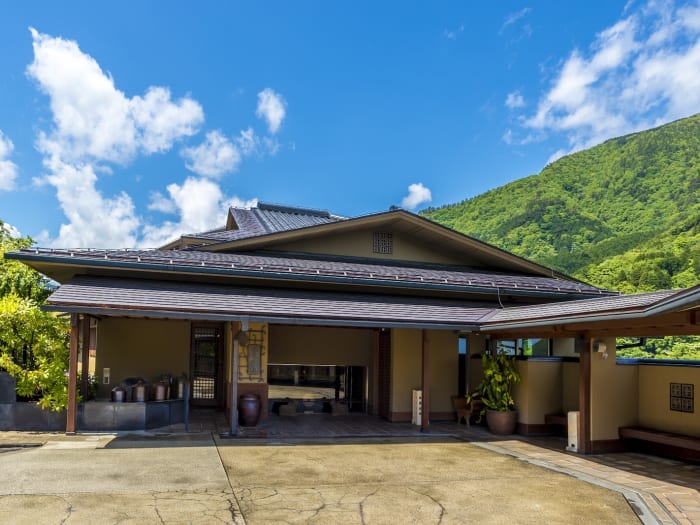
The architecture and communal spaces allow for this breathing space. The transitions between indoors and outdoors, the views of the landscape, and the materials used extend the site's tone. In a destination like Hakone, this is of great significance. The stay harmonises with the terrain, the changing light, and the relative silence of the mountains. The zen ambiance and soothing atmosphere find coherence here.
The proximity to hot springs is another structuring element. Hakone is among Japan's major destinations associated with onsen culture. Staying in this region often entails seeking a more direct relationship with thermal wellness. Days are organised around simple gestures: contemplating, bathing, reading, taking a short walk, and returning to calm. The hotel meets this expectation for a getaway focused on the essentials.
The establishment will suit travellers who are not looking for constant entertainment, but rather a form of tranquil density. Couples, fans of intimate addresses, travellers at the end of their journey in Japan, or guests seeking a respite from the city will find an appropriate setting here. Luxury resides in the location, the sensation of being sheltered from noise, and the opportunity to experience Hakone from a base that resonates with the local spirit.
Hakone remains a highly sought-after destination, particularly at certain times of the year. Therefore, booking in advance is wise. Once on-site, the prevailing impression is one of controlled retreat. Hakone Ginyu offers a gentle way to enter Hakone. The landscape, the steam from the baths, and the elegant restraint of the interiors restore a contemplative dimension to travel.
Rooms, Suites, and the Art of Rest
At Hakone Ginyu, the room transcends a mere private space; it is the very heart of the experience.
Guests come to sleep, of course, but also to gaze at the landscape, listen to the silence, and reconnect with a slower passage of time.
The decor, inspired by traditional Japanese style, suggests interiors where restraint takes precedence over ornamentation. This aesthetic does not embody a cold minimalism; rather, it seeks balance, clarity, and visual comfort.
The lines are understated. The materials are valued for both their tactile qualities and their presence. The overall design is intended to soothe rather than stimulate.
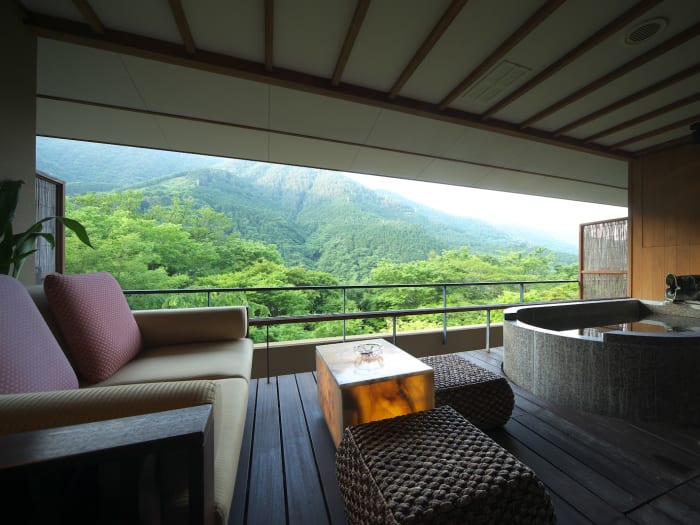
One of the joys of staying at Hakone lies in this intimacy with nature. In the rooms and suites, this connection is facilitated by a direct relationship with the outdoors. Sometimes, a view, a terrace, or a wide opening to the landscape is all that is needed.
Without resorting to excessive effects, a space can become memorable. It allows the right light to enter, provides a place for the gaze to rest, and enables one to feel the mountains without leaving the comfort of the room.
The fusion of tradition and modern comfort finds its true meaning here. Refinement lies in fluidity: bedding designed for rest, a serene bathroom, and discreet contemporary amenities.
The daily housekeeping and turn-down service reflect this attention to detail. Here, nothing is ostentatious. Every element aims to make the stay simpler and more comfortable.
For couples, this destination naturally lends itself to a romantic getaway. The calming atmosphere, proximity to the baths, and care taken with the interiors all contribute to this.
Solo travellers can also find great comfort here, in a space that allows for reading, contemplation, and silence.
What distinguishes the rooms at Hakone Ginyu is their ability to become a refuge. After a day spent exploring the region or enjoying the hot springs, one returns at a more harmonious pace.
This restraint holds something precious. It serves as a reminder that the luxury of rest often lies in the simplest of things: beautiful light, calming materials, and discreet service.
Dining: Between Seasonality and Simplicity
At Hakone, gastronomy plays an integral role in the overall experience, even for those who do not come primarily for the food. At an establishment like Hakone Ginyu, one expects not a spectacular display, but a cuisine in harmony with its surroundings: attentive to the seasons, respectful of the ingredients, served in a setting that extends the atmosphere of tranquility. In the absence of detailed information about specific restaurants or culinary signatures, it is more accurate to speak of a dining experience rooted in the Japanese tradition of refined hospitality.
The pleasure often begins in the morning. In such a calming environment, breakfast takes on particular significance. It is not merely about refuelling before an excursion, but about entering the day gently. A view of the landscape, attentive service, and an unhurried pace are as important as the contents of the plate. At the finest establishments in Hakone, the morning meal becomes a moment of centring, almost an extension of bathing or contemplation. It embodies the Japanese idea that comfort arises from the harmonious flow of the simplest actions.
Dinner, too, ideally follows this same philosophy. After bathing, walking, or a day of travel, the dining experience should offer continuity rather than disruption. One seeks a cuisine that is clear and precise, where the season is celebrated, where presentation remains elegant without being showy, and where service knows how to accompany without overwhelming. In a mountainous setting with hot springs, this restraint feels particularly appropriate: it allows the traveller the space to savour, to slow down, and to prolong the state of relaxation that the location instills.
For an international clientele, this approach is highly appealing. It allows for the discovery of a certain idea of Japanese dining in a comfortable setting, without necessarily adhering to the more formal codes of some urban establishments. The luxury lies in the coherence of the whole: a peaceful decor, a respected sense of time, discreet attention, and flavours that complement rather than dominate the stay. It is a form of destination gastronomy in the most subtle sense of the term.
Even without a precise inventory of culinary offerings, one can assert that the dining experience at a place like Hakone Ginyu contributes to this alliance of tradition and modern comfort that defines the establishment. It meets a very contemporary expectation — to eat well, in peace, without ostentation — while remaining rooted in an ancient Japanese culture that regards meals as moments of care. For many travellers, it is precisely these moments, neither ostentatious nor anecdotal, that linger in memory: a tea served at the right moment, a leisurely dinner, a clear morning facing the mountains. Here, gastronomy seems less concerned with impressing than with setting the emotional temperature of the stay.
Baths, spa, and the culture of wellness
To speak of Hakone without mentioning wellness would be to overlook the essence. The region is closely linked to its hot springs. This promise of relaxation often motivates the stay. Hakone Ginyu fully embraces this environment.
Here, the spa is not merely a facility. It contributes to the understanding of the place. The body regains a central role within a culture of relaxation, warmth, and recovery.
The Japanese thermal experience combines physical care with a form of mental clarity. Bathing in hot water, facing the landscape, transcends immediate comfort. The pace slows down. Tensions unwind. Attention refocuses.
In a calm atmosphere, this dimension gains even more strength. The stay is organised around simple gestures: bathing, resting, tea, reading, silence.
Booking a treatment at the spa remains a pertinent option. In such establishments, treatments often extend the effects of the bath. Massages, relaxation, or wellness rituals naturally find their place here. A treatment booked in advance aligns well with the spirit of the place.
What distinguishes wellness in Hakone from a more urban approach is its direct connection to the territory. Relaxation is not confined to a treatment room. It begins in the mountain air. It continues in the steam of the baths. It is confirmed in the silence of the rooms and the leisurely pace of meals.
For couples, this dimension is naturally shared. For travellers fatigued by a busy itinerary, it offers a restorative pause. For first-time visitors to Hakone, it provides a fitting introduction to the spirit of the destination.
More than a spa in the Western sense, Hakone Ginyu offers an immersion in a Japanese culture of wellness. The setting, the warmth of the water, and the discretion of the service create a soothing luxury.
Concierge & Services
In the realm of luxury hospitality, the quality of a stay often hinges on what is not immediately visible. Hakone Ginyu belongs to this category of establishments. Service here is measured less by its display than by its consistency.
The hotel offers 24-hour concierge services, a 24-hour reception, daily housekeeping, turn-down service, luggage storage, laundry services, wake-up calls, and multilingual staff. Together, these services paint a portrait of a place attentive to the fluidity of the stay, which is particularly valuable in Hakone.
The round-the-clock concierge and reception provide a very tangible sense of peace. They allow for late arrivals, early departures, managing changes in plans, or requesting assistance without friction. In a sometimes complex Japanese itinerary, this availability constitutes a genuine comfort. It also contributes to the overall atmosphere — that of a place where one feels discreetly taken care of.
The daily housekeeping and turn-down service reinforce this impression of silent attentiveness. They punctuate the day without interrupting it. They prepare the return to the room and maintain the order of private spaces. In a hotel where one comes to rest, this quality of maintenance is essential.
Luggage storage and laundry services meet very practical needs. For a stop in Hakone between two stages, the ability to travel light, deposit belongings before check-in, or retrieve freshly laundered items makes a real difference. The wake-up call service is useful for organising an early departure or a connection.
Finally, the presence of multilingual staff deserves special mention. In a Japanese destination sought after by an international clientele, this capability facilitates dialogue, reduces hesitations, and makes the experience more serene. It also allows for a better transmission of the spirit of the place, the customs of the house, and local recommendations.
The services at Hakone Ginyu are designed to support the experience rather than detract from it. The best service is not that which puts itself on display, but that which makes the stay simpler and more coherent. In a setting dedicated to relaxation, this operational discretion becomes a form of luxury.
The art of living in Hakone
To stay in Hakone is to accept that a destination can be experienced through nuance. One does not come only to tick off sights, but to feel a particular quality of presence within the landscape. Easily reached from Tokyo, the region has long offered Japanese and international travellers a form of counterpoint: less speed, more air, a more direct relationship with the mountains, hot water and the seasons. Hakone Ginyu appears fully aligned with this local art of living, shaped by calm, contemplation and simple gestures.
Hakone’s first luxury is perhaps its rhythm. One can of course explore the area, enjoy its viewpoints, museums or panoramic routes, but the essential often lies elsewhere: in the way the day begins, in the time given to bathing, in the slowness of tea, in the pleasure of returning early to the hotel to watch the light change. It is a destination that rewards travellers able to leave room for emptiness, silence and the unexpected. In that context, a property defined by a zen ambience and calming atmosphere makes complete sense, because it does not compete with Hakone; it amplifies its qualities.
For couples, the destination has an obvious appeal. The natural setting, culture of wellbeing, softness of the interiors and possibility of withdrawing from the world create a stay suited equally to conversation and shared silence. Yet Hakone is not limited to a romantic imaginary. Solo travellers, admirers of reinterpreted Japanese tradition, or those simply seeking a pause between major cities can also find a rare form of balance here.
There is something profoundly Japanese in Hakone’s way of life: attention to the seasons, respect for transitions, and the value placed on what soothes rather than what clamours for attention. One then understands why interiors inspired by traditional Japanese style and the blend of tradition with modern comfort are not merely aesthetic claims. They respond to a broader culture in which dwelling, dining, bathing and landscape are conceived as parts of a single whole.
From Hakone Ginyu, this philosophy seems especially accessible. The hotel offers a coherent base from which to experience the region without agitation. One may choose to explore and then return to quiet, or conversely decide to live almost everything on site, making the stay itself the destination. That may be Hakone’s real privilege: allowing the traveller to rediscover a form of luxury less tied to accumulation than to the quality of attention. In a world saturated with stimuli, this way of inhabiting time has a singular value. Hakone Ginyu appears to be one of the most fitting settings for those seeking in Japan a pause of depth rather than a mere backdrop.
Book via MyConciergeHotel
Booking Hakone Ginyu through MyConciergeHotel means approaching the property with the right level of guidance. A stay in Hakone is not simply a matter of choosing a room: it often involves a wider itinerary, a travel rhythm, onward connections and, above all, a very specific expectation in terms of atmosphere. That is why editorial and concierge mediation makes particular sense here. It helps ensure that the address truly suits the way you travel: a couple’s escape, a wellness pause, a restorative stop after Tokyo or before continuing elsewhere in Japan.
One of the first advantages of a guided booking lies in clarity. Hakone attracts significant demand, and certain periods can be especially busy. Planning ahead is therefore essential, particularly if you wish to shape your stay around a specific moment, a particular season or a non-negotiable pace. Booking in advance also makes it easier to coordinate the different elements of the stay: arrival, departure, possible spa treatment, special requests, luggage arrangements or service preferences.
MyConciergeHotel’s role is above all to provide a qualitative reading of the property. In a digital environment saturated with contradictory reviews and standardised promises, it is useful to place the hotel back into its real context. Hakone Ginyu will appeal foremost to travellers drawn to calm, Japanese aesthetics, proximity to hot springs and a discreet form of luxury. Those seeking constant animation or an overt social scene may find it less compelling than those who value privacy, rest and coherence of setting. This distinction matters, because the right hotel is not necessarily the most visible one; it is the one that answers the intention of the journey exactly.
Booking through MyConciergeHotel also allows practical details to be approached with greater ease. In a destination such as Hakone, where logistics can require some anticipation, being guided in the preparation of the stay materially improves the experience. This is especially true if you want this stop to become a highlight of your time in Japan rather than a mere overnight pause.
Lastly, reserving this address through an editorial lens also means choosing a particular way of travelling: more informed, more attentive and less standardised. Hakone Ginyu is not about spectacular luxury; it speaks to those who recognise the value of a well-framed landscape, a bath taken at the right moment, discreet service and a room designed for rest. MyConciergeHotel is precisely there to support that kind of choice, prioritising the fit between place and traveller. For Hakone, it is likely the best way to turn a booking into a fully realised stay.