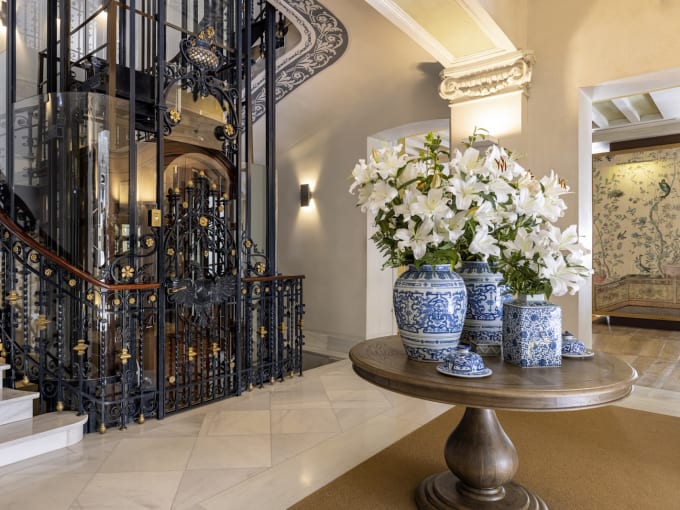
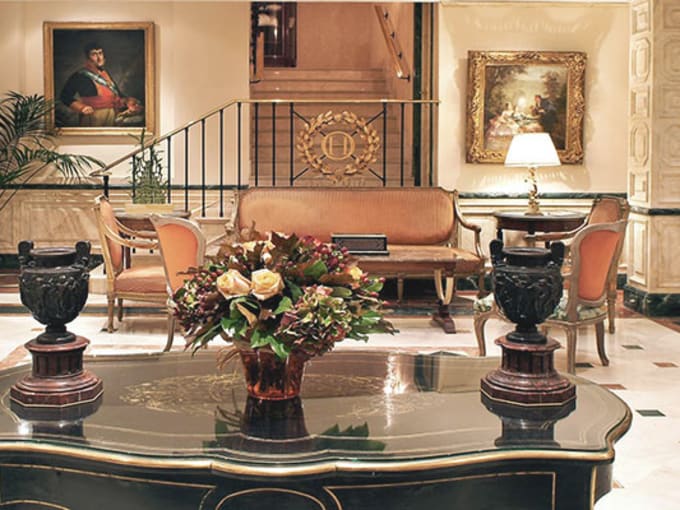
Madrid has transformed its hotel landscape in just a few years. The city is no longer merely a major cultural capital; it has become a destination in its own right. Travellers still come for the Prado, the Retiro, the bustling shopping streets, and the vibrant nightlife. However, they now also seek high-end accommodation. This elevation in quality can be seen across various neighbourhoods, affecting both historic establishments and newer openings. In this context, Four Seasons Madrid, Mandarin Oriental Ritz Madrid, and Rosewood Villa Magna play a pivotal role, enhancing the city's international image. Alongside them, more intimate establishments remind us that Madrid also caters to travellers looking for a more personal connection to their surroundings.
At MyConciergeHotel, our rankings are never just a simple tally of popularity. We first assess the consistency of the experience. Does the venue deliver on its promises from the first contact to departure? Next, we consider the quality of the location, which significantly influences the experience of a stay in Madrid. Sleeping near the art triangle, in the Salamanca district, or in more institutional areas offers different rhythms. We also evaluate the strength of the hotel brand; a large international name does not guarantee the same assurance as an independent boutique hotel. Finally, we take into account tangible criteria: five-star rating, the reputation of the establishment, presence of a spa, heritage dimension, perceived quality of common areas, and ability to cater to diverse needs.
The primary appeal of this selection lies in its diversity. Madrid does not pit historic palaces against contemporary hotels; rather, it allows them to engage in dialogue. Mandarin Oriental Ritz Madrid embodies a certain worldly memory of the capital. Four Seasons Madrid represents the arrival of a comprehensive urban luxury, designed for both long stays and city breaks. Rosewood Villa Magna fits into the logic of an international neighbourhood address, easily recognisable to clientele accustomed to major brands. In parallel, Hotel Orfila, Heritage Madrid Hotel, and Urso Hotel and Spa advocate a more residential scale. Their strength lies not in ostentation but in the feeling of a carefully chosen address. Hotel Urban Madrid, on the other hand, offers a more design-oriented and urban interpretation of Madrid's luxury. La Moraleja finally opens up another, more peripheral perspective.
For 2025 and 2026, several trends are confirming in Madrid. The first concerns the return of the hotel as a complete living space. The upscale traveller no longer seeks just a beautiful room; they expect a coherent whole. Spa, dining, meeting spaces, terraces, local anchorage, and seamless service weigh more heavily in decision-making. The second trend relates to the geography of the stay. The historic centre remains central, but travellers are more discerning in balancing vibrancy and tranquillity. Some prioritise immediate proximity to cultural institutions, while others prefer Salamanca for its commercial elegance and neighbourhood life. Finally, we observe a clearer expectation for hotels capable of offering intimacy without sacrificing international standards. This is precisely what makes Madrid interesting today.
From Le Concierge's perspective, luxury hospitality in Madrid is best understood when avoiding clichés. The city does not need to overdo it; its refinement is often more direct than ceremonial. It is conveyed through the quality of the welcome, the ease of a journey, the genuine calm of a room, or the appropriateness of a renovation. This is an approach we know well. French luxury, when properly understood, does not involve overloading the decor; it involves precisely prioritising the client's needs. In Madrid, this logic works particularly well. The best addresses know how to combine heritage, contemporary comfort, and clear service. What our advisors often observe is that a good Madrid hotel simplifies the city without diluting it, making it more accessible but never more uniform.
Thus, this ranking should be read as a navigational tool, not as an abstract verdict. The number one hotel is not the universal choice; it is the one that, according to our criteria, embodies the greatest number of structuring qualities. However, each address has its audience. An anniversary trip, a business stay, a museum weekend, or a first-time discovery of Madrid all call for different choices. Some travellers desire a grand establishment with all integrated services, while others prefer tranquillity, a human scale, or a specific neighbourhood. It is important to remember that a well-ranked hotel is not just beautiful or well-known; it is relevant in its context. This relevance is what we strive to measure, often holding more value than a spectacular narrative or a reputation repeated without nuance.
Our top 8 best hotels in Madrid thus brings together very different but solid signatures. You will find institutions, neighbourhood houses, and more contemporary positioned addresses. My advice before booking is simple: start by choosing your Madrid. The rest will follow more naturally.