History & heritage
In Madrid, some hotels favour spectacle, while others cultivate a quieter form of distinction that speaks more to attentive travellers than to seekers of effect. Hotel Orfila clearly belongs to the latter family. Its identity rests less on display than on a certain idea of urban hospitality: discreet, classical and measured. Its membership of Relais & Châteaux immediately clarifies its positioning. This is not merely a marker of comfort, but of a way of inhabiting a place, defending an atmosphere, and embracing a deliberately intimate scale rather than that of a large-format luxury hotel.
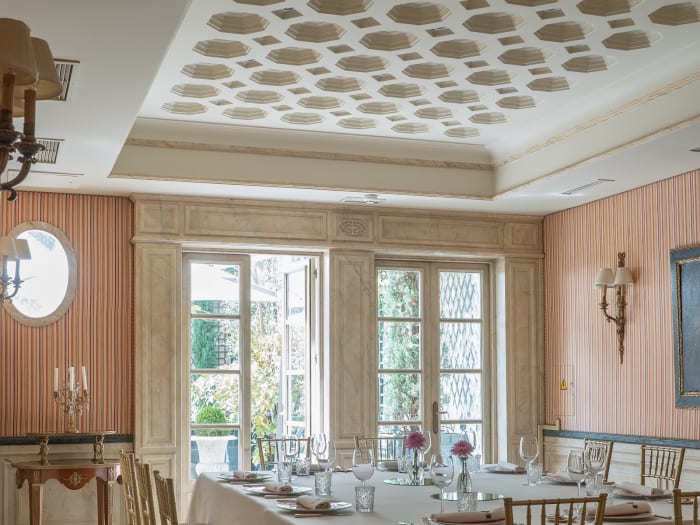
In a capital as energetic as Madrid, Orfila fits into a European tradition of townhouse-style properties turned into elegant refuges. It offers what many travellers look for in the finest city hotels: the feeling of staying in an address with a personality of its own rather than in an interchangeable establishment. The classic décor, noted among its defining traits, contributes to that sense of continuity. It suggests an attachment to enduring codes — woodwork, fabrics, traditionally inspired furnishings, a soothing palette — without neglecting contemporary expectations of comfort.
Orfila's heritage also lies in its scale. A warm, intimate atmosphere cannot simply be declared; it emerges from a subtle combination of architecture, rhythm and quality of welcome. Here, the experience appears designed to preserve the calm one associates with refined residential addresses. It is a form of luxury that is less demonstrative than relational: recognition, ease, and the impression that everything is in its proper place.
Madrid, a city of palaces, boulevards and strongly defined neighbourhoods, provides an ideal setting for this kind of hotel. Orfila plays a precise role within it: that of an elegant base from which to discover the capital without absorbing all of its intensity. Its heritage is therefore not only decorative; it is urban. It rests on a distinctly Madrilenian way of reconciling culture, city life and the taste for retreat.
For travellers familiar with Europe's great addresses, Orfila recalls those hotels recommended not for a list of records, but for a tone. One chooses it for character over effect, continuity over fashion, and restraint over spectacle. That fidelity to classical elegance helps explain why the property appeals to varied guests, from couples on a city break to business travellers seeking a more personal setting than a standard luxury hotel.
In that sense, Hotel Orfila belongs to a very legible hotel tradition: prestigious urban houses where the quality of the stay, aesthetic restraint and the art of receiving matter most. That is precisely what gives it its place in contemporary Madrid.
The hotel
One of Hotel Orfila's greatest assets lies in its setting in the heart of Madrid while remaining in a quiet neighbourhood. In a European capital, that combination is uncommon and it changes the way a stay is experienced. Guests enjoy centrality without being constantly exposed to noise, footfall and density. For a discerning traveller, that distinction matters: it allows a busy day in the city to end in calm, without logistical effort or unnecessary fatigue.
The hotel's setting therefore answers a very contemporary expectation: to experience the city fully, yet sleep away from its commotion. Madrid is a capital best discovered both on foot and through the rhythm of its neighbourhoods. From a central address, it becomes easier to organise days around museums, architectural walks, late lunches, shopping, business appointments and cultural evenings. Returning afterwards to a house with an intimate atmosphere gives the stay a more balanced cadence.
Orfila seems to cultivate that idea of an urban refuge. One imagines public spaces designed not to impress from afar, but to welcome properly: lounges in which to read or wait for a meeting, fluid circulation, an attentive reception, and a coherent decorative tone. The classic décor, paired with modern comforts, is essential here. It provides a legible, reassuring setting without coldness. In many city hotels, modernity can translate into a certain aesthetic abstraction; at Orfila, it appears instead to support comfort without erasing character.
That sense of balance will appeal equally to leisure travellers and business guests. The former will find a practical base from which to explore Madrid under good conditions; the latter, an address that allows them to work, host or rest in surroundings that feel more personal than those of a large chain hotel. A 24-hour front desk and round-the-clock concierge service further enhance that flexibility, particularly valuable in a city where daily rhythms often extend later than elsewhere in Europe.
The property also lends itself to a certain idea of a romantic stay. Not through an accumulation of predictable signs, but because calm, intimacy and attentive service naturally create the right context. A hotel of this kind accompanies the moments of a trip rather than staging them too insistently. That is often where true sophistication lies.
Ultimately, Hotel Orfila is more than a well-located central address. It offers a specific way of staying in Madrid: close to major sights, yet residential in feel; rooted in the city, yet protected from its agitation; classical in expression, contemporary in comfort. For travellers seeking to experience the capital with elegance rather than at speed, that equation is particularly compelling.
Rooms and Suites
In a hotel like Orfila, the room extends the identity of the establishment. The warm and intimate atmosphere evokes accommodations designed for rest. It embodies the feeling of a home rather than merely a hotel product. The classic decor, combined with modern amenities, creates a balance between decorative tradition and contemporary comfort.
For the traveller, this translates into a more soothing experience. Classic lines often age better than overly pronounced trends. They create an immediately recognisable ambiance. One can settle in easily, without a period of adjustment. In Madrid, this elegant familiarity takes on a particular significance. After a day spent exploring art, business, or the city’s dining scene, returning to a quiet room transforms the stay.
The classicism of Orfila does not come at the expense of practical considerations. The contemporary traveller expects well-appointed bedding, a thoughtfully designed bathroom, seamless connectivity, impeccable maintenance, and discreet service. The daily housekeeping and turn-down service enhance this feeling of continuous care. The room is regularly tidied, and the evening atmosphere is prepared to encourage relaxation.
The charm of a boutique hotel is particularly evident in the rooms and suites. While some large hotels standardise their categories, more intimate establishments maintain a more sensitive relationship with space, light, and furnishings. Orfila caters to guests who appreciate places where one truly stays, not just sleeps.
Couples will find a setting conducive to a tranquil weekend in Madrid. Business travellers will benefit from an environment that fosters concentration and recovery. Regular visitors to fine European addresses will recognise this discreet quality that makes a room a personal refuge.
Choosing a room at Hotel Orfila prioritises a certain idea of comfort. A luxury of restraint, grounded in the coherence of the decor, the quality of maintenance, the precision of service, and the ability to create calm in the heart of Madrid. In the five-star segment, this accuracy often matters more than the accumulation of effects.
Dining
In a Relais & Châteaux property, the culinary dimension almost always plays an important role, even when one chooses not to reduce it to a list of titles or signatures. At Hotel Orfila, dining is likely to sit in continuity with the overall experience: elegant without ostentation, attentive to the rhythm of guests, and conceived as a natural extension of the stay rather than a mere ancillary service. That coherence matters. In the finest city hotels, the restaurant, breakfast and lounge moments all contribute fully to the identity of the place.
The first pleasure of such an address often lies in the quality of the morning. In Madrid, a city of long evenings and days that begin at different tempos depending on the traveller, breakfast becomes a genuine marker of comfort. In a calm, classical setting, it takes on an almost residential dimension: one does not simply consume a meal, one eases into the day. For a couple on a city break, it is a suspended moment; for a business traveller, an ordered pause before appointments; for a culture-minded guest, a way to prepare for a day among museums and walks.
The rest of the culinary offering, without detailing unconfirmed specifics, can be approached through the codes of European luxury hospitality. One expects clear cuisine, precise service, and a menu capable of supporting both a composed dinner and a lighter lunch or discreet refreshment. In a house with an intimate atmosphere, dining often takes on a particular tone: less theatrical than in some grand palaces, closer to the art of receiving. This suits Madrid especially well, where social life often revolves around the table, but where places that preserve a sense of calm are equally valued.
The hotel's classic décor once again plays a decisive role. It creates a setting suited to meals that matter, whether a tête-à-tête, a business meeting or dinner after a full day. The culinary experience is then not limited to the plate; it includes the light, the tempo of service, and the feeling of being expected without being watched. That quality of attention is often what distinguishes fine houses.
For travellers wishing to discover Madrid through its food scene, Orfila also makes a relevant base. Its concierge can help organise reservations, guide guests towards different styles of dining, and adapt suggestions to the rhythm of the stay. The advantage of a central yet quiet hotel lies precisely in that alternation: dining out in the city and then returning to serenity, or choosing to remain in-house for a more private evening.
Dining at Hotel Orfila should therefore be understood as part of its art of living. It extends the elegance of the house, supports the comfort of the stay, and offers a more intimate counterpoint to Madrid. For many travellers, that is exactly what one expects from a fine urban address: dining that accompanies the day with precision, without ever breaking the harmony of the place.
Concierge & Services
Hotel luxury is often measured less by what is visible than by what operates seamlessly behind the scenes. At Hotel Orfila, this concept takes tangible form through services that outline the contours of a smooth and well-supported stay. The 24-hour reception and round-the-clock concierge service form the foundation of this experience. In a capital like Madrid, where late arrivals, early departures, and changes of plans are common, this continuous presence reassures and simplifies everything.
The concierge service goes beyond mere information provision. It acts as an interface between the guest and the city. Whether reserving a table, organising a transfer, recommending a sightseeing itinerary, suggesting a neighbourhood based on the time of day, or assisting in crafting a cultural or practical programme, these gestures transform a good stay into a well-orchestrated one. In a hotel with an intimate atmosphere, this relationship can take on a more personalised dimension. The advice becomes relevant as it aligns with the traveller's style.
The daily housekeeping service ensures a consistent standard in private spaces, while the turn-down service discreetly prepares for the evening return. The luggage storage service proves invaluable for fully enjoying the city on the day of an early arrival or a late departure. The laundry service caters to various needs: extended stays, business trips, unexpected travel issues, or simply comfort.
The wake-up service retains genuine utility. It reflects a logic of reliability and support, particularly appreciated when a flight, train, or important meeting demands absolute punctuality. The multilingual staff contributes to the sense of international ease sought by travellers accustomed to major capitals. The ability to articulate a request clearly and be understood without ambiguity immediately elevates the comfort level.
What distinguishes an address like Orfila is not merely the sum of services expected in a five-star establishment. It is the way these services integrate into the overall ambiance. In a calm and classic setting, the service gains clarity: it accompanies, anticipates, and remains measured. This restraint is particularly appreciated by a clientele that prefers silent efficiency over ostentation.
For couples, this means a stay that is simpler to navigate, where logistical details fade in favour of shared time. For business travellers, it guarantees a reliable environment capable of supporting a busy agenda. For all, it confirms that a grand urban establishment is defined not just by its address or decor, but by the quality of its attentiveness. At Hotel Orfila, the services are designed to preserve that rare impression: being cared for with tact, at the right moment, without ever losing one’s freedom.
The Madrid art of living
Staying at Hotel Orfila also means choosing a certain way of approaching Madrid. The city cannot be reduced either to its best-known monuments or to a simple succession of addresses to tick off. It reveals itself in layers: the elegance of its façades, the density of its cultural life, the rhythm of its meals, the vitality of its neighbourhoods, the particular light of late afternoon. A central yet quiet hotel makes it possible to grasp that complexity without being carried away solely by urban intensity.
Madrid possesses a very distinctive energy among European capitals. More open in its hours, more sociable in its relationship to public space, it invites visitors to compose their days with flexibility. One may devote a morning to major collections, prolong lunch, walk at length through avenues and residential streets, pause in a café, resume the day with shopping or a visit, then go out again in the evening. In this context, the value of a hotel such as Orfila is obvious: it offers a stable, elegant and quiet point of return that allows one to experience the city without becoming scattered by it.
For art lovers, Madrid is one of Europe's great cultural destinations. For travellers sensitive to architecture, it offers a constant dialogue between aristocratic heritage, monumental urbanism and neighbourhood life. For gourmets, it alternates institutions, contemporary tables and more discreet addresses. For flâneurs, it remains a city of walks, perspectives and observation. Orfila seems particularly well suited to this plurality of uses. Its intimate atmosphere imposes no scenario; on the contrary, it allows each guest to construct a personal Madrid.
That is also what gives character hotels in city centres their charm. They are not merely places to sleep, but subtle mediators between visitor and destination. A good concierge can direct guests towards a museum at the right moment of the day, recommend a walk according to the season, suggest a neighbourhood for an aperitif or a less expected route. In a city as rich as Madrid, that intelligence of timing matters as much as the list of sights.
In the evening, the capital changes face again. The light softens, terraces fill, dinners begin later, and one understands why so many travellers return to Madrid for its atmosphere as much as for its heritage. Returning afterwards to a hotel set in the heart of the city yet away from the agitation extends that sense of discreet privilege. One remains in Madrid without enduring its noise.
The Madrid art of living lies precisely in that balance between intensity and ease. Hotel Orfila seems to embody it in its own way: an address that allows guests to participate in the city while preserving a comfortable distance; a place where one can alternate activity and retreat, sociability and rest, curiosity and intimacy. For a successful stay, that sense of balance often matters more than an overfilled programme.
Book with MyConciergeHotel
Booking Hotel Orfila through MyConciergeHotel means approaching the stay not as a simple transaction, but as an experience to be prepared with discernment. An address of this kind, in the heart of Madrid yet in a quiet setting, naturally attracts travellers looking for more than a good location. They want overall coherence: the right hotel, at the right moment, with the right rhythm to the stay. That is precisely where editorial guidance and concierge-style support become meaningful.
The value of a well-considered booking begins even before arrival. Whether one is travelling for a cultural weekend, a romantic pause, a business trip or a few days of urban respite, expectations differ. Some will prioritise absolute calm, others ease of movement, and others the possibility of combining the hotel with a programme of restaurants, exhibitions or appointments. A specialist platform such as MyConciergeHotel makes it possible to place Orfila within that logic of a tailored stay, taking into account the personality of the house as much as the traveller's profile.
In the case of a hotel with an intimate atmosphere, this preparation is particularly useful. Character properties are often chosen for qualitative reasons that do not always appear in a simple list of amenities. The tone of service, the relationship to the neighbourhood, the sense of refuge, the place of silence, the coherence of the décor: all these elements matter enormously once on site. Understanding them in advance helps confirm that the address truly corresponds to the idea one has of a stay in Madrid.
Booking through MyConciergeHotel also means benefiting from a finer reading of the destination. Madrid does not wear the same face depending on the season, the cultural calendar, the nature of the trip or the length of stay. A short visit requires denser organisation; a longer one allows for more breathing space. In both cases, Orfila can serve as an elegant and serene base, provided the journey is considered as a whole: arrival times, concierge needs, reservations to anticipate, and free time to preserve.
The simplest advice remains to plan ahead. Addresses appreciated for their calm, centrality and character are often those one regrets not booking earlier, especially during periods of high demand or at weekends. Planning ahead is not only about securing availability; it is also about giving oneself time to shape a stay that is smoother, more personal and more fitting.
Choosing Hotel Orfila through MyConciergeHotel therefore means favouring a certain quality of preparation. Not burdening the trip with formalities, but on the contrary making its course lighter. In a city such as Madrid, where one wants at once to see, taste, walk, rest and sometimes improvise, that discreet groundwork makes all the difference. It allows guests to arrive with the essentials already considered, and then let the city do the rest.