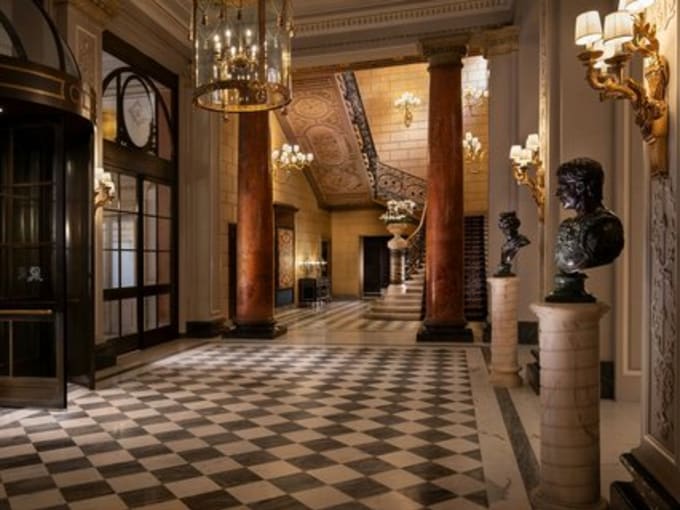
In Rome, the culinary experience in hotels transcends mere dining services. It shapes the stay as much as the hotel itself. In a city where every neighbourhood carries a culinary memory, choosing a gastronomic hotel reflects a particular relationship with Rome. Some travellers seek a panoramic table after a day spent between Via Condotti and Piazza di Spagna. Others prefer a more discreet establishment, where dinner becomes a natural extension of the living room. Between Hotel Eden, Hotel Hassler, Palazzo Manfredi, Rome Cavalieri, Bulgari Hotel Rome, Hôtel de la Ville, Rocco Forte Collection, and The St. Regis Rome, the focus is not solely on fine dining. It is about understanding how a grand Roman hotel showcases the city through its cuisine, service, views, and rhythm.
To establish this ranking, we do not rely on marketing promises or fleeting trends. We first observe the coherence between the hotel's identity and its culinary offerings. A fine dining experience carries different weight depending on whether it dialogues with a rooftop, a garden, a historic palace, or a more residential address. We also consider the establishment's reputation, its hotel rating, its ability to be a dinner destination, and the clarity of its culinary positioning. It is important to note that a convincing gastronomic hotel does not rest solely on a signature dish. It relies on a whole ensemble. The setting, consistency, wine selection, table service, breakfast, bar offerings, and the relevance of the experience are just as important as the food itself.
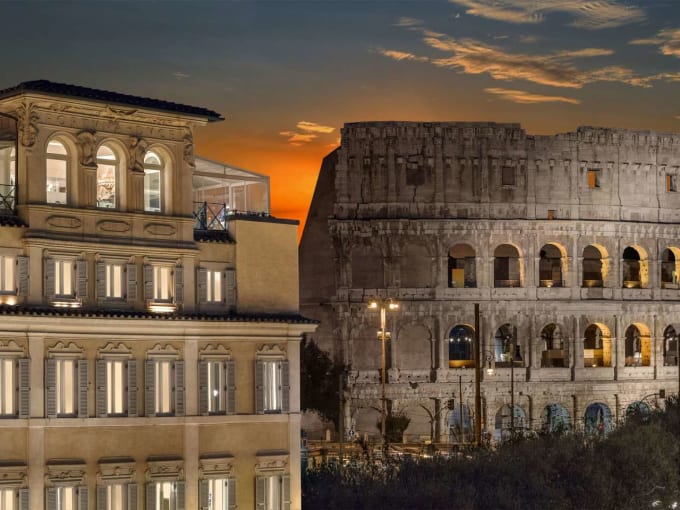
The Roman panorama is more varied than it appears. On one hand, international institutions like Rome Cavalieri, The St. Regis Rome, or Bulgari Hotel Rome embrace a comprehensive ambition, with restaurants, bars, and reception spaces capable of attracting a local clientele. On the other hand, more intimate establishments, such as Babuino 181, Margutta 19, or Villa Médicis, offer a more residential interpretation of gastronomy. They often charm with their scale, location, and a more subdued way of experiencing the city. In between, Palazzo Manfredi capitalises on its exceptional location facing the Colosseum. Hotel Eden and Hotel Hassler play the card of views and historical addresses. Hôtel de la Ville and Rocco Forte Collection assert a more contemporary energy, deeply rooted in the upper part of the city.
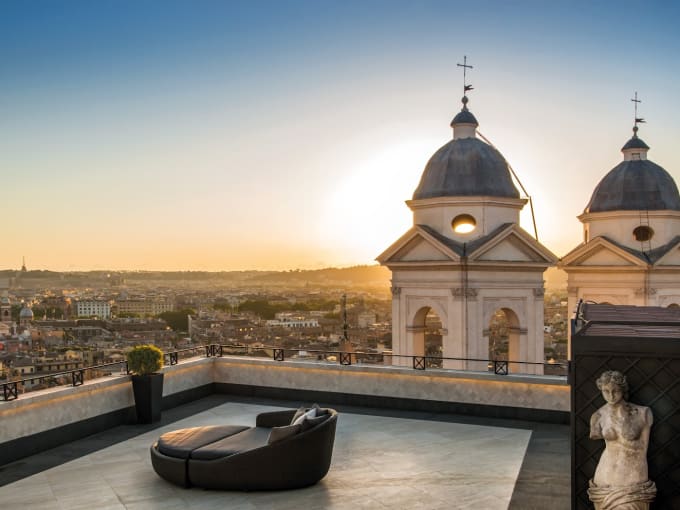
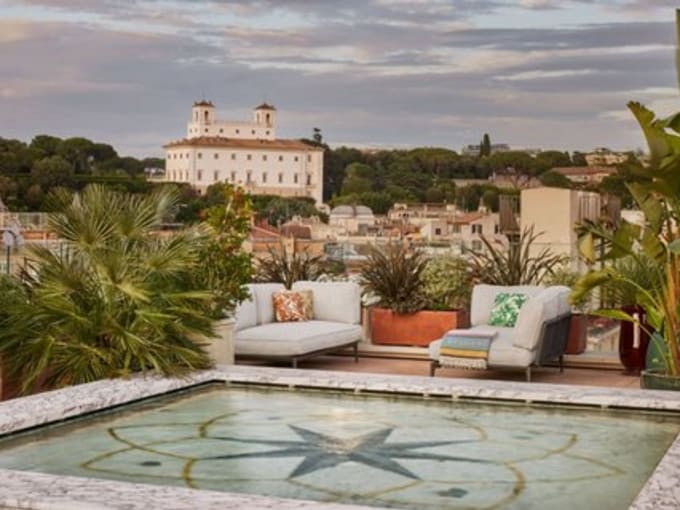
For 2025 and 2026, our advisors observe several clear trends emerging in Rome. The first concerns the rise of panoramic experiences, which are no longer limited to end-of-day cocktails. Rooftops are becoming full-fledged dining venues, designed for constructed dinners. The second trend relates to clarity. Travellers are seeking less an accumulation of options and more a clear, well-executed proposition in a coherent setting. The third evolution concerns the rhythm of the stay. A good gastronomic hotel must now operate from morning to night, from morning coffee to the last drink. Finally, international clientele expect Italian cuisine that is rooted in its territory but interpreted with precision. In Rome, this favours hotels capable of connecting heritage, views, service, and culinary identity without overplaying the spectacle.
This perspective aligns with a certain idea of French luxury, which we advocate at MyConciergeHotel. Luxury is not about excess. It is about a quality of attention, a clear hierarchy of pleasures, and a sense of detail that does not seek to impress at all costs. In a gastronomic hotel, this translates into well-thought-out spaces, a comprehensible menu, service that knows how to accompany without interrupting, and an atmosphere that encourages prolonging the evening. My advice in Rome is to look beyond just the signature dinner. The true level of an establishment is also measured by the quality of breakfast, the reliability of room service, the quality of the bar, and how the hotel welcomes both regular Roman patrons and passing travellers.
This ranking should also be read without absolute reflexes. The best gastronomic hotel in Rome may differ depending on the trip. An anniversary stay does not necessarily call for the same address as a cultural weekend, a business trip, or a first discovery of the city. Some may prefer the monumentality of a grand urban palace. Others may desire a quieter establishment, better integrated into their preferred neighbourhood. We therefore value different profiles without opposing institutions to boutique hotels. What our advisors observe is each address's ability to fulfil its promise. A hotel may be remarkable for its panoramic table. Another may impress with a more confidential atmosphere. In both cases, relevance takes precedence over showiness, and the memory of the meal is as significant as its presentation.
Our Top 11 of the best gastronomic hotels in Rome reads as follows. It highlights establishments where cuisine genuinely contributes to the journey. Some dominate the scene. Others nuance it intelligently. All deserve attention.