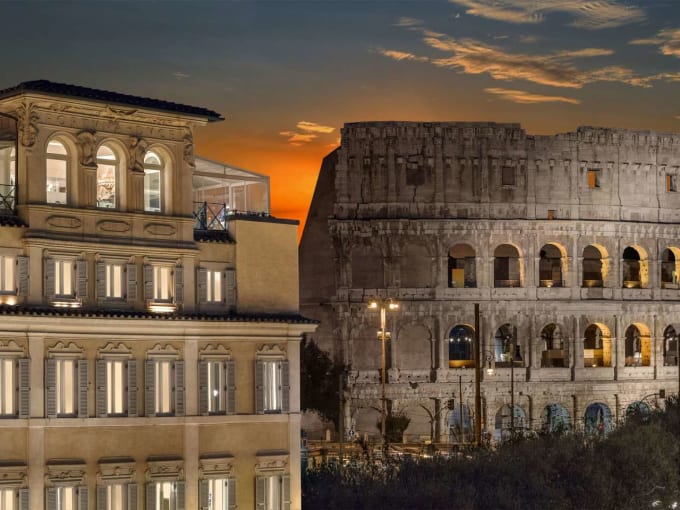
In Rome, hotel design is never merely about furniture, signatures, or trends. It engages in a dialogue with a city where every facade already carries a memory. This is precisely what makes this segment so intriguing. A compelling Roman design hotel does not seek to erase its context; it works in harmony with it. In our selection, the focus is not on the spectacular, but rather on how contemporary vision is inscribed within palaces, townhouses, or more discreet addresses. From The St. Regis Rome, Bulgari Hotel Rome, Casa Monti, Portrait Roma to Margutta 19, Rome showcases various design languages, each distinct from the other. It is this plurality, more than mere fashion, that warrants a genuine editorial ranking today.
To establish this top list, MyConciergeHotel employs specific criteria. We first observe the overall coherence. The design must connect architecture, circulation, light, materials, rooms, and communal spaces. Next, we consider the Roman anchoring. An address can be very contemporary without becoming interchangeable. We also assess the clarity of the chosen approach. A successful design hotel tells a story from the moment of arrival and then confirms that promise in the details. The level of service is equally important, as design without hospitality remains mere decoration. Finally, we incorporate the actual desirability for our travellers. What our advisors observe holds significant weight. A beautiful image is not enough; a sustained experience is essential, from the lobby to the final morning, and throughout all rhythms of stay.
The Roman panorama is broader than one might imagine. On one hand, some addresses embrace a grand heritage register, with a more theatrical staging of luxury. The St. Regis Rome and Hôtel de la Ville, Rocco Forte Collection, appeal to those who appreciate the dialogue between heritage and decorative sophistication. On the other hand, Rome hosts hotels where the design becomes more streamlined, more residential, sometimes almost silent. Portrait Roma and Margutta 19 exemplify this approach well. In between, houses like Casa Monti, Palazzo Ripetta, or Palazzo Manfredi offer more contextual readings, engaging with the neighbourhood, the view, human scale, or heritage. Finally, the realm of Bulgari Hotel Rome, Bulgari Roma, and Bvlgari Hotel Roma highlights how a strong brand can impose an identifiable vocabulary while remaining rooted in the capital.
For 2025 and 2026, several trends are emerging in Rome. The first is the return of tactile decor. Design is becoming less demonstrative, more attuned to materials, textures, and mineral tones. The second is the elevation of a more residential luxury. Travellers seek spaces where they feel settled, not just impressed. The third concerns the relationship with the neighbourhood. A convincing design address is one that provides access to a lived-in Rome, not just a monumental one. We also see a progression towards a reinterpreted classicism, where heritage and modernity are no longer opposed. The best hotels articulate both with method. It is also worth noting the growing importance of wellness spaces and terraces. In Rome, light, perspectives, and visual breathing become integral design elements.
This perspective aligns with a certain idea of French luxury, as we advocate at Le Concierge. Refinement is not measured by the volume of effects but recognised by its precision. A great design hotel knows how to prioritise sensations, allowing for moments of respite. It lets a room remain a room, rather than a manifesto. It also understands that comfort is a form of culture. A beautiful bathroom, thoughtful seating, controlled lighting, or a quiet corridor are as significant as a spectacular room. In Rome, this philosophy takes on a particular resonance, as the city can easily push towards visual excess. The most convincing addresses are often those that know how to frame this intensity. My advice is simple: seek less the immediate effect and more the overall coherence, for it is this that brings one back.
It is also essential to read this ranking carefully. We do not aim to designate one hotel as universally superior to others. Each address meets a different expectation. Some charm with their decorative power, while others attract with their discretion, intimacy, or architectural precision. A romantic getaway, a first stay in Rome, an anniversary weekend, or a more cultural interlude do not call for the same choices. This is why our hierarchy remains editorial, never dogmatic. It rewards the quality of proposals within the theme of design without detracting from hotels that prioritise other strengths. What our advisors observe is that a good choice often depends on the traveller's tempo. Rome accommodates both grand entrances and hushed retreats. Thus, the best design hotel is also the one that aligns with your way of experiencing the city.
In the following top list, you will find eight addresses, each expressing a precise idea of contemporary Roman design. Some are already references, while others deserve to be revisited with attention. All possess a distinct personality, which is the only true commonality that matters.